Sustainable Dog Beds Made From Recycled Materials
Your dog sleeps about 12 to 14 hours each day. That’s like a full-time job! If anyone deserves a comfy bed, it’s the one who greets you like you’ve been gone for years every time you walk in.
But many pet owners forget to ask: what is that bed made of, and what happens when it eventually wears out?
If you’re considering a sustainable dog bed made from recycled materials, you’re not alone.
It’s a choice that feels right on every level. Once you start exploring this option, you’ll wonder why you didn’t switch sooner.
Why Recycled Materials Are a Big Deal for Dog Beds
The Problem With Conventional Dog Beds
Most conventional dog beds are stuffed with virgin polyester fill, wrapped in synthetic fabrics, and treated with chemical flame retardants or stain-resistant coatings.
That combination does a fine job of being cheap and widely available, but it comes at a cost most of us do not think about until we toss the thing in the trash two years later.
Polyester takes anywhere from 20 to 200 years to decompose in a landfill.
So every time a conventional dog bed gets chewed to shreds or simply wears out, it sits in a dump for longer than anyone alive today will be around to see.
Multiply that by the millions of pet owners globally, and the picture gets a little uncomfortable.
Conventional dog beds also tend to off-gas volatile organic compounds (VOCs), especially when they are new.
You know that “new product smell”? That is not freshness. That is chemistry. For a dog who lives nose-first, that is a surprisingly meaningful concern.
What Recycled Materials Actually Offer
Sustainable dog beds made from recycled materials flip that whole story around. The most common recycled materials you will find in quality eco-friendly dog beds include:
- Recycled PET (rPET) fill, which is polyester fiber made from post-consumer plastic bottles
- Recycled denim or cotton scraps from textile manufacturing offcuts
- Reclaimed wool or fleece from clothing and industrial fabric waste
- Recycled rubber used in non-slip bases and supportive foam alternatives
- GOTS-certified organic cotton covers made with sustainably sourced raw material
Each of these materials diverts waste from landfills. A single dog bed filled with rPET fiber, for example, can use anywhere from 20 to 50 recycled plastic bottles depending on the bed size.
That is a tangible, real-world impact, not just feel-good marketing language.
How to Spot a Genuinely Sustainable Dog Bed
Do Not Just Trust the Label
Here is where I want to be honest with you, because this matters: the word “eco-friendly” on a product tag means almost nothing without certification to back it up.
Companies know that sustainability sells, and some use that to their advantage without doing much actual good. This practice has a name: greenwashing. And the pet industry is not immune to it.
When you shop for a sustainable dog bed made from recycled materials, look for these verified certifications and indicators:
- OEKO-TEX Standard 100 certifies that every component of the fabric has been tested for harmful substances
- GOTS (Global Organic Textile Standard) applies to organic fiber content and ethical production
- Bluesign certification ensures responsible use of resources in fabric manufacturing
- GRS (Global Recycled Standard) verifies the percentage of recycled content in a product
- B Corp certification for the brand itself signals a broader commitment to social and environmental accountability
If a brand cannot point you to at least one of these, treat their eco-claims with healthy skepticism.
Durability Is Part of Sustainability Too
A bed that falls apart in six months is not a sustainable choice, no matter what it is made from. True sustainability includes durability.
Look for reinforced seams, heavy-duty zippers, and machine-washable covers, because a bed you can actually maintain and keep for years is far better for the planet than one you replace constantly.
Some brands now use interlocking panel construction and double-stitched stress points specifically to extend product life.
That attention to build quality is worth paying a premium for, and when you do the math on cost-per-year, the more durable bed almost always wins.
Shop Sustainable Dog Beds On Amazon
The Best Types of Sustainable Dog Beds and What Works for Different Dogs
Recycled Fill Bolster Beds

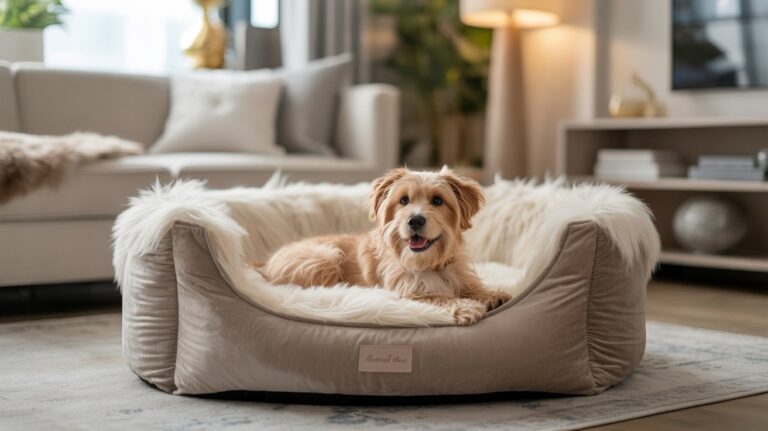
Bolster beds have that classic raised-edge design that dogs who love to lean and curl up will absolutely obsess over.
When filled with rPET fiber instead of virgin polyester, they deliver the same lofty, supportive feel with a significantly reduced environmental footprint.
These beds work especially well for:
- Anxious or nervous dogs who like the security of a wraparound edge
- Small to medium breeds that love curling into a tight ball
- Dogs who sleep in cooler rooms where extra insulation from the fill is a bonus
The rPET fill in quality bolster beds holds its loft better than cheap polyester, which tends to flatten into a sad pancake within a few months.
A well-constructed recycled fill bolster bed can maintain its shape for two to three years with regular fluffing.
Find Recycled Fill Bolster Beds On Amazon
Recycled Memory Foam Beds
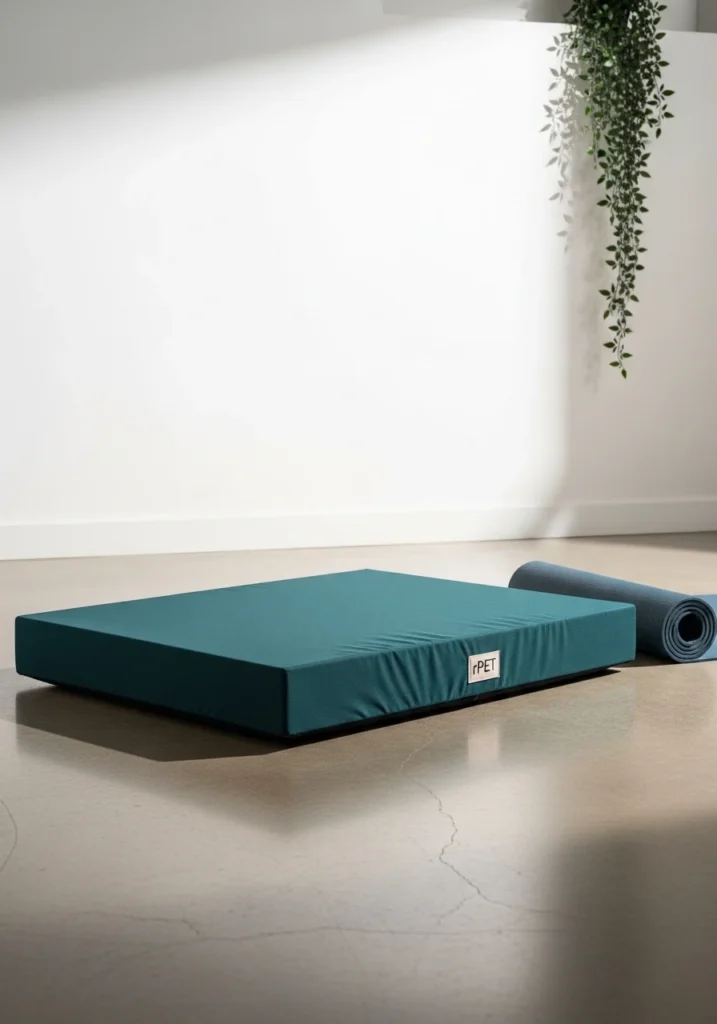
Orthopedic support is not optional for older dogs, large breeds, or any dog with joint issues.
The good news is that memory foam options now exist that use certified recycled foam or plant-based foam alternatives, often wrapped in covers made from rPET fabric or reclaimed textiles.
These beds matter most for:
- Senior dogs with arthritis or hip dysplasia
- Large and giant breeds like Labradors, German Shepherds, and Great Danes
- Dogs recovering from surgery or managing chronic pain
One thing worth knowing: not all “memory foam” dog beds actually use true memory foam.
Some use shredded foam scraps (which is fine and also reduces waste), while others use cheaper alternatives marketed with the same language.
Check the density rating. A quality orthopedic bed should use foam with a density of at least 1.5 to 2 pounds per cubic foot.
Browse Orthopedic Dog Beds On Amazon
Recycled Cotton and Denim Flat Mats
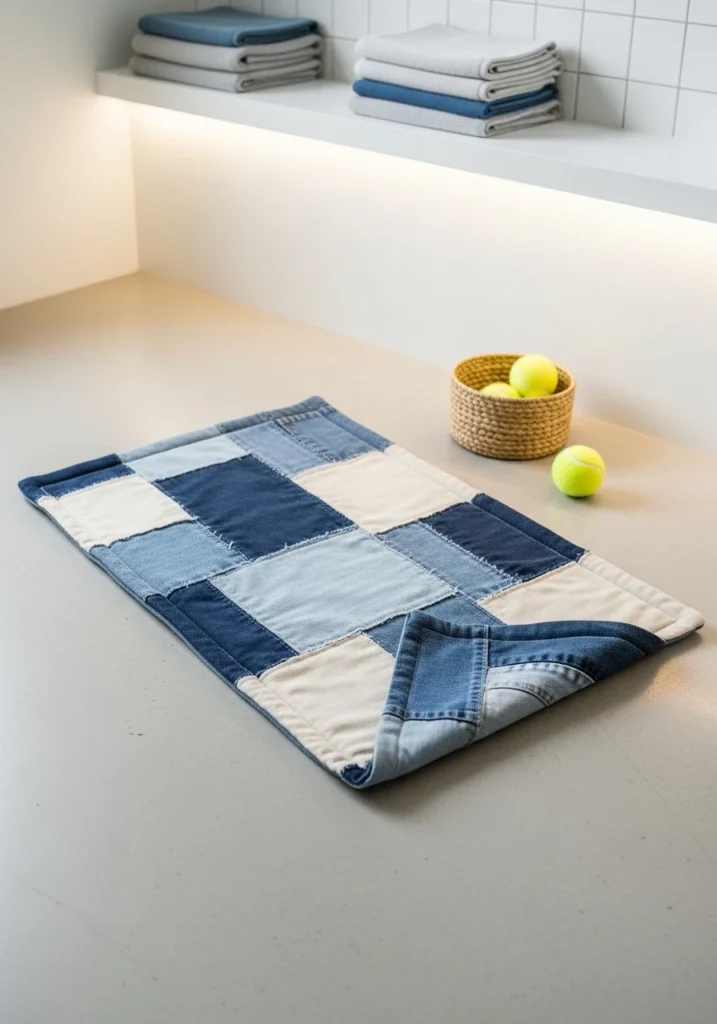
These are the workhorses of the sustainable dog bed world. Flat mats made from recycled denim or cotton are washable, packable, and rugged enough to handle heavy use from larger or more active dogs.
They lack the cushioning of a bolster or foam bed, but they make excellent crate liners, car seat covers, or secondary beds for dogs who travel a lot.
If your dog treats every bed like a chew toy, starting with an inexpensive but well-made recycled cotton mat is a smarter call than spending big on a foam orthopedic bed that gets shredded on day three.
Shop Washable Dog Mats On Amazon
The Real Cost of Going Sustainable
Upfront Price vs. Long-Term Value
Let’s be real: sustainable dog beds made from recycled materials usually cost more upfront than their conventional counterparts. A mass-market polyester dog bed might run you 20 to 40 dollars.
A well-made recycled fill bed from a certified brand will more likely land between 60 and 150 dollars, depending on size and construction.
That price gap stings a little at first glance. But think about it this way:
- A conventional bed that lasts 12 months costs more per year than a quality bed that lasts 3 years
- Machine-washable covers mean you actually clean the bed, which extends its life and keeps your dog healthier
- Some brands offer repair programs or take-back recycling schemes for their products at end of life
The better value calculation is always lifetime cost, not sticker price. Once you frame it that way, the premium for a sustainable option starts to look a lot more reasonable.
What You Are Actually Paying For
When you spend more on a certified sustainable dog bed, you are paying for:
- Verified recycled content that actually diverts waste
- Safer materials with fewer synthetic chemical treatments
- Ethical manufacturing practices that pay fair wages
- Longer product lifespan through better construction
- A brand with accountability to third-party certification standards
That is a lot of real value packed into what is ultimately a place for your dog to nap. And your dog, for what it is worth, will enjoy it just as much as anything else you have ever bought them.
Brands Worth Knowing in the Sustainable Dog Bed Space
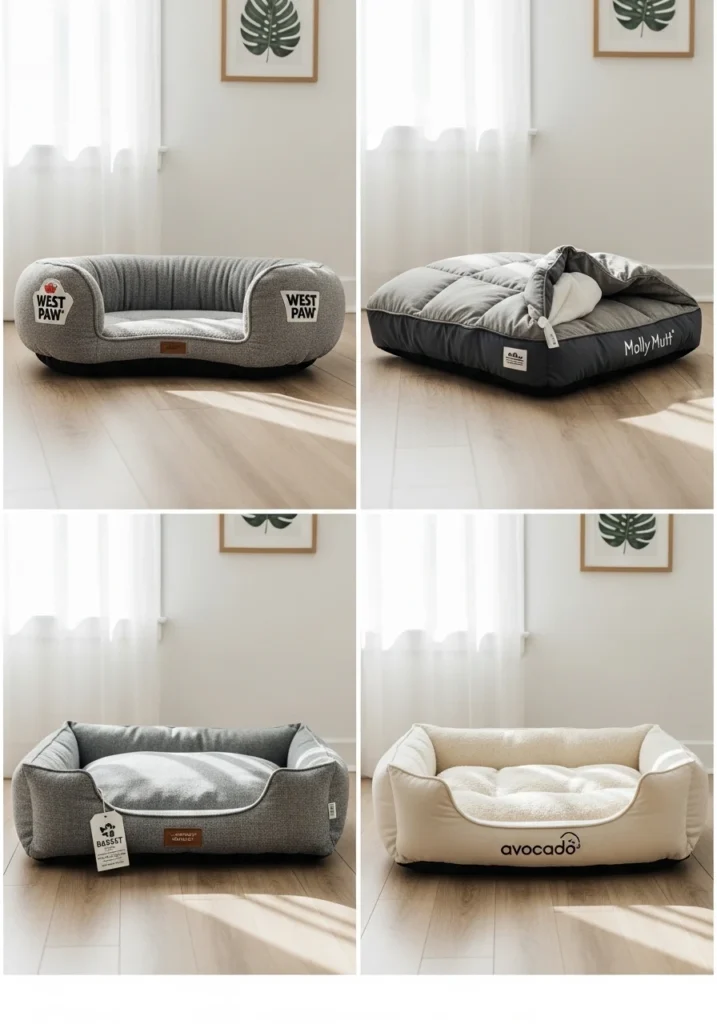
You do not need an exhaustive brand guide here, but a few names consistently come up when pet owners research sustainable options seriously:
- West Paw uses rPET fill and maintains strong recycling commitments with US-based manufacturing
- Molly Mutt makes duvet-style covers from recycled and natural materials that you stuff yourself, reducing shipping weight
- Harry Barker uses recycled fabrics and partners with non-profit organizations
- Avocado (yes, the mattress company) makes a certified organic and natural dog bed that skips synthetic materials entirely
None of these are perfect, and none are the only good options. But they represent brands that have made verifiable commitments rather than just printing the word “eco” on their packaging.
Search Sustainable Pet Bed Brands On Amazon
Making the Right Choice for Your Dog
Match the Bed to Your Dog’s Actual Needs
Sustainability matters, but so does whether your dog actually uses the bed you buy.
An anxious dog who needs bolster support will not benefit from a flat mat, no matter how many recycled bottles went into it. A chewer needs durable construction above all else.
Ask yourself:
- How does my dog actually sleep? (Curled up, stretched out, on their side?)
- Does my dog have any joint or health issues that require orthopedic support?
- How rough is my dog on their belongings?
- How often am I realistically going to wash this bed?
Match the form factor and material to those honest answers, and then filter for sustainability certifications within that category.
That order of operations gets you a bed your dog loves and that you feel good about buying.
The Bottom Line
Choosing a sustainable dog bed made from recycled materials is one of those genuinely low-effort, high-impact decisions that most dog owners can make without dramatically changing their lives or emptying their wallets.
You get a product that performs well, lasts longer, and does not add another chunk of petroleum-based foam to a landfill when it is done.
Your dog is going to sleep on whatever you put on the floor and love you just the same regardless. But you get to know you made a thoughtful choice, and that is worth something.
Start with the certifications, match the bed type to your dog’s needs, and think long-term on cost. Do that, and you will land on something both of you can feel good about.
After all, if your dog is going to spend half their life sleeping, they might as well do it on something that does not cost the planet more than it should.
What Are Sustainable Dog Beds Made From Recycled Materials?
Sustainable dog beds use recycled materials like plastic bottles (rPET), reclaimed denim, reclaimed wool, or recycled foam for filling and fabric. These beds avoid virgin synthetic materials.
They help reduce waste by repurposing it instead of sending it to landfills. Many certified beds also avoid harmful chemicals, making them safer for your dog and better for the environment.
Are Eco-Friendly Dog Beds as Comfortable as Regular Dog Beds?
Yes, many eco-friendly dog beds are more comfortable. High-quality options use rPET fiber fill, which keeps its shape longer than cheap virgin polyester.
Recycled memory foam provides real orthopedic support for older or larger dogs. The key is to buy from brands that support their sustainability claims with certifications like OEKO-TEX or GRS.
These standards ensure material performance and safety testing, not just recycled content percentages.
How Do I Know if a Dog Bed Is Truly Eco-Friendly and Not Just Greenwashed?
Check for third-party certifications instead of relying on label claims.
Look for trusted certifications like OEKO-TEX Standard 100, GOTS (Global Organic Textile Standard), Global Recycled Standard (GRS), and Bluesign.
A brand with B Corp certification shows added accountability. If you see terms like “natural,” “green,” or “eco” without a clear standard, treat that as a red flag. Investigate further before making a purchase.
What Is the Best Recycled Material for a Dog Bed?
The best recycled material depends on your dog’s needs. rPET fiber, made from recycled plastic bottles, is great for bolster and flat beds. It’s resilient, washable, and easy to find.
For older dogs or large breeds needing orthopedic support, recycled memory foam or plant-based foam is ideal.
Reclaimed denim and cotton are excellent for durable, washable flat mats, especially for dogs that are tough on their bedding.
Matching the material to your dog’s sleep style and health needs is more important than choosing one material over another.
Are Sustainable Dog Beds Worth the Higher Price?
A sustainable dog bed usually offers better value over its lifespan than a cheaper one. A good recycled fill bed from a certified brand can last two to three years with proper care.
In contrast, a budget polyester bed often flattens or breaks down within a year. Machine-washable covers can extend that lifespan even more.
Some brands also provide repair programs or take-back schemes. When you calculate the cost per year, the higher upfront price seems much more reasonable.