Best Sprays to Kill Bird Mites and Lice Fast
Have you ever woken up with itchy bites, only to find your backyard birds infested with parasites? If so, you know how frustrating bird mites and lice can be.
These tiny pests not only annoy your birds; they can invade your home and bite you, making life uncomfortable.
The good news is that the right spray can eliminate them quickly. That’s what we’ll discuss today.
This guide covers the best sprays to kill bird mites and lice fast. You’ll learn what to look for when choosing a product, how to use them correctly, and some tips often overlooked.
Whether you keep backyard chickens, breed birds, or face an unexpected infestation, this article has the information you need.
Understanding What You Are Actually Fighting
Before you grab the nearest spray bottle, it helps to know your enemy. Bird mites and lice are not the same thing, even though people often lump them together.
Bird mites (like Dermanyssus gallinae, the red poultry mite) are arachnids, which puts them in the same family as spiders and ticks.
They feed on blood, hide in cracks and crevices during the day, and come out at night to feed on birds. They can also bite humans, which is how many people first realize they have a problem.
Bird lice, on the other hand, are insects that live directly on the bird. They feed on feathers, skin debris, and sometimes blood.
They do not typically bite humans, but they can seriously stress and weaken your birds if left untreated.
You can usually spot them by parting your bird’s feathers and watching for tiny, fast-moving specks near the skin.
The reason this distinction matters is that some sprays work better on mites, while others target lice more effectively.
Knowing which pest you are dealing with helps you choose the right weapon.
What to Look For in a Bird Mite and Lice Spray
Not all sprays are created equal. Walk into any farm supply store and you will find a dizzying shelf of options. So what actually separates a great spray from a glorified bottle of false hope?
Active Ingredients That Actually Work
The active ingredient is everything. Here are the ones worth your attention:
- Permethrin — A synthetic pyrethroid that kills mites and lice on contact. It is highly effective and widely used in poultry. Just note that it is toxic to cats, so keep your feline friends away during treatment.
- Pyrethrin — The natural version derived from chrysanthemum flowers. It breaks down faster in the environment, making it a popular choice for those who prefer a more natural approach.
- Spinosad — A biological insecticide that works well against lice. It is derived from soil bacteria and considered less harsh than synthetic options.
- Carbaryl (Sevin) — An older but still effective active ingredient found in some dusts and sprays. It kills both mites and lice but requires more careful handling due to its toxicity profile.
- Neem oil — A natural option that disrupts the life cycle of mites and lice. It works more slowly but is a solid choice for routine prevention or mild infestations.
Browse Poultry Mite and Lice Sprays on Amazon
Always read the label before you buy. If a product does not clearly list its active ingredient, that is a red flag worth paying attention to.
Ready-to-Use vs. Concentrate
Ready-to-use sprays are convenient and great for spot treatments. You shake, spray, and you are done.
Concentrates require mixing with water, but they give you more bang for your buck over larger areas like coops, aviaries, or stables.
If you are treating a serious infestation across a big space, a concentrate often makes more financial sense.
Find Ready-to-Use and Concentrate Bird Mite Sprays on Amazon
The Best Sprays to Kill Bird Mites and Lice Fast
Let’s get into the actual products. These are the ones that consistently get results and are trusted by poultry keepers and bird owners alike.
1. Elector PSP (Spinosad)
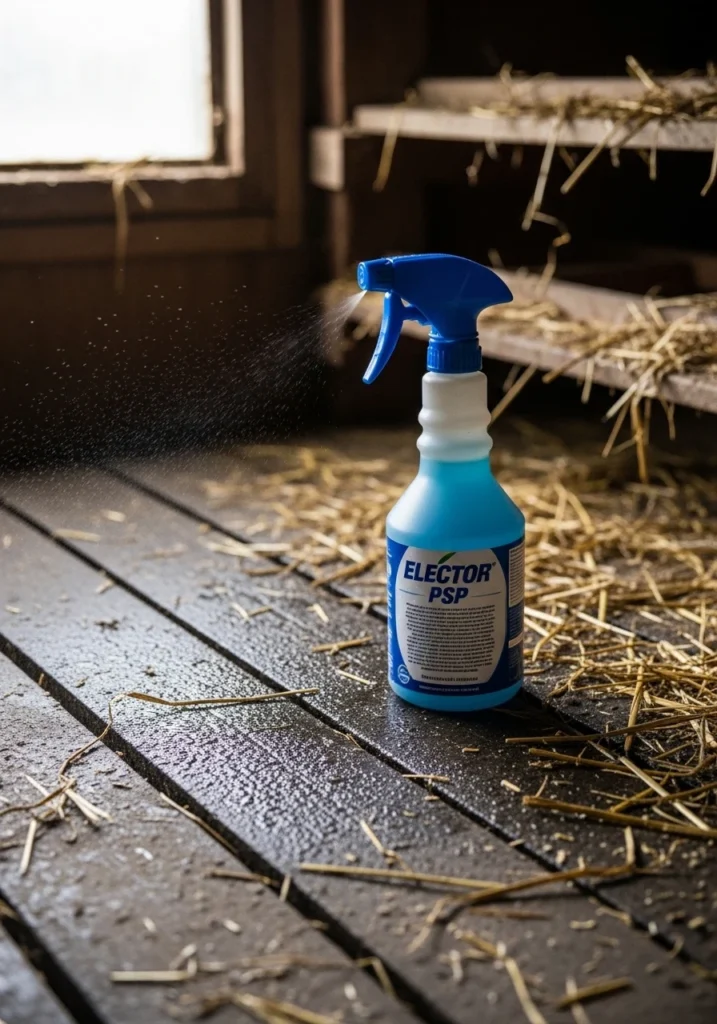
Elector PSP is arguably one of the most respected sprays in the poultry world. It contains spinosad, which kills lice and mites through contact and ingestion.
What makes this product stand out is that it has no known resistance issues, which is a big deal since many mite populations have developed resistance to permethrin-based products over the years.
- Works against northern fowl mites, chicken lice, and other ectoparasites
- Can be applied directly to birds and to coop surfaces
- Breaks down naturally in the environment
- Safe for use around food-producing animals
The only downside? It costs more than most alternatives. But if you are dealing with a stubborn infestation that has not responded to other treatments, Elector PSP is worth every penny.
2. Permethrin SFR 36.8%
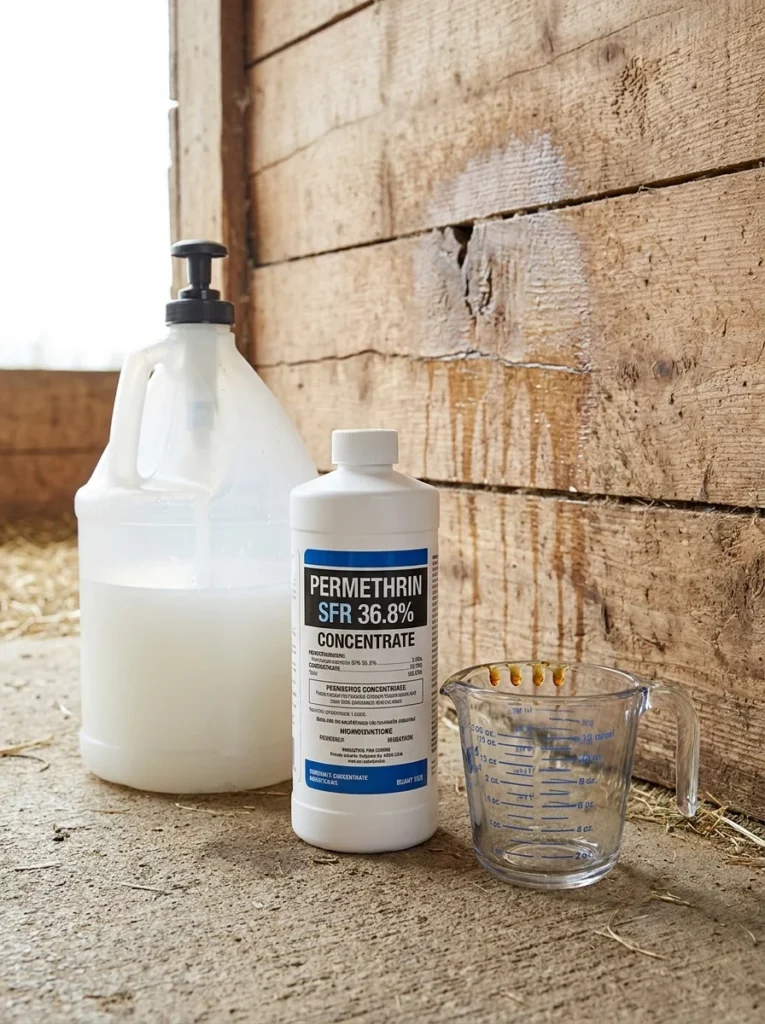
This is a heavy-hitter concentrate used by professionals and serious poultry keepers.
Permethrin SFR at 36.8% concentration gives you the flexibility to dilute it for direct bird application or use a stronger mix for treating the coop.
- Kills mites and lice on contact
- Long residual effect when applied to surfaces
- Cost-effective for large-scale treatment
- Works fast, often within hours of application
Remember the cat warning here. Keep cats away from treated areas until the spray has fully dried. Permethrin is highly toxic to cats and this is not something to take lightly.
3. Prozap Garden and Poultry Dust (also available as spray)
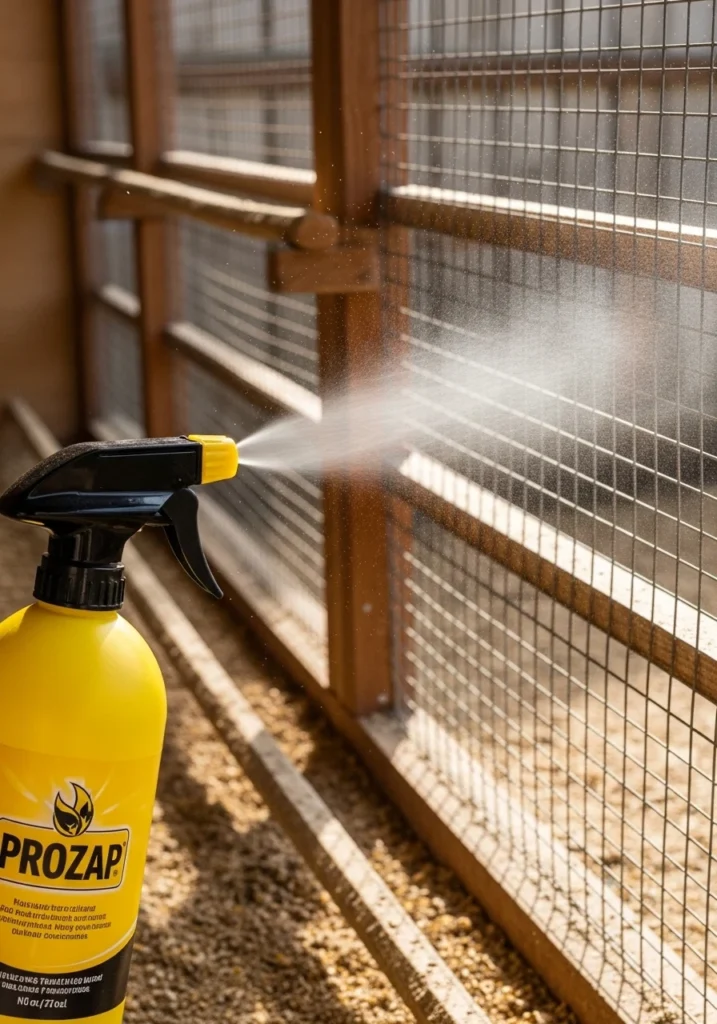
Prozap is a trusted name in the poultry community. Their permethrin-based products come in both dust and spray forms.
The spray version works well for direct application to birds and coop walls, and it dries quickly without leaving a greasy residue.
- Effective against a wide range of poultry parasites
- Easy to apply with a standard garden sprayer
- Affordable and widely available at farm supply stores
If you want a budget-friendly option that still gets the job done, Prozap is a solid pick.
4. Adams Flea and Tick Mist with IGR
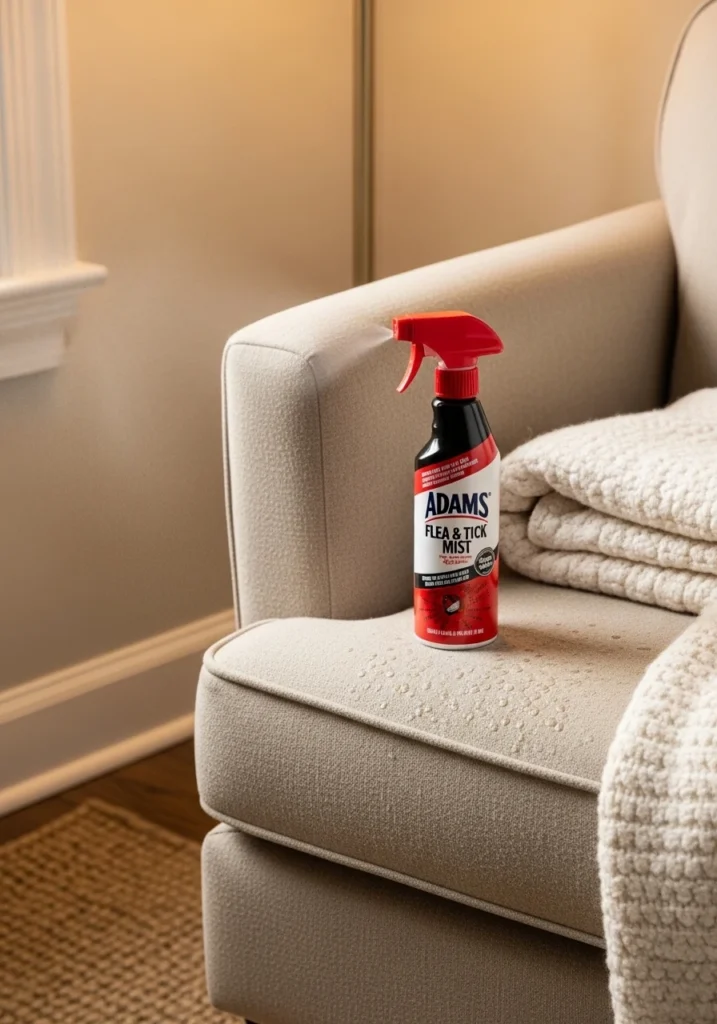
Now, you might raise an eyebrow at a flea product showing up on this list.
But Adams Flea and Tick Mist with IGR (Insect Growth Regulator) actually works well against bird mites, particularly in indoor environments where mites have migrated from birds into your living space.
The IGR component disrupts the reproductive cycle, meaning even the eggs and larvae get targeted.
- Good for treating indoor spaces, furniture, and bedding
- The IGR prevents re-infestation by stopping eggs from hatching
- Not for direct bird use, but excellent for home environments
This one belongs in your toolkit specifically if mites have moved from your birds into your house. And yes, that absolutely happens. Welcome to the fun part of bird keeping.
5. Neem Oil Spray (Mixed Solution)
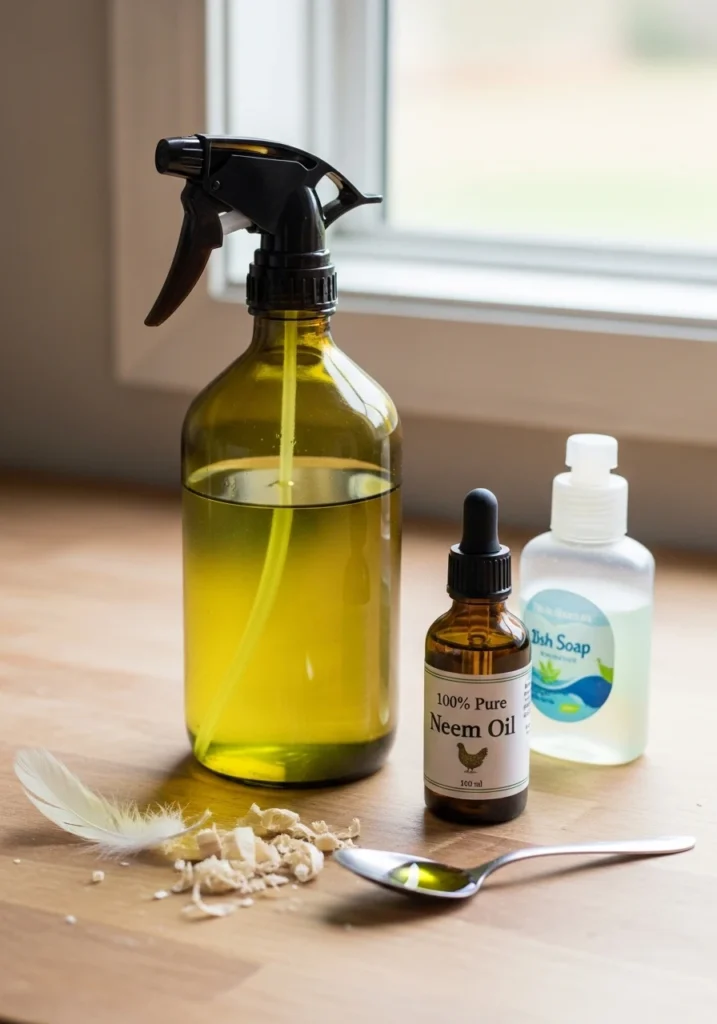
For those who prefer a natural route, a properly mixed neem oil spray can be genuinely effective, especially for prevention and mild infestations.
You can buy pre-mixed neem sprays or mix your own using pure neem oil, a few drops of dish soap as an emulsifier, and water.
- Non-toxic to birds, humans, and most beneficial insects when used correctly
- Disrupts the molting cycle of mites and lice
- Works best as a preventive treatment or in combination with stronger products
- Degrades quickly, so you need to reapply more frequently
Neem is not your go-to spray if you are in the middle of a full-blown infestation and need results today. But for ongoing maintenance? It earns its spot on the shelf.
Shop Bird Mite and Lice Sprays on Amazon
How to Apply These Sprays for Maximum Effectiveness
Choosing the right spray is only half the battle. How you apply it determines whether you actually solve the problem or just annoy the mites for a few days.
Treat the Birds and the Environment Together
This is the mistake most people make: they treat the birds but leave the coop untouched, or vice versa.
Mites and lice can survive off the host for days, hiding in cracks, bedding, nesting boxes, and perches.
If you only treat one side of the equation, the parasites just wait it out and reinfest your birds within days.
Here is the approach that actually works:
- Remove all birds from the coop or treat them separately first.
- Clean out bedding, droppings, and debris from the coop before spraying.
- Spray all surfaces inside the coop, paying special attention to cracks, corners, roosts, and nesting boxes.
- Allow the coop to dry completely before returning birds.
- Apply spray directly to birds, focusing on the vent area, under wings, and around the neck where mites and lice tend to concentrate.
- Repeat the treatment in 7 to 14 days to catch any eggs that hatched after the first treatment.
Timing Matters More Than You Think
Red poultry mites hide during the day and feed at night.
If you spray the coop in the afternoon and your birds are back in by nightfall, you give those mites very little time to contact the treatment before they start feeding again.
Spray in the morning, let the coop dry and ventilate, and let the birds back in the evening. This gives the treatment the best possible contact time with the pest population.
Preventing Bird Mites and Lice From Coming Back
Honestly, dealing with one infestation is enough to make anyone proactive about prevention. Here is how to keep these pests from staging a comeback:
- Quarantine new birds for at least two weeks before introducing them to your flock.
- Inspect your birds regularly, especially around the vent and under the wings.
- Keep the coop clean and dry, since mites thrive in dark, damp, cluttered conditions.
- Do a routine preventive spray every four to six weeks during warmer months when parasite activity peaks.
- Use a food-grade diatomaceous earth in dustbathing areas as a low-level mechanical control between spray treatments.
Get Food-Grade Diatomaceous Earth on Amazon
Wild birds are also a major source of infestation. If wild birds roost near your birds or near your home, that increases your risk significantly.
Discouraging wild birds from nesting in or around your structures goes a long way toward keeping your flock parasite-free.
A Quick Word on Safety
No matter which spray you choose, read the label and follow the instructions.
That advice sounds obvious, but it is surprising how many people skip it and then wonder why their treatment did not work or, worse, caused a problem.
A few general safety points worth keeping in mind:
- Wear gloves and a mask when applying any insecticide, natural or synthetic.
- Keep children and pets away from treated areas until dry.
- Never apply products to sick or very young birds without consulting a vet first.
- Store products in their original containers, away from heat, sunlight, and reach of children.
- For food-producing birds, always check the withdrawal period listed on the label before collecting eggs or processing.
Wrapping It All Up
Bird mites and lice are genuinely awful to deal with, but they are not unbeatable.
With the right spray and a smart treatment plan, you can get your birds comfortable again and your sanity back faster than you might expect.
To recap the key points: match your spray to the pest you are targeting, choose a product with a proven active ingredient like permethrin or spinosad, treat both the birds and their environment at the same time, and always follow up with a second treatment to catch hatching eggs.
If you keep that cycle up and stay consistent with prevention, you will rarely have to deal with a serious infestation twice.
The birds will thank you. Probably not verbally, but that contented scratching around in clean bedding is basically the same thing.
Shop Bird Mite and Lice Treatment Sprays on Amazon
How Long Does It Take for Bird Mite Sprays to Start Working?
Most contact sprays, like permethrin and spinosad, kill bird mites within hours. However, full results depend on how well you treat the birds and their environment.
A single treatment may not affect the eggs. So, a follow-up spray after 7 to 14 days is recommended to break the life cycle.
Can I Use Bird Mite Sprays Directly on My Chickens or Pet Birds?
Yes, but only if the product label says it’s safe for animals. Products like Elector PSP and diluted permethrin sprays can be used directly on birds.
Never spray your birds unless the label confirms it. Also, avoid spraying near their eyes, nostrils, and mouth.
Are Bird Mite Sprays Safe to Use Around Humans and Other Pets?
Most poultry-approved sprays are safe after they dry, but precautions are still needed during use. For example, permethrin is very toxic to cats, even when dry.
Cat owners must take this seriously. Always wear gloves and a mask when spraying. Keep children and other pets away from treated areas until everything is dry.
Also, ventilate closed spaces well.
How Often Should I Spray to Keep Bird Mites and Lice From Returning?
In warmer months, when parasites are most active, use a preventive spray every four to six weeks. If you’re dealing with an active infestation, space your first two treatments 7 to 14 days apart.
This helps catch hatching eggs. After that, switch to a monthly maintenance schedule to prevent populations from rebuilding.
Why Do Bird Mites Keep Coming Back Even After I Spray?
The main reason bird mites come back is incomplete treatment. If you spray the birds but skip the coop, or treat the coop but miss the cracks, roosts, and nesting boxes, the surviving mites will reinfest.
Nearby wild birds also contribute to the problem. A complete treatment should cover both the birds and all surfaces around them.
Then, a second application is needed to catch any eggs that hatch after the first round.