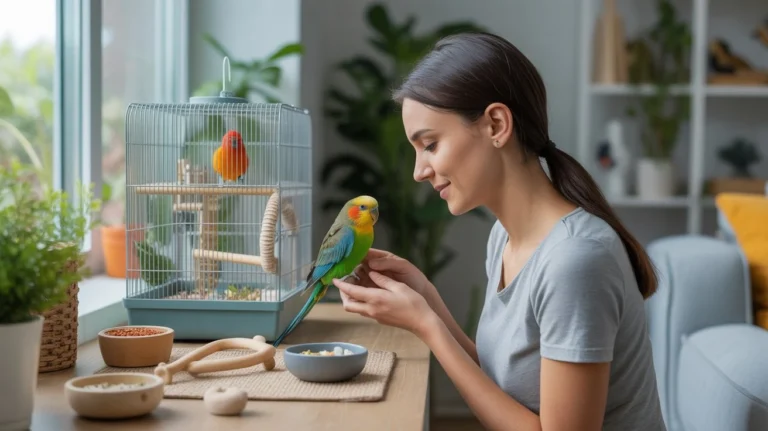
Safe Fruits and Vegetables to Feed Your Pet Bird
Your bird just gave your lunch that side-eye again. You know the look: the head tilt, the little hop closer, and the shameless staring.
You want to share something healthy with your feathered friend, but you’re unsure what’s safe for that tiny beak. You’re in the right place.
Feeding your pet bird fresh produce is one of the best ways to boost their health, feathers, and mood. But not everything from your fruit bowl is safe for their cage.
This guide shows you what is safe, what to be cautious about, and how to make fresh food a regular part of your bird’s diet.
Why Fresh Produce Matters for Your Pet Bird
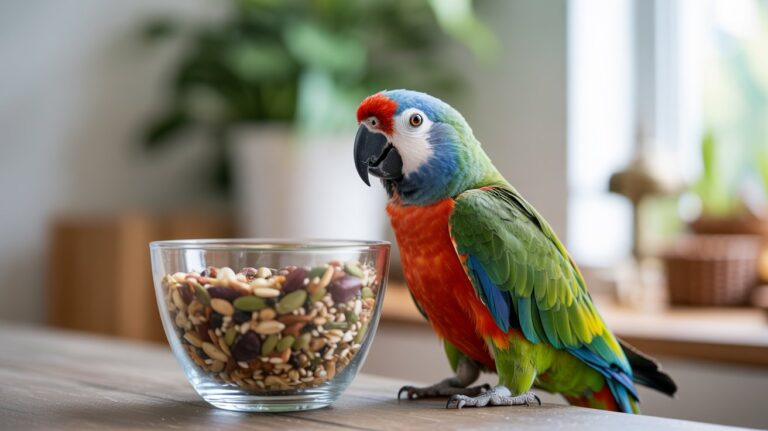
Here is something a lot of new bird owners do not realize: seeds alone are not a complete diet. Yes, seeds taste great to your bird.
Yes, your bird will happily eat seeds for every meal if you let them. But a seed-only diet is the nutritional equivalent of eating fast food three times a day.
Fresh fruits and vegetables provide vitamins, minerals, antioxidants, and hydration that seeds simply cannot offer.
Vitamin A deficiency alone is one of the most common health problems in pet birds, and it leads to a host of issues including respiratory problems and poor feather quality.
Dark leafy greens and orange-colored vegetables solve that problem directly.
Birds in the wild forage constantly. They eat a rotating mix of fruits, seeds, plant matter, and insects depending on the season.
Bringing that variety into your home bird’s diet keeps them mentally stimulated and physically healthier.
Shop High-Quality Pellet and Seed Mixes for Pet Birds on Amazon
Safe Vegetables to Feed Your Pet Bird
Leafy Greens: The Daily Powerhouses
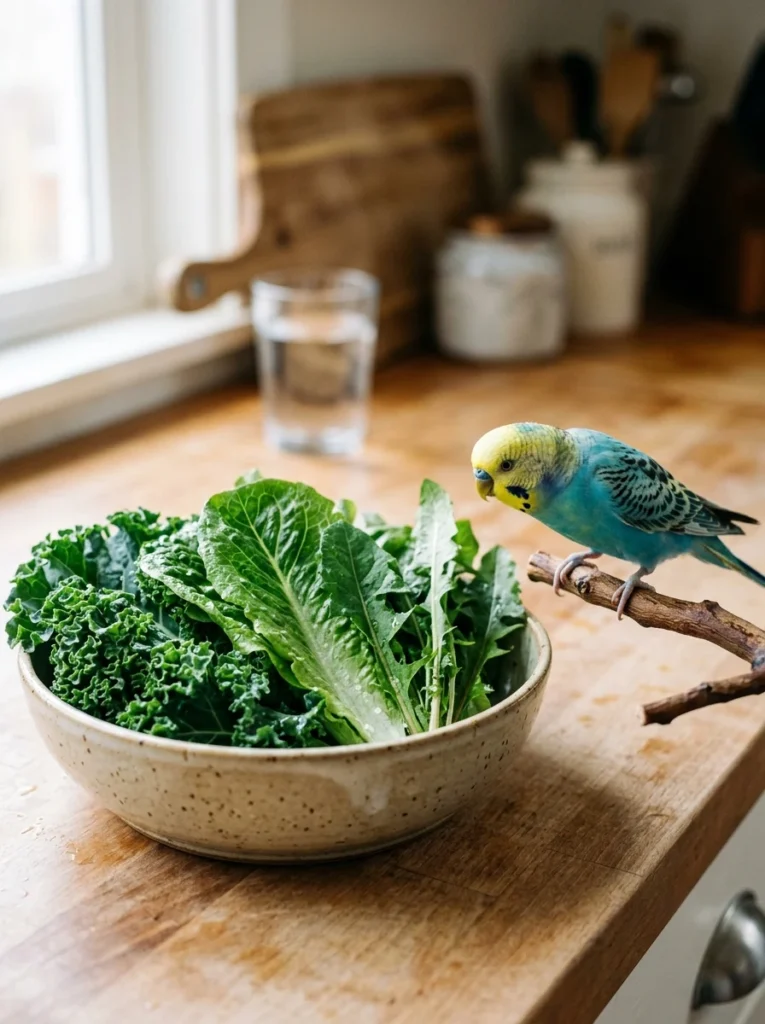
Leafy greens should form the backbone of your bird’s fresh food offerings. Think of them as the everyday staple, not the occasional treat.
- Kale: Loaded with Vitamin A, Vitamin C, and calcium. Most birds take to it quickly. Offer it raw and washed.
- Spinach: Nutritious but feed it in moderation. It contains oxalic acid, which in large quantities can interfere with calcium absorption.
- Swiss chard: A great source of vitamins and minerals. Rotate it in alongside kale.
- Romaine lettuce: Hydrating and easy to eat. Skip iceberg lettuce entirely since it offers basically zero nutrition and is mostly water.
- Dandelion greens: Underrated and often overlooked. Birds love them, and they pack a solid nutritional punch.
Browse Bird Feeding Bowls and Fresh Food Dispensers on Amazon
The golden rule with leafy greens is simple: the darker the green, the better the nutrition. That pale, watery iceberg sitting in your fridge is not doing your bird any favors.
Vegetables Your Bird Will Actually Enjoy
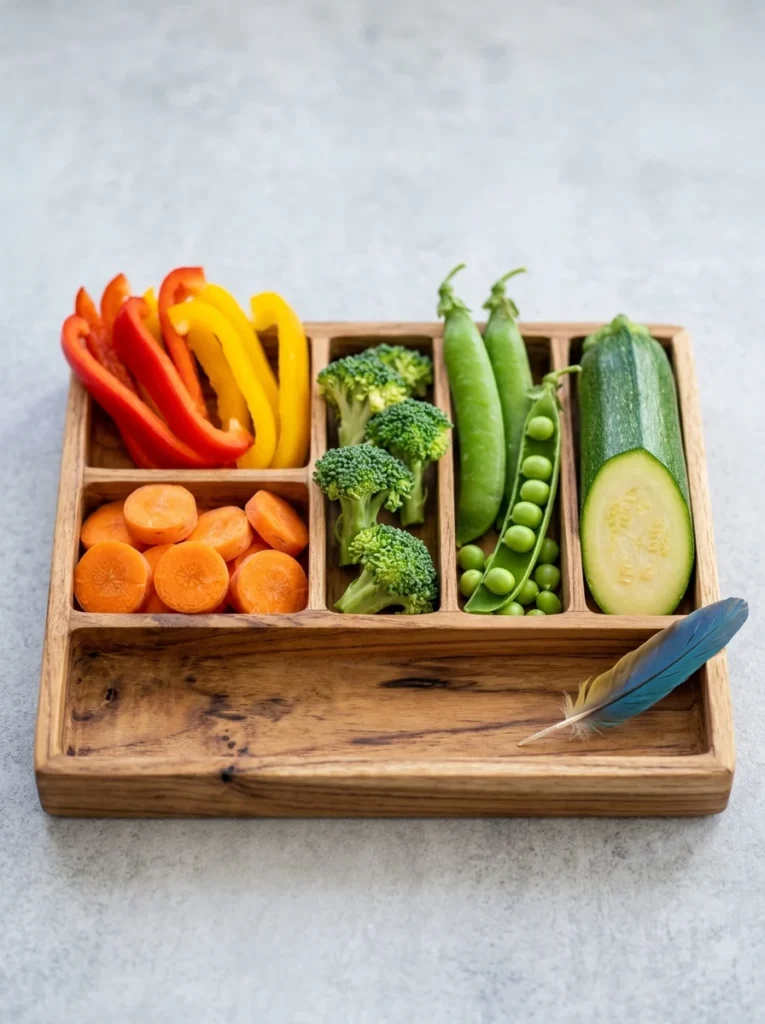
Here are some tried-and-tested favorites that birds across most species tend to love.
- Carrots: Rich in beta-carotene, which converts to Vitamin A. Offer them raw or lightly steamed. Many birds enjoy gnawing on a raw carrot chunk because it doubles as enrichment.
- Bell peppers: Yes, birds can eat peppers, and many of them go absolutely wild for them. Red, yellow, and orange bell peppers are especially rich in Vitamin C and beta-carotene. No, capsaicin does not affect birds the way it affects mammals, so spicy peppers are fine too.
- Broccoli: A solid source of calcium and Vitamin C. Offer the florets and the stalks. Some birds prefer it slightly steamed; others will tear into raw florets without hesitation.
- Zucchini: Mild, easy to eat, and well-tolerated by most birds. A good option if your bird is still warming up to vegetables.
- Sweet potato: Rich in Vitamin A and a fantastic option served lightly cooked. Raw sweet potato is harder to digest, so a quick steam makes it more bird-friendly.
- Peas: Fresh or frozen (and thawed) peas are a popular choice. Many birds love to pop them open. They offer good protein, fiber, and vitamins.
- Corn: Fresh corn cut from the cob is fine as an occasional treat. It is higher in sugar than most vegetables, so keep the portions reasonable.
- Cucumber: Hydrating and gentle on the digestive system. Not the most nutrient-dense option, but a nice addition to the rotation.
Vegetables to Use With Caution
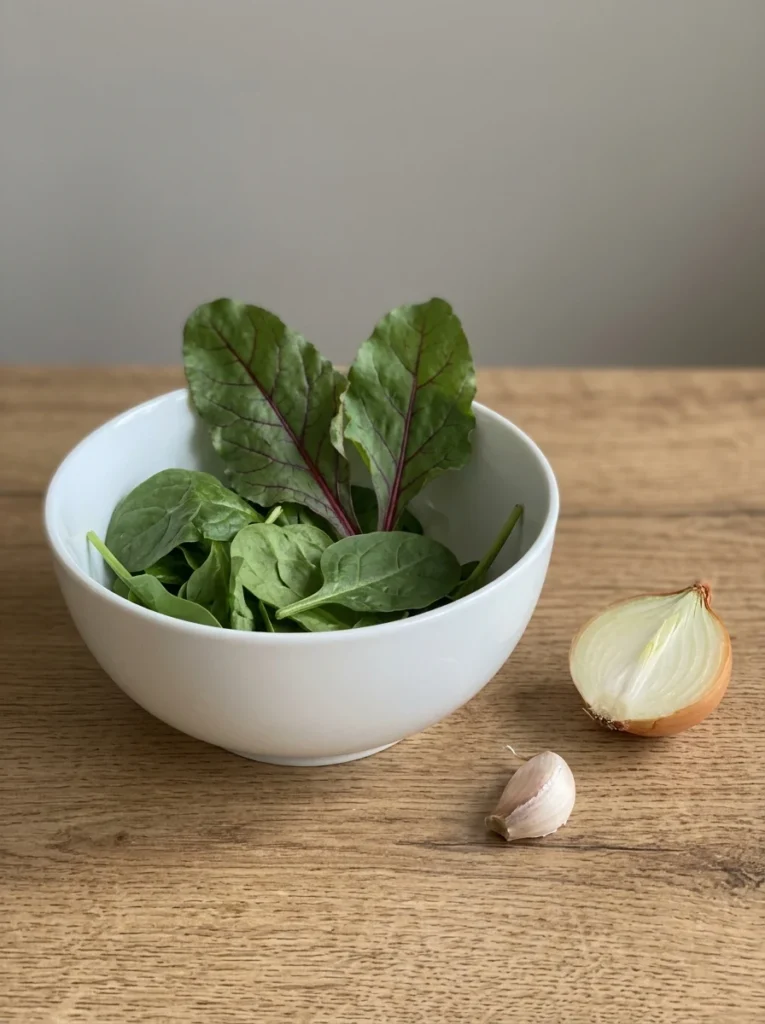
Not every vegetable is off-limits, but some deserve a note of caution.
- Spinach and beet greens: Safe in small amounts, but their oxalic acid content makes them a “sometimes” food rather than a daily staple.
- Mushrooms: Some bird owners offer cooked mushrooms occasionally without issue. However, the research on mushrooms for birds is limited enough that many avian vets recommend skipping them altogether to be safe.
- Garlic and onions: These are best avoided entirely. Both belong to the allium family, and they can cause digestive distress and even hemolytic anemia in birds. Your bird does not need garlic flavor in their life.
Safe Fruits to Feed Your Pet Bird
Fruits Most Birds Love
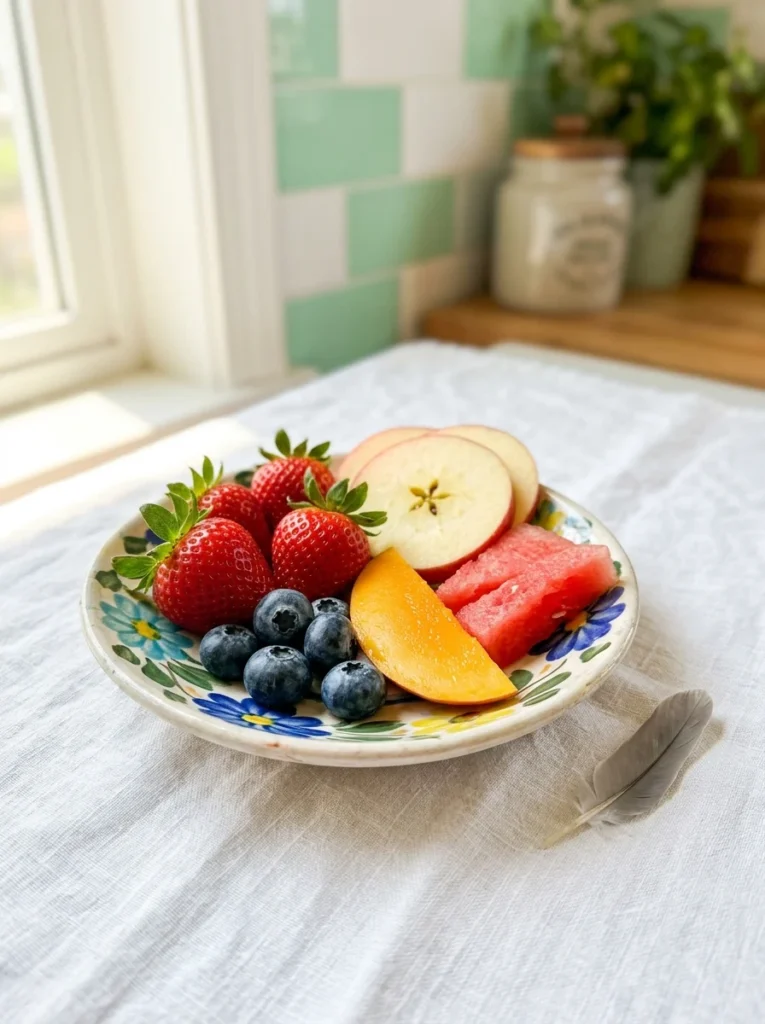
Fruit tends to be the gateway food for birds who are new to fresh produce. The natural sweetness makes it an easy sell.
- Apples: A fantastic option. Always remove the seeds and core before offering apple to your bird. Apple seeds contain cyanogenic compounds that are toxic to birds. The flesh itself is perfectly safe and well-loved.
- Berries: Blueberries, strawberries, raspberries, and blackberries are all excellent choices. They are rich in antioxidants and most birds go absolutely crazy for them. Offer them whole for small birds or halved for easier eating.
- Mango: A tropical favorite that many birds adore. Remove the skin and the large pit before serving. The flesh is soft, sweet, and rich in Vitamin A.
- Papaya: Another tropical winner. Rich in digestive enzymes and Vitamin C. Seed removal is technically optional here since papaya seeds are considered non-toxic to birds, but most owners just scoop them out for simplicity.
- Melons: Watermelon, cantaloupe, and honeydew are all safe and hydrating. Remove the rind and seeds. Cantaloupe is particularly good because of its beta-carotene content.
- Grapes: Offer them in moderation. Grapes are safe for birds, unlike the situation with dogs, but their sugar content means a couple at a time is plenty.
- Pomegranate: The arils are a fantastic enrichment food. Many birds spend a satisfying amount of time digging them out and eating them. Rich in antioxidants and Vitamin C.
- Peaches and nectarines: The flesh is safe and enjoyed by many birds. Remove the pit completely before serving since stone fruit pits contain cyanide compounds.
A Word on Citrus
Citrus fruits like oranges, lemons, and grapefruit sit in a somewhat debated category. Many birds eat citrus without any issue, and the Vitamin C content is genuinely beneficial.
However, some birds experience digestive upset from the high acidity, so introduce citrus slowly and watch how your bird responds. A small slice of orange is a reasonable starting point.
Fruits to Avoid Completely
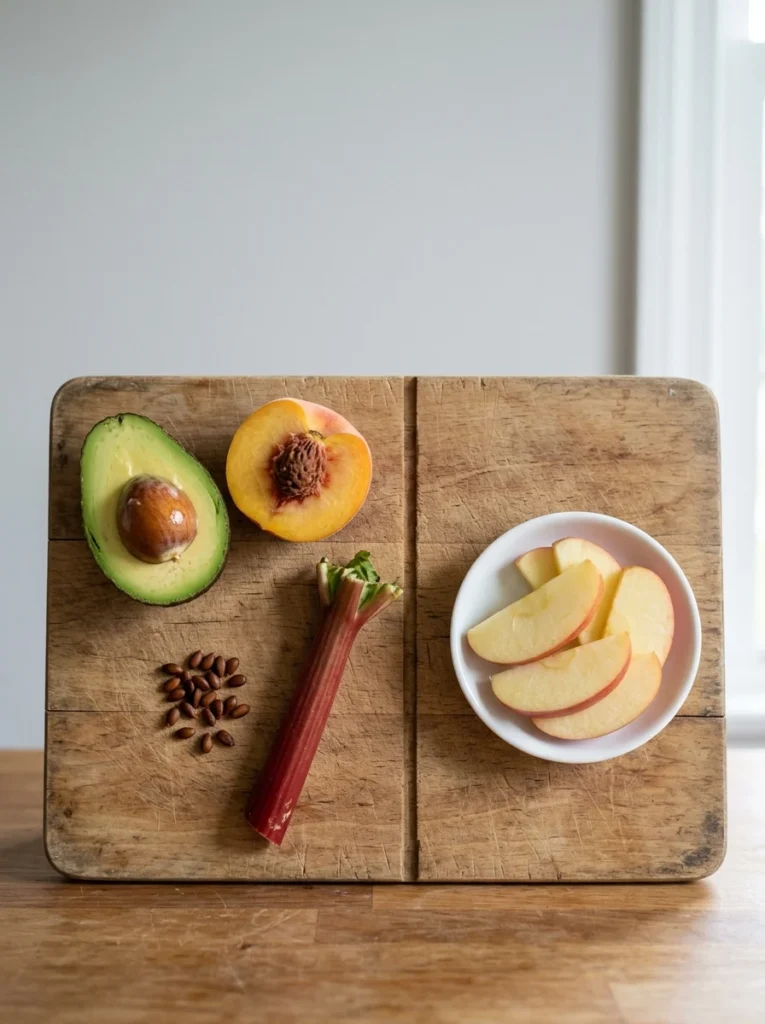
A short list, but an important one.
- Avocado: This one is non-negotiable. Avocado contains a compound called persin, which is toxic to birds and can cause serious cardiac problems. Keep avocado away from your bird entirely, including guacamole, avocado oil, and anything that contains avocado as an ingredient.
- Fruit pits and apple seeds: As mentioned, the pits of cherries, peaches, plums, apricots, and nectarines contain cyanogenic compounds. Always remove them.
- Rhubarb: The leaves are highly toxic, and the stalks are not recommended for birds either.
How to Introduce Fresh Food to a Stubborn Bird
Here is a challenge nobody warns you about: some birds simply refuse new food at first.
You proudly prepare a beautiful bowl of fresh produce, you set it in the cage, and your bird looks at it like you just offered them a plate of rocks. Sound familiar?
Persistence is the key. Birds are naturally cautious about new things, a survival instinct called food neophobia. The trick is to keep offering new foods consistently without forcing anything.
A few strategies that actually work:
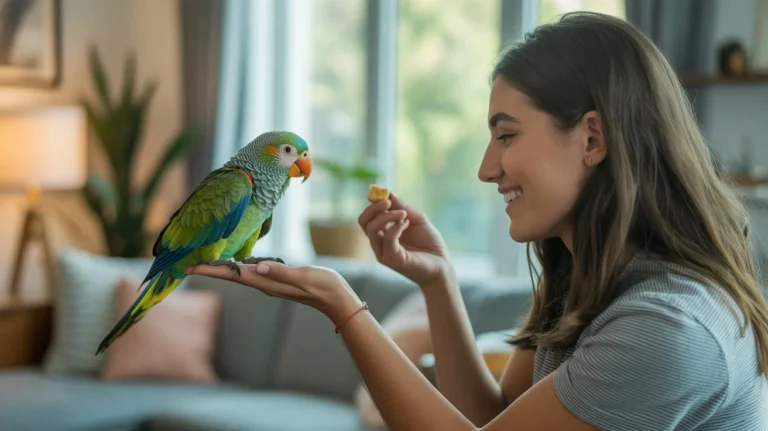
- Eat in front of your bird. Birds are flock animals. If they see you eating something with enthusiasm, curiosity kicks in. Pick up a piece of broccoli and make it look like the best thing you have ever tasted. Your bird will want to investigate.
- Mix new foods with familiar favorites. Tuck a small piece of mango next to a food your bird already loves. The familiar smell lowers their guard.
- Offer food in different forms. Some birds prefer raw; others prefer lightly steamed. Some like their food chopped finely; others prefer larger pieces they can tear apart. Experiment.
- Use foraging opportunities. Hiding small pieces of fruit in a foraging toy turns mealtime into playtime and makes new foods feel less threatening.
Do not give up after three attempts. Some birds take weeks of consistent exposure before they try something new. That is completely normal.
Find Bird Foraging Toys and Enrichment Feeders on Amazon
Practical Tips for Serving Fresh Produce Safely
Getting the food right is only half the battle. Serving it safely matters just as much.
- Wash everything thoroughly. Pesticide residue is a real concern for small birds whose bodies are far more sensitive than ours. Rinse all produce under running water and consider organic options when possible.
- Remove uneaten fresh food within a few hours. Fresh produce spoils quickly, especially in a warm room. Leaving it in the cage too long creates a bacterial breeding ground.
- Serve produce at room temperature. Cold food straight from the fridge can cause digestive upset in some birds. Let it sit out for a bit before offering it.
- Cut food into appropriate sizes. A large parrot can handle a broccoli floret whole. A small finch or budgie needs things chopped small enough to manage comfortably.
- Skip salt, seasonings, and oils. Plain and simple is always the rule. Birds do not need flavor enhancement, and added salt can cause serious health problems.
Shop Bird-Safe Food Prep and Feeding Accessories on Amazon
Building a Balanced Fresh Food Routine
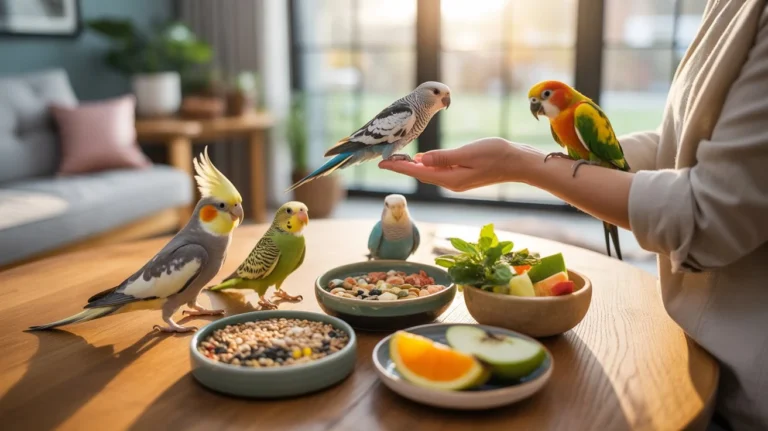
The goal is variety and consistency. You do not need to offer every fruit and vegetable at once, but rotating through a good mix throughout the week ensures your bird gets a broad nutritional spectrum.
A simple weekly rotation might look something like this:
- Monday and Tuesday: Dark leafy greens like kale or Swiss chard, plus a few blueberries
- Wednesday and Thursday: Chopped bell pepper, broccoli florets, and a small piece of mango
- Friday: Carrot sticks, peas, and a slice of apple (seeds removed)
- Weekend: Something new you are testing, mixed with a familiar favorite
There is no perfect formula here. Watch your bird, note what they eat with enthusiasm versus what they toss out of the bowl, and adjust accordingly.
Every bird has preferences, and figuring those out is honestly one of the more enjoyable parts of bird ownership.
Final Thoughts
Feeding your pet bird safe fruits and vegetables does not need to be complicated or stressful.
Start with a handful of reliable options like kale, bell peppers, berries, and apple, build your bird’s comfort with fresh food gradually, and stay consistent.
The biggest mistake most bird owners make is giving up too soon because their bird ignored a new food on the first try.
Your bird’s long-term health is absolutely worth the extra five minutes it takes to chop up some fresh produce.
And honestly, watching a parrot demolish a pomegranate aril by aril is entertainment you cannot put a price on.
Get experimenting, keep it varied, and your bird will thank you with spectacular feathers, great energy, and probably a lot of demanding stares at your next meal.
Explore Bird Nutrition Essentials and Feeding Supplies on Amazon
Can Pet Birds Eat Spinach Every Day?
No, pet birds shouldn’t eat spinach daily. Spinach is nutritious but has oxalic acid. This can block calcium absorption if eaten too much over time.
Instead, rotate it with other greens like kale, Swiss chard, and dandelion greens. This way, your bird gets variety without nutritional risks.
What Fruits Are Completely Off-Limits for Pet Birds?
Avocado is the most important fruit to avoid. It has persin, which can cause serious heart issues in birds.
Remove all pits from stone fruits like peaches, cherries, plums, and apricots. The pits have cyanogenic compounds.
Apple seeds are the same and must always be removed before giving apples to your bird.
Can I Feed My Bird Frozen Vegetables?
Yes, frozen vegetables are a safe and easy option for pet birds. Just thaw them completely and let them reach room temperature before serving. Frozen peas are a favorite among bird owners.
Avoid frozen veggies that are pre-seasoned or in sauces. Always check the ingredient list for salt, garlic, or onion powder.
How Often Should I Offer Fresh Produce to My Pet Bird?
You should give your pet bird fresh fruits and vegetables every day. These should be a big part of their diet, along with quality pellets or seeds.
Change up the options each week. This way, your bird gets a variety of vitamins and minerals instead of just two or three foods.
Why Does My Bird Refuse to Eat Fresh Fruits and Vegetables?
Birds are naturally cautious about unfamiliar foods, a behavior known as food neophobia. If your bird ignores fresh produce, do not give up after one or two attempts.
Try eating the food yourself in front of your bird, mixing new items with familiar favorites, or offering the same food in different forms such as raw versus lightly steamed.
Consistent exposure over several days or even weeks is often all it takes before a hesitant bird finally gives something new a try.