Best Bird Travel Carriers for Stress-Free Vet Visits
Your bird just gave you the look. You know the one. You pulled out the carrier, and now your feathered friend seems ready to escape.
Sound familiar? Taking a bird to the vet shouldn’t feel like a military operation. The right carrier can turn a chaotic trip into a calm one.
Choosing the best bird travel carrier is more important than many owners think. A bad carrier stresses your bird out before you even drive away.
A stressed bird is also harder for the vet to examine. After years of getting parrots, cockatiels, and stubborn conures into carriers, here’s what really works.
Browse Top-Rated Bird Travel Carriers on Amazon
Why the Right Bird Carrier Changes Everything
Most people grab whatever box or bag looks “bird-sized” and call it a day. That approach almost always backfires.
Birds are sensitive creatures with complex emotional responses to their environment, and the carrier you choose directly affects how calm or panicked they feel during travel.
A good carrier keeps your bird secure without feeling like a prison. It allows airflow, reduces visual overstimulation, and stays stable during movement.
The difference between a well-designed bird carrier and a flimsy one shows up the moment you hit a speed bump and your bird goes into a panic spiral.
What Stress Does to Your Bird During Travel
Stress triggers a bird’s fight-or-flight response hard and fast.
Elevated cortisol levels can suppress the immune system, cause feather-destructive behavior, and even lead to dangerous situations like a bird overheating or injuring itself trying to escape.
Reducing travel stress is not just about comfort. It genuinely protects your bird’s health.
How a Good Carrier Supports Calmer Vet Visits
When your bird arrives at the vet already wound up from a terrible transport experience, the examination becomes harder and less accurate.
A calm bird lets the vet do a thorough check without unnecessary restraint or distress. Starting the trip right sets the tone for the whole visit.
Key Features to Look for in a Bird Travel Carrier
Before you start shopping, know what separates a genuinely useful carrier from one that looks pretty on a shelf and performs terribly in real life.
Ventilation is non-negotiable. Your bird breathes rapidly and generates heat. A carrier with poor airflow turns into a stuffy box in minutes, which is both dangerous and distressing.
Stability matters more than you think. A wobbly carrier that tips or swings stresses birds out significantly. Look for carriers with flat, stable bases that sit securely on a car seat or in your lap.
Here are the key features worth prioritizing:
- Adequate ventilation panels on at least two sides
- Secure latching mechanisms that your bird cannot undo (because some of them absolutely will try)
- Appropriate sizing so your bird can stand upright and turn around comfortably
- Easy-clean materials because vet trips often involve nervous bathroom incidents
- A perch or flat floor option depending on your bird’s size and preference
- Visibility control so you can partially cover the carrier to reduce visual stress
Shop Bird Carriers With These Features on Amazon
Sizing Your Carrier Correctly
This is where a lot of owners get it wrong. A carrier that is too large lets your bird get thrown around during movement.
One that is too small forces unnatural posture and increases panic. Your bird should stand upright, turn around, and flap wings slightly without hitting the walls.
For small birds like budgies and cockatiels, a compact carrier works well. For medium birds like conures or Quakers, step up to a mid-sized option.
Large parrots like African Greys or Amazons need carriers built specifically for their size and strength.
Best Bird Travel Carriers Worth Considering
Let’s get into the actual products. These picks cover a range of bird sizes, travel styles, and budgets.
Prevue Pet Products Small Animal Carrier
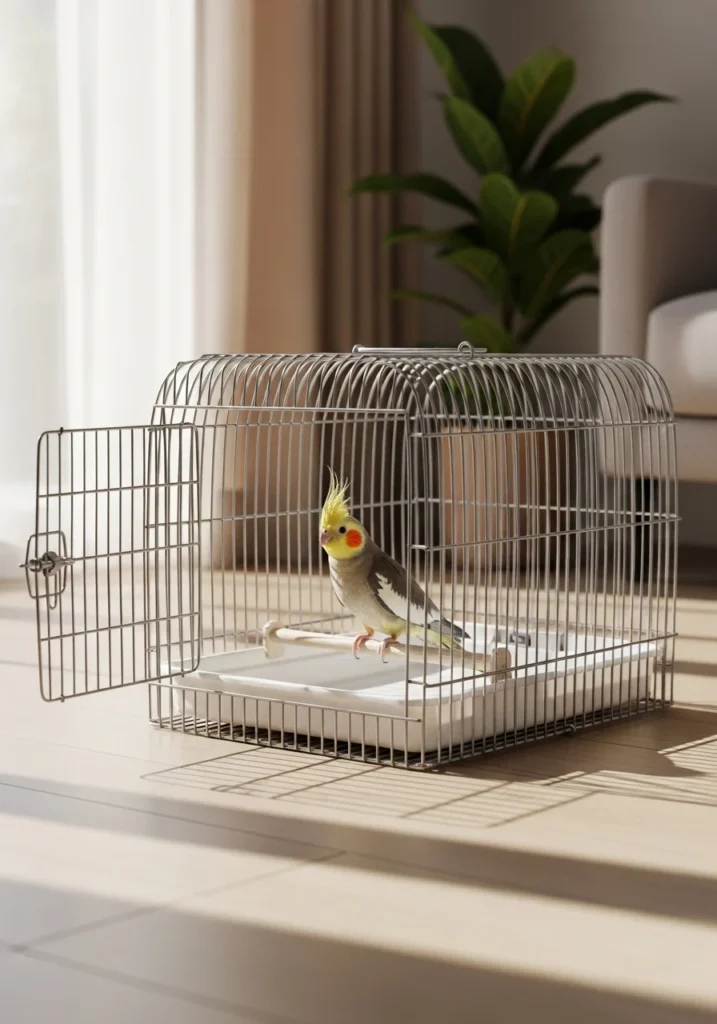
This carrier punches above its weight for small to medium birds.
The wire construction provides excellent ventilation, and the front door opens wide enough to coax even the most reluctant bird inside without a dramatic wrestling match.
What works well:
- Sturdy wire build that holds up to repeated use
- Front and top openings for flexible loading options
- Easy to clean after those inevitable vet-trip accidents
- Affordable price point without sacrificing quality
The one limitation is that it offers no built-in perch for longer trips, so adding a small travel perch separately improves comfort for birds that prefer to grip rather than stand flat.
Sturdy Bird Travel Backpack Carriers
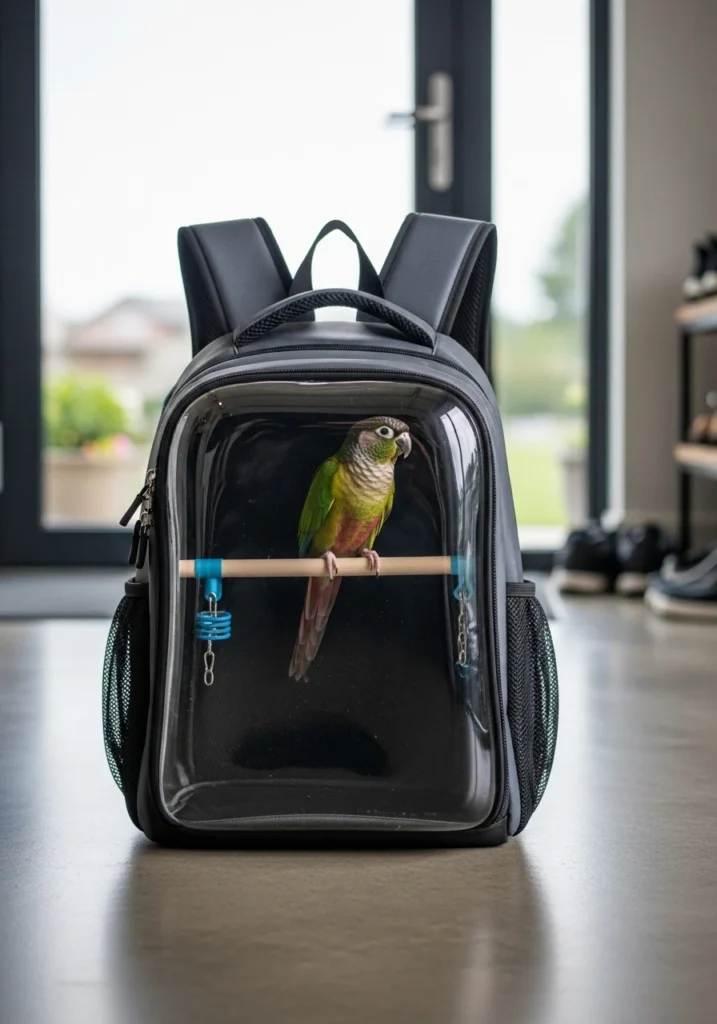
Backpack-style carriers have gained serious popularity among bird owners who travel frequently or use public transport.
The best ones feature transparent panels that let your bird see out while staying contained, along with padded shoulder straps that distribute weight evenly.
Standout features to look for in backpack carriers:
- Mesh ventilation panels on multiple sides
- Interior perch with adjustable height
- Removable, washable liner tray
- Lockable zipper pulls (critical for escape artists)
- Side pockets for carrying food, treats, and paperwork
The main trade-off with backpack carriers is visibility. Your bird can often see too much, which either delights them or sends them into sensory overload depending on personality.
Covering the mesh panels partially with a light cloth solves this quickly.
Rigid Plastic Airline-Style Carriers
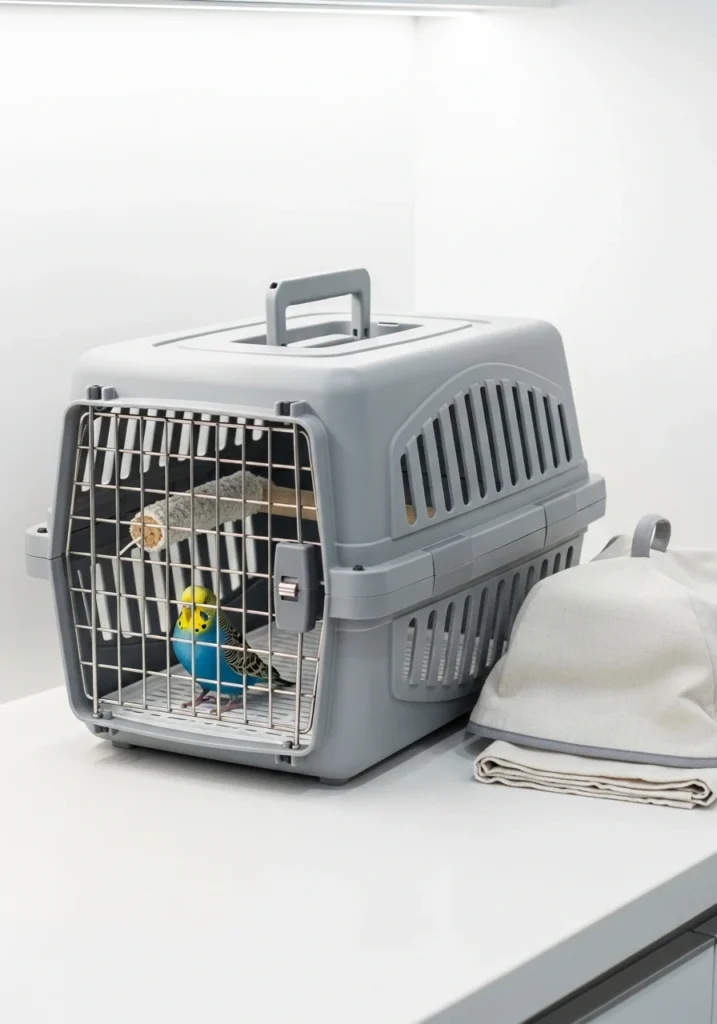
These are the workhorses of bird transport. Rigid plastic carriers designed for small animals adapt extremely well for birds, especially when you add a proper perch inside.
They offer excellent protection in a vehicle, stack securely, and withstand rough handling far better than soft-sided options.
Why these carriers earn their place:
- Hard shell protects against accidental drops or bumps
- Ventilation slots on multiple sides allow good airflow
- Most have secure top-loading and front-loading options
- Easy to sanitize completely between uses
One honest note here: rigid plastic carriers look clinical and impersonal, which can initially unsettle a bird that has never used one.
Introduce it at home weeks before the vet visit to help your bird treat it as a familiar object rather than a terrifying new development.
Find Rigid Bird Travel Carriers on Amazon
Soft-Sided Fabric Carriers
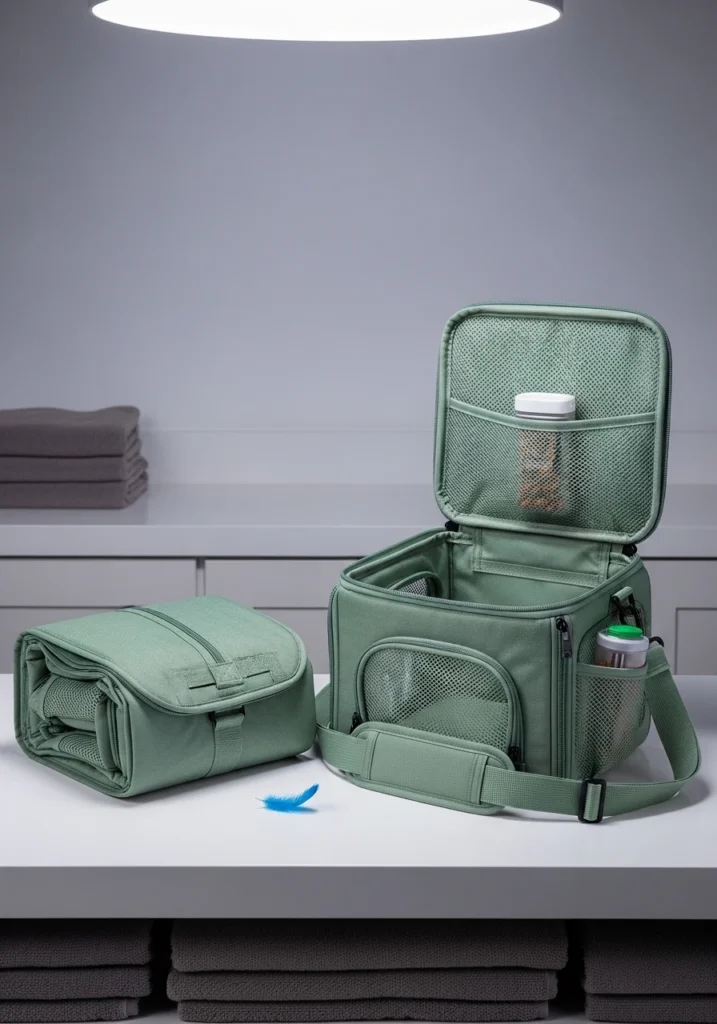
Soft carriers work beautifully for calm, well-socialized birds that do not tend to chew aggressively.
They offer a lighter carry, fold flat for storage, and often come with shoulder straps and carrying handles for flexibility.
Where soft carriers shine:
- Lightweight and easy to carry for longer distances
- Multiple access points for loading and checking on your bird
- Fabric sides muffle external sounds better than hard plastic
- Often include exterior pockets for supplies
However, if your bird has even a mild chewing habit, a soft carrier becomes a liability fast. One determined beak through a mesh panel is all it takes for a very inconvenient situation.
Know your bird before committing to fabric.
How to Make Carrier Training a Normal Part of Life
Here is something most articles skip over entirely. The carrier itself matters less than whether your bird actually tolerates being in it.
Carrier training is one of the most practical things you can do for your bird’s long-term wellbeing, and it costs nothing but a little time.
Start early and keep it casual. Leave the carrier out in your bird’s regular space with the door open. Put familiar toys or foraging treats inside.
Let your bird explore it voluntarily. This reframes the carrier as a curiosity rather than a threat.
Build positive associations gradually. Once your bird enters willingly, begin closing the door briefly while staying nearby and speaking calmly.
Extend the duration slowly over days or weeks. Reward calm behavior with preferred treats immediately after opening the door.
Practice short mock trips. Carry the bird around the house, then outside briefly, then on a short car ride before the actual vet appointment.
Each successful low-stakes trip builds your bird’s confidence for the real thing.
Stock Up on Bird Training Treats and Carrier Accessories on Amazon
Travel Tips That Make the Vet Visit Smoother
Getting the right carrier is step one. How you use it matters just as much.
Cover part of the carrier during travel. A light cloth draped over the sides reduces visual stimulation significantly.
Birds often calm down within minutes once their view narrows. Keep one ventilation area fully uncovered at all times for airflow.
Bring familiar smells. Tuck a small piece of familiar bedding or a toy with your bird’s scent inside the carrier. Familiar smells reduce anxiety in birds the same way they do in other animals.
Keep the car quiet. Turn off loud music, avoid sudden acceleration or braking, and maintain a comfortable temperature.
Your bird registers everything happening around it, and a calm driving experience directly translates into a calmer bird.
Talk to your bird during the trip. Your voice is one of the most reassuring things your bird knows. Narrate the drive, sing a familiar phrase, or simply say your bird’s name periodically.
It signals that you are present and that everything is fine.
Matching the Carrier to Your Bird’s Personality
Not every carrier works equally well for every bird. Personality plays a big role in what your bird will tolerate and what sends them spiraling.
Bold, curious birds often do well with carriers that offer views of the outside world. They engage with their surroundings rather than fearing them, so partial visibility backpack carriers suit them nicely.
Anxious or shy birds benefit from more enclosed, covered carriers that limit sensory input. Rigid plastic carriers with covers work well here because you control exactly how much your bird sees.
Destructive chewers need rigid construction, full stop. Fabric and mesh are not reasonable options for birds that treat everything as a chewing opportunity.
Bonded birds that tolerate handling well adapt to most carrier types quickly, especially when carrier training starts early in their lives.
Final Thoughts
Finding the best bird travel carrier for vet visits is genuinely one of the most practical investments you make as a bird owner.
It reduces your stress, protects your bird’s health, and makes the vet’s job considerably easier.
The perfect carrier combines solid ventilation, appropriate sizing, secure closures, and easy cleaning into one practical package.
Start with your bird’s size and personality, add in honest self-assessment about how often you travel and by what method, and then pick a carrier that fits both.
Then do the carrier training. Seriously. That last part is what separates the bird owners who dread vet visits from the ones who handle them smoothly.
Your bird deserves a travel experience that does not feel like a catastrophe, and with the right carrier and a bit of preparation, that is entirely within reach.
Shop Bird Travel Carriers and Accessories on Amazon
What Is the Best Type of Bird Travel Carrier for Vet Visits?
The best carrier type depends on your bird’s size and temperament. Rigid plastic carriers suit most birds.
They are sturdy, easy to clean, and provide good ventilation. For calm, well-socialized birds, backpack-style carriers with mesh panels are a popular choice.
The key is to choose a carrier that feels secure but not suffocating.
How Do I Get My Bird Comfortable With Its Travel Carrier?
Leave the carrier out in your bird’s space with the door open. This helps it become familiar, not a threat. Put treats or favorite toys inside to create positive connections.
Take short, low-stakes trips around the house or yard before the vet visit. Gradual carrier training makes a big difference in how calm your bird stays during travel.
What Size Bird Carrier Do I Need for My Parrot?
Your bird should stand upright, turn around fully, and move its wings without hitting the carrier walls. Small birds like budgies and cockatiels fit well in compact carriers.
Medium birds, such as conures, need a mid-sized option. Large parrots, like African Greys or Amazons, need carriers made for their size and strength to travel safely.
How Do I Keep My Bird Calm Inside the Carrier During Travel?
Cover part of the carrier with a light cloth to reduce visual stimulation. Make sure at least one ventilation area is still open for airflow. Talk to your bird in a calm, familiar voice during the trip.
Your presence will reassure them. Bring a small piece of familiar bedding or a scented toy for added comfort.
Are Soft-Sided Bird Carriers Safe for Vet Trips?
Soft-sided carriers are safe for calm birds that don’t chew much. They are lightweight and easy to store.
However, birds that chew aggressively can escape from soft fabric and mesh. If your bird bites through things, a rigid plastic or wire carrier is a safer choice.