Best Squeaker-Free Dog Toys for Quiet Play
I love a happy, playing dog. I do not love the squeak, squeak, squeak that drills through my head in the middle of a work call. Sound familiar?
Good news: plenty of toys give your dog all the fun without the noise. This guide shows you which squeaker-free dog toys work best for quiet play, how to pick the right one for your dog, and how to keep playtime calm at home.
Why Squeaker-Free Dog Toys Deserve a Spot in Your Toy Basket
Let’s be honest, squeakers are mostly for the humans who buy the toy. The dog hears a sound, gets excited, and then spends the next hour trying to find the source. You hear every second of it.
A quiet toy changes the mood of your whole house. You can play in the evening without waking anyone, share a small apartment with neighbors who love their sleep, or work from the couch while your dog chews happily nearby.
Some dogs also seem startled by sharp, high sounds. If that sounds like your dog, a soft toy with no noise inside can feel much friendlier. If your dog seems truly upset by noise, check with your vet.
There is one more reason I like them. Squeakers are small, hard parts, and plenty of dogs love to rip them out. A toy with no squeaker takes that little prize out of the game.
What to Look for in a Quiet Dog Toy
Quiet does not mean boring. The best squeaker-free toys still give your dog something to chew, carry, tug or figure out. Here is what I check before I add a toy to the basket.
Size That Fits Your Dog
A toy that is too small can slip too far back in your dog’s mouth. A toy that is too big gets ignored. Pick a size that your dog can carry comfortably but cannot swallow whole.
Materials That Stay Quiet
Soft fabric, thick cotton rope, natural rubber and felt all make less noise than hard plastic. Crinkle layers and hidden noise makers defeat the whole point, so skip anything that rattles or crunches. Give the toy a quick shake in the shop or at home before you hand it over.
Strong Stitching and Seams
Loose seams turn a good toy into a mess of stuffing fast. Look for tight, even stitching, especially around the ears, legs and tails of plush toys. I always tug a seam gently before I buy.
Easy Cleaning
Dogs drool, dig and drag toys through all kinds of places. A toy you can wash keeps your home fresher. Check the label for care instructions before you toss it in the machine.
The Best Types of Squeaker-Free Dog Toys
Now for the fun part. Here are the toy types I reach for when I want fun without the noise.
Soft Plush Toys With No Squeaker
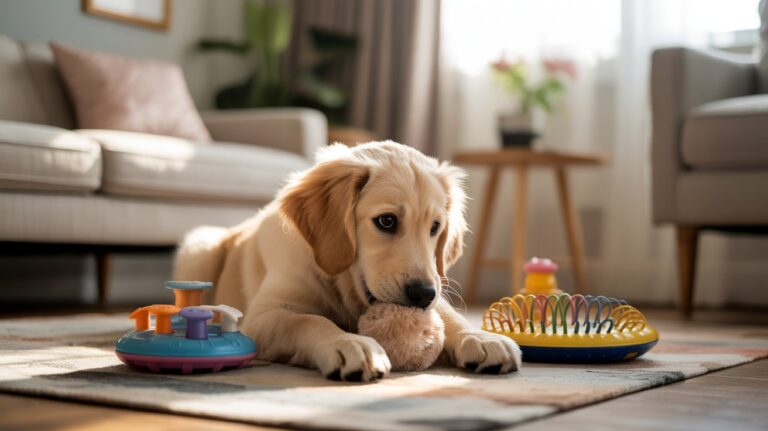
Plush toys are the classic cuddle companion. Many brands now make versions with no squeaker and no crinkle, so your dog gets a soft friend to carry around without any racket.
I like these for gentle chewers and for dogs who love to nap with a toy. Heavy chewers can shred plush quickly, so keep an eye on your dog and take the toy away once it starts to fall apart.
Shop Squeaker-Free Plush Dog Toys
Rope and Tug Toys
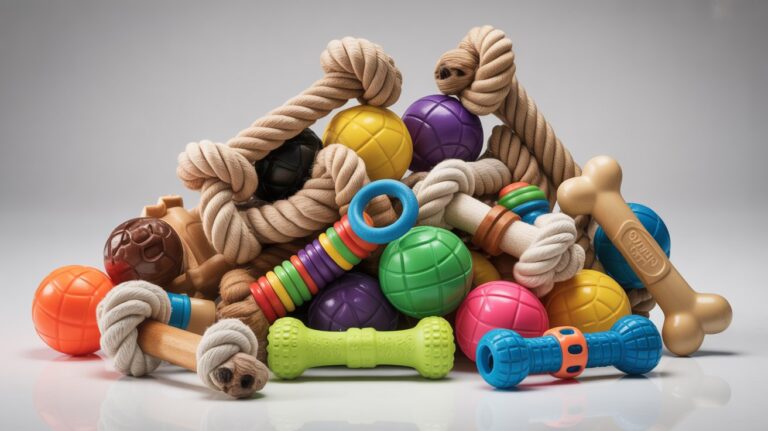
Rope toys make almost no sound, and dogs adore them. Your dog gets a satisfying tug, and you get a game that sounds like nothing at all.
Thick cotton rope works well for gentle tug games with you. Check the rope often, because loose strands can come off as the toy wears. Take it away if it starts to unravel.
Rubber and Chew Toys
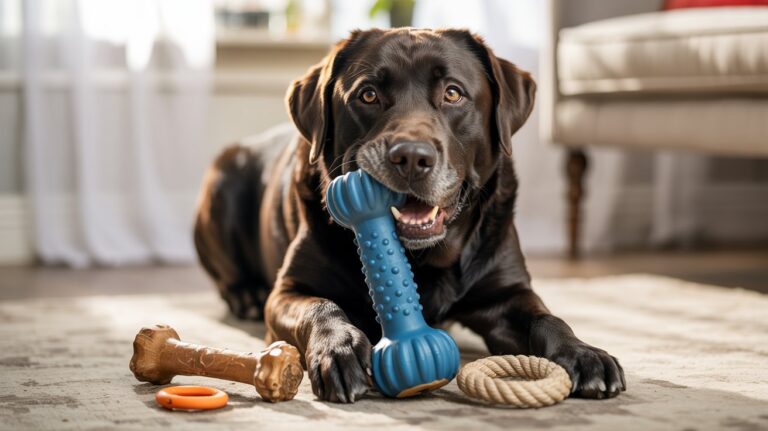
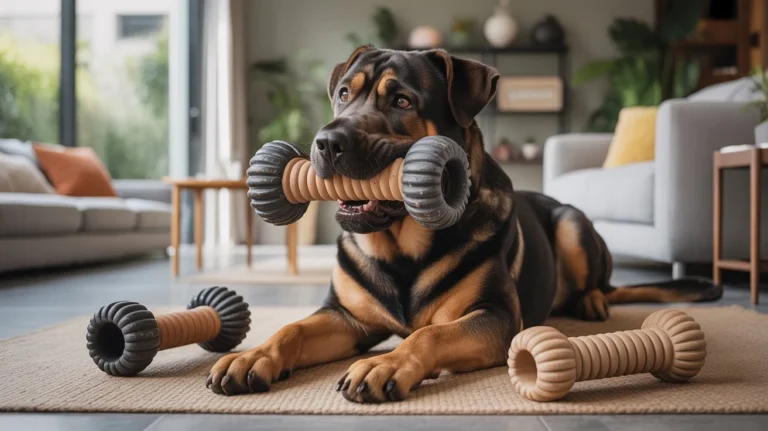
A solid rubber toy gives your dog something sturdy to gnaw on while you stay in peace. These toys make a soft thud at most, and many dogs spend a long time working on them.
Pick a size that matches your dog and a firmness that suits how hard your dog chews. If you feel unsure about which toy is safe for your dog’s chewing style, ask your vet.
Shop Durable Rubber Dog Chew Toys
Treat-Dispensing and Puzzle Toys
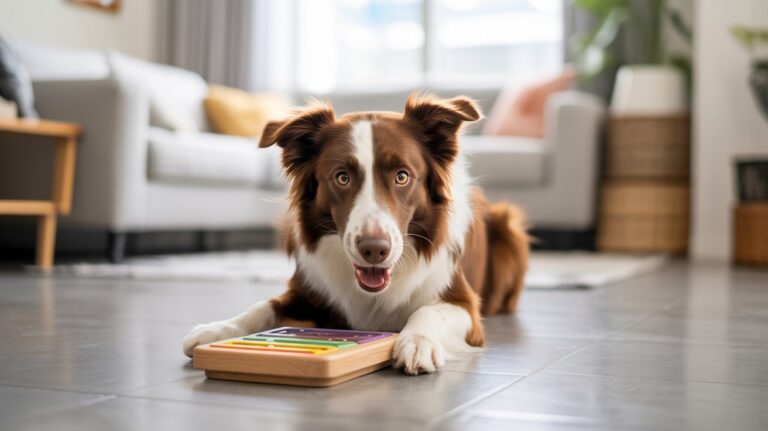
Puzzle toys make your dog think instead of squeal. Your dog nudges, rolls and sniffs to get the treats out, and you enjoy a calm house while the brain works.
I love these for rainy days. A few small treats inside a puzzle toy can keep a bored dog busy while you finish your coffee.
Shop Treat-Dispensing Puzzle Toys for Dogs
Soft Fetch Toys
Hard balls bounce and clatter on tile and wood floors. A fabric or felt covered ball, or a soft fleece fetch toy, lands with barely a whisper.
Your dog still gets the chase and the happy return. Your downstairs neighbor gets to keep their sanity.
How to Match a Quiet Toy to Your Dog
Every dog plays a little differently. A toy that thrills one dog can leave another totally cold. So how do you pick?
For Gentle Chewers and Cuddlers
Soft plush toys and fleece toys suit these dogs best. They carry the toy around, nuzzle it and chew it softly. A little wear is fine, but replace it when seams open up.
For Dogs Who Love a Tug
Rope toys and sturdy fabric tugs fit this style. Play together and let your dog win now and then. It keeps the game fun for both of you.
For Strong Chewers
Go for solid rubber toys and avoid anything stuffed. Strong chewers can tear through soft toys in a flash, which makes a mess and creates a risk if they swallow pieces. If your dog swallows any part of a toy, call your vet.
For Smart, Busy Dogs
Treat-dispensing and puzzle toys keep clever dogs thinking. Start with an easy toy so your dog wins early and stays interested. You can move to harder ones later.
For Small Dogs and Puppies
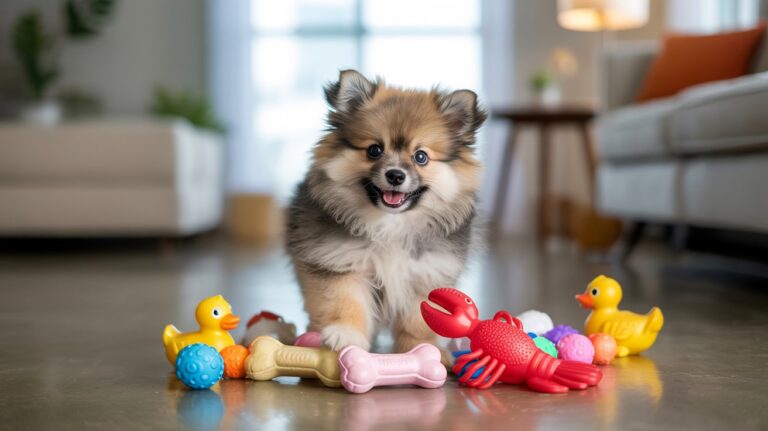
Choose small, soft toys that fit your dog’s mouth with room to spare. Watch your puppy while they play, and keep new toys simple. Your vet can answer questions about what suits your puppy’s age.
Quiet Games to Play With Squeaker-Free Toys
Silent toys still make great game props. You just need games that keep the volume down.
- Find It: Hide a soft toy under a blanket or behind a cushion and let your dog sniff it out.
- Gentle Tug: Hold a rope toy low and keep the pulling slow and steady.
- Treat Hunt: Tuck a few small treats into a puzzle toy and let your dog work it out on a rug.
- Soft Toss: Roll or lob a fleece fetch toy down a hallway instead of throwing it hard.
I use these games on gray days when nobody wants to go outside. My dog ends up tired and happy, and my ears get a break.
Set Up Quiet Play Time at Home
A quiet toy helps, but the way you play matters too. Small habits keep the house calm and your dog happy.
Pick a cozy spot, such as a rug, a dog bed or a corner of the living room. Soft surfaces cut down on thumping and bouncing, and your dog learns that this spot means calm play.
Rotate your toys instead of leaving them all out. Put a few away and swap them every few days, and the old toys feel new again. It also keeps your floor from looking like a toy store exploded.
Play before the quiet hours begin. A good session earlier in the day often leaves a dog ready to rest. Then a soft toy or a chew can fill the gentle moments.
Keep Quiet Toys Safe and Fresh
Squeaker-free does not mean risk-free. Every toy wears out, and a worn toy can break into small pieces.
Look over each toy before and after play. Check for loose threads, torn seams, chewed-off bits and cracks in rubber. Throw away anything that looks damaged.
Stay nearby while your dog plays, especially with new toys. Wash fabric toys and wipe down rubber toys on a regular basis so they stay clean. If your dog shows any worrying signs after chewing a toy, contact your vet right away.
Final Thoughts on Squeaker-Free Dog Toys
You do not need a toy that screams to make your dog happy. Soft plush, rope, rubber, puzzle and fetch toys all give your dog a great time while your home stays peaceful.
Start with the style that fits how your dog plays, pick a size that suits them, and check each toy often. Then settle in and enjoy the quiet. Which toy will you try first?
Are Squeaker-Free Dog Toys Safer Than Squeaky Toys?
A squeaker-free toy removes one small, hard part that some dogs like to tear out. That can make play simpler to supervise. Still, no toy is risk-free, so check every toy for damage and take it away once it breaks down. If your dog swallows any part of a toy, call your vet.
What Are the Quietest Types of Dog Toys?
Soft plush toys with no squeaker or crinkle, cotton rope toys and fabric covered fetch balls make very little sound. Solid rubber toys are quiet too, though they can thud on hard floors. Puzzle toys that dispense treats are another calm choice because your dog works them out slowly. Try a few styles and see which one your dog enjoys most.
Can a Squeaker-Free Toy Still Keep My Dog Entertained?
Yes, a toy does not need a sound to be fun. Many dogs enjoy the tug of a rope, the texture of a soft plush or the challenge of a treat puzzle. You can also add quiet games such as hide and find or a gentle tug session. Pay attention to what your dog loves and build play around that.
How Do I Choose a Squeaker-Free Toy for a Strong Chewer?
Start with solid rubber toys instead of soft, stuffed ones. Pick a size that your dog cannot swallow whole, and check the toy often for cracks or chewed-off pieces. Stay nearby while your dog chews, especially with a new toy. Your vet can help if you feel unsure which toy suits your dog’s chewing style.
How Often Should I Replace a Quiet Dog Toy?
There is no set schedule, because it depends on how your dog plays. Replace a toy as soon as you see loose seams, frayed rope, cracks or missing pieces. Look over each toy before and after play so you catch wear early. Washing fabric toys and wiping rubber ones also helps you spot damage.