Do Birds Need Cage Covers at Night?
If your bird screams at 5:30 AM every morning because the sun is up, you know why you’re reading this. A good blackout bird cage cover isn’t just a luxury.
It’s the key to a well-rested bird and a peaceful morning for you—before your coffee is ready.
Bird sleep is more complex than many new owners think. Birds need a consistent sleep schedule, total darkness, and minimal disturbance to rest deeply.
This rest is vital for their health and behavior. The right cage cover ensures all this quietly and effectively.
Let’s discuss what makes a blackout cover worth buying, what sets a great one apart from a frustrating one, and what you should know before spending any money.
Shop Blackout Bird Cage Covers on Amazon
Why Your Bird Needs a Blackout Cage Cover
Sleep Is Not Optional for Birds
Birds need between 10 and 12 hours of uninterrupted sleep every night. That is not a suggestion from overly cautious bird forums — it is a biological requirement.
Without adequate sleep, birds develop chronic stress, weakened immune systems, hormonal imbalances, and behavioral issues like feather plucking, excessive screaming, and aggression.
Think about how your bird acts after a noisy night or a morning where light crept in at dawn. The crankiness is real, and it is not just personality.
Sleep deprivation in birds compounds over time, and the effects show up in ways that are easy to misattribute to other causes.
Light Is the Biggest Disruptor
Birds are highly sensitive to light changes. Their circadian rhythms respond to light cues the way an alarm clock responds to a set time — fast and reliably.
A streetlight through a window, the glow of a TV across the room, or early morning sunlight can all trigger a bird to wake up and start vocalizing well before you planned to be conscious.
A blackout bird cage cover blocks all external light sources and tells your bird’s brain that it is still nighttime.
This single change can transform a bird that wakes at sunrise into one that sleeps until a reasonable hour.
If you have never tried a proper blackout cover, prepare to be surprised by how dramatic the difference is.
Browse Bird Cage Blackout Covers on Amazon
Temperature and Draft Protection Are a Bonus
A good cage cover does more than block light. It also insulates the cage against cold drafts and reduces ambient noise.
Both factors contribute to better sleep quality, and both are things a thin or poorly fitting cover handles badly. Material thickness and proper fit matter as much as the blackout capability itself.
What Makes a Blackout Bird Cage Cover Actually Good
Not every cover marketed as “blackout” lives up to that label. Some let light bleed through seams.
Others trap heat so effectively that the cage becomes uncomfortable. Here is what separates a genuinely good blackout cover from one that looks fine on a product page but disappoints in practice.
Fabric Quality and Light-Blocking Ability
The fabric is everything. A proper blackout cover uses a tightly woven, multilayer fabric that allows zero light penetration, even when held up to a bright window.
Single-layer covers almost always fail this test. Look for covers that specifically use:
- Double or triple-layer construction
- Blackout lining as an interior layer, not just a dark outer fabric
- Tightly finished seams that do not create light gaps at the edges
Find Breathable Blackout Cage Covers on Amazon
A dark-colored cover and a true blackout cover are not the same thing. You can hold most covers up to a light source before buying to check — if any light comes through, it will come through in use too.
Breathability and Ventilation
Here is where many blackout covers fall short. The denser the fabric, the better it blocks light, but also the more it can restrict airflow.
A well-designed blackout cover balances light-blocking with adequate ventilation so the cage does not heat up overnight.
Look for covers with:
- Ventilation panels on the sides or back, usually made from breathable mesh behind the blackout layer
- Fabric that allows passive airflow without creating bright spots
- A design that does not completely seal the bottom of the cage, allowing some air circulation
If you keep your bird in a warm room, breathability becomes non-negotiable. An overheated bird is not a sleeping bird.
Fit and Coverage
A cover that is too large bunches up, creates gaps, and lets light through at the base. A cover that is too small pulls at the corners and leaves sections exposed.
Proper fit is one of the most overlooked factors when buying a cage cover.
Most covers come in standard sizes corresponding to common cage dimensions. Measure your cage before buying:
- Width: measure the widest point including any protruding hardware
- Depth: measure front to back at the deepest point
- Height: measure from the base of the cage to the top of the dome or flat roof
When in doubt between two sizes, go with the larger one. A slightly oversized cover that sits flush at the bottom works better than a tight one with corners pulling away from the cage.
Ease of Use and Washing
You will put this cover on and take it off every single day.
If it is difficult to handle, awkward to fold, or a nightmare to launder, you will stop using it consistently — and inconsistent covering defeats the entire purpose.
The best covers are machine washable, quick to dry, and simple to put on without needing both hands free and a tutorial.
Features that make daily use easier:
- Drawstring or elasticated hem that holds the cover in place without slipping
- Lightweight enough to drape with one hand while you hold a perch or treat in the other
- Machine washable on a gentle cycle without losing shape or blackout properties
Types of Blackout Bird Cage Covers
Full Coverage Blackout Covers
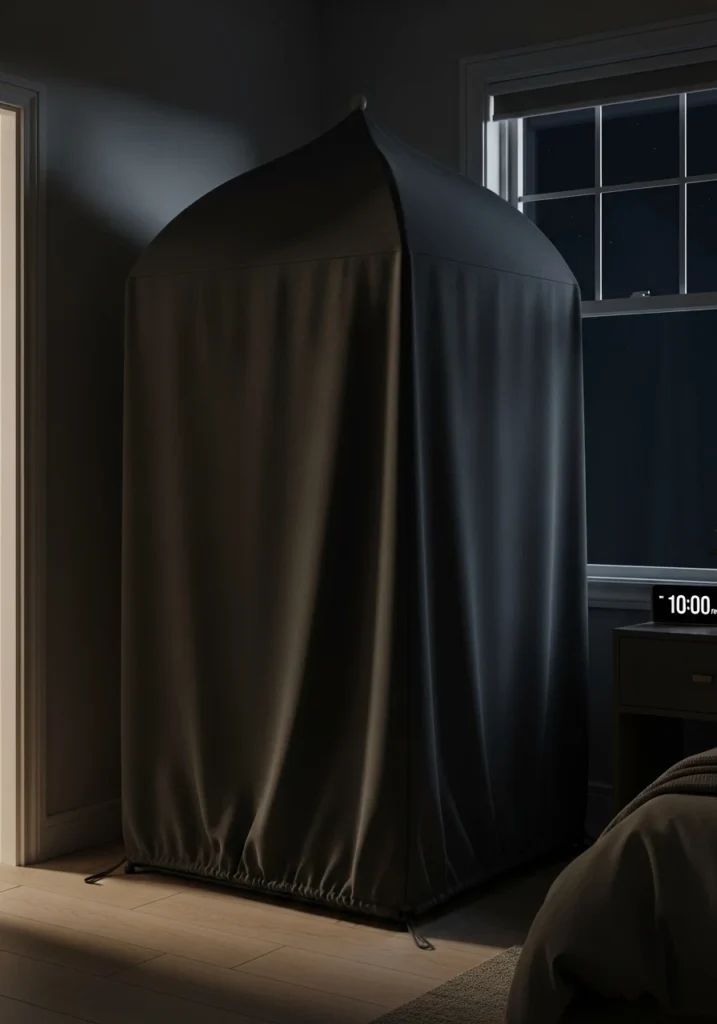
These covers drape over the entire cage and reach the base, leaving no exposed surfaces. They provide the best light-blocking performance and the most temperature insulation.
Full coverage covers work best in rooms with significant ambient light, such as those with streetlights outside the window or households that stay up late with lights on.
Best for:
- Birds that wake at the slightest light change
- Rooms with multiple light sources at night
- Colder climates where draft protection matters
Shop Full Coverage Bird Cage Covers on Amazon
Partial or Front-Only Covers
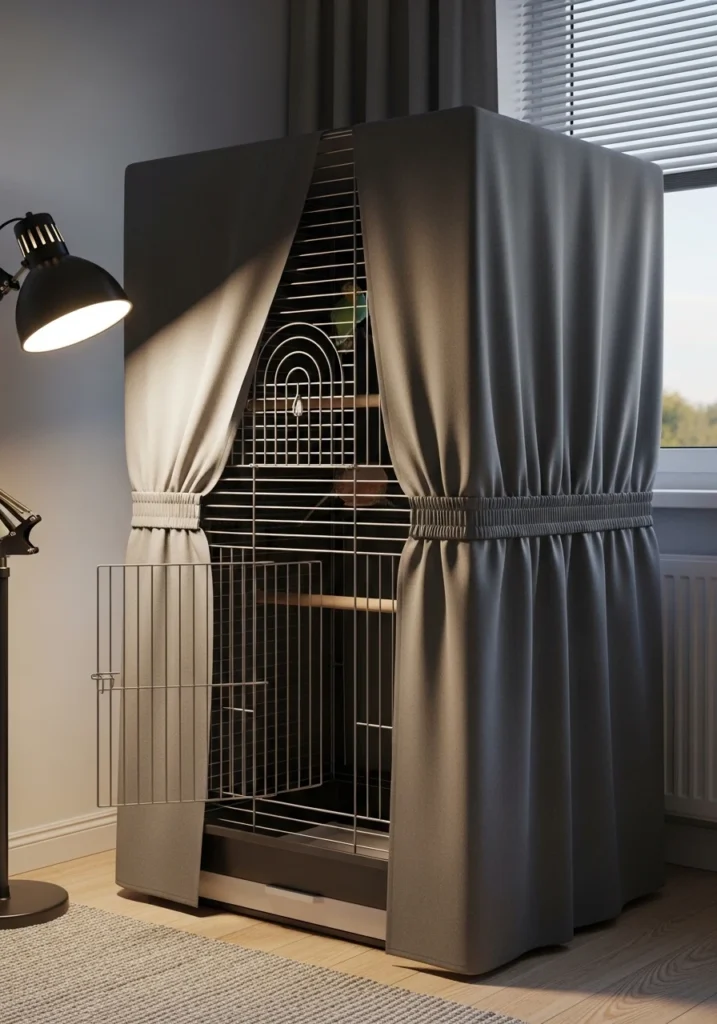
Some bird owners prefer covers that only cover three sides or the front panel while leaving the back open for airflow.
These work well in darker rooms where full blackout is not necessary but some light reduction and privacy is helpful.
Best for:
- Birds in rooms that are already quite dark at night
- Warmer climates where airflow takes priority
- Birds that get anxious under complete coverage initially
Custom-Fit Cage Covers
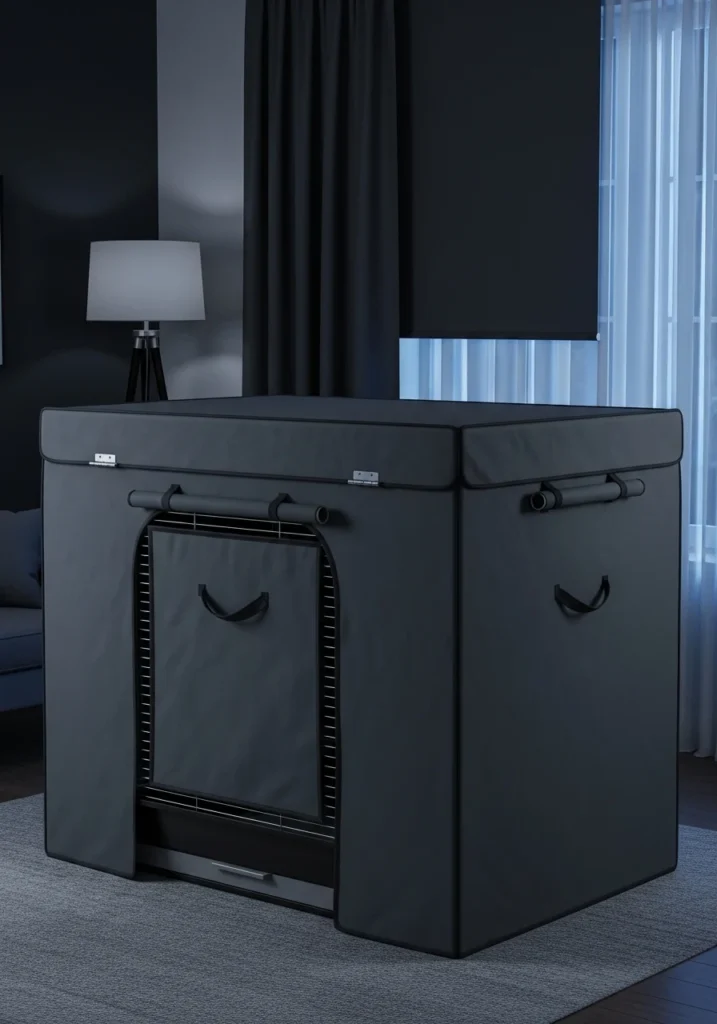
A growing number of sellers produce covers made specifically for popular cage models and brands. These fit precisely, look clean, and eliminate the guesswork of measuring.
If you own a popular cage brand, it is worth checking whether a custom cover exists for your exact model before buying a generic size.
Best for:
- Owners of well-known cage brands who want a perfect fit
- Anyone who has struggled with ill-fitting generic covers in the past
- Situations where aesthetics in a shared living space matter
How to Choose the Right Cover for Your Bird’s Species
Different birds have different sleep needs and sensitivities. A cover that works brilliantly for one species might be less ideal for another.
Small Birds: Budgies, Lovebirds, and Finches
Small birds are often more sensitive to temperature changes and drafts than larger birds.
Prioritize covers with good insulation for small bird cages, particularly in households with air conditioning running overnight.
Full coverage covers in a medium-weight fabric hit the sweet spot for this group.
Medium Birds: Cockatiels, Conures, and Caiques
Cockatiels in particular are prone to night frights, which are sudden panicked thrashing episodes triggered by noise or unexpected light.
A blackout cover significantly reduces night fright frequency by removing the light-stimulus triggers. For cockatiels especially, a properly fitting, fully blackout cover can be genuinely life-changing.
Browse Cage Covers for Cockatiels and Parrots on Amazon
Larger Parrots: African Greys, Amazons, and Macaws
Larger parrots generate more body heat overnight and need covers with better breathability. They are also generally less prone to night frights.
For this group, prioritize ventilation and fit over maximum insulation. A cover with mesh ventilation panels on the sides and a well-fitting hem works better than the densest blackout fabric available.
Establishing a Sleep Routine With a Cage Cover
Buying the right cover is only half the work. How you use it matters just as much.
Consistency Is Everything
Birds thrive on routine. If you cover the cage at 9 PM one night and midnight the next, the cover cannot do its job effectively because your bird’s internal clock stays confused.
Pick a consistent cover time and stick to it every night, including weekends, even when it feels inconvenient.
Most bird species do well with a cover time between 8 PM and 10 PM, giving them 10 to 12 hours of darkness before the morning uncovering time.
Start the routine and give it two weeks before judging whether it is working.
Introduce the Cover Gradually for Anxious Birds
Some birds, particularly those that have never used a cage cover before, react with alarm when the cover first goes on. The sudden darkness startles them.
Introduce the cover gradually by letting the bird see and investigate the cover during the day before using it at night.
Start by covering just one side for the first few nights, then increase coverage as the bird becomes comfortable.
Morning Uncovering Matters Too
The time you remove the cover is just as important as when you put it on. Removing it too early defeats the purpose of the late cover time.
Removing it very late can leave your bird sitting in darkness past when its body expects light, which creates its own disruption.
Aim for a consistent uncovering time that gives your bird 10 to 12 hours of darkness from the cover time you set.
Materials to Look for (and Avoid)
Good Material Choices
- Polyester blackout fabric: Durable, machine washable, widely available, and genuinely light-blocking when properly layered
- Cotton canvas with blackout lining: Breathable outer layer with a light-blocking interior; heavier but excellent for cold climates
- Fleece with blackout backing: Soft, quiet to handle, and good for cold environments; check that the backing actually blocks light rather than just being dark-colored
Materials to Avoid
- Thin single-layer polyester: Looks like blackout fabric but lets light through at seams and fabric gaps
- Vinyl or plastic covers: Block light effectively but trap heat and moisture, creating an unhealthy sleeping environment
- Loosely woven natural fibers without a blackout lining: Breathable but ineffective at blocking light
Final Thoughts
A blackout bird cage cover is one of the simplest, most affordable improvements you can make to your bird’s daily life.
Better sleep means a calmer, healthier, more sociable bird — and honestly, it usually means a more peaceful household for you too. No more 5:30 AM announcements about the sunrise.
Get the fit right, prioritize genuine blackout fabric over anything that just looks dark, and establish a consistent routine from the first night.
Do those three things and both you and your bird will notice the difference within a week.
And if your bird still decides to narrate its dreams at 3 AM regardless of the cover, well, that is just bird ownership for you — and no cover has solved that one yet.
Find Your Perfect Blackout Bird Cage Cover on Amazon
How Many Hours of Sleep Does a Bird Need Each Night?
Most pet birds need 10 to 12 hours of sleep each night. Small birds, like budgies and finches, prefer closer to 12 hours.
Larger parrots, such as African Greys and Amazons, usually need about 10 to 12 hours too. The main point is “uninterrupted.”
If your bird is in its cage for 12 hours, but wakes due to light, noise, or drafts, it won’t get the restful sleep it needs.
A good blackout cover for the cage blocks these disruptors. This helps your bird achieve the deep sleep stages it requires.
What Is the Best Material for a Blackout Bird Cage Cover?
The best blackout bird cage covers block light while allowing airflow. Double or triple-woven polyester is popular.
It blocks over 90 percent of light and withstands regular machine washing. It also resists wrinkling.
Cotton canvas with a blackout lining breathes well in warm weather. Fleece with a blackout backing is good for colder homes.
Avoid thin single-layer fabrics. They may seem dark but let light through at the seams. Never use vinyl or plastic covers. They trap heat and moisture inside the cage overnight.
How Do You Measure a Bird Cage for the Right Cover Size?
Measure your bird cage at its widest and deepest points. Include any feeder hooks or hardware that stick out.
Then, measure the height from the base of the cage frame to the top of the dome or flat roof. Use these three measurements—width, depth, and height—to compare with the cover’s dimensions.
If two sizes could work, pick the larger one. A cover that is slightly loose at the base still blocks light well. However, a tight cover at the corners may leave gaps, which defeats the blackout design.
Can a Blackout Bird Cage Cover Help With Night Frights in Cockatiels?
A blackout bird cage cover is one of the best ways to reduce night frights in cockatiels. Night frights are sudden, panicked thrashing episodes.
They happen when unexpected light or noise startles cockatiels during sleep. A full-coverage blackout cover blocks the light that often triggers these episodes.
Some owners add a dim night light near the cage instead of relying only on darkness. This helps the bird quickly reorient if a noise causes a brief wake-up.
The cover deals with the light issue, while a consistent routine takes care of the rest.
When Should You Put a Blackout Cover on a Bird Cage?
Cover your bird’s cage at the same time every night. Aim for between 8 PM and 10 PM, based on your bird’s species and your routine.
Consistency is more important than the exact time. Birds rely on light cues to manage their sleep-wake cycles. A regular covering time helps your bird’s internal clock adjust to darkness.
Also, remove the cover at the same time each morning. This gives your bird 10 to 12 hours of darkness. New birds or those not used to a cover may need several days to adjust comfortably.