Floating Dog Toys Every Water-Loving Pup Needs
If your dog sees a puddle and treats it like a swimming pool, you know the routine. Water-loving dogs don’t just enjoy water; they crave it.
If you let your pup splash around, make it fun and safe. That’s where the right floating dog toys come in.
The market is full of options, but not all are worth your money. Some sink faster than your dog’s excitement, while others break after one fetch.
Let’s discuss the floating dog toys that really work, the key features, and how to choose the best one for your water-loving pup.
Why Floating Dog Toys Matter More Than You Think
It Is Not Just About Fun
Sure, watching your dog leap into a lake after a toy is pure entertainment. But floating dog toys serve a real purpose beyond the laughs.
They keep your dog mentally stimulated and physically active in an environment where regular toys are completely useless.
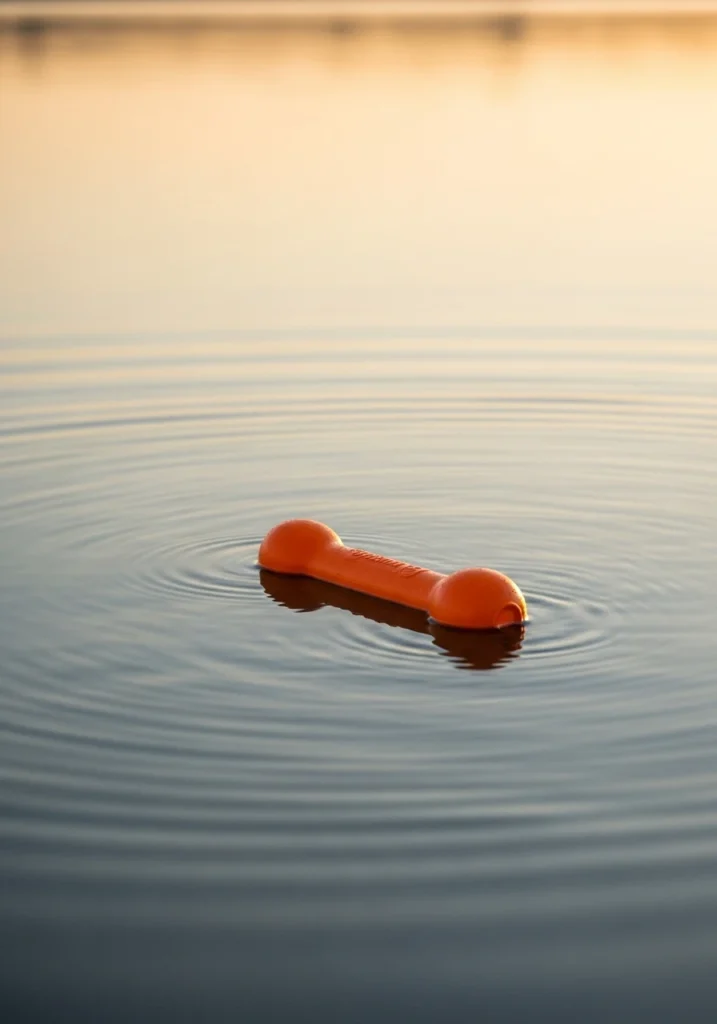
A toy that sinks the moment it hits the water is not a water toy. It is a disappointment with a price tag. A good floating toy stays visible, accessible, and engaging even in choppy or moving water.
Safety Plays a Big Role Too
Bright colors and buoyancy work together to keep your dog safe. A toy your dog can easily spot in the water reduces panic and frantic swimming.
This matters especially for dogs that are still building their water confidence.
A toy that bobs clearly on the surface gives your dog a clear target. That focus actually helps newer swimmers stay calmer and more directed in the water.
What to Look for in a Floating Dog Toy
Buoyancy That Actually Holds Up
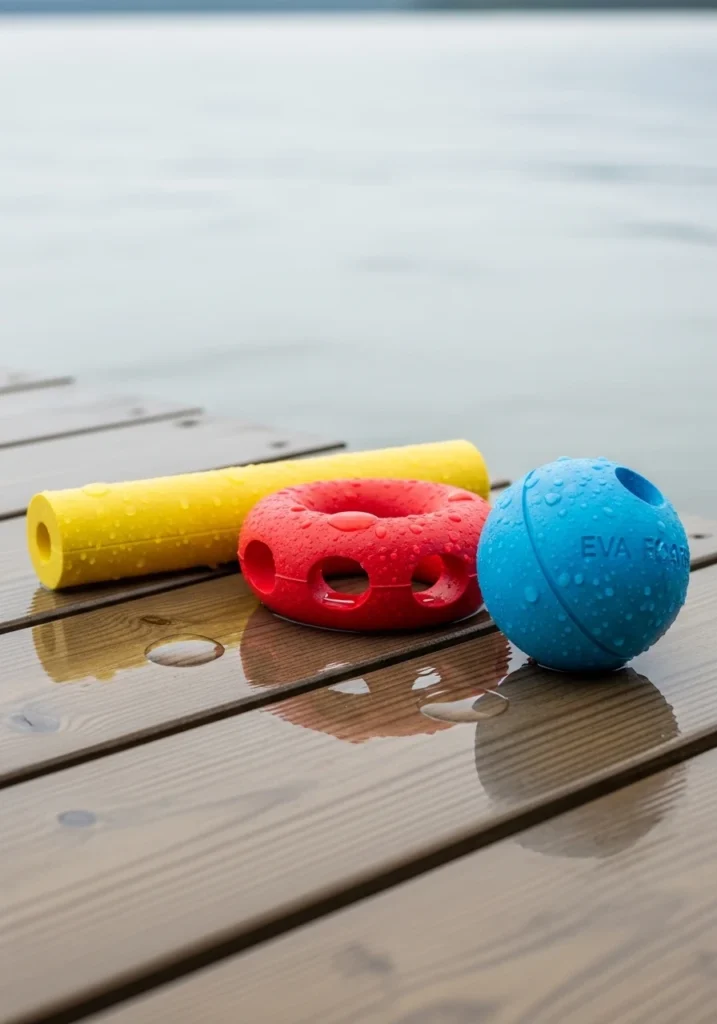
Not all toys labeled “floating” float equally well. Some barely stay afloat when empty and fail completely once a dog bites down. Look for toys made from:
- High-density foam: Lightweight, durable, and genuinely buoyant
- Hollow rubber: Holds air and maintains buoyancy even with repeated biting
- EVA foam: Softer on the mouth and highly water-resistant
Avoid toys with hollow chambers that are not fully sealed. Water gets in, buoyancy goes out, and suddenly your dog is diving for a toy that was supposed to float.
Durability Under Real Conditions
Water play is rough play. Your dog will chomp, shake, drag, and wrestle with that toy every single session. Cheap materials crack, splinter, or degrade quickly, especially with prolonged water exposure.
Look for toys that are specifically rated for water use and heavy chewers. A toy that holds up for a golden retriever in a lake is built differently than a plush squeaky meant for living room games.
Prioritize materials like natural rubber, thermoplastic rubber (TPR), or reinforced EVA foam.
Size and Shape for Your Dog
A toy that is too small for a large dog is a choking hazard. One that is too large for a small dog just frustrates them. Match the toy size to your dog’s mouth and strength.
Shape also affects how the toy behaves in water. Flat, disc-shaped toys move differently than cylindrical ones. Think about:
- Disc or ring shapes: These are great for skimming across the water and easy for dogs to grip
- Stick or bumper shapes: These mimic retrieved items and appeal to retriever instincts
- Ball shapes: Classic, universally loved, and great for dogs that love chasing a rolling target into the water
The Best Types of Floating Dog Toys for Water Play
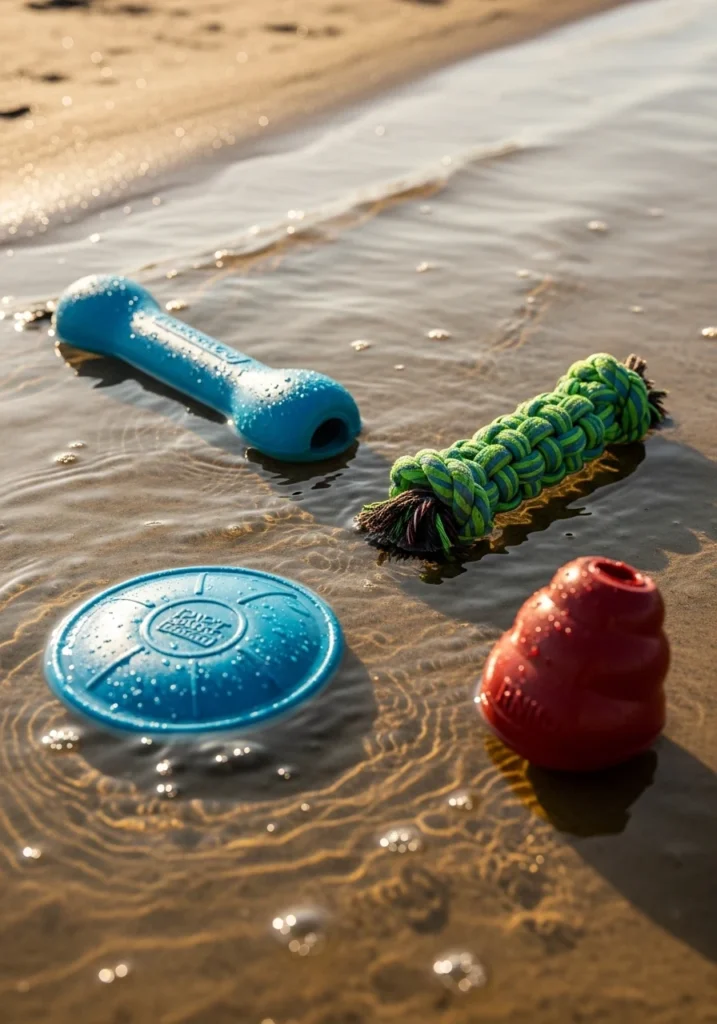
Floating Fetch Sticks
Fetch sticks were practically invented for water-loving retrievers. They mimic the feel of a natural stick without the splinter risk.
Good floating fetch sticks are made from foam or hollow rubber, stay visible on the surface, and are easy for a dog to pick up without submerging their whole head.
They also tend to throw well, which means you can stand on the shore and launch the toy a good distance.
Your dog swims out, grabs it, and swims back looking ridiculously proud of themselves. If you have a retriever of any breed, a floating fetch stick is basically a requirement.
Floating Rope Toys
Rope toys float surprisingly well thanks to their woven construction. They absorb some water but do not become waterlogged enough to sink under normal conditions.
What makes floating rope toys especially great is that they are gentle on teeth and gums, which matters during extended play sessions.
They are also easy to grab, toss, and tug, making them versatile for both fetch and tug-of-war at the water’s edge.
One thing to watch: rope toys fray with heavy use. Inspect them regularly and replace them before your dog swallows any loose strands.
Floating Rubber Rings and Discs
Ever seen a dog catch a disc mid-air before it hits the water? Absolutely cinematic. Floating rubber rings and discs are crowd-pleasers for a reason.
They fly well, float flat on the water’s surface, and are easy for dogs to spot and grip.
Rubber versions are significantly more durable than fabric ones and hold up much better when repeatedly soaked and dried.
If your dog plays in saltwater, rubber also resists the corrosive effects that destroy other materials faster.
Floating Kong-Style Toys
Kong-style floating toys combine the buoyancy you need with the treat-stuffing functionality that makes Kongs legendary.
You can fill them with your dog’s favorite snacks before a water session, and suddenly your dog has extra motivation to retrieve them.
These are especially useful for dogs that need a little extra encouragement to engage with water. The treat reward creates a positive association with swimming and fetching, which builds confidence over time.
Floating Bumper Toys
Bumper toys look like miniature training dummies, and they borrow heavily from professional retriever training gear. They are cylindrical, brightly colored, and designed to float high in the water.
These toys are absolutely built for serious fetch sessions. Many trainers and hunting dog owners swear by bumper toys because they are nearly indestructible and float exceptionally well even in fast-moving water.
If your dog is a relentless fetcher, a bumper toy will outlast almost anything else on the market.
Top Features That Separate Good Floating Toys from Great Ones
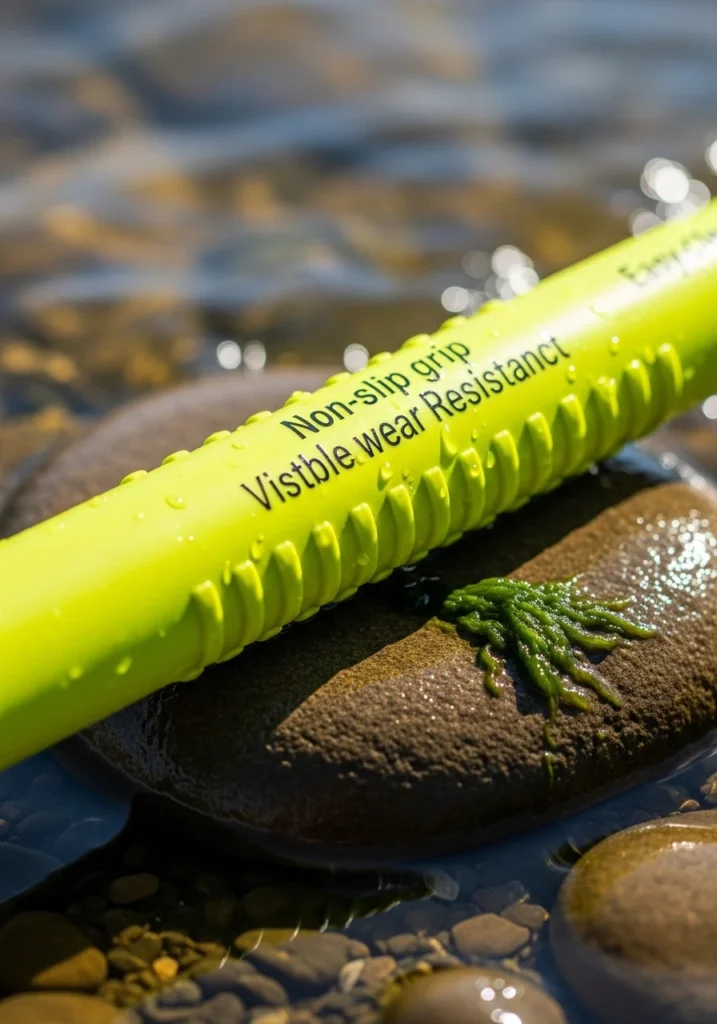
Bright, High-Visibility Colors
You want your dog to spot that toy fast. Orange, yellow, and neon green work best in open water because they contrast sharply against the blue and grey tones of lakes, rivers, and pools.
Avoid toys that are white, light blue, or any color that blends into the water. Your dog’s vision is different from yours, and a low-contrast toy makes retrieval genuinely harder for them.
Non-Toxic, Water-Safe Materials
This one should go without saying, but always check that the materials are non-toxic and free from BPA and phthalates.
Dogs mouth these toys constantly, and prolonged water exposure can cause certain materials to degrade and leach chemicals.
Look for toys that explicitly state they are:
- BPA-free
- Non-toxic
- Food-safe or pet-safe rated
Reputable brands list these specs clearly. If a product description is vague about materials, that is your cue to keep shopping.
Easy to Clean and Quick to Dry
Waterlogged toys that never fully dry become breeding grounds for mold and bacteria. This is genuinely gross and bad for your dog.
Choose toys with smooth surfaces or open designs that dry quickly. After each use, rinse with fresh water (especially after saltwater or chlorinated pool sessions), squeeze out any trapped moisture, and let them air dry completely before storing.
Matching the Right Toy to Your Dog’s Play Style
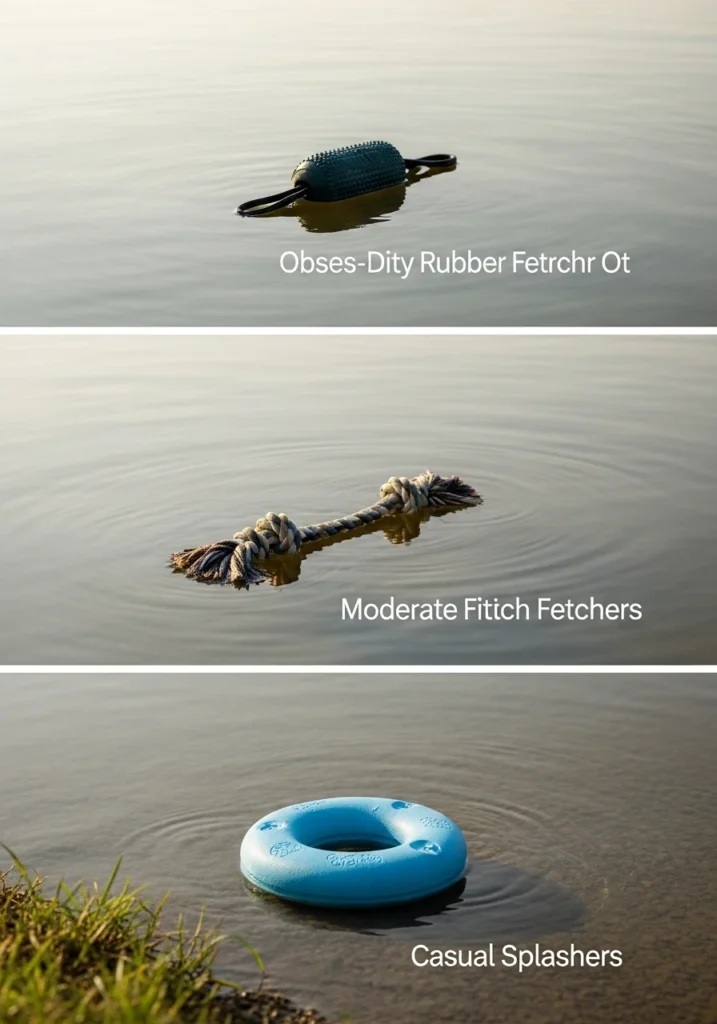
For the Obsessive Fetcher
If your dog would fetch until they physically collapse (we all know one), prioritize durability and visibility above everything else. Bumper toys and heavy-duty rubber fetch sticks are your best friends here.
These dogs burn through toys fast. Buying cheap, fragile options will cost you more money in the long run than investing in one quality toy upfront.
For the Casual Splasher
Some dogs love being in the water but are not obsessed with fetching. They just want to splash around and interact with something fun. Floating rings, rope toys, and soft foam toys work well here.
The goal for casual splashers is engagement, not endurance. You want a toy that floats near them and invites interaction, not something they have to pursue aggressively.
For the Water-Shy Beginner
If your dog is still warming up to water, the toy you choose can make a real difference. Start with a toy your dog already loves on land that also happens to float.
Positive associations are everything during this stage. A familiar toy in a new setting is far less intimidating than an unfamiliar object.
Once your dog gets comfortable retrieving near the water’s edge, gradually encourage them to go in a little deeper.
How to Make Water Toy Sessions Safe and Fun
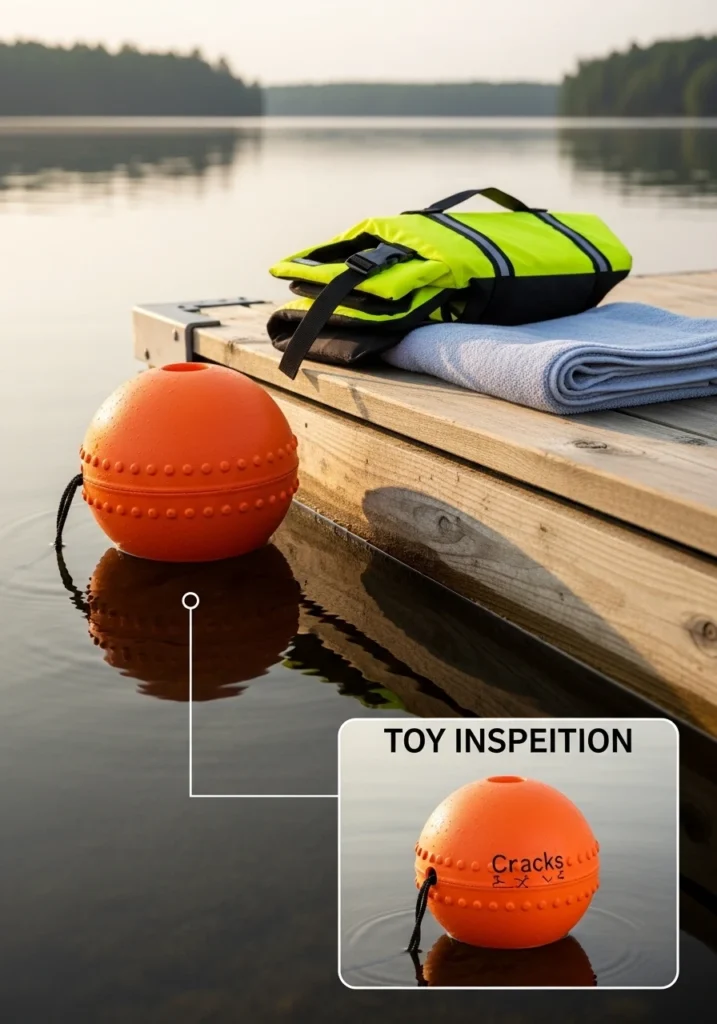
A great floating toy is only as good as the environment you use it in. A few simple habits make every session safer and more enjoyable.
- Always supervise water play, even for strong swimmers
- Know your dog’s limits and watch for signs of fatigue like heavy panting or slower swimming
- Rinse toys after every use to prevent bacteria buildup and material degradation
- Inspect toys regularly for cracks, missing chunks, or frayed parts that could become choking hazards
- Use a dog life jacket for deeper water or dogs still building swimming confidence
Conclusion
Finding the right floating dog toy is honestly one of the better investments you can make for a water-loving dog.
The right toy turns a swim into an adventure, keeps your dog focused and safe, and builds a routine that benefits their physical and mental health.
Whether your dog is a full-send dock diver or a tentative paddler who just likes getting their paws wet, there is a floating toy built exactly for them.
Do not settle for a toy that barely floats or falls apart after two sessions. Your dog’s enthusiasm deserves better than that, and honestly, so does your wallet.
Get your pup the right gear, head to the nearest lake, river, or pool, and let them do what water dogs do best. You will be the one standing on the shore, laughing, wondering why you did not start this sooner.
What Are the Safest Floating Dog Toys for Strong Chewers?
The safest floating dog toys for strong chewers are made from natural or thermoplastic rubber (TPR). These materials resist aggressive biting and won’t crack or break into small pieces.
Brands like Chuckit, KONG, and Ruffwear offer heavy-duty floating toys designed for power chewers. Always check that the toy fits your dog’s breed and jaw strength before buying.
Can Regular Dog Toys Be Used in Water?
Most regular dog toys aren’t made for water. They can absorb moisture, lose shape, or sink. Plush toys, for example, get waterlogged quickly and can mold if not dried properly.
Rope toys float better, but they still need rinsing and drying after water play. For reliable water fun, always pick toys marked as water-safe or floating.
How Do You Clean and Maintain Floating Dog Toys?
After each water session, rinse floating dog toys with fresh water. This removes chlorine, salt, algae, or lake debris. Squeeze out moisture from hollow or rope toys.
Then, lay them flat or hang them in a well-ventilated area to air dry completely before storing. For a deeper clean, wash the toys with mild, pet-safe soap once a week if used often.
Also, check for cracks, fraying, or missing chunks. This helps prevent your dog from swallowing damaged material.
At What Age Can Puppies Start Playing With Floating Dog Toys?
Most puppies can start supervised water play and light toy interaction at 10 to 12 weeks. This is after they finish their initial vaccinations.
However, never leave puppies unsupervised near water, no matter their age. Choose toys that fit their small mouths and developing teeth. Soft foam or lightweight rubber floating toys are the best choices.
They are gentle on baby teeth. Always introduce water and toys slowly. This helps build confidence without causing anxiety.
How Do You Choose the Right Size Floating Dog Toy for Your Dog?
The right floating toy should be big enough that your dog can’t swallow it or get it stuck in their throat. It should also be small enough for them to grip and carry easily.
A good rule is that the toy should be larger than your dog’s mouth when fully open. For small breeds, compact floating rings or mini bumper toys are great.
Large and giant breeds need oversized fetch sticks, large bumpers, or full-size floating discs. Always check the manufacturer’s size and weight guidelines before buying.