Interactive Treat Dispensing Toys for Slow Feeders
If your dog gobbles their food like they haven’t eaten in days, you’re not alone. Fast eating is a common issue for pet owners. It can lead to risks like bloating, vomiting, and digestive problems.
Interactive treat-dispensing toys can help with this. They’re one of the best investments for your pet’s health and happiness.
I’ve spent a lot of time testing these toys with my dog. He once finished a bowl of kibble before I set it down.
So, I understand the struggle. Let’s discuss what these toys do, which ones are worth your money, and how to choose the right one for your hungry pup.
What Are Interactive Treat Dispensing Toys, Exactly?
At their core, interactive treat dispensing toys are puzzle-style feeders or devices that release food slowly as your pet interacts with them.
Instead of your dog just burying their face in a bowl and going to town, they have to roll, nudge, paw, or solve their way to each piece of kibble.
These toys serve a dual purpose. They slow down eating, and they also give your dog’s brain a workout.
Think of it as combining dinner and a workout in one. Your dog gets mental stimulation while also eating at a pace that’s actually safe for their digestive system.
Why Slowing Down Feeding Matters
Quick eating forces large amounts of air into the stomach alongside food.
This can lead to a condition called gastric dilatation-volvulus (GDV), commonly known as bloat, which is a life-threatening emergency in dogs.
Even if it never gets that serious, fast eating often leads to regurgitation, gassiness, and general discomfort.
Slow feeders and treat dispensing toys break that pattern. They turn a 30-second feeding frenzy into a 10 to 20-minute activity, which is infinitely better for your dog’s gut.
Types of Interactive Treat Dispensing Toys
Not all dispensing toys are created equal. There’s a whole spectrum, from simple rubber Kongs to elaborate multi-level puzzle boards, and knowing the difference helps you pick what actually fits your dog’s needs.
Browse Interactive Treat Dispensing Toys On Amazon
1. Rolling and Tumbling Dispensers
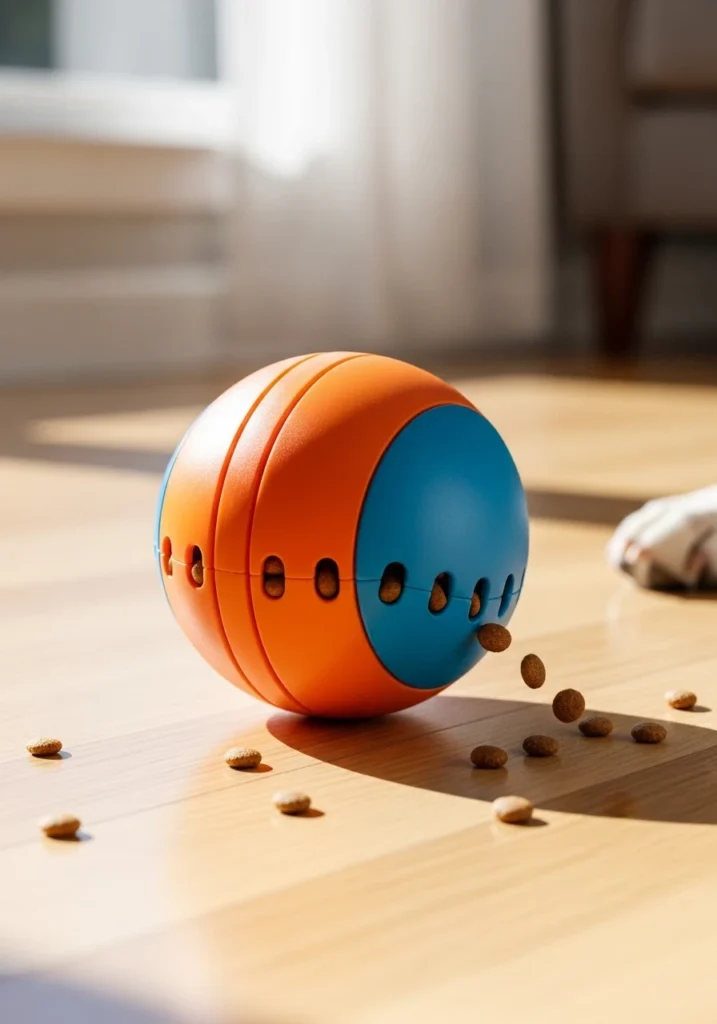
These are typically ball-shaped or cylindrical toys that your dog rolls around to release kibble through small holes. The Kong Wobbler and PetSafe Busy Buddy Twist ’n Treat fall into this category.
- Great for high-energy dogs who love to bat things around
- Works well with dry kibble or small treats
- Easy to clean (most are dishwasher-safe)
- Adjustable openings let you control difficulty
Rolling dispensers are a solid starting point if your dog is new to slow feeding. They’re not overly complicated, but they do the job well.
Shop Rolling And Tumbling Treat Dispensers On Amazon
2. Puzzle Feeders and Snuffle Mats
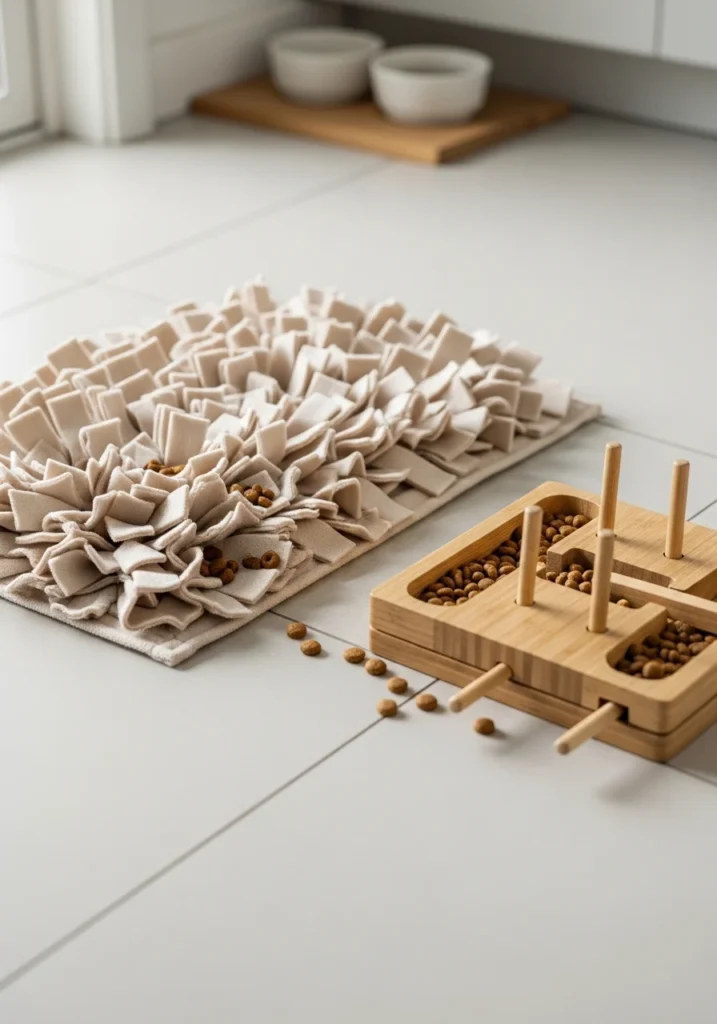
Puzzle feeders take things up a notch. They require your dog to slide panels, flip lids, or push levers to uncover hidden treats.
Snuffle mats, on the other hand, use fabric strips that your dog has to sniff through to find scattered kibble.
- Puzzle feeders are ideal for dogs who learn quickly and need more challenge
- Snuffle mats tap into a dog’s natural foraging instincts
- Both options significantly slow down eating
- Great for anxious dogs because the activity is calming and focused
Nina Ottosson makes some of the most popular puzzle feeders on the market. They range from beginner to advanced levels, which is great because you can grow with your dog as they figure things out.
3. Lick Mats
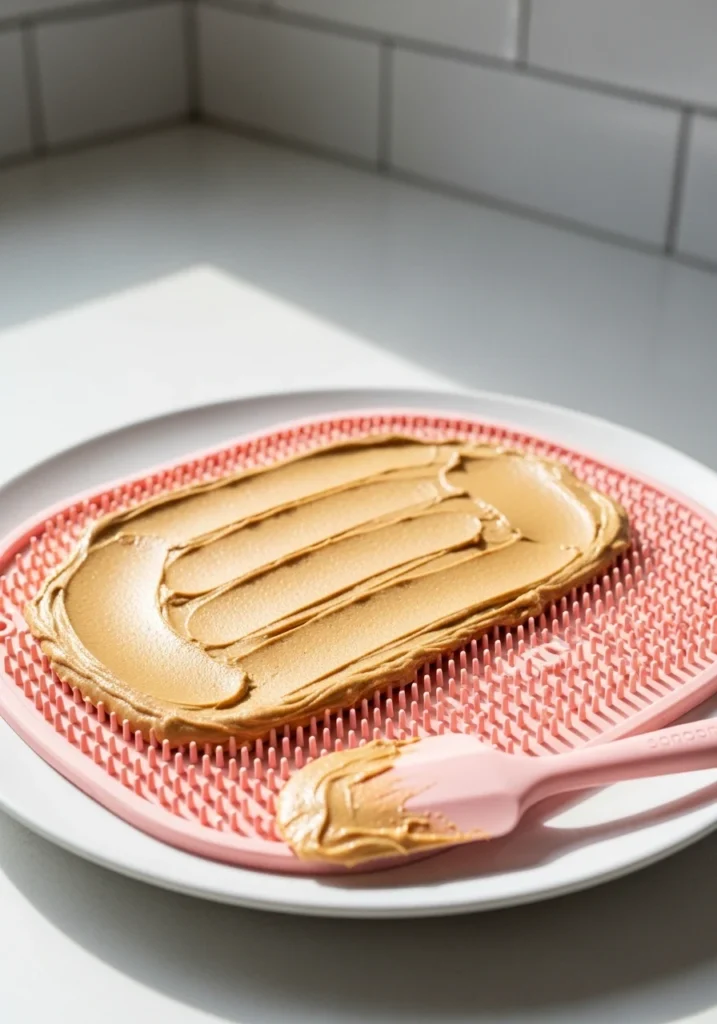
Lick mats work a little differently. You spread wet food, peanut butter, or yogurt across the surface, and your dog has to lick it clean. The textured surface slows the process naturally.
- Exceptional for dogs with anxiety, especially during baths or vet visits
- Promotes calm behavior through repetitive licking
- Easy to freeze for longer-lasting engagement
- Not ideal for dry kibble, but excellent for soft foods and spreads
If your dog is more of a gulper than a kibble-cruncher, lick mats might honestly be the most underrated tool in this whole category.
Find Top-Rated Lick Mats For Dogs On Amazon
4. Treat-Dispensing Balls with Auto-Roll Features
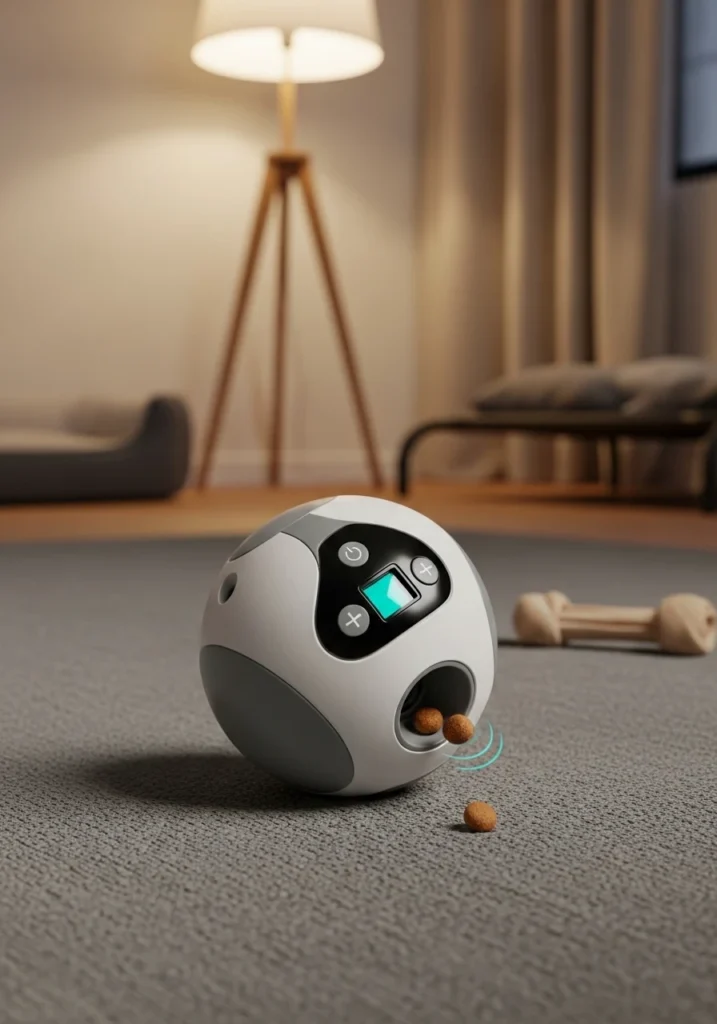
These are a step above basic rolling toys. Some models have electronic components that move on their own, keeping your dog engaged for longer without you having to be in the room.
- Works well for dogs home alone during the day
- Combines light physical exercise with treat motivation
- Battery-operated options vary widely in durability
- Ideal for playful, high-drive breeds like Border Collies or Labs
The tradeoff here is that the mechanical ones can break more easily than simple rubber or plastic toys. Worth checking reviews before committing.
How to Choose the Right Toy for Your Dog
Here’s where it gets personal, because the “best” dispensing toy really does depend on your specific dog. You wouldn’t hand a toddler a 1,000-piece puzzle on day one, right? Same logic applies here.
Consider Your Dog’s Size and Breed
Large breeds generally do better with sturdier toys that can handle aggressive pawing and chewing.
Small breeds need openings that dispense smaller kibble pieces without frustrating them into giving up.
Some breeds are natural problem-solvers. Herding breeds, retrievers, and working dogs tend to pick up puzzle feeders quickly and may need higher difficulty levels sooner than you’d expect.
Scent hounds, on the other hand, often go absolutely wild for snuffle mats since they’re built to follow their nose.
Think About Your Dog’s Motivation Level
Some dogs will work tirelessly for a single piece of kibble. Others will stare at a puzzle feeder for 30 seconds and then look at you like you’ve personally wronged them. Know your dog.
- High-motivation dogs can handle more complex puzzles right away
- Lower-motivation dogs do better with toys that offer quicker, more frequent rewards to stay engaged
- If your dog gets frustrated easily, start simple and build up gradually
Durability and Safety First
This one should go without saying, but you’d be surprised how many people skip it. Always check that the toy is made from non-toxic, BPA-free materials.
Look for toys that don’t have small parts that can break off and become choking hazards.
For aggressive chewers, skip the thin plastic options entirely. Rubber-based toys like those from Kong hold up much better and last longer.
Tips for Getting the Most Out of These Toys
Buying the toy is the easy part. Actually getting your dog to engage with it consistently takes a little strategy.
Start Easy and Build Up
If you jump straight to a Level 3 puzzle with a dog who’s never seen one before, you’re setting both of you up for disappointment.
Start with the simplest option, let your dog experience the win of figuring it out, and then gradually increase difficulty.
The goal is to keep them in that sweet spot where it’s challenging enough to be engaging but not so hard that they walk away.
Use Their Regular Meals
Replace your dog’s bowl entirely with a dispensing toy for regular meals. This is the most effective way to slow down eating consistently. Using it only as an occasional treat doesn’t build the habit.
You’ll also save money on treats since you’re just using the kibble they’d eat anyway.
Rotate Between Toys
Dogs can get bored with the same toy if you use it every single day. Keeping two or three options in rotation keeps things fresh and maintains their interest over the long term.
It’s a bit like how you’d get tired of the same meal every day too.
Supervise Initially
Especially with a new toy, keep an eye on your dog during the first few sessions. You want to make sure they’re engaging safely, not chewing off chunks of plastic or getting frustrated to the point of aggression.
Top Picks Worth Considering
Without turning this into a full product catalog, here are a few standouts that consistently earn high marks from pet owners and vets alike.
- Kong Classic and Kong Wobbler: Reliable, durable, and endlessly versatile. A staple for a reason.
- Nina Ottosson Dog Tornado: A solid mid-level puzzle that keeps dogs working for a while.
- Outward Hound Fun Feeder Slow Bowl: A great bowl replacement that’s simple but effective.
- LickiMat Classic: Perfect for soft foods and anxious dogs. Freezes beautifully.
- PetSafe SlimCat Meal-Dispensing Cat Toy: Worth mentioning here because yes, cats can benefit from slow feeding too.
Each of these has a clear use case, so the right pick really depends on what you’re working with at home.
Shop The Best Slow Feeder Toys For Dogs On Amazon
Wrapping It All Up
Interactive treat dispensing toys aren’t just a fun novelty. They’re a genuinely practical tool that protects your dog’s health, reduces mealtime stress, and keeps their brain sharp.
For dogs who eat too fast, these toys can make a real difference in their long-term wellbeing.
The key is matching the right toy to the right dog, starting simple, and staying consistent. Once your dog gets the hang of it, you’ll wonder why you ever bothered with a plain old bowl in the first place.
And honestly? Watching your dog puzzle their way through a meal is way more entertaining than watching them inhale one in ten seconds flat.
Ready To Get Started? Browse Slow Feeder Toys On Amazon Today
What Are the Best Interactive Treat Dispensing Toys for Slow Feeders?
The best options depend on your dog’s size, motivation, and chewing habits. For most dogs, the Kong Wobbler, Nina Ottosson Dog Tornado, and Outward Hound Fun Feeder are top choices.
Rolling dispensers are great for beginners. Puzzle feeders work well for dogs needing a mental challenge.
Always choose toys made from non-toxic, BPA-free materials. Match the difficulty level to your dog’s experience.
How Do Treat Dispensing Toys Help Slow Down a Dog’s Eating?
Treat dispensing toys need your dog to interact with them to get food. Your dog can roll a ball, nudge panels, or sniff through fabric. Each action releases a small amount of food.
This can extend mealtime from a few seconds to 10 to 20 minutes. It helps lower the risk of bloating, regurgitation, and digestive discomfort from eating too quickly.
Are Interactive Slow Feeder Toys Safe for All Dog Breeds and Sizes?
Most interactive treat-dispensing toys come in different sizes. This makes them good for both small and large breeds. However, aggressive chewers should skip thin plastic models.
Broken pieces can become choking hazards. For heavy chewers, rubber toys like the Kong Classic are much more durable and safer.
Always watch your dog during the first few sessions with any new toy to ensure they use it safely.
Can I Use Treat Dispensing Toys for My Dog’s Regular Meals?
Sure! Here’s a revised version:
This is a great way to use them. Replace your dog’s regular bowl with a treat-dispensing toy for each meal. This builds a slow-feeding habit instead of making it an occasional event.
Most dispensing toys fit standard dry kibble. Lick mats and Kongs work best with wet food, peanut butter, or soft treats. Using regular meals also saves money since you won’t need extra treats.
How Do I Know If My Dog Is Ready for a More Advanced Puzzle Feeder?
Observe how your dog interacts with their toy. If they solve it quickly and feel little frustration, they’re likely ready to advance.
Dogs that complete a Level 1 puzzle in under two minutes and seek more stimulation should move to a mid-level or advanced feeder.
However, if your dog struggles or gives up easily, keep using their current toy a bit longer before introducing something more challenging.