Crystal Clear Acrylic Bird Cages for Easy Viewing
Have you ever pressed your face against a wire cage to see your bird better? If so, you know the hassle of ending up with marks on your forehead.
Crystal clear acrylic bird cages solve this issue. Once you try them, going back feels like choosing a black-and-white TV over a widescreen.
These cages aren’t just a nice upgrade. They change how bird owners connect with their pets and how birds enjoy their space.
They also improve how your living room looks. Let’s explore what makes acrylic bird cages appealing, who they suit best, and what you should know before buying one.
Browse Acrylic Bird Cages on Amazon
What Makes Acrylic Bird Cages Different?
The Viewing Experience Is on Another Level
The most obvious advantage of a crystal clear acrylic bird cage is right there in the name. The transparent panels give you an unobstructed, panoramic view of your bird at all times.
No wire grid cutting across your line of sight. No shadows from metal bars breaking up the image.
You see your bird exactly as it is, doing exactly what it is doing, without squinting through a cage-shaped obstacle course.
This matters more than people initially realize. Bird behavior is subtle. A slight puffing of feathers, a change in posture, a quiet tail wag — these are the details that tell you how your bird is feeling.
Wire cages make those observations harder than they need to be.
They Actually Reduce Noise and Drafts
Here is something most people do not think about until after they buy one: acrylic panels significantly buffer ambient noise and drafts.
Traditional wire cages are essentially open air, meaning every cold draft that sweeps through your room reaches your bird directly. Acrylic acts as a barrier.
This is particularly useful if your bird’s cage sits near a window, an air conditioning vent, or a busy hallway. The reduced draft exposure can contribute meaningfully to your bird’s health over time.
The Mess Stays Inside
Let us be honest about bird ownership for a second. Birds are messy. They fling food, toss bedding, and scatter feathers like confetti at a very chaotic parade.
Acrylic cages contain the mess far more effectively than wire cages because the solid walls prevent seeds, droppings, and debris from spraying outward onto your floor, furniture, and, if you are especially lucky, your carpet.
Anyone who has spent twenty minutes vacuuming millet off a rug will appreciate this feature deeply.
Types of Crystal Clear Acrylic Bird Cages
Full Acrylic Enclosures
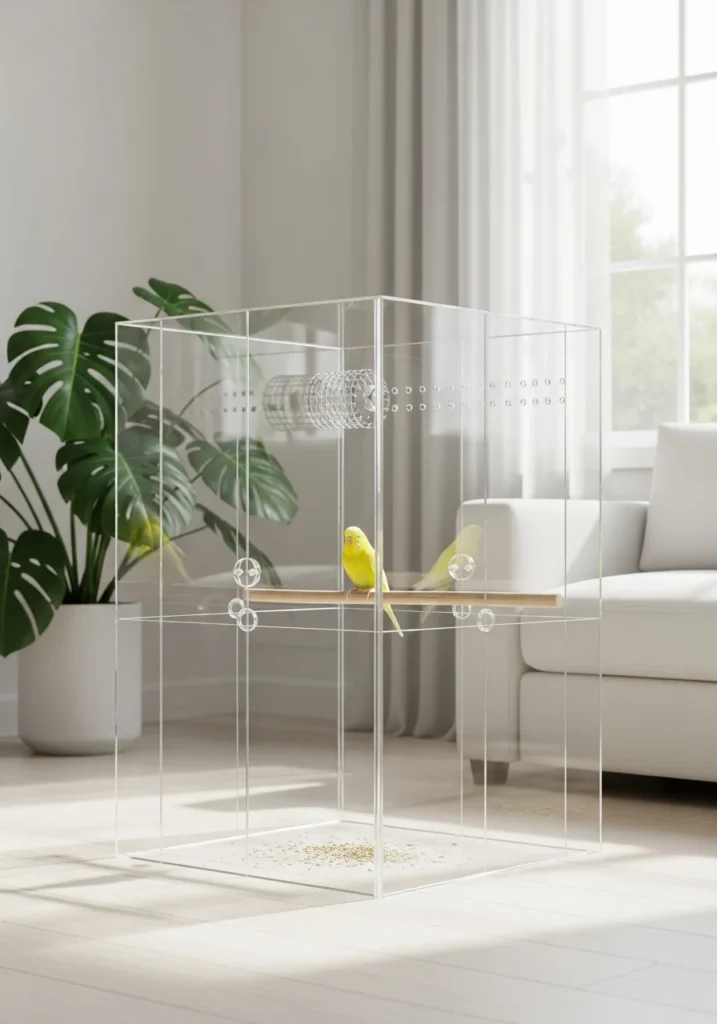
These cages feature four fully transparent acrylic panels with ventilation built into the design, typically through perforated sections or mesh strips at the top, sides, or bottom.
They offer the cleanest aesthetic and the best debris containment.
Best for:
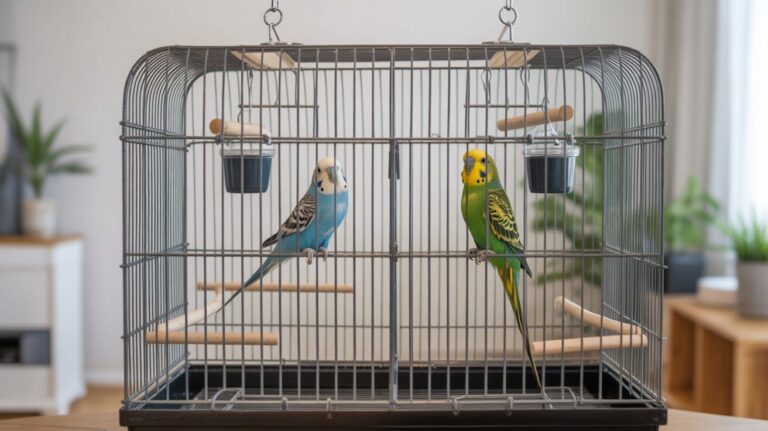
- Small to medium birds like budgies, cockatiels, lovebirds, and parrotlets
- Bird owners who prioritize observation and cleanliness
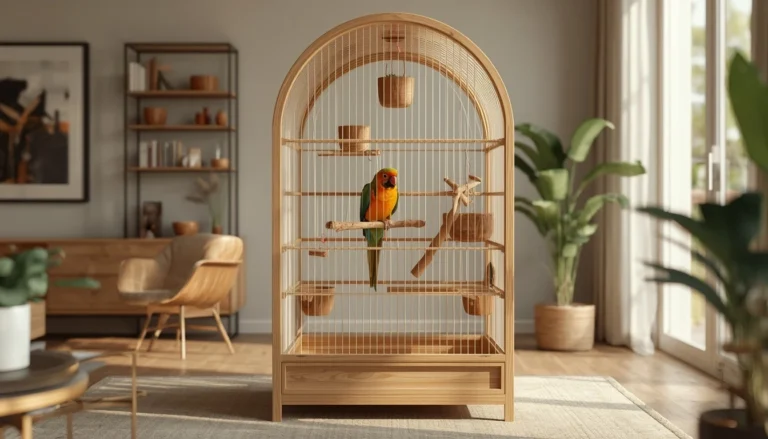
- Living spaces where the cage is a focal point of the room’s decor
Shop Full Acrylic Bird Cages on Amazon
Hybrid Acrylic and Metal Cages
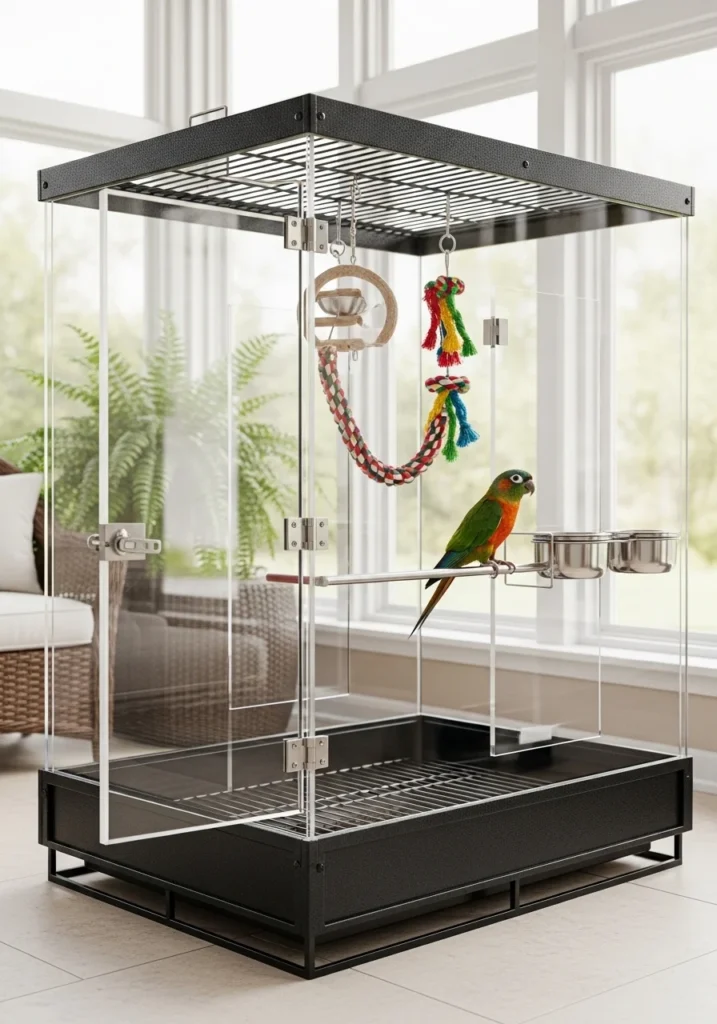
These designs combine a metal frame or top section with acrylic side panels.
The metal portions handle structural strength and door mechanisms, while the acrylic provides those unobstructed viewing angles you are after.
Best for:
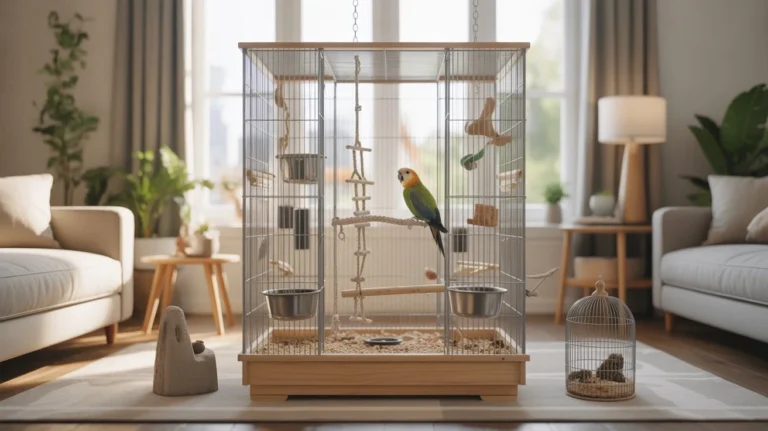
- Medium to larger parrots who need a sturdier structure
- Bird owners who want the viewing benefit without going fully acrylic
- Anyone who prefers a more traditional cage “feel” with a modern twist
Find Hybrid Acrylic Bird Cages on Amazon
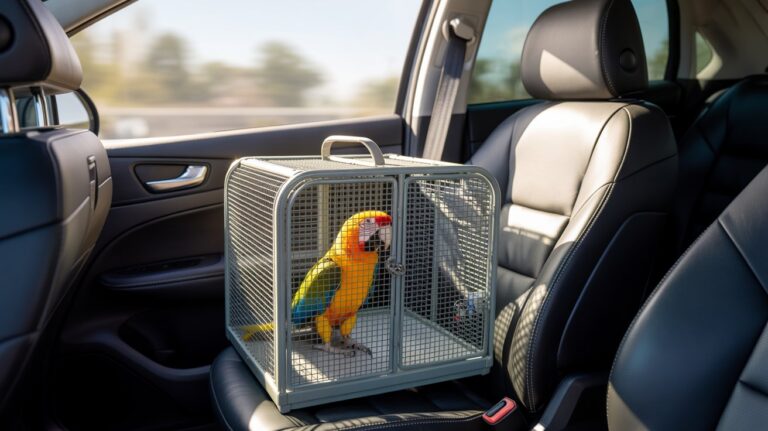
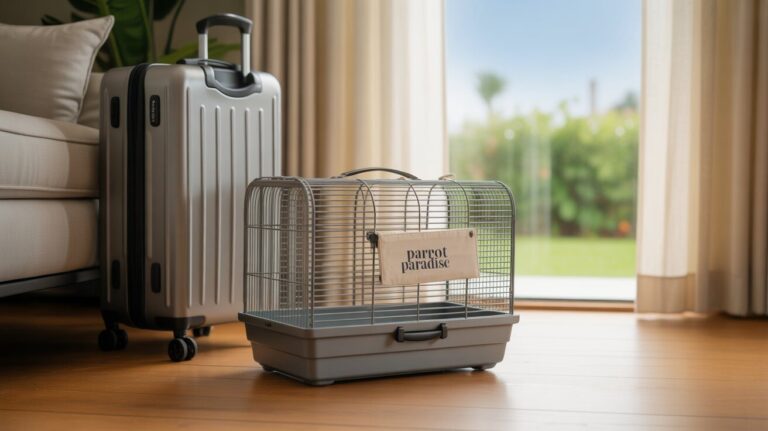
Acrylic Travel Carriers
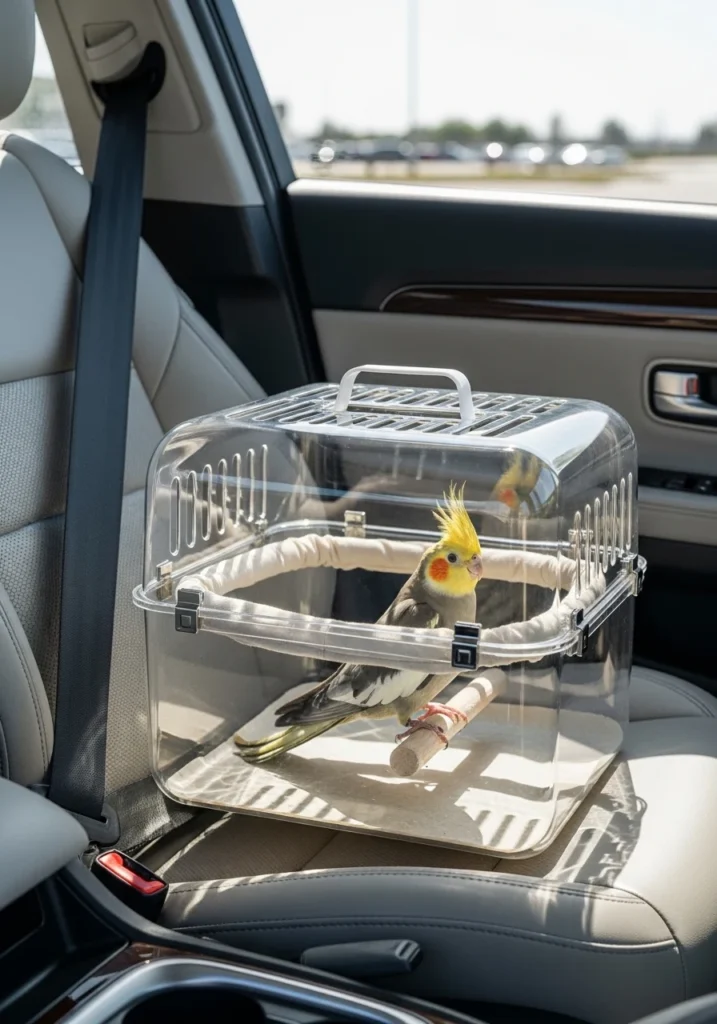
Smaller, portable versions of the full enclosure design.
These work brilliantly for vet visits and short trips because you can monitor your bird visually throughout the journey without having to open the carrier.
Best for:
- Frequent vet trips
- Birds who get anxious during travel, since you can maintain visual contact to reassure them
- Short day trips or outings
See Acrylic Bird Travel Carriers on Amazon
Key Features to Look for in an Acrylic Bird Cage
Not all acrylic cages are created equal. Before you hand over your money, run through this checklist.
Ventilation Quality
This is non-negotiable. A well-designed acrylic bird cage must have adequate ventilation to prevent humidity buildup and ensure fresh air circulation. Look for cages with:
- Perforated panels or mesh sections that allow airflow without sacrificing too much visibility
- Ventilation openings positioned to create passive airflow rather than stagnant air pockets
- Enough open area that the interior does not trap moisture
Inadequate ventilation in an enclosed acrylic space can cause respiratory issues for your bird. If a cage does not clearly describe its ventilation design, treat that as a red flag.
Acrylic Thickness and Durability
Thin acrylic scratches easily and can crack under pressure. Look for cages built with acrylic panels at least 3mm thick, and ideally 5mm or more for larger birds.
Thicker panels resist yellowing over time, hold up better against your bird’s beak, and feel substantially more solid.
For medium parrots and above, check whether the manufacturer specifies that the acrylic is rated for birds with strong beaks.
Some parrots will work at a panel repeatedly, and you want material that can handle that kind of attention.
Door and Access Design
Doors on acrylic cages need to be thoughtfully designed because the material does not behave like metal wire. Good features to look for include:
- Smooth sliding or hinged doors that open and close without stressing the acrylic
- Door latches that your bird cannot undo from the inside (some birds are distressingly clever)
- Wide enough access points for you to comfortably reach in for cleaning or interaction
Easy Cleaning and Maintenance
One of the reasons people love acrylic cages is that the surfaces wipe clean easily.
That advantage disappears fast if the cage has a complicated design with hard-to-reach corners or a tray that requires a small miracle to remove.
Prioritize cages with:
- Removable bottom trays that slide out without disassembling the whole unit
- Smooth interior surfaces with minimal ridges or grooves where grime accumulates
- Panels that detach for deep cleaning when needed
Acrylic vs. Traditional Wire Cages: An Honest Comparison
People often ask whether acrylic cages are genuinely better or whether they are just a more expensive version of something that already works fine.
The answer depends on what you value, so here is a straight comparison.
| Feature | Acrylic Cage | Wire Cage |
|---|---|---|
| Visibility | Excellent, unobstructed | Obstructed by bars |
| Mess containment | Very good | Poor |
| Draft protection | Good | Minimal |
| Noise buffering | Moderate | None |
| Airflow (natural) | Requires design care | Naturally open |
| Cleaning | Easy surfaces, trickier design | Bars need scrubbing |
| Cost | Higher upfront | Lower upfront |
| Aesthetics | Modern, sleek | Traditional |
| Durability for large parrots | Depends on thickness | Generally robust |
The honest takeaway? Acrylic cages are a clear upgrade for small to medium birds kept in living spaces where observation and cleanliness matter.
For very large parrots or birds that spend extensive time outdoors, traditional wire cages with powder-coated steel may still be the stronger practical choice.
Compare Acrylic Bird Cages on Amazon
Sizing Your Acrylic Bird Cage Correctly
Getting the size right is arguably more important than the material. A bird in a cage that is too small will be stressed regardless of how beautiful the enclosure looks.
General Sizing Guidelines
- Budgies and small finches: Minimum 18 x 18 x 24 inches. Bigger is always better.
- Cockatiels and lovebirds: Minimum 24 x 24 x 30 inches to allow comfortable movement.
- Conures and smaller parrots: At least 24 x 24 x 36 inches, with bar spacing no wider than 3/4 inch.
- African Greys and Amazon parrots: Minimum 36 x 24 x 48 inches. At this size, hybrid designs become more practical.
The rule of thumb that holds up well: your bird should be able to fully extend its wings in every direction without touching the sides. If it cannot do that, the cage is too small.
Shop Bird Cages By Size on Amazon
Placement Tips for Acrylic Bird Cages
Where you place the cage affects both your bird’s comfort and how well you get to enjoy that crystal clear visibility you paid for.
- Position the cage at eye level when you are seated. This makes observation natural and keeps your bird at a comfortable social height.
- Avoid direct sunlight on acrylic panels for extended periods. Some acrylic can yellow over years of UV exposure. A spot with bright indirect light is ideal.
- Keep the cage away from the kitchen. Cooking fumes, including non-stick cookware off-gassing, are dangerous to birds regardless of cage type.
- Place the cage against a wall on at least one side so your bird has a sense of security and a retreat from full exposure.
Caring for Your Acrylic Panels
Keeping those panels crystal clear takes just a little regular attention. Here is what works well.
- Use a soft microfiber cloth for daily wipe-downs. Rough cloths and paper towels scratch acrylic over time.
- Avoid ammonia-based cleaners like many commercial glass cleaners. They can cloud acrylic and are harmful to birds.
- A mild dish soap solution with warm water handles most cleaning needs without any risk.
- For stubborn deposits, a 50/50 white vinegar and water mix works beautifully and is bird-safe once it dries.
- Apply an acrylic polish every few months to buff out minor surface scratches and maintain that showroom clarity.
Are Acrylic Bird Cages Worth the Investment?
Here is the bottom line. Crystal clear acrylic bird cages cost more upfront than wire alternatives, and that is simply true.
A quality acrylic enclosure for a small to medium bird will typically run anywhere from two to five times the cost of a comparable wire cage.
What you get for that investment is a setup that looks genuinely beautiful in your home, keeps your floors cleaner, makes it far easier to observe your bird’s daily behavior, and reduces draft and noise exposure.
For bird owners who spend significant time near their birds and care about the aesthetic of their living space, the value proposition is strong.
If you treat your bird as a companion you actively interact with rather than a pet you occasionally glance at, an acrylic cage will pay you back in daily enjoyment and observation quality.
Final Thoughts
A crystal clear acrylic bird cage is one of those upgrades that sounds optional until you actually use one, and then it becomes hard to imagine going back.
The unobstructed views, the cleaner floors, the quieter environment, the sleek aesthetic — they all add up to a genuinely better experience for both you and your bird.
Do your homework on ventilation before you buy, match the size to your bird’s actual needs, and keep those panels clean with gentle products.
Get those three things right, and you will have a setup that both you and your bird are happy with for years to come.
And honestly, if your bird ever learns to press its beak against the acrylic and stare back at you the same way you stare at it, consider that a sign you made the right choice.
Find Your Perfect Acrylic Bird Cage on Amazon
What Is the Best Acrylic Bird Cage for Small Birds Like Budgies and Cockatiels?
For small birds like budgies, lovebirds, and cockatiels, an acrylic enclosure with ventilation panels is ideal. Choose a cage that measures at least 18 x 18 x 24 inches.
It should have 3mm to 5mm thick acrylic panels and a removable bottom tray for easy cleaning.
Brands like Perch Factory and Custom Cages, made in the USA, use high-quality acrylic that resists yellowing and cracking.
Are Acrylic Bird Cages Safe for Parrots?
Yes, high-quality acrylic bird cages are safe for parrots. The panels should be thick enough to handle beak pressure. Proper ventilation is also important.
For medium parrots like conures and caiques, choose panels at least 5mm thick. For larger parrots, like African Greys or Amazons, hybrid designs with acrylic panels and metal frames offer safety and visibility.
Always check that the cage uses non-toxic, bird-safe acrylic materials. Ensure door latches are secure so your parrot can’t open them.
How Do You Clean a Crystal Clear Acrylic Bird Cage Without Scratching It?
Clean acrylic bird cage panels with a soft microfiber cloth. Use a mild dish soap solution mixed with warm water.
Avoid paper towels, rough sponges, and ammonia-based cleaners. These can scratch the surface and cloud the panels over time.
For tough deposits, mix equal parts white vinegar and water. This solution is safe for birds once it dries.
Every few months, use an acrylic polish to buff out light scratches and restore clarity to the panels.
How Does a Clear Acrylic Bird Cage Compare to a Traditional Wire Cage?
A clear acrylic bird cage gives better visibility, keeps messes contained, and protects against drafts and noise.
In contrast, wire cages let seeds, feathers, and droppings scatter and offer no protection from cold air or sound.
However, acrylic cages need careful ventilation design for good airflow, and they usually cost more upfront.
For indoor bird owners who value observation and cleanliness, acrylic is the better option. For large birds or outdoor aviaries, powder-coated steel wire cages are more practical.
Can You Use a Transparent Bird Cage for Travel and Vet Visits?
Acrylic bird travel carriers are a great example of clear cage design. The transparent panels let you watch your bird’s body language and stress levels without opening the carrier.
This is helpful for anxious birds. Keeping visual contact through the walls can reassure them during vet visits or car rides.
Choose a carrier with secure door latches and ventilation slots on multiple sides. It should be the right size for your bird to stand and turn comfortably, but not so big that it causes jostling.