Best Avian Probiotics for a Healthy Pet Bird
If your bird seems off lately—maybe fluffed up, sluggish, or having loose droppings—you might be missing something simple: gut health.
Your feathered friend has a microbiome, just like you. When it’s out of balance, it can harm digestion and immunity.
Avian probiotics are becoming popular among bird keepers. This makes sense once you see their benefits.
This guide covers the best avian probiotics, what to consider when choosing one, and why your bird’s gut health is as important as its diet and feathers.
Why Your Bird’s Gut Health Matters More Than You Think
Birds have remarkably sensitive digestive systems. A round of antibiotics, a stressful move, a change in diet, or even a new cage mate can disrupt the balance of beneficial bacteria in your bird’s gut.
And once that balance tips, you start seeing problems.
Common signs of poor gut health in pet birds include:
- Loose or discolored droppings
- Loss of appetite or sudden weight loss
- Lethargy and reduced activity
- Increased susceptibility to infections
- Feather quality decline
The gut is essentially the foundation of your bird’s immune system.
When the beneficial bacteria are thriving, your bird can better fight off pathogens, absorb nutrients efficiently, and maintain a healthy energy level.
When those bacteria take a nosedive, it shows.
Browse Avian Probiotic Supplements on Amazon
The Role of Beneficial Bacteria in Birds
Just like mammals, birds host a complex community of microorganisms in their gastrointestinal tract.
These bacteria help break down food, synthesize certain vitamins, and create a protective barrier against harmful pathogens.
The most common beneficial strains found in healthy avian guts include Lactobacillus and Bifidobacterium species.
Probiotics work by replenishing and supporting these beneficial bacteria. Think of it as reinforcing your bird’s internal defense team. Not a bad investment, right?
What to Look for in a Quality Avian Probiotic
Before we get into specific product recommendations, let us talk about what separates a quality avian probiotic from a glorified dust packet.
Because not all probiotics are created equal, and some products out there are honestly more marketing than science.
Shop Top-Rated Bird Probiotic Supplements on Amazon
CFU Count and Strain Diversity
CFU stands for Colony Forming Units, and it tells you how many live bacteria are in each dose. A good avian probiotic should have a CFU count in the millions to billions range.
Anything significantly below that is unlikely to make a meaningful difference.
Strain diversity also matters. A product containing multiple strains of beneficial bacteria provides broader support than one with a single strain.
Look for formulas that include at least two to four different strains.
Stability and Shelf Life
Here is where things get tricky. Probiotics contain live organisms, and live organisms need proper conditions to survive. Look for products that are:
- Stored and shipped under recommended temperature conditions
- Clearly labeled with an expiration date
- Packaged in moisture-resistant containers
A probiotic that has been sitting on a shelf in the wrong conditions might technically contain the right strains on the label, but the bacteria may be mostly dead by the time it reaches your bird.
Always check the expiration date and buy from reputable suppliers.
Species-Specific Formulas
This is important. A probiotic designed for dogs or cats is not the same as one formulated for birds.
Avian gut flora differ significantly from mammalian gut flora, so a bird-specific formula will contain strains that are actually relevant to your bird’s digestive system.
Some products market themselves as universal, but if you can find one specifically labeled for birds or developed with avian gut health in mind, that is always the better choice.
Prebiotic Inclusion
Some advanced formulas include prebiotics alongside probiotics. Prebiotics are essentially food for the beneficial bacteria, helping them thrive once they reach the gut.
A product that combines both is often called a “synbiotic” and can offer more comprehensive gut support than a probiotic alone.
Best Avian Probiotics for Pet Birds
Now let us get into the actual products. These are well-regarded options among avian enthusiasts and bird veterinarians, each with their own strengths depending on what your bird needs.
1. Bene-Bac Bird Gel by PetAg
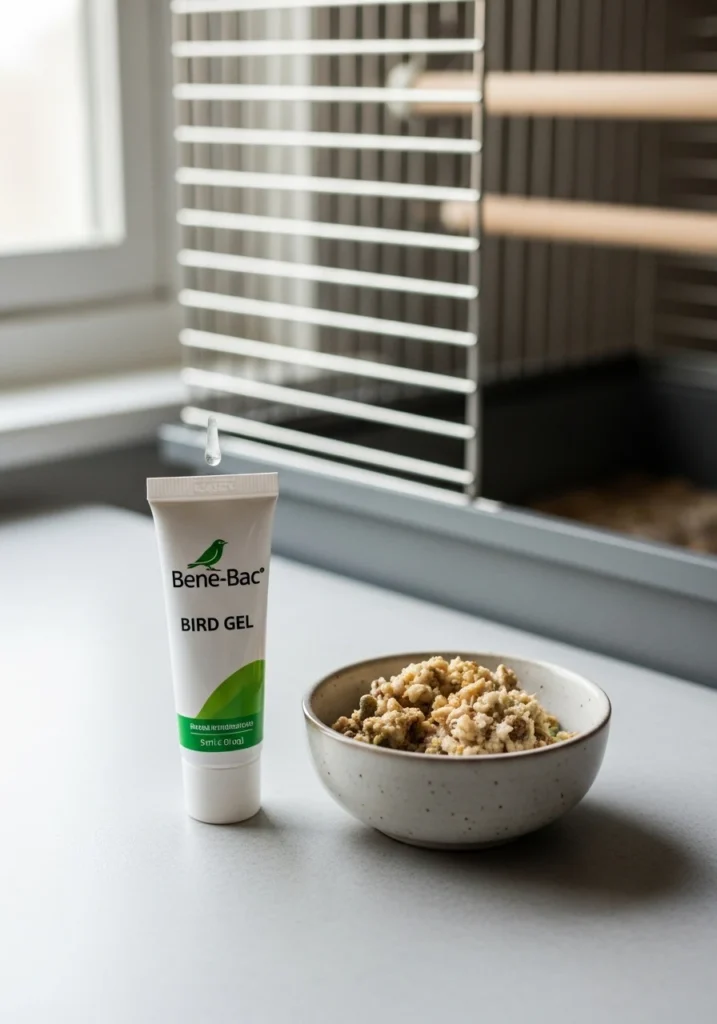
Best for: Post-antibiotic recovery and birds with acute digestive upset
Bene-Bac Bird Gel is one of the most widely recommended probiotics by avian vets, and for good reason.
It comes in a convenient gel form that you can easily administer directly into your bird’s beak or mix into soft food.
The formula contains live cultures of Lactobacillus acidophilus, along with other beneficial microorganisms.
Key features:
- Easy-to-administer gel format
- Contains live, beneficial microorganisms
- Widely trusted by avian veterinarians
- Works quickly for acute digestive issues
The gel format is particularly helpful if you have a bird that refuses to eat powdered supplements. You can target the dose directly rather than hoping your bird eats every bite of a treated food portion.
2. Morning Bird Probiotics and Electrolytes
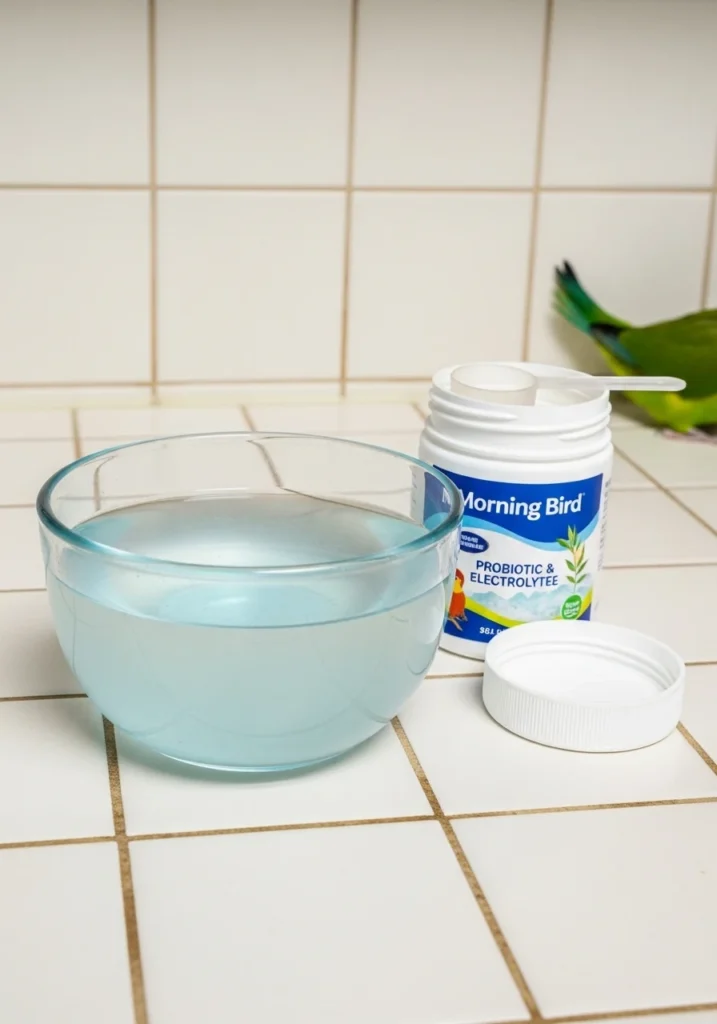
Best for: General maintenance and birds recovering from stress
Morning Bird combines probiotics with electrolytes, making it a dual-purpose product that supports both gut health and hydration recovery.
This is especially useful after illness, travel, or any other stressful event that might throw your bird off balance.
Key features:
- Combines probiotics with essential electrolytes
- Water-soluble powder for easy administration
- Good for birds experiencing stress-related digestive issues
- Suitable for a wide range of bird species
The powder dissolves well in water, which makes daily supplementation relatively simple.
The electrolyte component gives it an edge during recovery periods when hydration and mineral balance are both concerns.
3. Vetri-Science Avian and Reptile Formula Probiotic
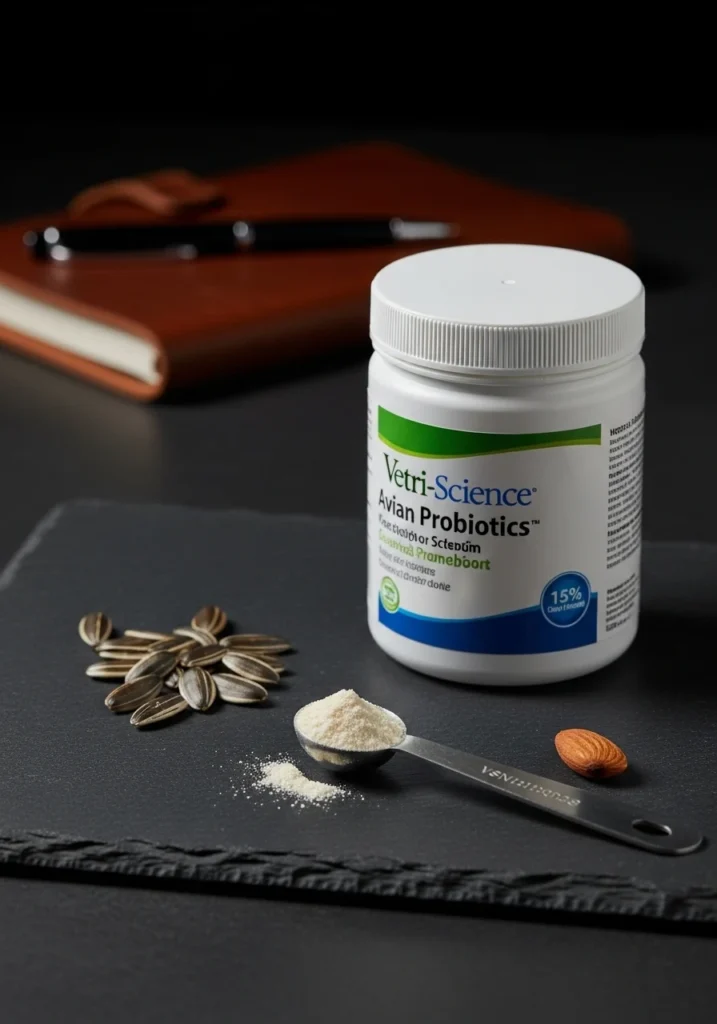
Best for: Multi-species households and long-term gut support
Vetri-Science has a solid reputation in the veterinary supplement world, and their avian probiotic formula lives up to that reputation.
This powder-based formula contains multiple bacterial strains alongside digestive enzymes, which help your bird extract more nutrition from every meal.
Key features:
- Multiple probiotic strains for broad-spectrum support
- Includes digestive enzymes for enhanced nutrient absorption
- Veterinarian formulated
- Suitable for long-term daily use
If you are looking for something you can add to your bird’s routine on an ongoing basis rather than just during illness recovery, this is a strong contender.
The digestive enzymes are a bonus that many single-purpose probiotic products skip entirely.
4. Nekton-BIO for Birds
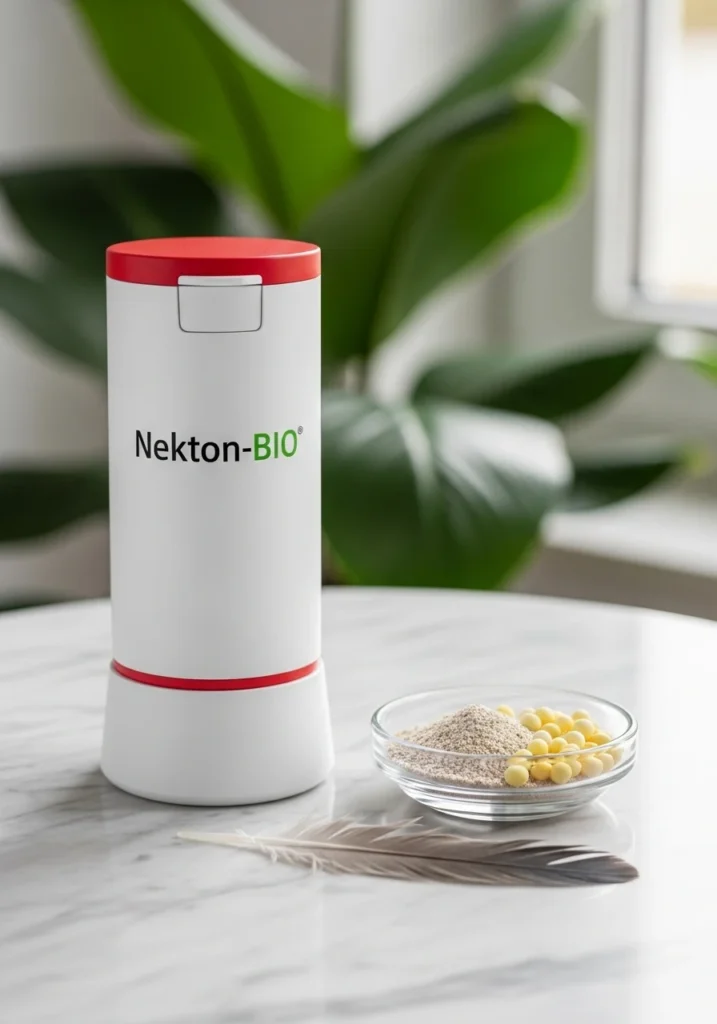
Best for: Birds with feather problems linked to poor nutrition absorption
Nekton is a German brand with a strong following in the avian community, and Nekton-BIO is their probiotic and B-vitamin combination product.
It supports gut health while simultaneously addressing B-vitamin deficiencies that can affect feather quality, nervous system function, and overall vitality.
Key features:
- Combines probiotics with B-complex vitamins
- Supports feather quality and nervous system health
- High-quality manufacturing standards
- Trusted by European aviculturists for decades
If your bird’s gut issues seem to coincide with feather problems or signs of nutritional deficiency, Nekton-BIO tackles both angles at once.
It is a bit more of an investment than basic probiotic powders, but the added nutritional support can make a real difference for birds dealing with multiple issues simultaneously.
5. Lafebers Nutri-Berries With Probiotic Support
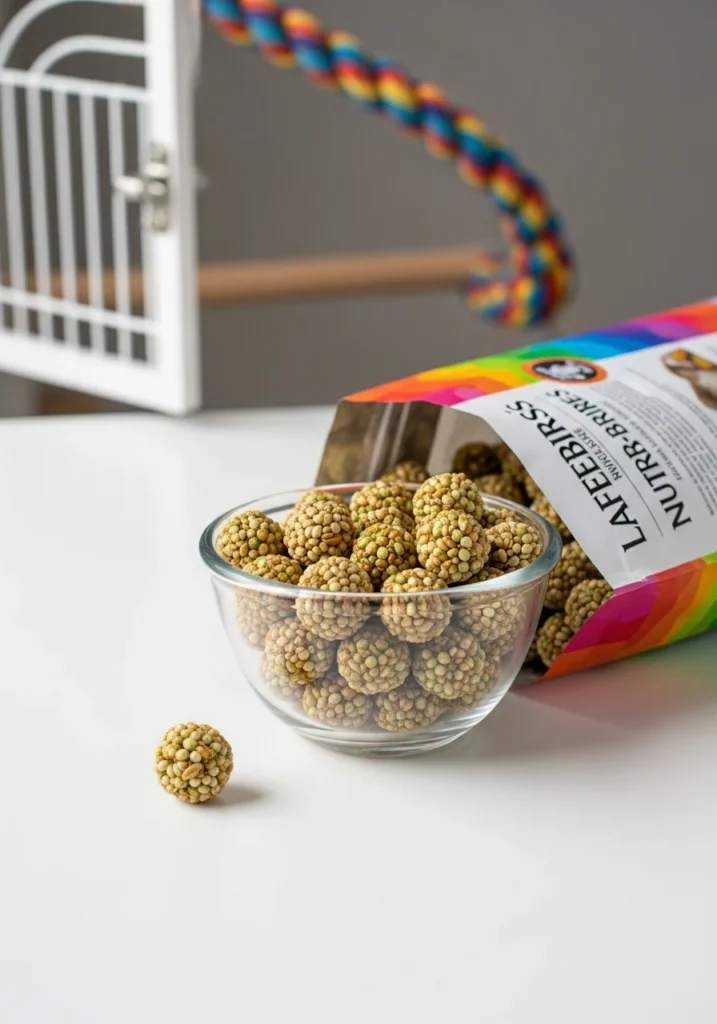
Best for: Picky birds who refuse supplements in water or soft food
Not every bird cooperates with supplementation.
If you have a stubborn bird who turns its beak up at anything unfamiliar in the water bowl, Lafebers has incorporated probiotic-supporting ingredients directly into their Nutri-Berries format.
This is not a standalone probiotic supplement, but it provides a convenient way to support gut health for difficult birds.
Key features:
- Probiotic support built into a familiar food format
- Great for picky or supplement-resistant birds
- Combines foraging enrichment with nutritional support
- No need for separate supplementation
Is it the most potent probiotic option on this list? No, not even close.
But when your bird refuses everything else, getting some beneficial support through a food they actually enjoy beats getting nothing in at all.
Find the Right Avian Probiotic for Your Bird on Amazon
How to Administer Probiotics to Your Bird
Knowing which probiotic to buy is only half the battle.
Getting your bird to actually consume it is the other half, and birds, as most of us know, can have very strong opinions about what goes in their beaks.
Explore Bird-Safe Probiotic Options on Amazon
In the Water Bowl
The easiest method for most birds is dissolving a water-soluble probiotic powder in the drinking water. A few important notes:
- Change the water daily when using probiotics, as the live cultures can affect water quality over time
- Use fresh, clean water as the base
- Avoid using probiotic-treated water in stainless steel bowls if the manufacturer advises against it
Mixed into Soft Foods
For birds that eat cooked grains, mashed vegetables, or egg food, mixing a probiotic powder directly into the food is highly effective.
The flavor of the food tends to mask any slight taste from the supplement.
Directly Administered
For gel-based probiotics like Bene-Bac, you can place a small amount directly on the tip of a finger and let your bird take it, or gently administer it to the side of the beak.
This method guarantees the bird actually receives the dose rather than leaving it uneaten.
When Should You Use Avian Probiotics?
You do not need to wait until your bird is sick to start thinking about probiotics. There are specific situations where starting or increasing probiotic supplementation makes especially good sense.
Use probiotics proactively during:
- Antibiotic treatment (and for at least two weeks after finishing the course)
- Dietary transitions or new food introductions
- Travel, moving, or any significant environmental change
- Breeding season, which places additional stress on the body
- Periods of illness recovery
Consider ongoing daily supplementation if:
- Your bird has a history of recurring digestive issues
- Your bird eats a diet that lacks dietary diversity
- Your bird tends to be stress-prone or easily affected by environmental changes
A Word on Probiotic Safety
Probiotics are generally very safe for birds when used as directed, but a few precautions are worth mentioning.
Always choose products specifically formulated or approved for birds.
Avoid giving your bird human probiotic supplements, as the strains and dosages are calibrated for the human gut, not an avian one.
If your bird shows signs of worsening digestive issues, blood in the droppings, or rapid weight loss, a probiotic is not the answer.
Get your bird to an avian veterinarian first. Probiotics support a healthy gut; they do not replace proper veterinary care for serious illness.
Conclusion
Your bird’s gut health quietly underpins almost everything, from feather quality and energy levels to immune function and long-term vitality.
Adding a quality avian probiotic to your routine is one of the most straightforward ways to give your feathered companion consistent support, especially during the stressful or medically challenging moments that all pet birds experience at some point.
Whether you go with the vet-trusted Bene-Bac gel for acute situations, the Morning Bird formula for stress recovery, or Nekton-BIO for its combined nutritional punch, the important thing is that you choose a product designed for birds and use it consistently.
Your bird cannot tell you when it is feeling off, but a healthy gut gives you a much better chance of seeing a bright, active, and thriving companion every single day.
And honestly, that is the whole point of keeping a bird in the first place.
Shop Avian Probiotics on Amazon and Support Your Bird’s Gut Health
What Are Avian Probiotics and How Do They Work?
Avian probiotics are supplements with live, helpful bacteria for birds. They support the natural microbes in your bird’s gut.
When antibiotics, stress, or diet change disrupt gut flora, these bacteria help restore balance. A healthy gut microbiome helps your bird absorb nutrients better, fight pathogens, and stay strong overall.
How Often Should I Give My Pet Bird Probiotics?
The right frequency depends on how you use the probiotic. If your bird is on antibiotics, daily use is best during treatment and for two weeks after.
For general gut health, many bird keepers give probiotics three to four times a week. Always follow the dosing instructions on your product.
If you’re unsure about the schedule, consult your avian vet.
Can I Give My Bird Human Probiotics Instead of Avian-Specific Ones?
No, this is a mistake to avoid. Human probiotic supplements have bacterial strains meant for the human gut.
Birds have a very different digestive system. The strains, concentrations, and ingredients in human formulas are not suitable for birds.
Always pick a probiotic made for birds or marked safe for avian use. This ensures your bird benefits from the supplement.
What Are the Signs That My Bird Needs a Probiotic?
No, this is a mistake to avoid. Human probiotic supplements have bacterial strains meant for the human gut.
Birds have a very different digestive system. The strains, concentrations, and ingredients in human formulas are not suitable for birds.
Always pick a probiotic made for birds or marked safe for avian use. This ensures your bird benefits from the supplement.
Are Avian Probiotics Safe to Use Long Term?
Yes, high-quality avian probiotics are safe for daily use if you follow the manufacturer’s dosage. They help maintain your bird’s natural gut bacteria without adding anything synthetic.
Quality is crucial, so choose reputable, bird-specific brands. Look for clear CFU counts and verified expiration dates.
If your bird has any unexpected changes after starting a probiotic, stop using it. Then, consult your avian veterinarian before resuming.