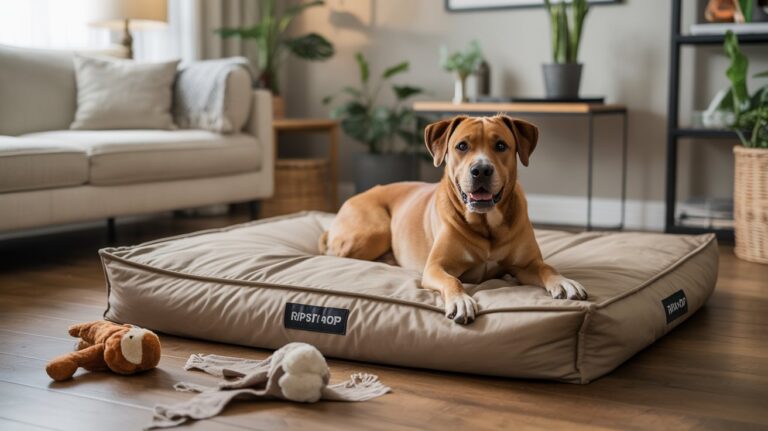
Eco Dog Beds Made from Recycled Materials
Your dog snoozes about 12 to 14 hours a day. So doesn’t it make sense to care about what that bed is actually made of?
I used to buy whatever bed had the cutest pattern, until I learned my old one was basically a plastic time bomb sitting in my living room.
That’s when I found eco dog beds made from recycled materials, and honestly, it changed how I shop for my dog completely.
I’m not here to lecture you about saving the planet one dog bed at a time (though, hey, it helps). I’m here to tell you why these beds are genuinely better, comfier, and smarter for your wallet in the long run.
What Exactly Are Eco Dog Beds Made From?
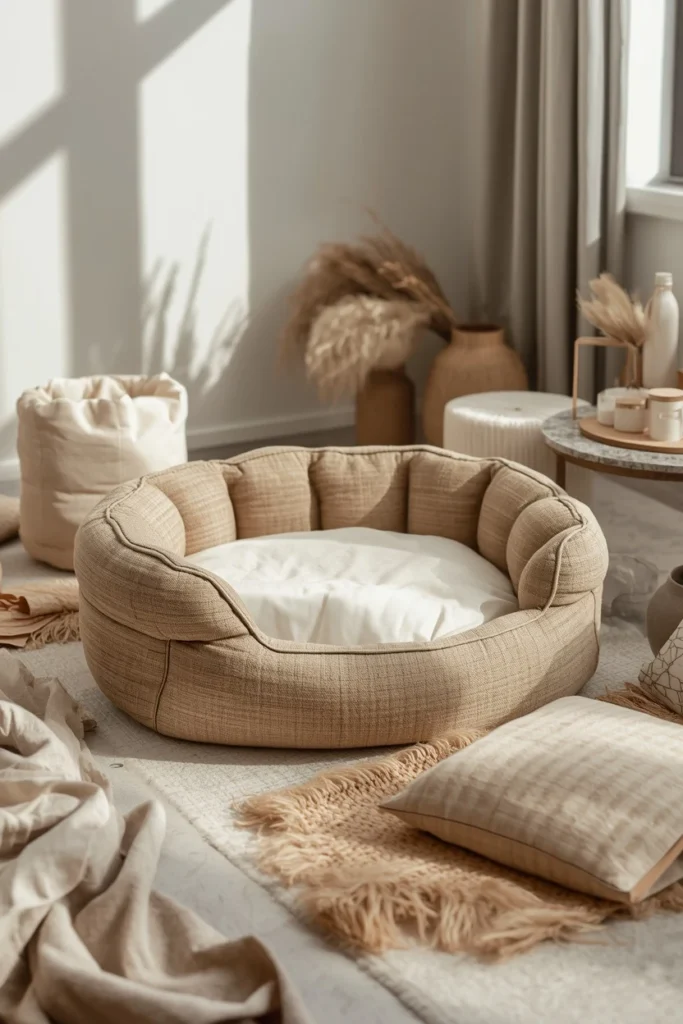
Let’s clear up the confusion first, because “eco-friendly” gets slapped on everything these days like a marketing sticker.
A true recycled dog bed uses materials that were already headed for a landfill or ocean and gives them a second life instead.
Here’s what typically goes into these beds:
- Recycled plastic bottles (rPET): Melted down and spun into soft, durable polyester fiber for stuffing.
- Reclaimed fabric scraps: Leftover textile pieces from clothing manufacturers, stitched into bed covers.
- Recycled foam: Old memory foam broken down and reformed into supportive cushioning.
- Organic cotton blends: Grown with fewer pesticides and often paired with recycled fill.
- Cork and natural fibers: Used in some higher-end beds for structure and odor resistance.
Ever wondered how many plastic bottles it takes to make one dog bed? Some brands use anywhere from 10 to 20 bottles per bed. That’s a lot of trash that didn’t end up floating in a river somewhere.
Why This Matters More Than You Think
Traditional dog beds often use virgin polyester and petroleum-based foam. Manufacturing that stuff from scratch burns through fossil fuels and pumps out emissions.
Recycling existing plastic instead cuts down on both, and it uses significantly less water in the process.
Are Recycled Dog Beds Actually Comfortable?
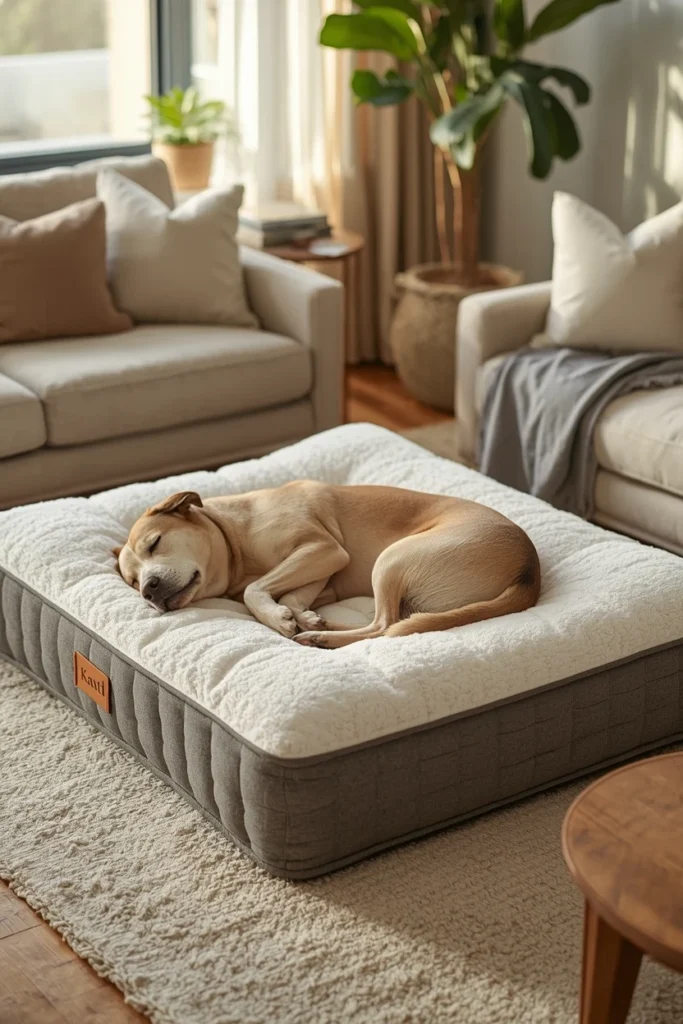
I get this question a lot, and I get why. People assume “eco-friendly” means “scratchy and sad,” like something you’d find in a compost bin. That assumption is flat out wrong.
I’ve tested a few of these beds with my own dog, a 60-pound lab mix who treats every bed like a personal quality inspector.
The recycled fiber fill actually held its shape better than a cheap synthetic bed I bought two years earlier. It didn’t flatten into a pancake after a month like some cheaper alternatives do.
The comfort comes down to construction, not the source of the material.
A well-made recycled bed uses the same loft, support, and stitching techniques as premium traditional beds. The only difference is where the raw material came from.
What Makes a Recycled Bed Comfortable
- Fiber density: Higher density means the bed won’t collapse under weight.
- Cover texture: Many brands use brushed or fleece-like recycled fabric that feels soft against fur.
- Support structure: Some beds include a recycled foam base layer for joint support, especially helpful for older dogs.
- Washability: A removable, machine-washable cover keeps the bed fresh without falling apart.
My dog actually prefers his recycled bed over the plush one my in-laws bought him. Make of that what you will.
Shop Orthopedic Recycled Dog Beds
The Environmental Impact: Why Should You Care?
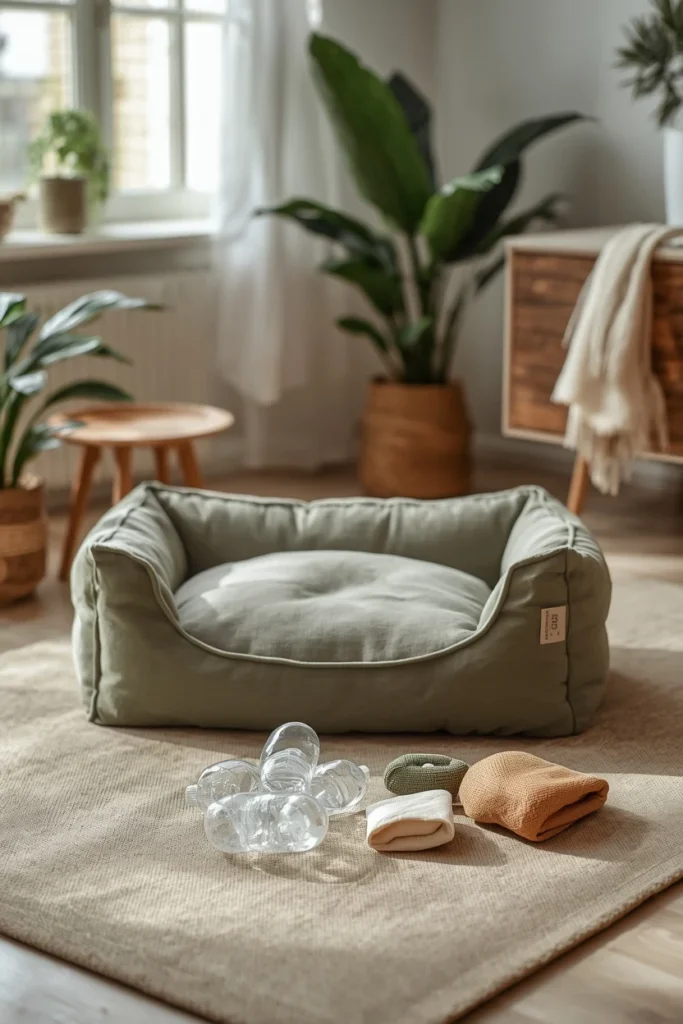
Look, I’m not going to pretend every person buying a dog bed is thinking about carbon footprints. But since you’re already here, let’s talk numbers for a second.
The pet industry produces an enormous amount of plastic waste every year, much of it from toys, packaging, and yes, bedding.
Choosing a bed made from post-consumer recycled materials directly reduces demand for new plastic production. That’s not a marketing gimmick, that’s basic supply and demand.
Quick Facts Worth Knowing
- Recycling plastic bottles into fiber uses roughly 59% less energy than producing virgin polyester.
- A single recycled dog bed can divert over a dozen bottles from landfills or waterways.
- Many eco brands also use water-based, non-toxic dyes, which reduces chemical runoff during manufacturing.
- Packaging from these brands is often plastic-free too, using recycled cardboard or compostable mailers.
Do these numbers alone save the planet? No, of course not. But every choice adds up, and this one happens to also give your dog a comfy place to sleep. That’s a pretty good trade-off if you ask me.
Is It Actually Better for Your Dog’s Health?

Here’s something people don’t talk about enough: what’s in your dog’s bed matters for their health, not just the planet’s.
Cheap synthetic beds often contain flame retardants, formaldehyde-based adhesives, or off-gassing foam that releases volatile organic compounds (VOCs).
Recycled and eco-conscious brands tend to skip these harsh chemicals entirely.
Many use OEKO-TEX certified fabrics, which means the materials are tested for harmful substances. That certification isn’t just a fancy label, it actually means something.
Signs Your Current Bed Might Be an Issue
- It has a strong chemical smell fresh out of the packaging.
- Your dog scratches or seems irritated after lying on it.
- The filling clumps or breaks down into dust within weeks.
- There’s no information available about the materials used.
If any of that sounds familiar, it might be time for an upgrade. Your dog can’t read labels, so you have to do that job for them.
How to Choose the Right Eco Dog Bed for Your Pup

Not every recycled bed fits every dog, and that’s fine. A senior dog with joint pain needs different support than a puppy who treats every bed like a chew toy audition.
Let’s break down how to actually pick the right one.
Consider Your Dog’s Size and Sleep Style
- Curl-up sleepers do well with bolstered, nest-style beds that offer a sense of security.
- Sprawlers need a flat, wide bed with even support across the whole body.
- Senior dogs benefit from orthopedic-style recycled foam for joint relief.
- Chewers need reinforced stitching and tougher recycled canvas covers.
Check These Features Before Buying
- Machine-washable cover: Non-negotiable if you value your sanity.
- Non-slip bottom: Keeps the bed from sliding across hardwood floors.
- Certifications: Look for OEKO-TEX, GRS (Global Recycled Standard), or similar labels.
- Warranty or durability guarantee: A sign the brand actually trusts their own product.
I made the mistake once of buying a bed with zero grip on the bottom. My dog basically surfed it across the kitchen every time he jumped on it. Learn from my mistake and check for that non-slip layer.
Are Eco Dog Beds Worth the Price?
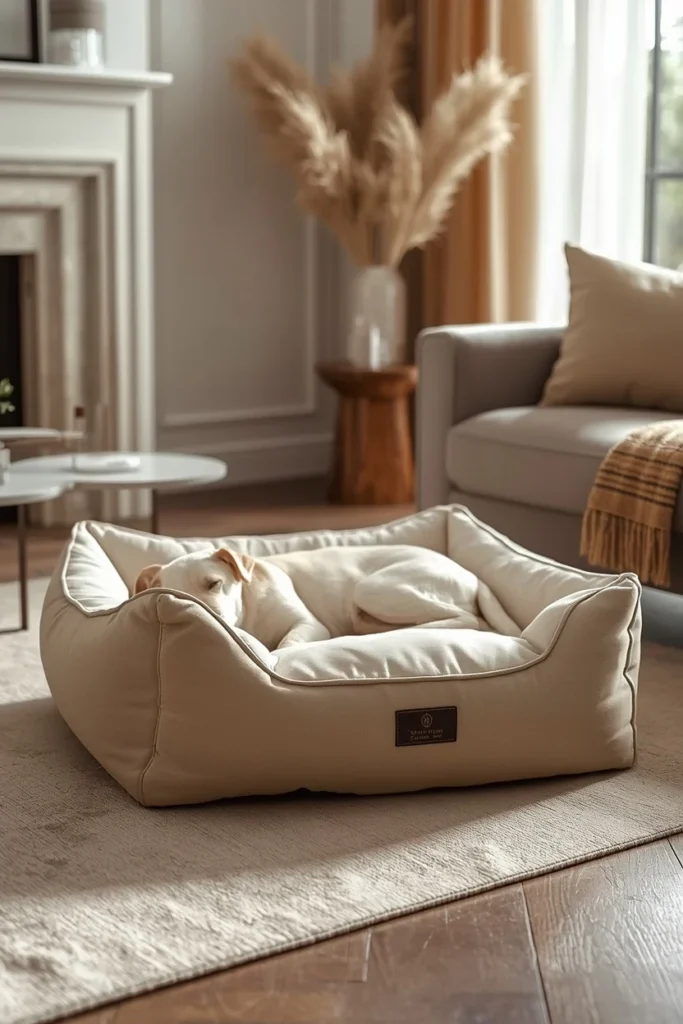
Let’s address the elephant in the room. Recycled dog beds sometimes cost more upfront than the bargain-bin option at a big box store. Is that extra cost actually worth it, or is it just eco-guilt pricing?
In my experience, it’s worth it, and here’s the honest reasoning why. Cheaper beds flatten fast, rip easily, and end up replaced every few months.
A well-made recycled bed, built with denser fill and sturdier stitching, tends to last two to three times longer.
Do the math and the “expensive” option often becomes the cheaper one over time.
You’re not just paying for the material source, you’re paying for better construction that happens to also be better for the environment. That’s a win-win, not a compromise.
Caring for Your Recycled Dog Bed the Right Way

Buying the bed is step one. Keeping it in good shape is step two, and it’s easier than you’d think.
- Wash the cover weekly if your dog sheds heavily or has allergies.
- Air out the filling every few weeks by leaving it in sunlight for an hour.
- Rotate or fluff the bed regularly to prevent uneven flattening.
- Avoid high heat drying, since it can break down recycled fibers faster than air drying.
A little maintenance goes a long way toward extending the life of the bed, which means less waste overall. That’s the whole point, right?
Final Thoughts

Choosing an eco dog bed made from recycled materials isn’t about being perfect or preachy. It’s about making one practical, comfortable choice that happens to also do less damage to the planet.
Your dog doesn’t care about carbon footprints, but they will absolutely notice a well-made, supportive bed that doesn’t smell like a chemical plant.
I switched because of the environmental angle, but I stayed because the bed genuinely held up better than anything else I’d tried.
Give one a shot, watch your dog claim it within five minutes, and enjoy the smug satisfaction of knowing you made a smarter choice without sacrificing comfort.
Your dog will thank you, probably by immediately shedding all over it.
Are Eco Dog Beds As Durable As Regular Dog Beds?
Yes, in most cases they hold up even better. Recycled fiber fill is often denser and more resistant to flattening than cheap virgin polyester, so the bed keeps its shape through more washes and more naps.
What Materials Are Used In Recycled Dog Beds?
Most recycled dog beds use rPET fiber from plastic bottles, reclaimed fabric scraps, recycled foam, or organic cotton blends.
Some higher-end options also include cork or natural fiber accents for structure and odor control.
Do Eco Dog Beds Cost More Than Regular Beds?
Sometimes the upfront price is a bit higher, but they usually last two to three times longer than cheap alternatives. That durability often makes them the more affordable option over time, not less.
Can Eco Dog Beds Help With Allergies Or Skin Irritation?
Many recycled dog beds use OEKO-TEX certified fabrics and skip harsh chemical treatments like flame retardants.
That makes them a safer choice for dogs with sensitive skin or allergies compared to some cheaply made synthetic beds.
How Do I Clean And Maintain A Recycled Dog Bed?
Wash the removable cover weekly if your dog sheds a lot, air out the filling in sunlight every few weeks, and avoid high heat when drying.
Regular fluffing also helps prevent uneven flattening and extends the bed’s lifespan.