Best Dog Allergy Supplements for Itchy Skin
If your dog scratches, bites, and rubs against furniture like they’re in a flea circus, you know the frustration. Watching your pup suffer from itchy, irritated skin is heartbreaking.
The endless vet visits, medicated shampoos, and elimination diets can wear you down fast. The good news?
The right dog allergy supplement can make a big difference, and you don’t have to spend a fortune to find one that works.
First, let’s be clear: not all supplements are the same. Some are just fancy treats with a bit of fish oil and a high price tag. What your dog needs depends on what’s causing the itching. So, let’s break it down.
We’ll cover the best ingredients to look for and specific products that real dog owners swear by.
Why Do Dogs Get Itchy Skin in the First Place?
Understanding the root cause of your dog’s scratching is the first step toward fixing it. Itchy skin in dogs usually falls into a few main categories, and each one responds differently to supplements.
Environmental Allergies
Just like humans sneeze their way through spring, dogs react to pollen, mold, dust mites, and grass.
These environmental triggers cause a response that shows up on the skin, leading to redness, hot spots, and that obsessive licking of paws we all know too well.
Environmental allergies are one of the most common reasons dogs develop chronic itchy skin.
Food Allergies and Intolerances
Beef, chicken, dairy, wheat, and eggs are the usual suspects when it comes to food-triggered skin reactions.
Your dog’s immune system flags these proteins as threats and launches an inflammatory response that irritates the skin.
Supplements alone won’t fix a food allergy if the trigger is still in the bowl, so pairing a good supplement with a proper diet matters.
Skin Barrier Dysfunction
Some dogs simply have a weaker skin barrier, meaning their skin loses moisture faster and lets irritants in more easily. Breeds like Bulldogs, Retrievers, and West Highland Terriers are notorious for this.
A compromised skin barrier is basically an open door for allergens, bacteria, and yeast.
What Ingredients Actually Work in Dog Allergy Supplements?
Walk into any pet store and you’ll find a wall of products all promising to stop the scratching. Here’s how to cut through the noise and know what you’re actually paying for.
Omega-3 Fatty Acids

Omega-3s are the undisputed stars of skin health for dogs. EPA and DHA, the two forms found in fish oil, reduce inflammation at a cellular level.
They strengthen the skin barrier, reduce redness, and can significantly decrease the severity of allergic reactions over time. Look for supplements with EPA and DHA specifically, not just generic “fish oil.”
The source matters too. Wild-caught salmon oil tends to be higher quality than generic fish oil blends.
Shop Quality Omega-3 Supplements for Dogs on Amazon
Probiotics

Here’s something a lot of dog owners don’t realize: a huge portion of the immune system lives in the gut.
When the gut microbiome is out of balance, it ramps up inflammatory responses, which shows up as itchy, reactive skin. Probiotic supplements help regulate this immune response from the inside out.
Strains like Lactobacillus acidophilus and Bifidobacterium animalis are the ones with the most research behind them for dogs.
Quercetin
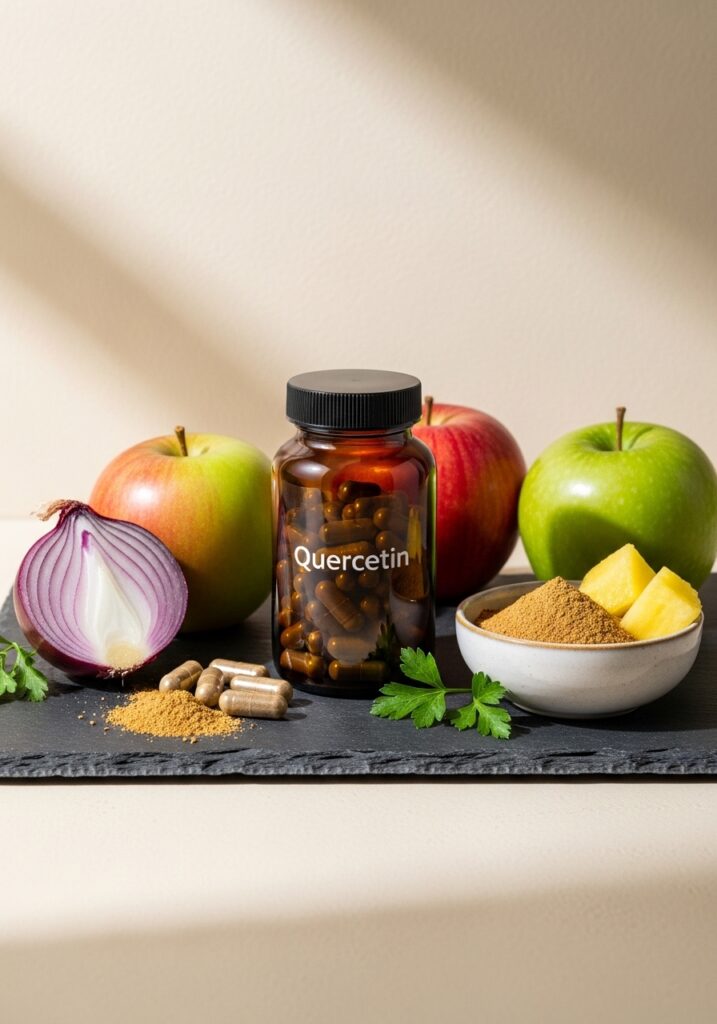
Think of quercetin as nature’s antihistamine. It’s a plant-derived flavonoid that inhibits the release of histamine and other inflammatory compounds.
Quercetin works best when paired with bromelain, an enzyme from pineapple that enhances its absorption. Together, they form a pretty effective tag team against allergic reactions.
Colostrum

Bovine colostrum contains immunoglobulins and growth factors that help regulate an overactive immune system.
It sounds fancy, but what it really does is teach your dog’s immune system to calm down and stop treating harmless substances like mortal enemies.
Some dogs respond incredibly well to colostrum supplements, especially those with seasonal or environmental allergies.
Vitamin E and Zinc
Both of these nutrients play key roles in skin repair and immune function. Zinc deficiency in particular is directly linked to skin problems in dogs, including scaling, hair loss, and chronic inflammation.
Many quality allergy supplements bundle these in with the omega-3s and probiotics for a more complete approach.
Best Dog Allergy Supplements for Itchy Skin
Now for the part you actually came here for. These are some of the top-rated dog allergy supplements that consistently deliver real results.
Zesty Paws Allergy Immune Supplement
This one shows up on nearly every recommended list for a reason.
It combines omega-3 fatty acids, probiotics, quercetin, and colostrum into a single soft chew, which most dogs take without any fuss. The chews include:
- EpiCor (a yeast fermentate that supports immune health)
- Apple cider vinegar (for gut support)
- Quercetin and bromelain for natural antihistamine effects
- Probiotics at 250 million CFU per chew
Dog owners consistently report reduced paw licking and less redness within four to six weeks of regular use. It is not a miracle overnight fix, but it delivers steady, noticeable improvement.
PetHonesty Allergy Relief Immunity Supplement
PetHonesty focuses on clean, transparent ingredient lists, which is something I personally appreciate. You know exactly what you’re giving your dog. Their allergy formula includes:
- Wild Alaskan salmon oil for high-quality omega-3s
- Colostrum to regulate immune responses
- Probiotics and digestive enzymes
- Echinacea for additional immune support
The soft chews have a salmon flavor that even picky eaters tend to love.
Pet owners with dogs who have both skin and digestive issues often find this one particularly helpful since it tackles both problems at once.
Nutramax Welactin Omega-3 Supplement
If you want to go straight to the source and just load your dog up with high-quality omega-3s, Welactin is one of the most vet-recommended fish oil supplements on the market.
It comes in a liquid form, which you drizzle over food, and it contains concentrated levels of EPA and DHA.
This one is ideal for dogs whose main issue is a weak skin barrier rather than a full-blown allergic response.
Results tend to show up in the coat first, with noticeably shinier, softer fur before the skin irritation starts to calm down.
VetriScience Canine Plus Senior Multivitamin (for older dogs)
Older dogs often develop skin issues as their nutritional absorption declines with age.
This comprehensive multivitamin addresses that by delivering omega-3s, zinc, vitamin E, and B vitamins in a formula designed for senior dogs.
If you have an older pup who has started scratching more as they’ve aged, their diet might simply not be meeting all their nutritional needs anymore.
Dogzymes Digestive Enhancer
For dogs where the root problem is clearly gut-related (think chronic ear infections alongside itchy skin, or skin issues that flare after dietary changes), a targeted probiotic and enzyme supplement like Dogzymes can be a game-changer. It includes:
- Multiple probiotic strains at high concentrations
- Digestive enzymes to improve nutrient absorption
- Prebiotics to feed the beneficial bacteria
Improving gut health often produces visible changes in skin condition within three to eight weeks.
How to Choose the Right Supplement for Your Dog
Choosing the right supplement comes down to understanding your specific dog’s triggers and health profile. Here are a few practical guidelines:
- If itching is seasonal, focus on quercetin, colostrum, and omega-3s to manage the immune response during high-allergen periods.
- If itching is year-round, prioritize a gut-focused approach with probiotics alongside omega-3 fatty acids.
- If the skin looks dry, flaky, or dull, the skin barrier is likely the issue, and a high-quality fish oil supplement should be your starting point.
- If your dog also has digestive symptoms, look for a combined probiotic and omega-3 formula.
Always check with your vet before adding any supplement, especially if your dog is already on medication.
Some supplements interact with common allergy drugs or anti-inflammatory medications.
How Long Before You See Results?
Managing expectations here matters. Supplements work gradually, not instantly. Most dog owners notice initial improvements in coat quality and reduced inflammation within three to six weeks.
Full skin barrier repair and immune regulation can take three to four months of consistent use.
The biggest mistake people make is giving up after two weeks because they don’t see dramatic results. Stick with it, keep the diet consistent, and give the supplement enough time to actually work.
Final Thoughts
Dealing with a constantly itchy dog tests your patience in ways no one warns you about. But with the right allergy supplement, combined with a solid diet and a little consistency, most dogs see real, lasting relief.
Focus on quality ingredients like omega-3s, probiotics, and quercetin rather than flashy marketing language on the label.
Your dog cannot tell you what’s working, so pay close attention to changes in their scratching frequency, coat appearance, and overall comfort. They will show you the results even if they cannot say it.
And honestly, watching a dog finally stop chewing their paws and just relax? That is its own kind of reward.
Find the Right Dog Allergy Supplement for Your Pup on Amazon
How Long Does It Take for Dog Allergy Supplements to Work?
Most dog allergy supplements show results in three to six weeks. You may see less scratching and a healthier coat.
For complete effects, like skin barrier repair and immune support, it may take three to four months of daily use. Patience is important.
Stopping too soon is a common reason owners think a supplement isn’t effective.
Can I Give My Dog More Than One Allergy Supplement at the Same Time?
Yes, you can combine supplements, but do it carefully. Over-supplementing certain nutrients, like zinc or vitamin A, can be toxic.
The safest way is to pick one comprehensive formula that includes omega-3s, probiotics, and immune-support ingredients. This is better than stacking multiple single-ingredient products.
Always check with your vet before combining supplements, especially if your dog is on prescription medication.
What Is the Best Ingredient to Look for in Dog Allergy Supplements for Itchy Skin?
Omega-3 fatty acids, like EPA and DHA from quality fish oil, are key. They reduce inflammation at the cellular level and strengthen the skin barrier.
Probiotics follow closely, as they support the gut-immune link that causes many chronic allergic skin reactions.
For dogs with seasonal allergies, quercetin with bromelain provides a natural antihistamine effect, enhancing a solid supplement routine.
Are Natural Dog Allergy Supplements as Effective as Prescription Allergy Medications?
Natural supplements and prescription medications work in different ways, so comparing them isn’t entirely fair.
Prescription meds like Cytopoint or Apoquel provide quick, targeted relief by blocking specific immune signals. In contrast, supplements act slowly, addressing the root causes of allergic reactions.
For dogs with mild to moderate allergies, quality supplements often offer enough relief without the side effects of long-term medication use. For severe cases, many vets suggest combining both methods.
Can Puppies Take Dog Allergy Supplements for Itchy Skin?
Many allergy supplements are safe for puppies. However, age limits vary by product, and dosages differ from those for adult dogs.
Most labels state a minimum age, usually around twelve weeks, and suggest smaller doses based on the puppy’s weight. It’s wise to consult a vet before giving any supplement.
Puppies have developing immune and digestive systems, which react differently to concentrated nutrients.