Best Large Indoor Aviaries for Multiple Pet Birds
If you share your home with more than one feathered companion, you already know the drill: birds need space, and a cramped cage is a recipe for stress, squabbles, and one very unhappy household.
Choosing the right large indoor aviary is not just about picking the biggest thing that fits in your living room.
It is about giving your birds a real environment where they can stretch, fly, interact, and thrive together.
This guide walks you through everything you need to know before you spend your hard-earned money on an aviary.
From size requirements and materials to ventilation and placement, let us cover what actually matters when you are housing multiple birds under one roof.
Why a Large Indoor Aviary Is Worth Every Penny
Let me put it plainly: birds are not meant to sit still. Anyone who has watched a flock of parakeets tear around a room at full speed understands that these animals are built for movement.
When you house multiple birds together in a small cage, you are not creating a social paradise. You are creating a pressure cooker.
A large indoor aviary solves that problem. It gives each bird personal space to retreat, fly short distances, and claim a favorite perch.
It also gives you the joy of watching your birds behave more naturally, which is honestly one of the best parts of keeping birds in the first place.
The Difference Between a Cage and an Aviary
Here is something people mix up all the time. A bird cage is designed for a single bird or a bonded pair.
An aviary is designed to house a community. The difference is not just size. It is also about how the structure is built, how it ventilates, and how easy it is to maintain.
A proper indoor aviary offers:
- Enough vertical height for birds to fly short distances upward (this matters especially for finches and canaries)
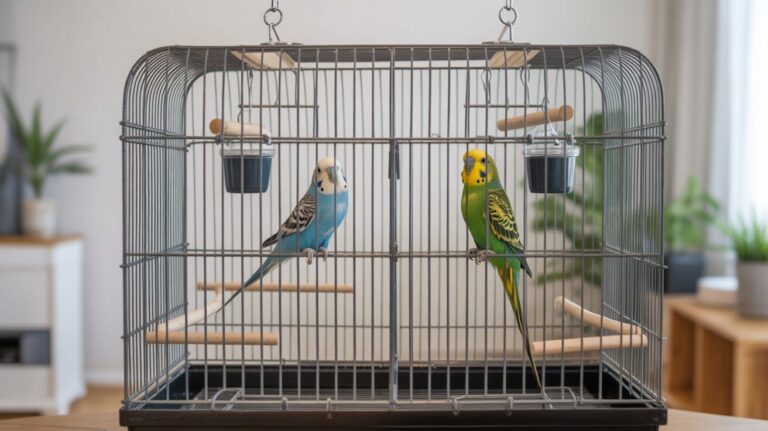
- Multiple feeding and watering stations to reduce competition
- Designated perching zones at different heights
- Easy-access doors for cleaning without turning it into a full escape operation
- Solid construction that holds up to daily activity without rattling or wobbling
Browse Large Indoor Aviaries on Amazon and Find the Right Fit for Your Flock
What to Look for in a Large Indoor Aviary
Shopping for an indoor aviary without a checklist is how you end up with a 200-dollar regret. Trust me. Before you buy anything, run through these key features.
Size: Go Bigger Than You Think You Need
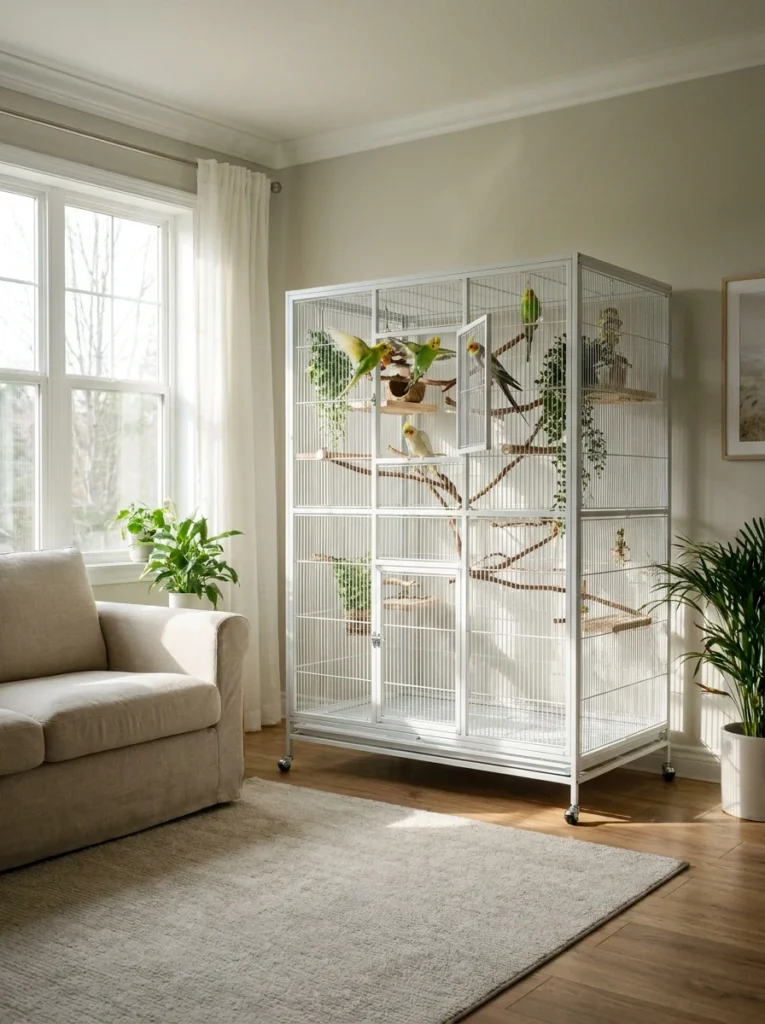
The single most common mistake bird owners make is underestimating how much space their flock actually needs.
A general rule of thumb is that each bird should have enough room to fully extend its wings without touching another bird or the cage walls.
For a group of small birds like finches, canaries, or budgies, you are looking at a minimum footprint of about 36 inches wide by 24 inches deep, with a height of at least 60 inches.
For medium birds like cockatiels or lovebirds, go bigger. For larger parrots in a group setting, you need a walk-in or near walk-in size structure.
A practical breakdown of recommended minimum dimensions by bird size:
- Small birds (finches, canaries, budgies): 36″W x 24″D x 60″H, minimum
- Medium birds (cockatiels, lovebirds, parrotlets): 48″W x 30″D x 72″H, minimum
- Large birds (conures, caiques, small Amazons): 60″W x 36″D x 72″H or larger
When in doubt, add 20 percent more space to whatever calculation you land on. Birds will use it.
Shop Large Indoor Aviaries by Size on Amazon
Bar Spacing: A Detail That Can Save a Life
Bar spacing is not glamorous, but it is critical. If the bars are too wide, small birds can slip through or get their heads stuck.
If the bars are too narrow, the aviary does not ventilate properly and can become stuffy and damp.
General bar spacing guidelines:
- Finches and canaries: 1/4 inch to 1/2 inch
- Budgies and parrotlets: 1/2 inch
- Cockatiels and lovebirds: 1/2 inch to 5/8 inch
- Conures and caiques: 3/4 inch to 1 inch
Always double-check the bar spacing before you purchase, especially if you are mixing bird sizes in one aviary.
Materials: Not All Metal Is Created Equal
You want a powder-coated steel or stainless steel aviary. Full stop. Here is why:
Powder-coated steel is the most common option. It is affordable, durable, and comes in a range of colors.
The coating prevents rust and also stops your birds from accessing the bare metal underneath, which can sometimes contain zinc or lead. Always confirm that the coating is non-toxic and bird-safe.
Stainless steel is the gold standard. It does not rust, it does not chip, and it does not leach anything harmful. It is also significantly more expensive.
If you have chewing birds like parrots, stainless steel pays for itself over time because they cannot destroy it the way they can a powder-coated surface.
What to avoid:
- Galvanized metal (contains zinc, which causes zinc poisoning in birds)
- Wooden aviaries indoors (moisture damage, mold, and very difficult to sanitize)
- Painted surfaces with unknown or unverified coatings
Find Bird-Safe Powder-Coated and Stainless Steel Aviaries on Amazon
Doors and Access Points
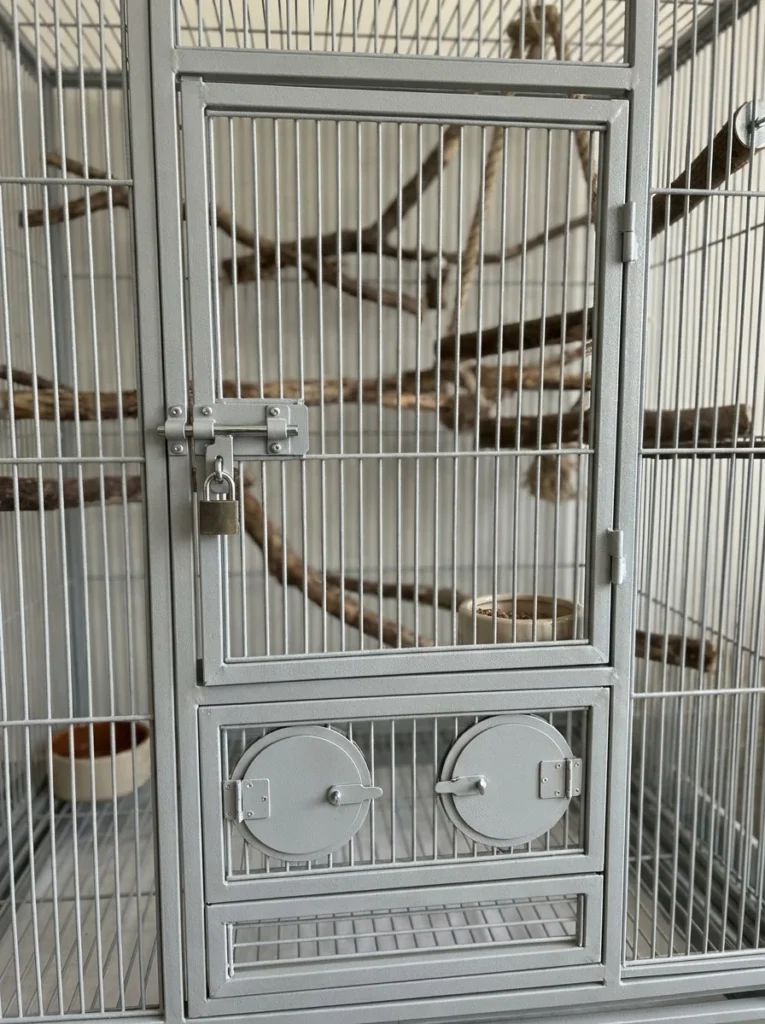
How many doors does the aviary have, and where are they? This matters far more than most people realize when they are standing in a store looking at a nice photo on a box.
A well-designed indoor aviary should have at least one large main door for access during cleaning, and several smaller side doors for feeding and watering.
Sliding bolt latches or double-locking mechanisms are essential if you have clever birds like conures or cockatiels, who will absolutely figure out a simple latch given enough time and motivation.
Mobility and Stability
Many large indoor aviaries come with casters or wheels. This is genuinely useful.
You will want to move the aviary for thorough cleaning, for repositioning near natural light, or just because you changed your mind about where it looks best in the room.
That said, make sure the aviary also has a way to lock those wheels in place.
An aviary that rolls freely while birds are inside is a hazard, and the absolute last thing you want is a 70-pound birdhouse sliding across hardwood floors because someone bumped into it.
Setting Up Your Indoor Aviary for Multiple Birds
Buying the aviary is only half the job. How you set it up determines whether your birds actually thrive in it.
Perch Placement: Think Like a Bird
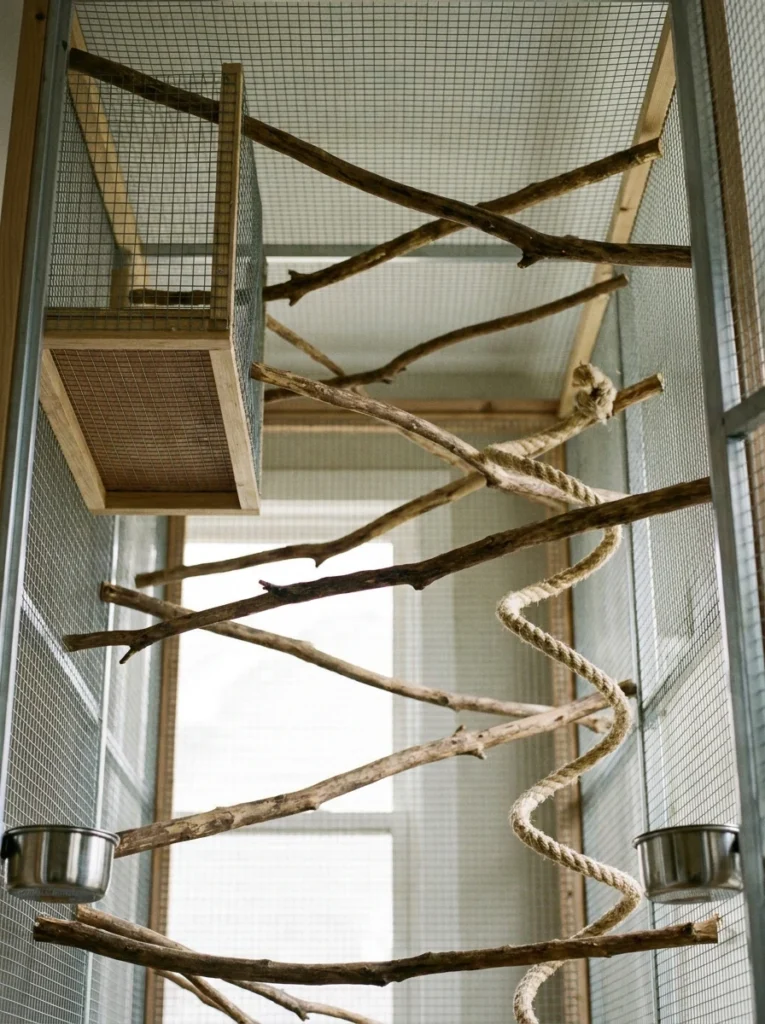
Birds naturally seek height for safety. Place the highest perches near the top of the aviary, and use the lower space for feeders, water stations, and toys.
Varying perch diameters is important too, because using only dowel rods of a single size can cause foot problems over time.
Good perch options include:
- Natural wood branches (cleaned and dried) for varying grip and texture
- Rope perches for flexible, softer grip options
- Concrete or mineral perches near feeding areas to naturally keep nails trimmed
- Platform perches for birds who like a flat resting spot
Avoid placing perches directly over food and water dishes. You already know why.
Feeding Stations: More Than You Think You Need
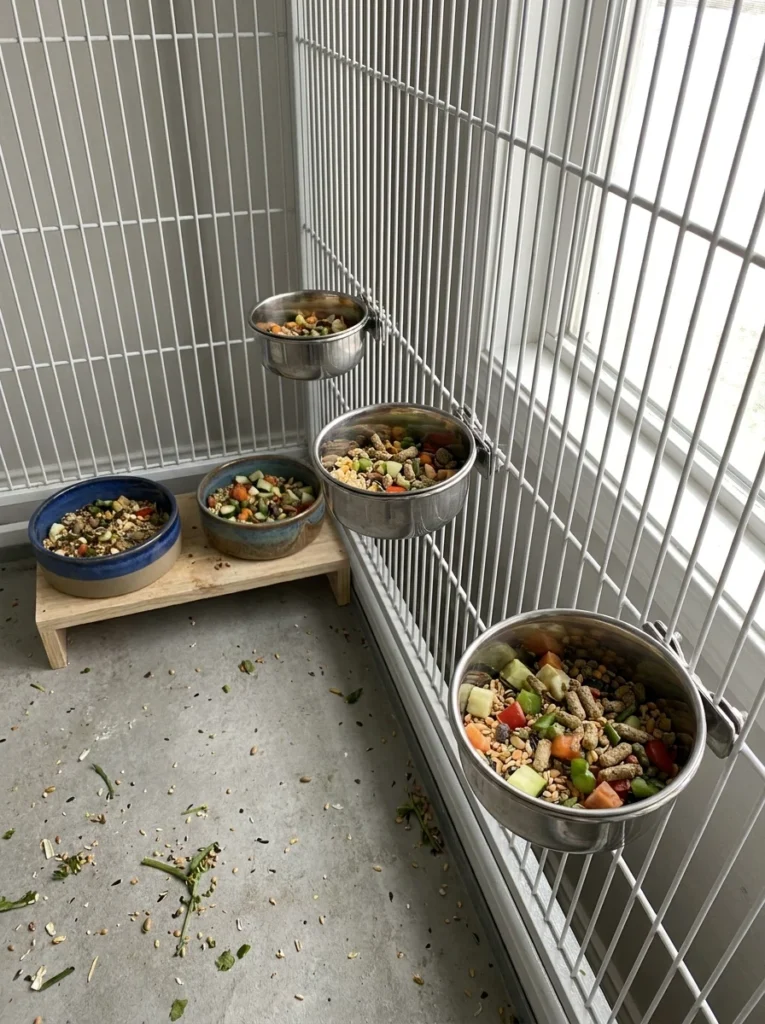
Multiple birds mean feeding competition, and feeding competition means stress injuries if you are not paying attention.
As a baseline, provide one more feeding station than the number of birds you have. If you house six cockatiels, set up seven feeding points.
Spread them around the aviary rather than clustering them in one spot.
This prevents dominant birds from guarding the food supply and ensures the more timid birds in your flock still eat properly.
Lighting and Natural Light Exposure
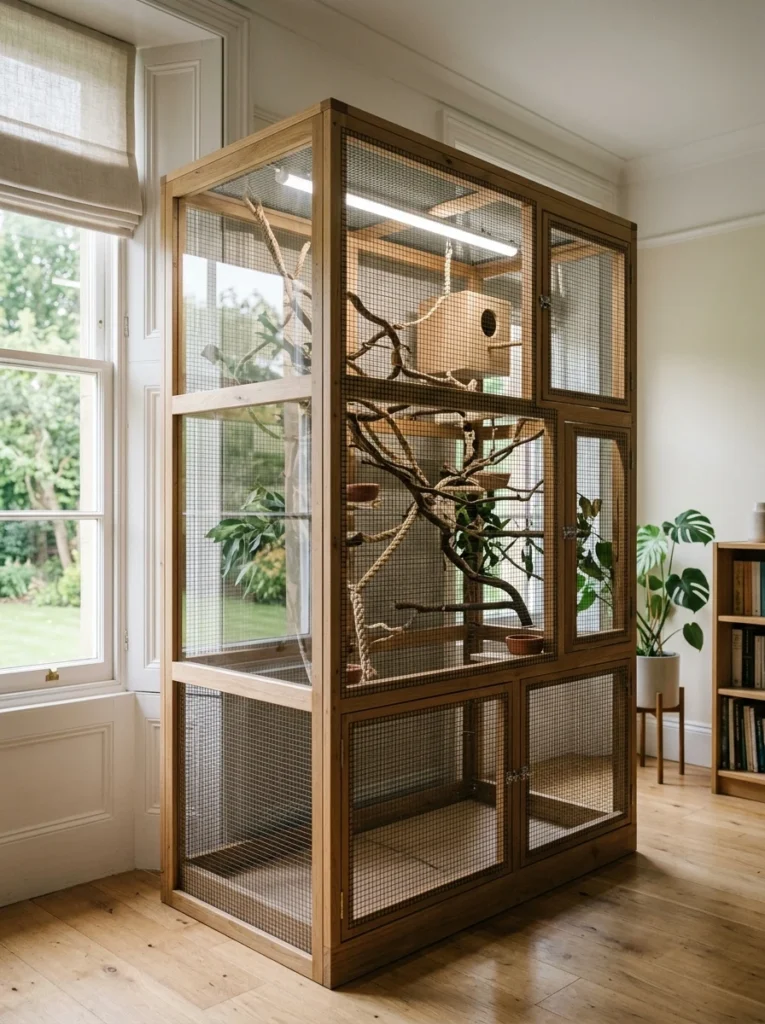
Birds need a proper light cycle to stay hormonally balanced and psychologically healthy.
Position the aviary somewhere it receives natural light for part of the day, but not in direct sunlight for hours at a stretch.
Overheating is a real risk, and a bird cannot exactly step out of the sun when it needs to.
If natural light is limited in your space, a full-spectrum avian lighting system is worth the investment.
These lights mimic natural daylight and support everything from vitamin D synthesis to proper sleep cycles and even feather condition.
Ventilation and Air Quality
Stale air inside an aviary builds up ammonia from droppings and dander from feathers. This is bad for your birds and honestly not great for you either.
Make sure your aviary sits in a room with decent air circulation, and that the design itself does not create enclosed pockets where air stagnates.
A HEPA air purifier nearby is a genuinely smart addition to any bird room. It pulls feather dander and dust from the air, which reduces respiratory issues for both your birds and your household.
Top Features Worth Paying More For
Not every premium feature on an aviary is marketing fluff. Some genuinely improve daily life with multiple birds.
Pull-Out Waste Trays
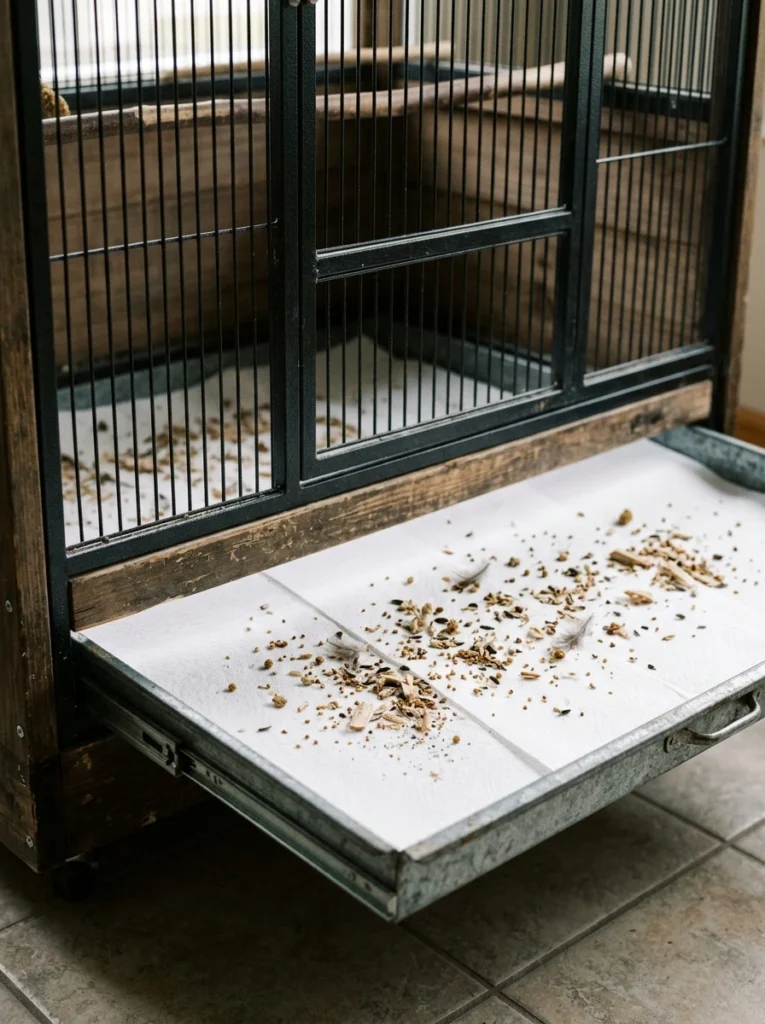
A pull-out tray at the base of the aviary means you can clean droppings without opening the main structure and triggering a small riot of flying birds.
If this feature is not on an aviary you are considering, think very carefully about whether you want to open a large door every single day just to remove a tray of waste.
Seed Guards
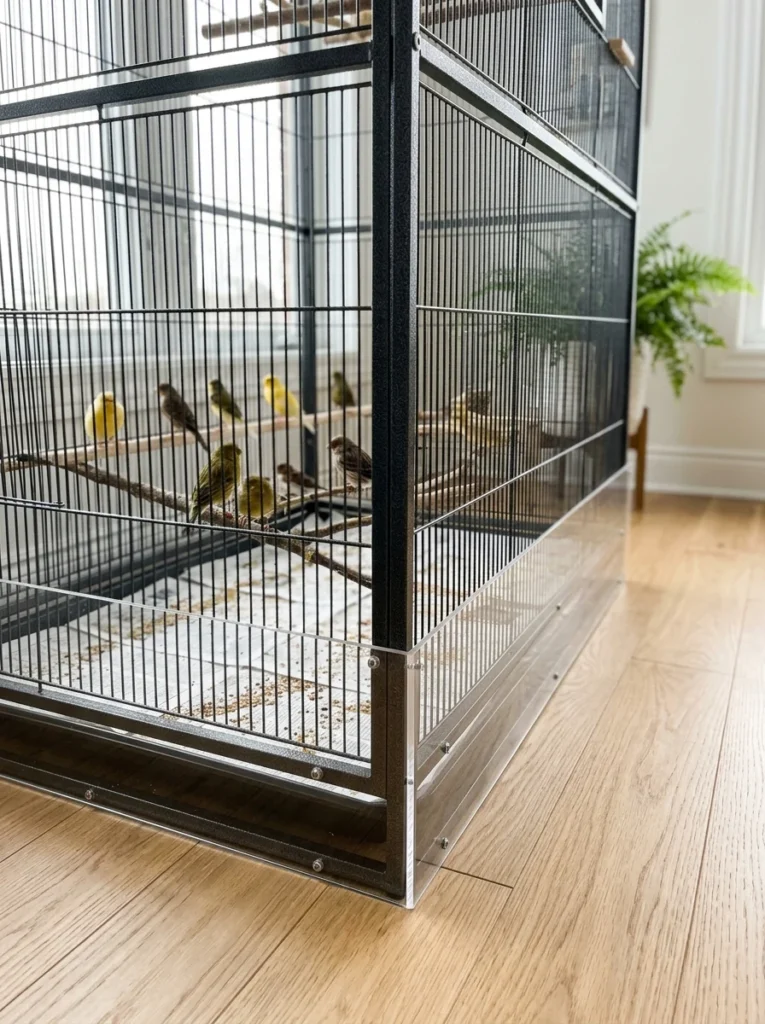
These are the mesh or plastic guards that wrap around the lower perimeter of the aviary to catch tossed seeds and debris before they hit your floor.
Birds are spectacularly messy, and without a seed guard, you will spend a surprising portion of your life sweeping up millet.
Built-In Feeding Doors
Some aviaries include small external access doors positioned directly in front of food and water holders.
You can refill food and water from outside the aviary without opening the main structure. For multiple-bird setups, this means fewer escape attempts and far less chaos at feeding time.
Explore Full-Featured Large Indoor Aviaries on Amazon
Placement Tips for Indoor Aviaries
Where you put the aviary inside your home shapes your birds’ daily experience more than most people expect.
Good placement principles:
- Away from kitchen fumes. Cooking vapors, especially from non-stick cookware, are lethal to birds. Keep the aviary out of or far from the kitchen.
- Away from drafts. Cold drafts from air conditioning vents or windows weaken bird immune systems over time.
- In a social area of the home. Birds are flock animals. Placing the aviary in a room where your family spends time keeps your birds engaged and reduces stress.
- Not against an exterior wall. Exterior walls experience greater temperature swings, which causes stress for indoor birds.
Keeping Multiple Species Together
Can you house different bird species in the same large indoor aviary? Sometimes, yes. Often, it is more complicated than it looks. Some species cohabit peacefully. Others do not.
Generally compatible pairings:
- Finches and canaries (watch for canary dominance over smaller finches)
- Budgies and cockatiels (provide enough space for cockatiels to escape budgie energy)
- Different finch species of similar size
Species to keep separate:
- Lovebirds with most other species (they are territorial and will attack)
- Parrots with finches or canaries (size difference creates risk)
- Cockatiels with hook-billed parrots larger than themselves
When in doubt, set up a divider and observe behavior before committing to full cohabitation.
Final Thoughts
Finding the best large indoor aviary for multiple pet birds comes down to three things: getting the size right, choosing safe and durable materials, and setting it up in a way that actually supports your flock’s social dynamics.
Skip any one of those and you will be spending more money and more time fixing problems down the road.
Take your time with this decision. Measure your space, know your birds, and do not let a bargain price talk you into something undersized.
Your birds will spend most of their lives in that aviary, and they deserve one that gives them room to be exactly what they are.
After all, happy birds make for a happy bird keeper. And a happy bird keeper does not spend every morning mediating territorial disputes over a single perch.
Ready to Upgrade Your Birds’ Space? Shop Large Indoor Aviaries on Amazon Today
What Is the Best Size for a Large Indoor Aviary That Houses Multiple Birds?
The best size depends on the species you keep, but as a general rule, you should never go smaller than 36 inches wide by 24 inches deep by 60 inches tall for small birds like finches or budgies.
For medium birds like cockatiels, aim for at least 48 inches wide by 30 inches deep by 72 inches tall. The more birds you add, the more space you need.
A good approach is to calculate the minimum size for your flock and then add at least 20 percent on top of that. Your birds will use every inch of it.
Can You Keep Different Bird Species Together in One Indoor Aviary?
Yes, but it requires careful planning. Some species cohabit reasonably well, such as budgies and cockatiels or different finch varieties of similar size.
However, species with strong territorial instincts, like lovebirds, tend to harass or injure calmer birds when housed together.
Parrots should never share an aviary with much smaller birds like finches or canaries due to the size and strength difference.
Always research your specific species combinations and introduce birds gradually while monitoring their behavior closely before committing to permanent cohabitation.
What Materials Are Safest for a Large Indoor Bird Aviary?
Powder-coated steel and stainless steel are the two safest and most practical materials for indoor aviaries.
Powder-coated steel is affordable and widely available, but you must confirm that the coating is non-toxic and bird-safe before purchasing.
Stainless steel costs more upfront but does not chip, rust, or leach harmful substances, making it the better long-term investment especially for chewing birds.
Always avoid galvanized metal, which contains zinc and can cause serious zinc poisoning in birds, and skip wooden indoor aviaries because they absorb moisture, harbor bacteria, and are nearly impossible to sanitize properly.
Where Should You Place a Large Indoor Aviary Inside Your Home?
The best placement for a large indoor aviary is in a social living area where your family spends regular time, since birds are flock animals and thrive on interaction and ambient activity.
Keep the aviary well away from the kitchen because cooking fumes, particularly from non-stick cookware, are highly toxic to birds even in small concentrations.
Avoid positioning it near cold air conditioning vents, drafty windows, or directly against exterior walls where temperature fluctuations are greater.
A spot with access to natural light for part of the day, without prolonged direct sun exposure, is ideal for maintaining a healthy light cycle.
How Many Feeding Stations Do You Need in a Multi-Bird Indoor Aviary?
A reliable rule is to provide at least one more feeding station than the total number of birds in the aviary. So if you keep six birds, set up seven feeding points.
This reduces competition at mealtimes and ensures that more submissive birds in the flock still get consistent access to food without being pushed out by dominant individuals.
Spread the feeding stations around different areas and heights within the aviary rather than clustering them together.
Adding multiple water stations following the same logic is equally important, since water access disputes can cause just as much stress as food competition.