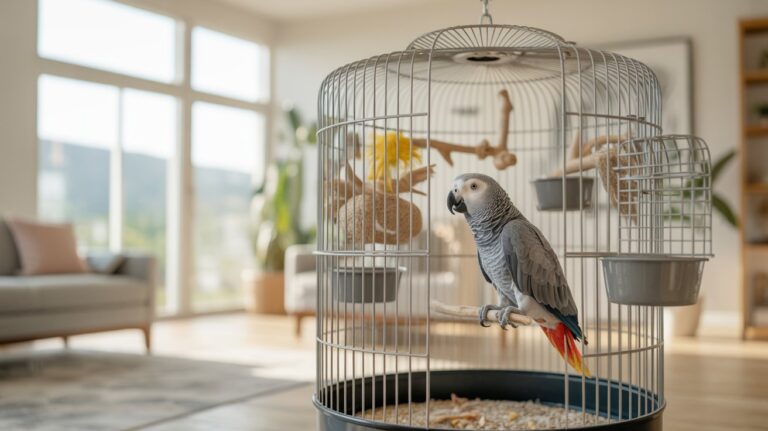
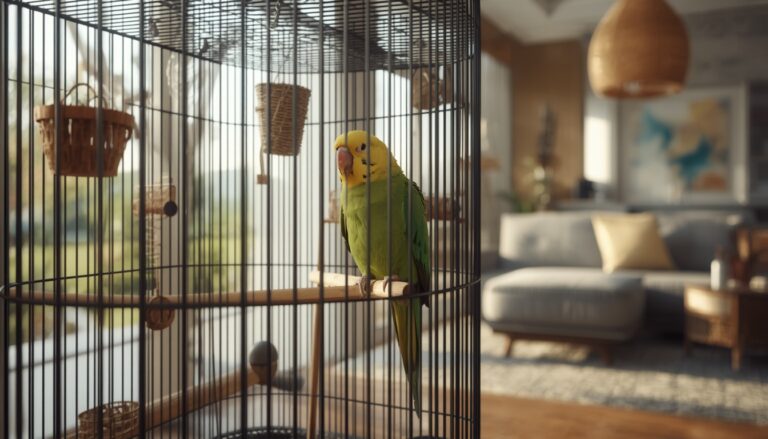
Handmade Custom Parrot Cages Your Bird Will Love
Your parrot deserves better than a flimsy, mass-produced cage from a big-box store. You know, the kind that wobbles when your bird grabs the bars and rusts after three months.
If you have spent any real time with parrots, you already know they are smart, curious, and frankly a little dramatic about their living spaces. A handmade custom parrot cage changes everything.
Building or commissioning a custom cage is one of the best decisions you can make as a bird owner. It gives you complete control over size, materials, bar spacing, and design.
And when your parrot has room to stretch, climb, and truly live, that investment pays off in happier bird behavior every single day.
Why a Handmade Custom Parrot Cage Beats Store-Bought Every Time
Walk into any pet store and you will find rows of parrot cages that look decent enough on the surface. But spend five minutes reading the specs and you will notice the problem.
The dimensions are generic. The bar spacing is a compromise. The finishes chip. The doors are awkward. Nothing about those cages was designed with your specific bird in mind.
A handmade custom parrot cage fixes all of that. A skilled craftsperson builds it around your bird’s species, size, personality, and daily habits. That is not something any factory in a rush can replicate.
The Problem With Generic Cages
Here is the honest truth about mass-produced cages. They are built for the average bird, which means they work well for no bird in particular.
A large macaw crammed into a cage with too-small bar spacing will bend or break those bars within weeks.
A small conure in an oversized cage with wide bar spacing risks getting a foot or head stuck. Neither situation is good.
Generic cages also tend to use cheaper coatings that contain zinc or lead, two materials that are seriously toxic to parrots.
A handmade cage built by a conscientious craftsperson uses bird-safe materials from the start, not as an afterthought.
What Custom Actually Means
When people hear “custom,” they sometimes picture something astronomically expensive and impractical. But custom just means built to your specifications. You choose:
- The dimensions based on your bird’s wingspan and activity level
- The bar spacing appropriate for your specific species
- The material finish, whether stainless steel, powder-coated steel, or wrought iron
- The door placement for easy feeding and cleaning
- Additional features like built-in perch holders, food dish ports, or play tops
That level of control is worth a lot, especially when your parrot is going to spend most of its life in that space.
Choosing the Right Materials for Your Custom Parrot Cage
Material choice is where handmade custom parrot cages really shine. You are not stuck with whatever the manufacturer decided to use.
You get to pick what goes into your bird’s home, and that matters enormously.
Stainless Steel: The Gold Standard
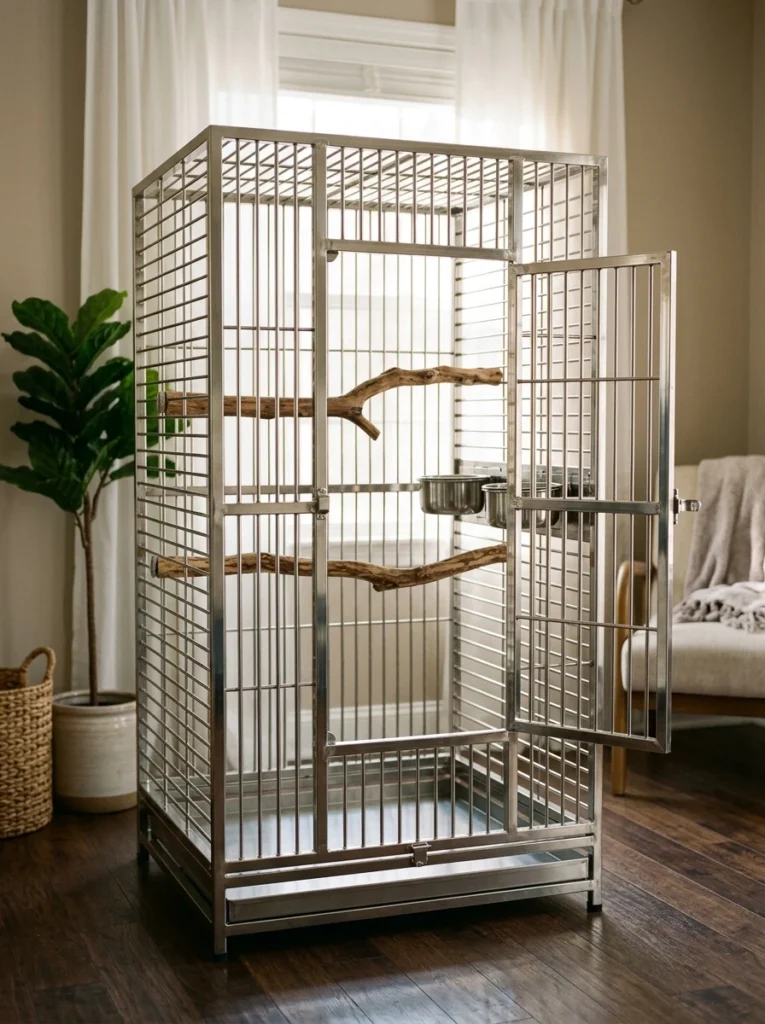
If budget allows, stainless steel is the best material for a parrot cage, full stop. It does not rust. It does not chip. It contains no harmful coatings.
It survives the relentless chewing, climbing, and beak-testing that parrots subject their cages to daily. A stainless steel custom cage can last decades.
Yes, stainless steel costs more upfront. But when you break down the cost over ten or fifteen years of use versus replacing a cheap cage every few years, the math actually favors stainless steel.
Your parrot also deserves not to ingest flakes of cheap paint.
Browse Stainless Steel Parrot Cages On Amazon
Powder-Coated Steel: A Solid Middle Ground
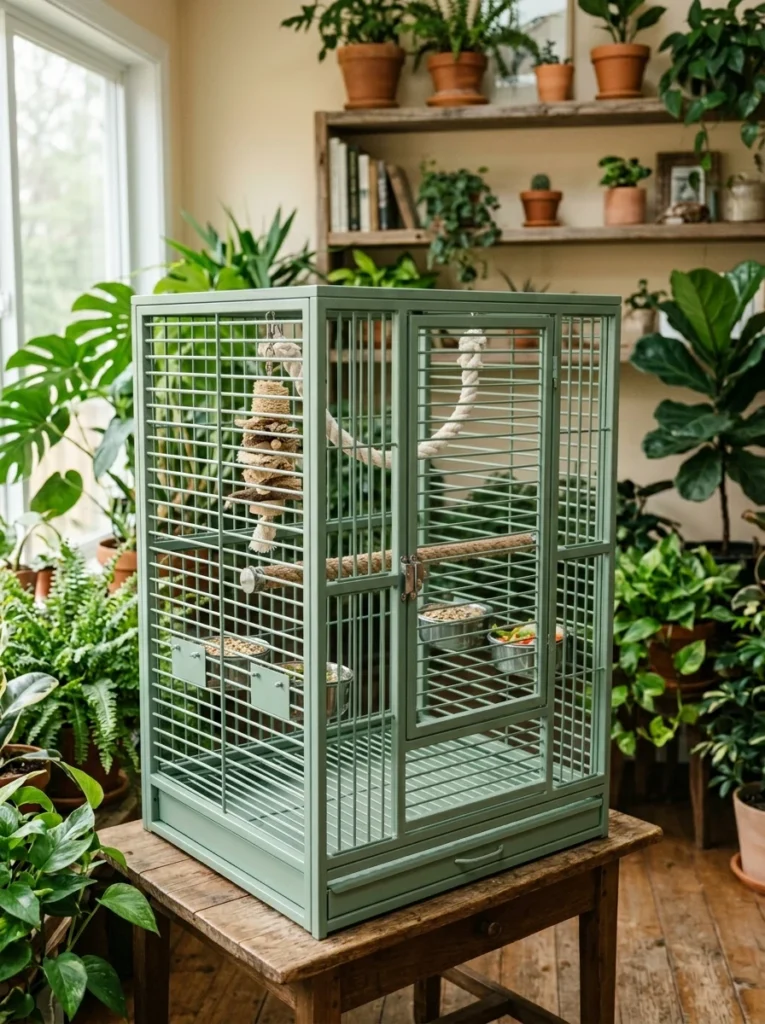
Powder-coated steel is a popular choice for handmade cages because it balances cost and durability reasonably well.
The key is making sure the powder coat is non-toxic and properly cured. A reputable custom cage builder will know which coatings are bird-safe and which are not. Always ask before you order.
Powder-coated cages can last many years if they are well-maintained and the coating is not scratched or chipped. Once the coating starts to wear, however, you need to monitor it closely.
Shop Powder-Coated Parrot Cages On Amazon
Materials to Avoid
Not all metals belong near parrots. When working with any custom cage builder, confirm they are not using:
- Galvanized steel coated with zinc
- Any paint containing lead-based pigments
- Untreated wrought iron that rusts easily
- Cheap chrome plating that flakes over time
A trustworthy builder will not need much convincing to avoid these. If they push back on your material questions, that tells you something important about their standards.
Getting the Size Right for Your Bird
Size is the single most important factor in a parrot cage. Bigger is almost always better, but “bigger” still needs to be thoughtful.
A cage that is enormous but oddly shaped may give your bird more stress than comfort.
Sizing by Species
Here is a rough guide to minimum cage dimensions by parrot type. These are starting points, not ceilings:
- Small parrots (budgies, parrotlets, lovebirds): 24 inches wide by 18 inches deep by 24 inches tall
- Medium parrots (cockatiels, conures, caiques): 36 inches wide by 24 inches deep by 36 inches tall
- Large parrots (Amazons, African Greys, Eclectus): 36 inches wide by 36 inches deep by 48 inches tall
- Extra-large parrots (macaws, cockatoos): 48 inches wide by 36 inches deep by 60 inches tall or larger
With a custom build, you are not locked into these standard sizes. You can go bigger in whatever dimension matters most for your bird’s movement patterns.
Bar Spacing Matters More Than You Think
Bar spacing is one of those specs that casual buyers often overlook until something goes wrong. Too wide and your bird can get its head stuck or escape entirely.
Too narrow and the cage feels more like a prison than a home.
General bar spacing guidelines:
- Small birds: 1/2 inch to 5/8 inch
- Medium birds: 3/4 inch to 1 inch
- Large birds: 1 inch to 1.5 inches
- Extra-large birds: 1.5 inches to 2 inches
A custom builder sets the bar spacing precisely for your species. That small detail alone justifies going custom over store-bought.
Design Features That Make a Real Difference
Once you nail down materials and sizing, the fun part begins. This is where you get to think about how your parrot actually lives and move those insights into the cage design.
Door Placement and Access
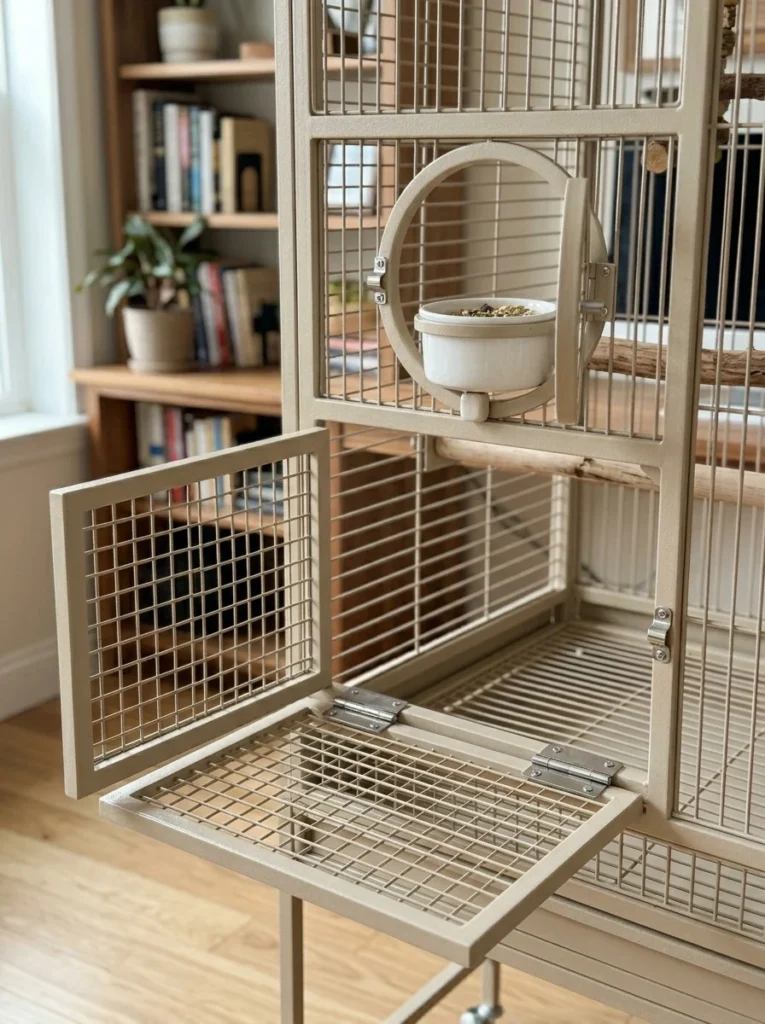
Think about how often you open that cage every single day. Feeding, watering, cleaning, taking your bird out, putting your bird back in, retrieving the toy they flung to the bottom at 7 a.m.
A cage with well-placed, easy-access doors saves you time and reduces stress for your bird.
Custom cages can include large front doors for easy access, small side doors at perch height for feeding, and removable bottom trays that slide out without disturbing the bird.
These are small conveniences that feel enormous after a few months of daily use.
Built-In Play Tops and Activity Platforms
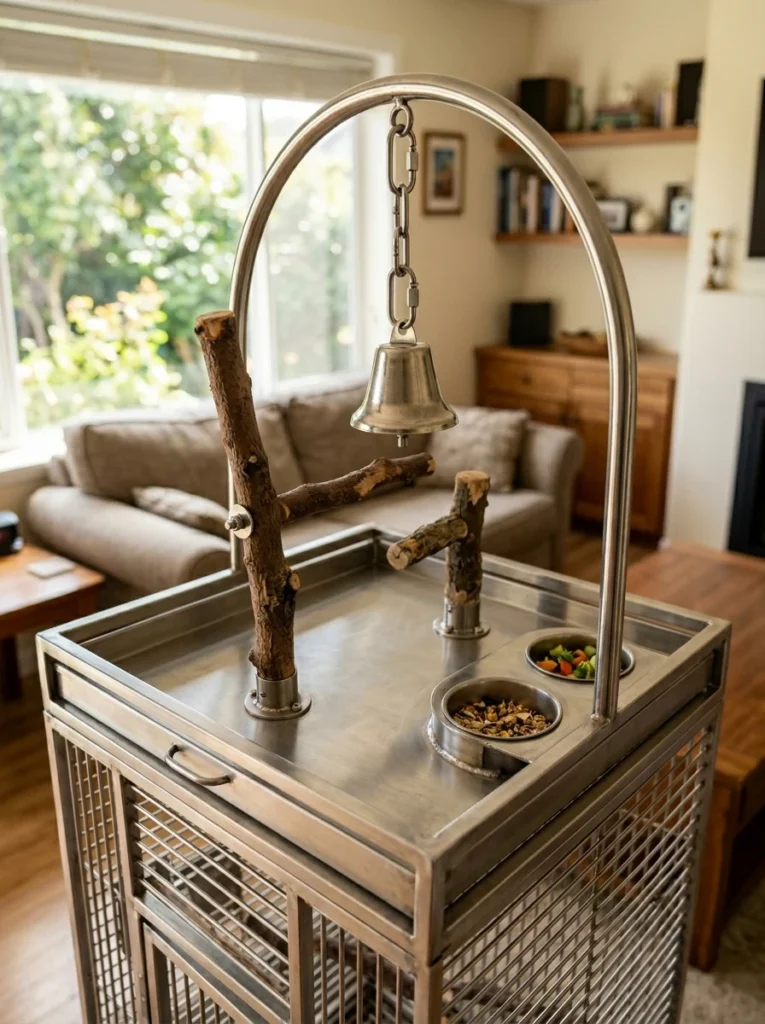
Many handmade custom parrot cages come with the option of a play top, which is essentially a flat or structured surface on top of the cage where your bird can spend time outside the cage without roaming freely.
For parrots that love to climb and explore, this feature adds serious enrichment value.
A play top can include:
- Perches at different heights
- Hanging toy hooks
- Built-in food and water cups
- A ladder connecting the top to the inside
It transforms the cage from a containment space into a full activity center.
Find Parrot Cages With Play Tops On Amazon
Removable Perch Systems
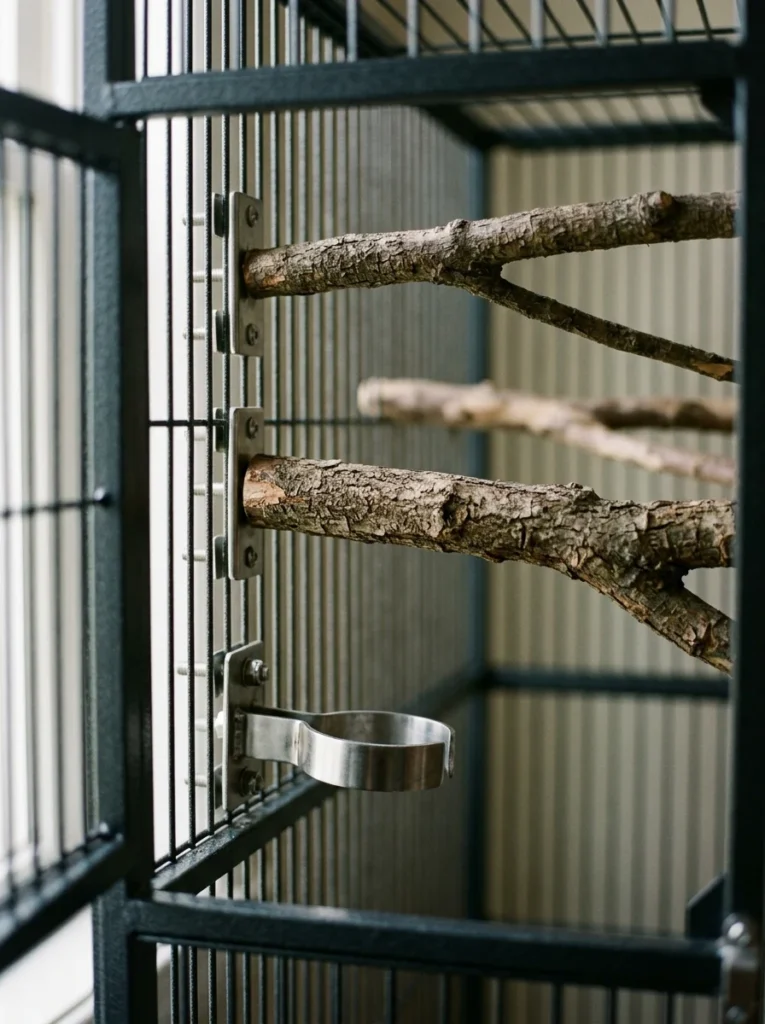
Wild parrots do not spend their lives on one identical dowel rod. They grip branches of different textures, widths, and angles.
A custom cage can include mounting systems for interchangeable perches so you can rotate natural wood perches, rope perches, and platform perches regularly.
Your bird’s feet and joints will thank you.
Shop Natural Wood And Rope Perches For Parrots On Amazon
Finding or Commissioning a Handmade Custom Parrot Cage
So where do you actually find someone who builds these? The custom bird cage market has grown significantly, and you have several solid options.
Independent Craftspeople and Welders
Local metalworkers and fabricators can build custom cages to your specifications. The advantage here is direct communication throughout the build.
You can visit the workshop, check materials firsthand, and provide feedback before the cage is finished.
The disadvantage is that not every welder understands bird-safe requirements, so you need to come prepared with your material specifications.
Specialty Bird Cage Builders
Several small businesses specialize specifically in handmade parrot cages. They understand bar spacing, safe coatings, and parrot behavior.
A quick search for “custom handmade parrot cages” will surface several well-regarded makers. Read reviews carefully and ask for references from previous buyers.
Any reputable builder welcomes those questions.
What to Ask Before You Commission
Before committing to any builder, ask these questions:
- What materials and coatings do you use, and are they bird-safe?
- Can you provide references from previous parrot owners?
- What is your standard build time?
- Do you offer any warranty or guarantee on the cage structure?
- Can I see examples of completed builds?
A builder who hesitates on any of these questions is a builder worth reconsidering.
Caring for Your Custom Parrot Cage
You invested real money and thought into this cage. Treat it accordingly. A well-maintained custom cage lasts for many years.
Clean the cage weekly with bird-safe cleaning solutions and rinse thoroughly. Check the bar joints and welds periodically for any signs of rust or wear.
Rotate perches and toys to keep your bird mentally stimulated. And inspect the door latches regularly because parrots are surprisingly clever escape artists.
Browse Bird-Safe Cage Cleaners On Amazon
Final Thoughts
A handmade custom parrot cage is not a luxury purchase for people who have too much money. It is a practical, thoughtful investment in your bird’s health, safety, and happiness.
You control the size, the materials, the features, and the design. Your parrot gets a home built specifically for them, not for the theoretical average bird.
Your parrot already gives you personality, entertainment, and companionship every day. The least you can do is give them a cage worth living in.
What Makes Handmade Custom Parrot Cages Better Than Store-Bought Cages?
Handmade custom parrot cages give you full control over the size, bar spacing, materials, and design features of your bird’s home.
Unlike mass-produced cages built around generic measurements, a custom cage is crafted specifically for your parrot’s species, body size, and daily behavior.
This means safer materials, better proportions, and a living space your bird can genuinely thrive in rather than just survive in.
What Is the Safest Material for a Handmade Custom Parrot Cage?
Stainless steel is widely considered the safest and most durable material for handmade parrot cages. It does not rust, does not chip, and contains no toxic coatings.
Powder-coated steel is a good budget-friendly alternative, provided the coating is fully bird-safe and properly cured.
Always avoid galvanized steel, zinc-coated metals, and any paint containing lead-based pigments, as these materials pose serious health risks to parrots.
How Do I Know What Size Custom Parrot Cage to Order for My Bird?
The right cage size depends on your parrot’s species and wingspan.
As a general rule, your bird should be able to fully spread its wings, move between perches, and turn around comfortably without touching the cage walls.
Small parrots like budgies need a minimum of 24 by 18 by 24 inches, while extra-large parrots like macaws need at least 48 by 36 by 60 inches.
A reputable custom cage builder can help you determine the ideal dimensions based on your specific bird.
How Long Does It Take to Commission a Handmade Custom Parrot Cage?
Build times vary depending on the complexity of the design and the builder’s current workload.
Most specialty custom parrot cage builders take anywhere from two to eight weeks to complete a cage from order to delivery.
Cages with intricate designs, play tops, or special material requirements may take longer.
Always confirm the expected turnaround time before placing your order, and ask whether the builder provides build progress updates along the way.
What Questions Should I Ask a Custom Parrot Cage Builder Before Ordering?
Before commissioning any handmade parrot cage, ask the builder about the specific materials and coatings they use and whether those materials are confirmed bird-safe.
Request references from previous parrot owners, ask to see photos or examples of completed builds, and confirm the standard build and delivery timeline.
You should also ask whether the cage comes with any structural warranty or guarantee. A builder who answers these questions confidently and transparently is one you can trust with your bird’s home.