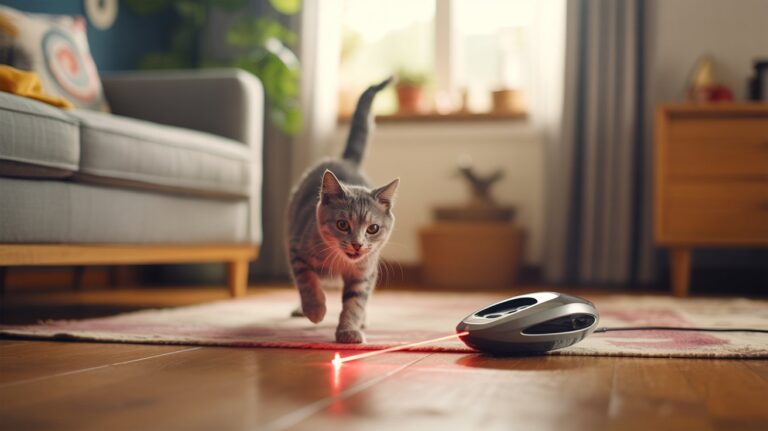
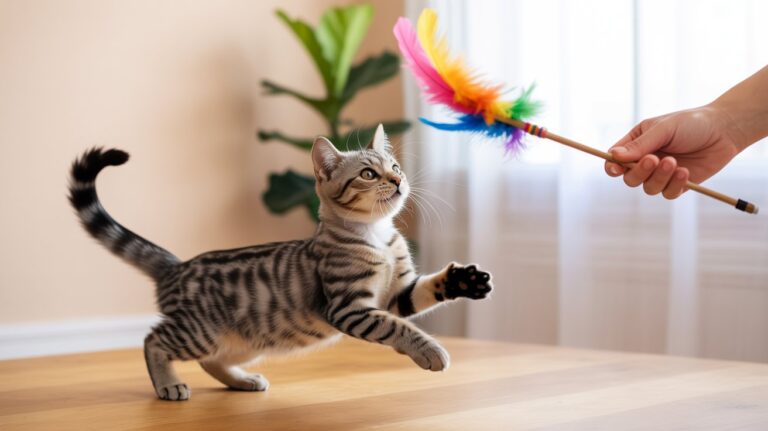
Best Scratching Posts With Dangling Toys for Cats
Your cat just ignored the scratching post you bought and went straight back to the sofa arm. Rude, but not surprising. A plain post asks a cat to scratch on command, and cats do not take orders.
That is where a scratching post with dangling toys earns its floor space. The toy gets your cat close, the sisal keeps them there, and suddenly the post feels like a playground instead of a chore. I put this guide together to help you pick one that fits your cat, your room and your patience.
Why Dangling Toys Make a Scratching Post More Fun
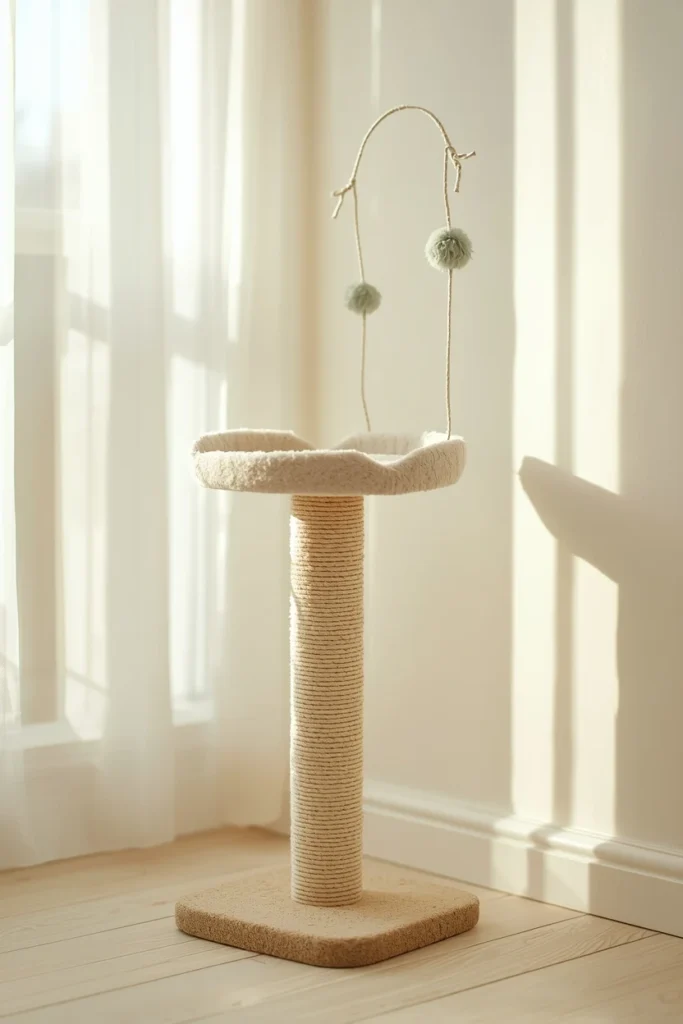
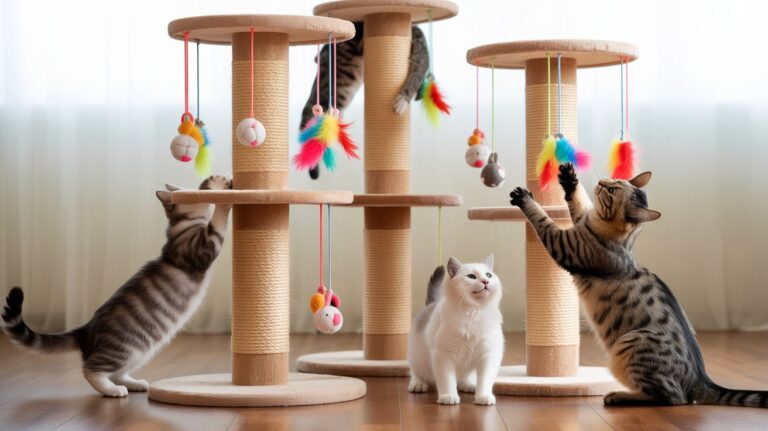
Cats love to chase anything that moves. A toy that swings, bounces or flutters near the top of a post pulls your cat in without any coaching from you. Once they reach up to bat at it, their claws are already on the post.
That is the whole trick. The toy starts the visit, and the scratching surface finishes the job. Many cats then stay for a good stretch and a scratch, because the post starts to feel like their own territory.
I also like dangling toys for a practical reason. A cat who plays on the post learns to see it as part of the home, not a strange piece of furniture. That often makes it easier to steer their scratching away from your couch.
What To Look For Before You Buy
Not every post with a toy on it deserves your money. Check the points below before you add one to your cart.
Stability Comes First
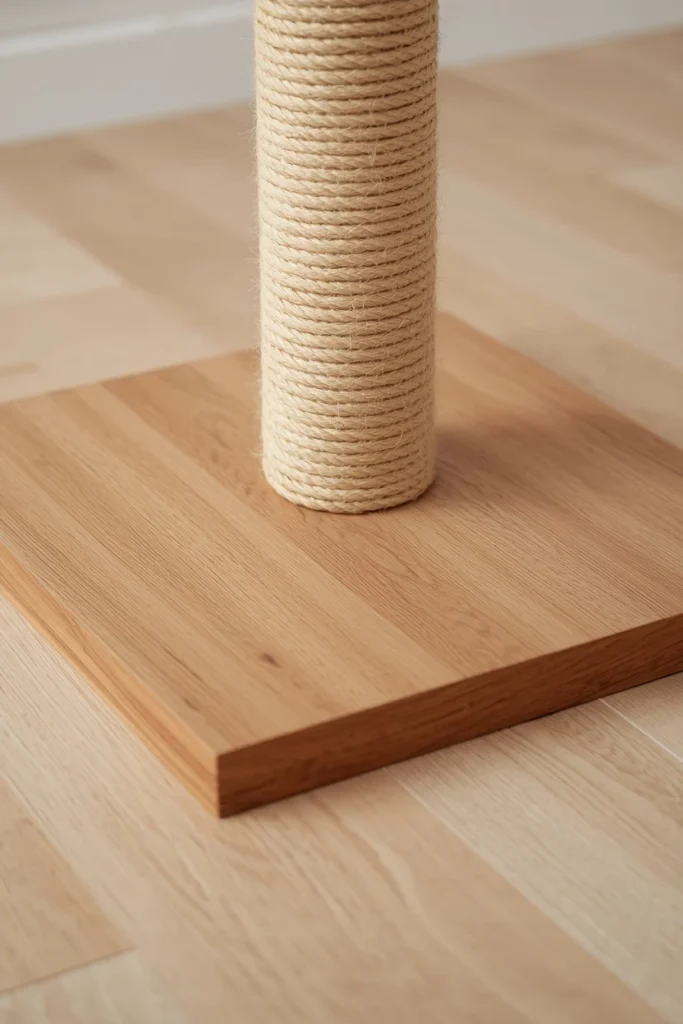
A wobbly post teaches your cat that scratching is a bad idea. Look for a wide, heavy base and a post that stays put when you push on it. If a post shakes every time your cat leaps at the toy, you will find it ignored by dinner time.
Height and Scratching Surface
Your cat should be able to stretch out fully while scratching. Taller posts suit adult and big cats, and shorter ones suit kittens and small spaces. Check that the scratching surface covers most of the post, so your cat has room to reach.
Sisal is my first choice for the covering. Sisal rope feels rough and satisfying under the claws, while sisal fabric gives a flatter, tighter surface. Carpet works for some cats, but it can snag claws, so I usually skip it.
The Toy Itself
Check how the toy attaches. A toy on a sturdy cord or spring that clips or screws on lets you swap it out when it wears down. A toy that comes glued or stitched in place becomes a sad stump after enough attacks.
Also look at how long the cord hangs. A short drop keeps tangles down and keeps the toy within easy paw reach.
Styles of Scratching Posts With Dangling Toys
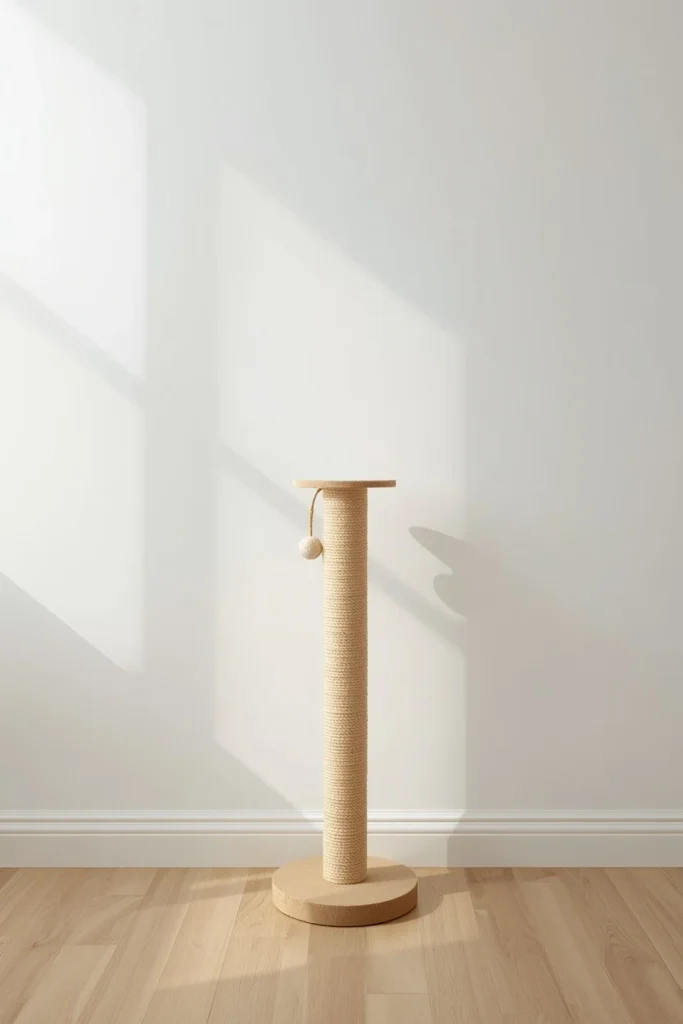
You will see four main styles in shops. Each one suits a different cat and a different room.
Classic Sisal Post With a Hanging Toy
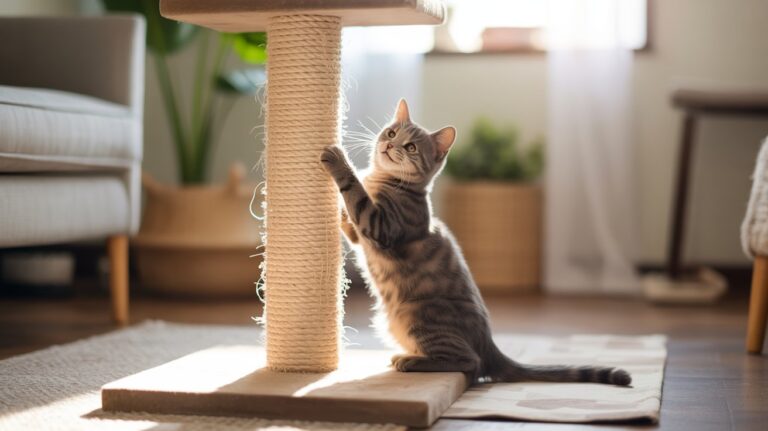
This is the simple version: an upright post with sisal wrapped around it and a toy swinging near the top. It takes up little floor space and works well for cats who like a vertical scratch. I recommend it for first-time buyers because there is not much that can go wrong.
Post With a Spring Toy
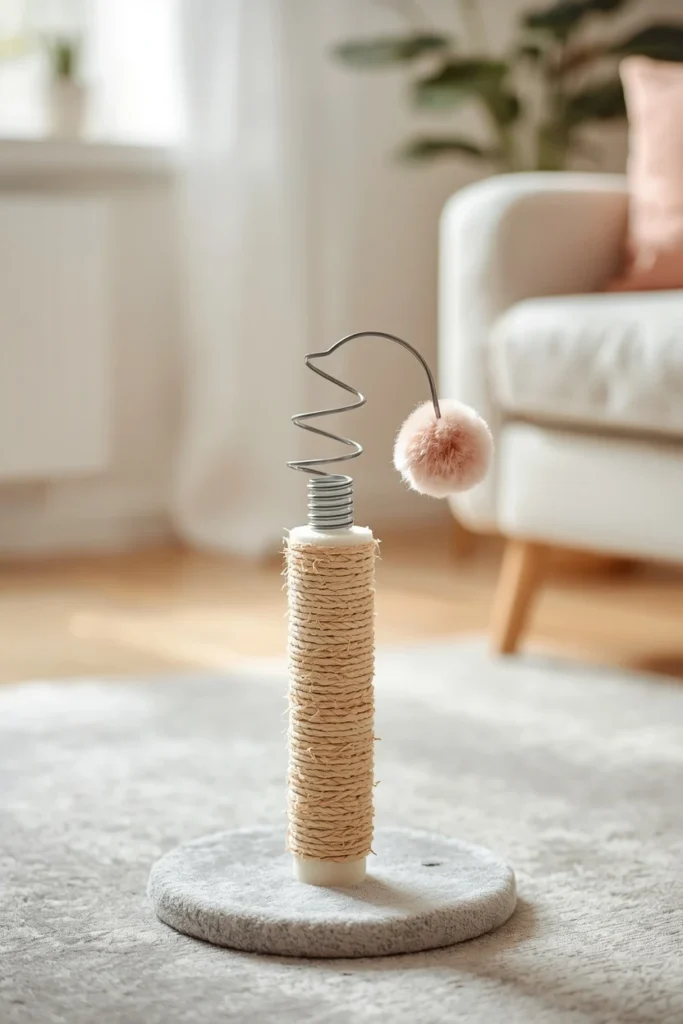
Here the toy sits on a springy stem, so it bounces back every time your cat swats it. Playful cats can lose an entire evening to this one. The bounce keeps the toy interesting even when you are not around to wiggle it.
Post With a Small Platform
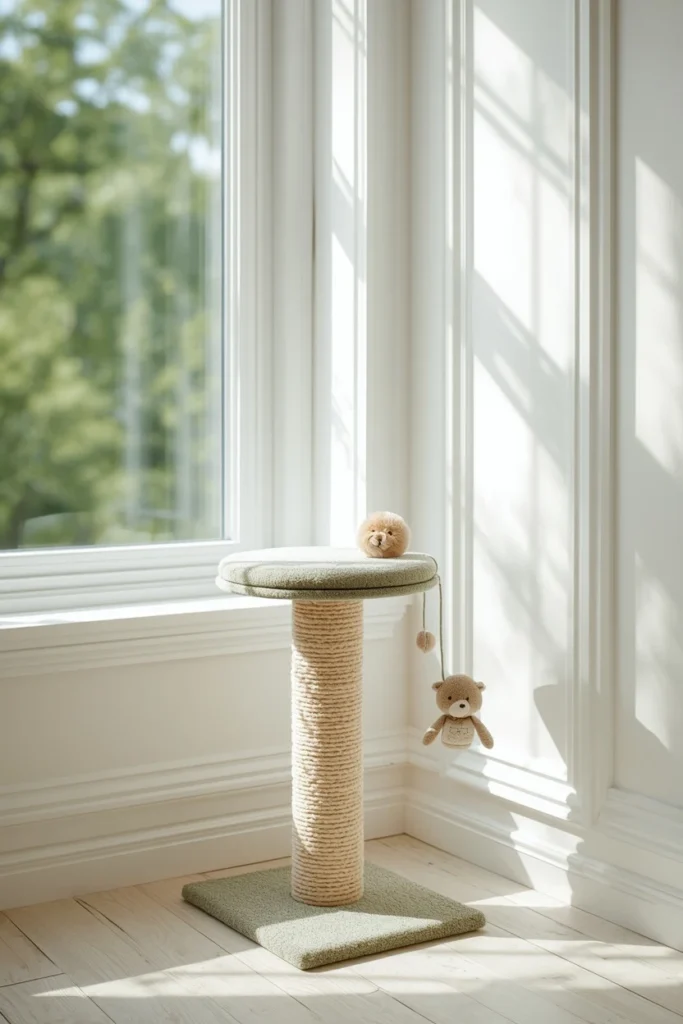
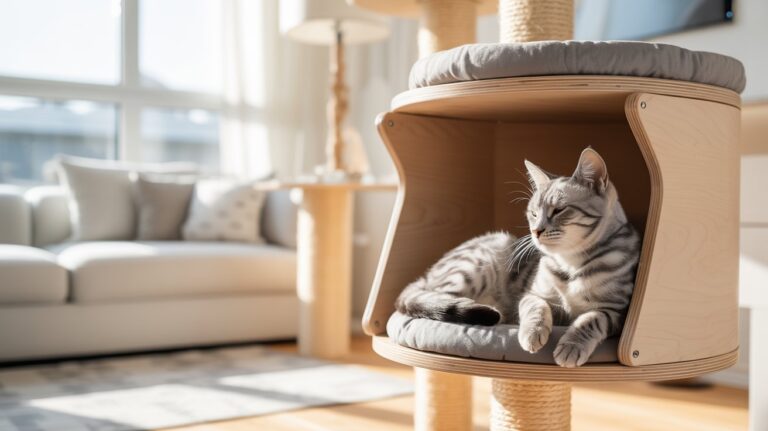
Some posts add a small platform at the top with toys hanging beside it. Your cat can scratch, then hop up and survey the room like a tiny landlord. Make sure the platform feels steady before you commit.
Angled Scratcher With an Overhead Toy
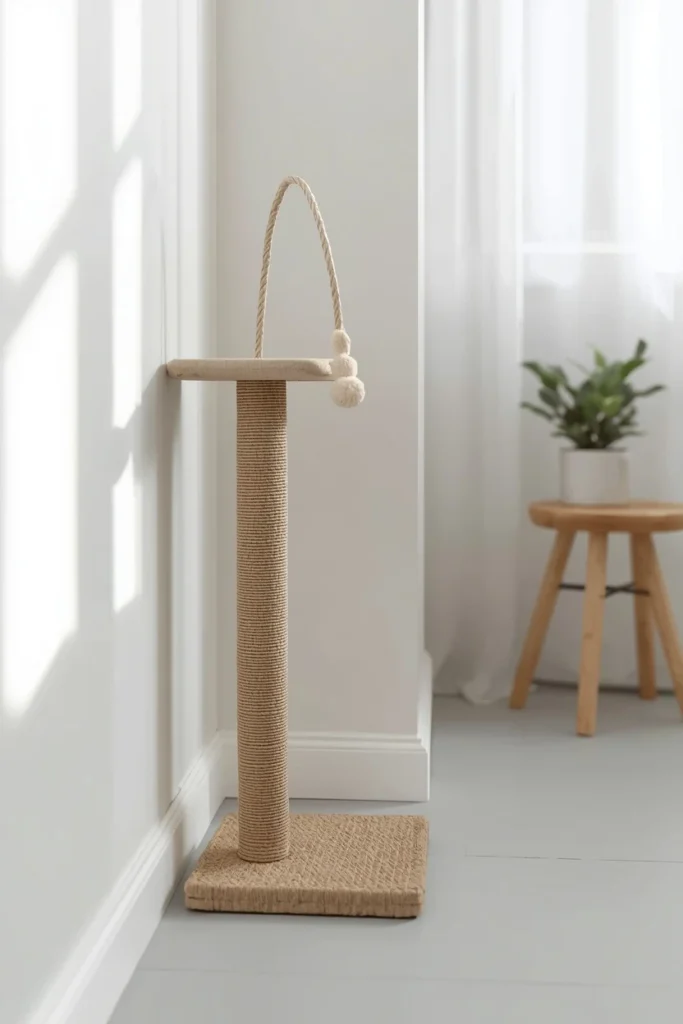
A few scratchers lie at an angle with an arch or bar above them that holds a toy. They suit cats who like to scratch low and stretch out sideways. I like them for small apartments because they tuck neatly against a wall.
Shop Scratching Posts With Dangling Toys
Choosing the Right Post for Your Cat
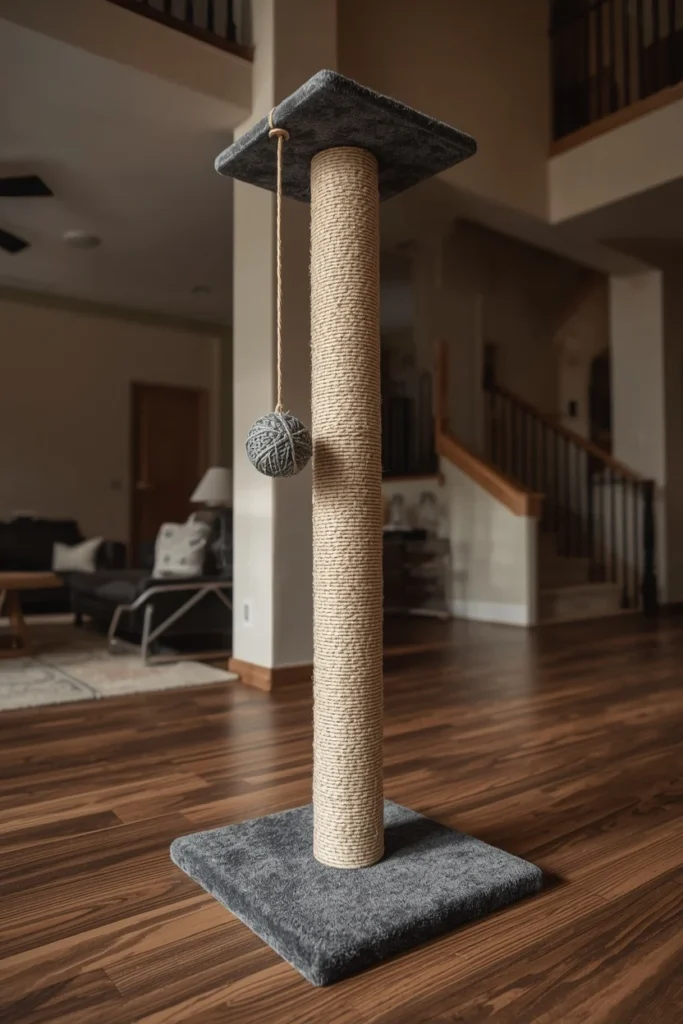
Every cat has a different personality, and the best post matches yours. Here is how I think about the common types.
Big Cats
Big cats need a taller, heavier post. If your cat could knock over a post by sneezing, pick one with a broad base and a thick central post. Skinny posts and big cats make for noisy mornings.
Kittens and Small Cats
Kittens do better with lower posts and lightweight toys they can actually reach. A post that towers over them just gets ignored. Pick something sized for the cat you have today and upgrade later.
Shy or Cautious Cats
Some cats hesitate around anything new. Park a sturdy post in a quiet corner and let them approach it in their own time. A gently swinging toy often does the persuading for you.
Homes With Several Cats
If you share your home with several cats, think about how they use space. A post with a wide base and more than one toy lets them take turns. You may still end up with a toy fight, but at least it will happen on the right piece of furniture.
Shop Sturdy Cat Scratching Posts
Where To Put Your Scratching Post
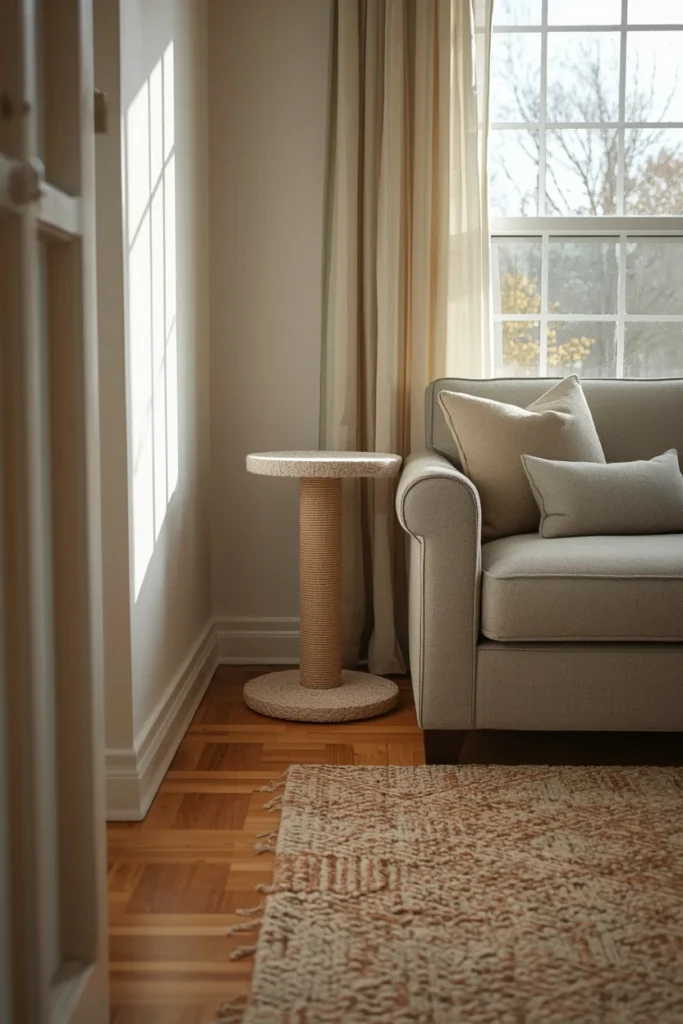
Location matters more than you might think. Cats scratch when they wake up, when they get excited and when they want to mark their space. Put the post near where your cat sleeps or beside the furniture they already target.
A post in a back room rarely gets any love. Face it toward the room instead of tucking it behind a door. Keep it on a hard, flat surface or on a rug that will not slide.
If you want to pull your cat away from the sofa, place the post right next to the spot they already scratch. Once your cat uses it happily, you can slowly shift it to a spot that suits your decor.
Safety Basics for Dangling Toys
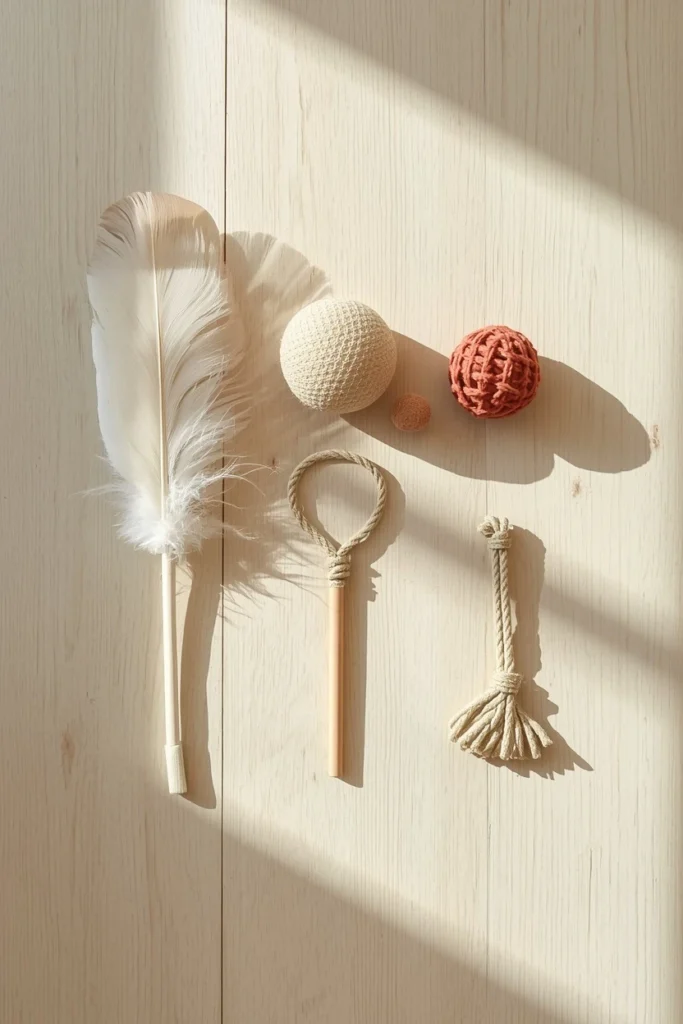
A dangling toy is a toy, not a chew snack. Watch your cat the first few times they play so you know how they treat it. Replace any toy that frays, loses a part or comes loose.
Keep an eye on cords and strings. Cats can chew and swallow small pieces, so trim loose threads and remove any toy that is falling apart. If you think your cat swallowed string or a small part, call your vet right away.
Also keep the post away from curtain cords and blind strings. A cat who plays with a cord at the post may carry the habit to other parts of your home.
Shop Replacement Cat Toys and Teasers
How To Get Your Cat Using the Post
Start with play. Wiggle the toy gently, let your cat catch it and reward them with a treat or a soft word. Let the scratching become part of the game.
Add a sprinkle of catnip if your cat likes it. Some cats love catnip and some shrug at it, so treat it as an optional bonus. If your cat ignores it, skip it and rely on the toy.
Praise and patience beat scolding. Never drag your cat’s paws across the post, because that can turn a fun place into a stressful one. Let them find it on their own terms.
Mistakes That Make Cats Ignore a New Post
Many of the problems I see come from the setup, not the cat. A post in a lonely room gets ignored, and so does a post that is too short for a full stretch. A toy that never moves the way prey moves loses its charm quickly.
Swap the dangling toy every so often so it stays interesting. A toy that hangs there forever becomes part of the wallpaper. Store spares out of sight and bring them out when your cat starts to lose interest.
Quick Buying Checklist
Keep this list handy when you shop:
- A wide, heavy base that stays put when your cat leaps
- A post tall enough for a full stretch
- A sisal covering your cat can really get claws into
- A toy you can replace when it wears out
- A cord short enough to keep tangles down
- A spot near where your cat already scratches
Final Thoughts
A scratching post with dangling toys gives your cat a reason to visit, a reason to stay and a reason to leave the sofa alone. Look for a steady base, a good scratching surface and a toy you can swap out. Match the size to your cat, and you will have a winner.
Put it where your cat already hangs out, play with them on it and stay patient. Cats rarely take orders, but they do love a good game. Which style do you think your cat will attack first?
Do Cats Really Use Scratching Posts With Dangling Toys?
Many cats do, because the toy gives them a reason to visit the post. A swinging or bouncing toy triggers the chase instinct, and the cat ends up scratching while they play. Every cat is different, so give yours some time and keep the post in a spot they already like.
How Tall Should a Scratching Post Be?
The post should let your cat stretch out fully while they scratch. Adult and big cats usually need a taller post than kittens do. Watch how your cat reaches up on the furniture they already scratch and choose a post that gives them at least that much room.
Are Dangling Toys on Scratching Posts Safe for Cats?
They are fine for supervised play when the toy is in good shape. Check the cord and any small parts often, and replace the toy as soon as it frays or comes loose. If you think your cat swallowed string or a small part, contact your vet right away.
Where Should I Put a Scratching Post for My Cat?
Place it near where your cat sleeps or next to the furniture they already scratch. Cats often scratch after waking up or when they feel excited, so those areas work well. Choose a steady spot on a hard floor or a non-slip rug, and face the post toward the room.
How Do I Teach My Cat To Use a Scratching Post?
Start with play by wiggling the toy near the post and letting your cat catch it. Add a little catnip if your cat enjoys it, and praise them when they scratch. Never drag your cat’s paws across the post, because patience works better than force.