Dust-Free Cat Litter That Helps Asthmatic Cats Breathe Easier
Grass seed cat litter tracks less than most clay litters. This is one of its hidden benefits. The fibers are coarser and heavier than fine clay. They don’t cling to paw pads as much, so they stay on floors better.
Placing a mat at the box entrance catches what does escape. Most users find tracking with grass seed litter easier to handle than with clay.
If tracking has frustrated you, grass seed litter can improve your daily experience.
Why Dust Is a Serious Problem for Asthmatic Cats
What Cat Asthma Actually Looks Like
Cat asthma affects roughly one to five percent of the feline population, though veterinarians suspect the number is higher because many owners miss the early signs.
An asthmatic cat typically shows symptoms like:
- Chronic coughing or wheezing, especially after using the litter box
- Open-mouth breathing or labored breathing after minimal exertion
- Crouching low to the ground with neck extended during an episode
- Blue-tinged gums in severe cases, which signals a veterinary emergency
If any of those sound familiar, your cat needs a vet visit first and a litter change second. Asthma is a medical condition, not just a quirk.
The Role Litter Dust Plays in Triggering Attacks
Here is what happens inside a litter box during a single digging session: your cat kicks up a microscopic cloud of particles. For a healthy cat, that is mildly annoying at worst.
For a cat with asthma, those particles land in already-inflamed airways and trigger bronchospasms.
The trachea and bronchi constrict, breathing becomes labored, and you end up with a cat hacking like a chain smoker.
Conventional clay litters are the biggest offenders. They produce silica dust as a byproduct of the mining and drying process.
When your cat digs into clay litter, that silica dust becomes airborne almost instantly. Silica is not something you want in any lungs, human or feline.
Scented litters make the problem worse. The fragrances added to mask odor are chemical compounds that irritate mucous membranes.
So that lavender-scented litter you bought because it smelled nice? Your asthmatic cat genuinely hates you for it. Not personally. But their airways do.
What Makes a Litter Truly Dust-Free
Understanding “Low Dust” vs. “Dust-Free”
Marketing language on cat litter bags deserves some healthy skepticism.
When a bag says “99% dust-free,” what does that actually mean? Most manufacturers measure dust using a standardized sifting test, but the real-world performance in an actual litter box can vary widely depending on:
- How vigorously your cat digs
- The depth of litter in the box
- Humidity levels in your home
- The litter’s particle size and density
Truly low-dust litters use larger, denser particles that do not become airborne as easily. They also tend to clump tightly rather than crumbling, which reduces the amount of disturbed material during digging.
The Best Litter Materials for Asthmatic Cats
Not all low-dust litters are created equal. Here is a breakdown of the most effective options:
1. Paper-Based Litter Paper pellets rank among the absolute best choices for asthmatic cats. They produce virtually no airborne dust because the pellets are too large and heavy to float.
The trade-off is that odor control is weaker compared to clay, so you need to scoop more frequently.
Brands like Yesterday’s News use recycled newspaper and remain a top recommendation from many veterinary dermatologists and feline specialists.
Shop Paper-Based Cat Litter On Amazon
2. Crystal Litter (Silica Gel) Wait, silica gel litter? The same material we are blaming for dust problems?
Yes, actually. Here is the distinction: silica gel crystals are large, porous beads that absorb moisture and odor without crumbling.
Unlike ground silica dust from clay processing, these crystals do not become airborne during normal use.
They are not perfect for every cat, but for respiratory health, they perform surprisingly well. PrettyLitter and Ultra Pet Crystal are popular options worth considering.
Find Low-Dust Crystal Cat Litter On Amazon
3. Wood and Pine Litter Pine pellets disintegrate into sawdust when wet, which does introduce some particulate matter.
However, unscented wood litters that retain their pellet form throughout use generate significantly less dust than clay.
They also have natural odor-neutralizing properties from pine oils, though strong pine scent can irritate some cats. Always choose unscented versions for asthmatic cats.
4. Corn and Wheat-Based Litters These plant-based options offer decent clumping with minimal dust.
World’s Best Cat Litter (corn-based) has earned a loyal following among owners of respiratory-sensitive cats. The clumps hold together well, reducing crumble and airborne particles.
The main concern with these is mold if the litter stays damp, so proper box maintenance matters more here.
5. Tofu or Soy-Based Litters A newer category gaining popularity, tofu litters use compressed soy or pea fiber. They produce almost no dust, clump reasonably well, and are biodegradable.
They tend to run pricier than traditional options, but for a cat with serious asthma, the cost-benefit calculation tips pretty clearly toward “just buy it.”
What to Avoid Completely
The Litters That Make Asthma Worse
If your cat has asthma or even a sensitive respiratory system, steer completely clear of:
- Scented clay litter of any kind. The combination of silica dust and chemical fragrance is genuinely harmful.
- Fine-grain clumping clay. The finer the grain, the more dust it generates. Those ultra-clumping, tight-ball formulas feel satisfying to scoop but create enormous dust clouds during digging.
- Baking soda additives. Some litters add baking soda for odor control. In fine-particle form, it becomes another airborne irritant for sensitive airways.
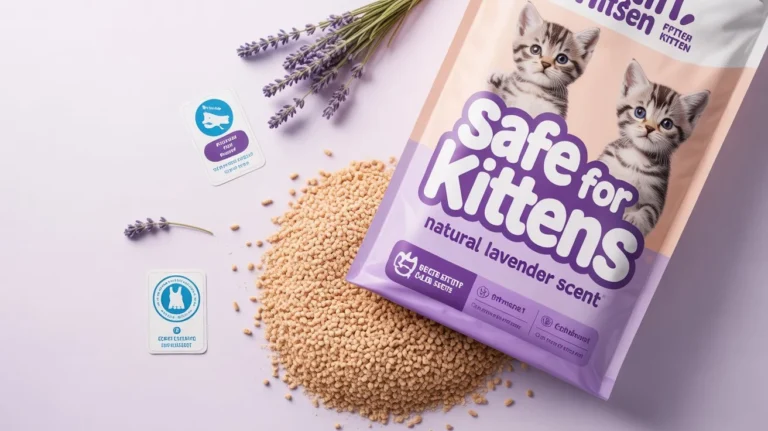
- Heavily perfumed “natural” litters. Lavender, citrus, and floral scents are not safer just because they come from plant extracts. Your asthmatic cat’s airways do not distinguish between synthetic and natural irritants.
Practical Tips for Setting Up the Litter Box
The Box Itself Matters Too
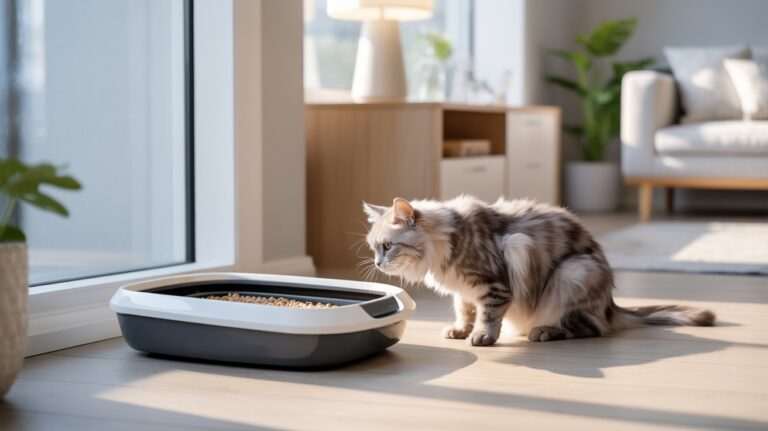
You can buy the most dust-free litter on the market and still undermine everything with the wrong litter box setup. A few things worth paying attention to:
Choose an open or top-entry box over covered boxes. Covered boxes trap dust inside and force your cat to inhale concentrated particulates every time they enter and exit.
The privacy feels nice for the cat, but the respiratory cost is real.
Place the box in a well-ventilated area. A corner of a bathroom with a small air purifier nearby does more good than most people realize.
HEPA air purifiers capture particles down to 0.3 microns, which covers the range of litter dust particles.
Browse HEPA Air Purifiers For Pet Owners On Amazon
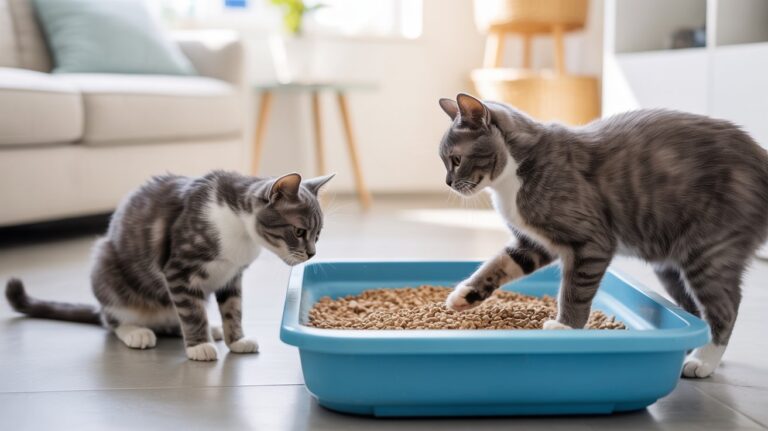
Keep the litter depth at two to three inches. More litter means more material to kick up. Less litter means poor coverage and more scraping against the bottom, which creates its own kind of dust.
Two to three inches is the sweet spot.
Transitioning Your Cat to a New Litter
Cats famously resist change. If you have ever tried to swap litters overnight, you have probably discovered your cat’s creative protest involving the floor directly next to the box.
Transition gradually by mixing the new litter with the old, increasing the proportion of new litter over one to two weeks.
For asthmatic cats, even this gradual process helps because sudden environmental changes can themselves trigger stress-related asthma flare-ups.
Keep the transition slow, keep the box clean, and let the cat adjust at their pace.
How to Tell If the New Litter Is Actually Helping
Signs of Improvement to Watch For
After switching to a dust-free litter, most owners notice changes within two to four weeks. Look for:
- Fewer coughing or wheezing episodes, particularly after litter box visits
- More relaxed breathing at rest
- Increased willingness to use the box without hesitation
- Reduced eye squinting or watering around litter box time
Keep a simple log of symptom frequency before and after the switch. It sounds overly diligent, but it gives you real data to share with your vet at the next checkup.
Vets appreciate owners who track symptoms rather than just saying “I think they seem better.”
When Litter Alone Is Not Enough
Dust-free litter removes one major trigger, but it is not a cure. If your cat continues showing respiratory symptoms after switching litters, several other factors deserve investigation:
- Household cleaning products containing bleach or ammonia
- Cigarette or candle smoke anywhere in the home
- Mold or mildew in humid rooms
- Air fresheners and plug-in scent diffusers
- Other pets’ dander in multi-animal households
Asthma management in cats usually requires a combination approach. Your vet may also recommend bronchodilators, corticosteroids, or allergy testing depending on the severity of your cat’s condition.
Wrapping It Up
Watching an asthmatic cat struggle to breathe is one of the more stressful experiences in pet ownership. The litter box, of all places, should not be a health hazard.
Switching to a genuinely low-dust or dust-free cat litter is one of the most immediate, practical changes you can make to improve your cat’s respiratory quality of life.
Start with paper pellets or silica gel crystals if you want the safest bet on minimal airborne particles. Ditch scented products entirely.
Set up the box in a ventilated space, and pair it with a HEPA air purifier if your budget allows. Then give it a few weeks and watch your cat breathe a little easier.
Your cat cannot tell you when something helps, but they will show you.
And honestly, watching them walk calmly into a litter box without immediately launching into a coughing fit? That is a pretty good reward for a fifteen-dollar bag of different litter.
Shop Dust-Free Cat Litter Options On Amazon
What Is the Best Dust-Free Cat Litter for Cats With Asthma?
Paper-based litters and silica gel crystal litters are top choices for asthmatic cats. Paper pellets create almost no airborne particles. Their size and weight stop dust during digging.
Silica gel crystals absorb moisture without crumbling, keeping dust levels very low.
Brands like Yesterday’s News (paper-based) and PrettyLitter (crystal-based) are often recommended by vets for cats with asthma or chronic respiratory issues.
Can Cat Litter Actually Trigger Asthma Attacks in Cats?
Yes, it can. Conventional clay litters release fine silica dust when a cat digs. This dust becomes airborne quickly. For a cat with asthma, inhaling these particles can irritate inflamed airways and trigger bronchospasms.
Scented litters make it worse. They add chemical fragrances that further irritate mucous membranes. Switching to a low-dust or dust-free litter removes a major trigger for feline asthma attacks.
Is Scented Cat Litter Bad for Cats With Respiratory Problems?
Scented cat litter is a poor choice for cats with respiratory issues. The added fragrances, whether synthetic or natural like lavender or citrus, can irritate their airways.
Cats with asthma or bronchitis breathe in these compounds closely each time they use the litter box. Even “naturally scented” products aren’t safe for sensitive respiratory systems.
For asthmatic cats, always select completely unscented litter, no matter the base material.
How Long Does It Take to See Improvement After Switching to Low-Dust Litter?
Most cat owners see a notable drop in coughing, wheezing, and respiratory issues within two to four weeks of switching to dust-free litter.
How quickly this happens depends on how much the old litter affected symptoms and if other household irritants are present.
Keeping track of symptom frequency before and after the switch helps you see progress. It also provides your vet with useful data for follow-ups.
If symptoms continue after four weeks, consult your vet to check for other environmental or medical triggers.
Do I Need to Change Anything Else Besides the Litter to Help My Asthmatic Cat?
Switching to dust-free litter is a good start. However, managing feline asthma needs a wider approach.
You should remove scented products like air fresheners, candles, and spray cleaners near the litter area. A HEPA air purifier near the litter box captures airborne particles from low-dust litters.
Using an open or top-entry litter box helps prevent dust from building up. Your vet might suggest medications like bronchodilators or corticosteroids based on your cat’s condition.