Interactive Noise-Making Toys Parrots Absolutely Love
If you have a parrot at home, you know what to expect. These birds are loud, smart, and a bit dramatic. When they get bored, they let you know.
Noise-making toys are not just fun; they are vital for keeping parrots mentally and physically active.
Now, let’s discuss the toys that really work. We’re not talking about those that look good in pictures but end up ignored in the cage.
We mean the toys your parrot will bonk, chew, rattle, and ring with joy.
Why Parrots Crave Noise-Making Toys in the First Place
Here is something worth thinking about: in the wild, parrots spend most of their day foraging, communicating, and interacting with their flock.
That means their brains are constantly running. When you bring a parrot home, you become their flock. And when you are not around? A noise-making toy becomes the next best thing.
Sound is stimulating for parrots in a deeply instinctive way. They are wired to respond to audio cues. A toy that rattles, rings, or crinkles gives them feedback every time they interact with it.
That feedback loop keeps them engaged, and an engaged parrot is a happy parrot. A bored parrot, on the other hand, will redecorate your walls with its beak.
The Science Behind the Squawk
Parrots are highly intelligent animals. Studies on parrot cognition have consistently shown that they need enrichment activities that challenge them mentally, not just physically.
Noise-making toys hit both targets at once. The unpredictable sounds trigger curiosity, which encourages your bird to keep exploring and manipulating the toy.
Think of it this way. You would not hand a toddler a plain wooden block and call it a day. The same logic applies here.
Parrots want things that respond to them, and sound is one of the most immediate and satisfying forms of response available.
The Best Types of Interactive Noise-Making Toys for Parrots
Not all noisy toys are created equal. Some are built for small birds like budgies and cockatiels, while others are designed to survive the beak of a large macaw.
Here is a breakdown of the categories that consistently get parrot owners excited.
1. Foraging Toys with Rattling Elements
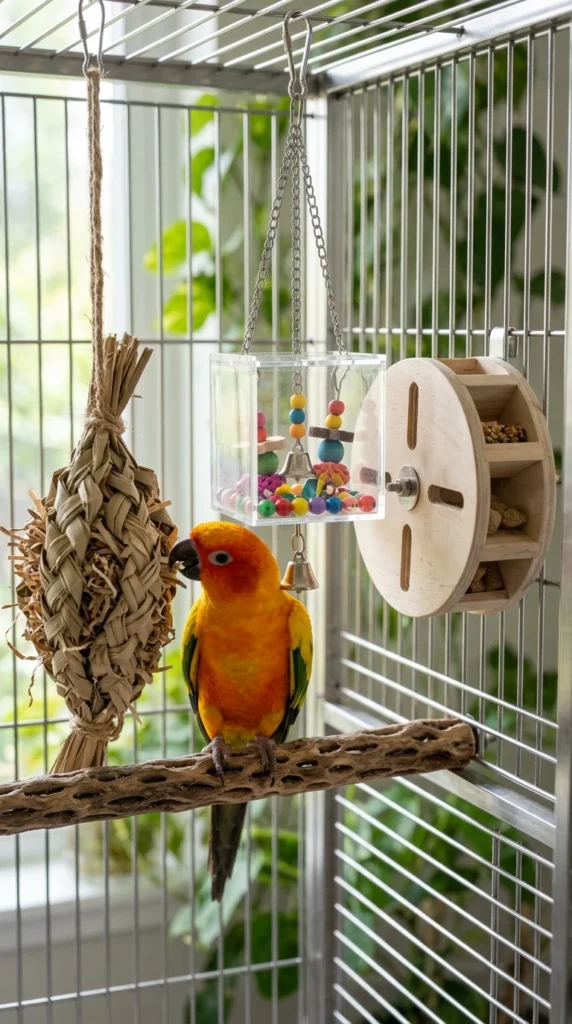
Foraging toys are arguably the gold standard of parrot enrichment. When you add rattling components like beads, bells, or seed pods inside a foraging toy, you multiply its value instantly.
Your parrot works to get the treat out, and every shake and tug rewards them with a satisfying sound.
Some popular options include:
- Acrylic foraging boxes with rolling beads inside the lid that rattle with every movement
- Woven palm leaf bundles filled with rattling seed capsules
- Wooden foraging wheels that spin and click as the bird manipulates them
The key thing to look for here is durability combined with accessible noise. The toy should make sound easily, not only when your bird hits it at just the right angle.
Browse Foraging Toys for Parrots on Amazon
2. Bell Toys
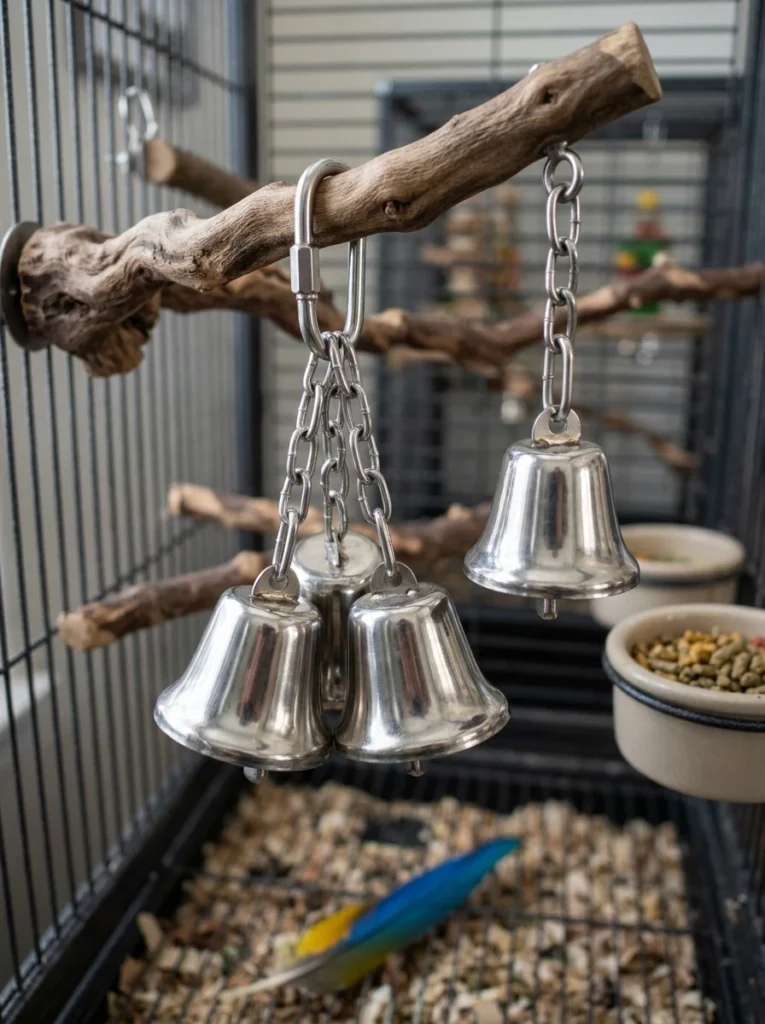
Bells are a parrot classic for a reason. Stainless steel bells are safe, durable, and produce a clear, bright sound that many parrots find irresistible.
Watch a parrot with a good bell toy for five minutes and you will understand completely. They ring it, step back, tilt their head, ring it again. It is honestly adorable.
When shopping for bell toys, keep these points in mind:
- Avoid cheap zinc or lead-based bells, which can cause heavy metal toxicity
- Choose bells with a clapper that is too large to remove and accidentally swallow
- Stainless steel or nickel-plated steel bells are your safest and most durable choices
- Multiple bells on a single toy tend to hold attention longer than a single bell
Larger parrots like African Greys, Amazons, and Macaws need bigger, sturdier bells. A tiny budgie bell will not survive five seconds with a Blue and Gold Macaw.
Shop Bird-Safe Bell Toys for Parrots on Amazon
3. Crinkle and Shredding Toys with Sound Elements
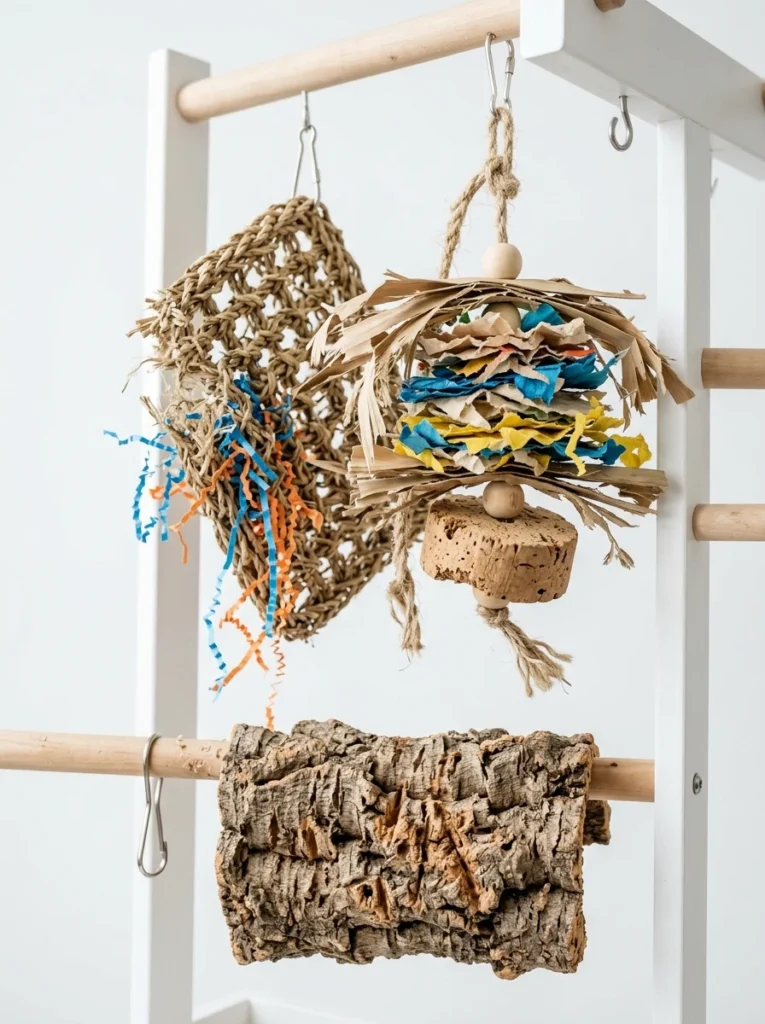
Parrots love to shred. Give a parrot a pile of palm fronds or cork material and watch pure joy unfold.
Shredding toys that crinkle or rustle as they are torn apart add an audio dimension that makes the activity even more rewarding.
Some great options in this category include:
- Paper and palm leaf shredders with crinkle paper woven in
- Seagrass mats that make a satisfying rustling sound as pieces pull apart
- Cork bark panels that pop and creak as they are broken apart
These toys are especially great because they are consumable. Your parrot destroys them completely, which is kind of the whole point.
Just make sure all materials are bird-safe and dye-free.
Find Parrot Shredding and Crinkle Toys on Amazon
4. Musical and Electronic Noise-Making Toys
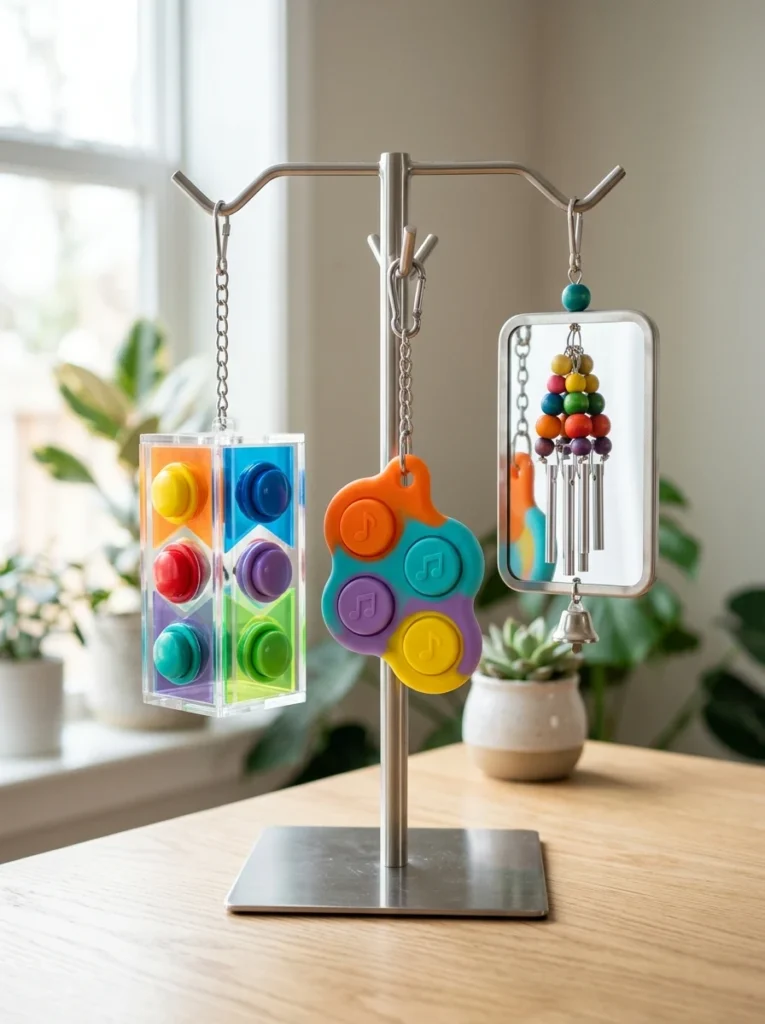
Yes, these exist, and yes, some parrots absolutely obsess over them.
Electronic toys that play music, mimic sounds, or respond to touch can keep a curious parrot occupied for surprisingly long stretches.
A few things that tend to work well:
- Foot toys with squeakers inside, which the bird can squeeze and manipulate
- Touch-sensitive pads that play bird calls or musical tones when tapped
- Mirrors with built-in bells or chimes that react when the bird pecks at its own reflection
The caveat here is that not every parrot responds to electronic toys. Some birds find them overstimulating and ignore them entirely.
It really depends on your bird’s personality. Trying a cheaper version first before investing in a pricier electronic option is always a smart move.
5. Rattle and Roll Foot Toys
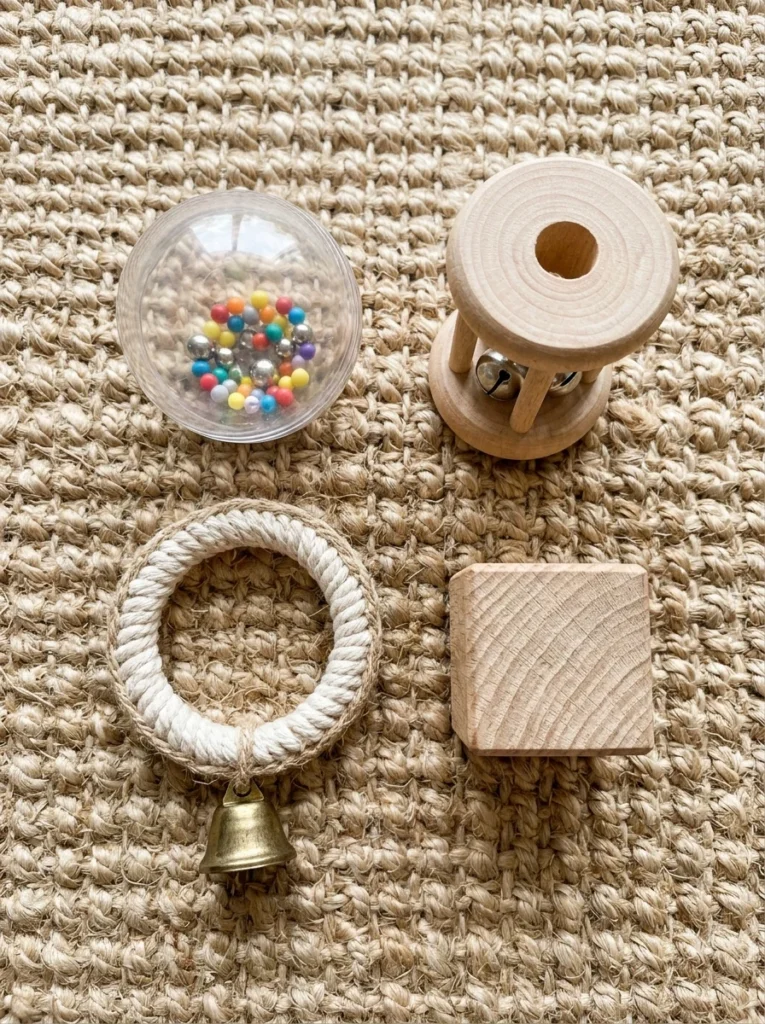
Foot toys deserve their own spotlight. Parrots use their feet to hold and manipulate objects, and a small rattling foot toy gives them something to grab, roll, and shake on their own terms.
These are especially fantastic for independent play when you are not home.
Good foot toy options include:
- Wooden spools or beads strung with rattling interior pieces
- Small acrylic balls with a pebble or bead inside that clicks as the bird rolls them
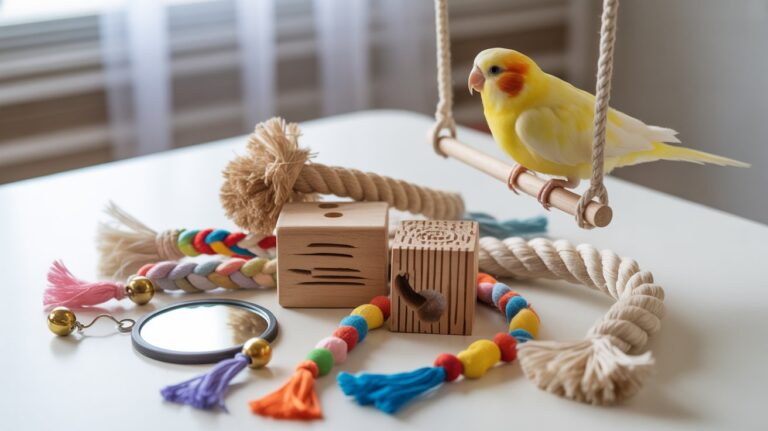
- Woven rope rings attached to small jingling bells
Foot toys also help develop coordination and grip strength, which is a nice bonus on top of the entertainment value.
What to Look for When Choosing a Noise-Making Toy
Buying parrot toys is not as simple as grabbing the loudest thing on the shelf.
You want toys that are genuinely safe, appropriately sized, and interesting enough to hold your bird’s attention past the first afternoon. Here is what actually matters.
Safety First, Always
Bird-safe materials are non-negotiable. This means avoiding:
- Zinc, lead, or chrome-plated metals, which are toxic to parrots
- Dyed ropes or fabrics unless confirmed food-safe
- Small parts that can be easily detached and swallowed
- Rough metal edges that can cut tongues or feet
Stick to toys made from stainless steel, natural untreated wood, food-grade acrylic, cotton rope, and palm or seagrass materials.
Reputable bird toy brands will always list their materials clearly.
Size Matching Matters More Than You Think
A toy that is too small poses a choking or entanglement risk. A toy that is too big intimidates smaller birds and often gets ignored.
Match the toy size to your bird’s size using these rough guidelines:
- Small birds (budgies, parrotlets, lovebirds): Small bells, tiny foot toys, crinkle paper toys
- Medium birds (cockatiels, conures, caiques): Medium bell clusters, foraging boxes, shredding toys
- Large birds (African Greys, Amazons, Eclectus): Heavy-duty bells, large foraging wheels, cork shredders
- Extra-large birds (Macaws, Cockatoos): Industrial-grade stainless steel bells, large acrylic rattles, thick rope toys
Shop Parrot Toys by Size on Amazon
Rotation Keeps Things Fresh
Here is a trick that every experienced parrot owner learns eventually. Rotating toys every one to two weeks prevents boredom far more effectively than buying brand-new toys every time.
Put away a few toys, bring them back out a couple of weeks later, and your parrot will often treat them like they are completely new. Your wallet will thank you for this strategy.
Top Picks That Parrot Owners Keep Coming Back To
After a lot of trial and a fair amount of error, a few specific toy types have proven themselves with parrots across different species and personality types.
The Classic Bell Cluster
A cluster of three to five stainless steel bells on a quick-link connector is a tried and true favorite. Simple, durable, and immediately engaging.
Most parrots will investigate a bell cluster within minutes of it being added to the cage. It is one of the most consistently successful toys across species.
The Spinning Foraging Wheel
These wooden wheels have multiple compartments that you can fill with treats, and they click and spin as the bird works through them.
The combination of sound, movement, and food reward makes this one of the most enriching toys available. It keeps birds busy and thinking, which is exactly what you want.
The Crinkle Shredder Bundle
Bundles of palm leaf strips, crinkle paper, and cork pieces tied together give your parrot a multi-sensory experience.
The sounds change as the bundle is destroyed, which keeps the bird engaged from the first bite to the last shred.
These are especially loved by conures and cockatoos, who have a near-spiritual relationship with shredding.
Keeping Your Parrot Engaged Long-Term
Buying great toys is only half the equation. The way you introduce and rotate toys matters just as much as the toys themselves. Hang new toys near familiar perches so your bird notices them.
Some parrots are neophobic, meaning they fear new objects, and may need a few days just to warm up to something new. Do not give up after one day.
Pairing a new toy with a treat can also help. Place a favorite treat near or inside the toy to encourage your bird to approach it.
Once they realize the toy responds to them, especially with sound, their curiosity usually takes over.
The Bottom Line
Noise-making toys are not a luxury for parrots. They are a genuine part of keeping these intelligent, social animals mentally healthy and emotionally balanced.
The right toys reduce stress, prevent destructive behavior, and give your bird something purposeful to do with all that energy and intelligence.
Whether you start with a simple bell cluster or go all in on a spinning foraging wheel, just start somewhere.
Your parrot is waiting. And trust me, they will let you know when you have picked a winner.
Explore Interactive Parrot Toys on Amazon and Find Your Bird’s New Favorite
What Types of Interactive Noise-Making Toys Are Safest for Parrots?
The safest noise-making toys for parrots are made from stainless steel, untreated wood, food-grade acrylic, cotton rope, and palm or seagrass.
Avoid toys with zinc, lead, or chrome-plated metals. These can cause heavy metal toxicity in birds. Choose bells with clappers that are too large to swallow.
Always buy from trusted bird toy brands that list their materials clearly. If you’re unsure, ask your avian vet before getting a new toy.
How Often Should I Rotate My Parrot’s Noise-Making Toys?
Rotate your parrot’s toys every one to two weeks. This helps prevent boredom and keeps their environment stimulating.
Parrots are smart and lose interest in the same toy quickly. However, they often see a rotated toy as new after a short break.
A small rotation of four to six toys is cost-effective. It’s better than constantly buying new ones. When you reintroduce a toy, pair it with a treat. This helps rebuild your bird’s interest faster.
Why Do Parrots Love Toys That Make Noise?
Parrots respond to sound because audio cues are key for communication, foraging, and flock behavior in the wild.
Noise-making toys give instant feedback whenever a parrot plays with them. This creates a rewarding loop that keeps the bird engaged and curious.
Such stimulation mimics the mental activity parrots have in their natural habitat. A toy that makes noise essentially “talks back” to your parrot, and that interaction is very satisfying for them.
Are Electronic Noise-Making Toys Good for Parrots?
Electronic noise-making toys can be great for some parrots, but not all. Touch-sensitive pads that play music, squeaky foot toys, and sound-reactive mirrors have been popular with many parrot owners.
They work well for curious and bold birds like African Greys and Eclectus parrots. However, some birds find electronic sounds too much and may avoid these toys.
Always begin with a cheaper electronic option to see if your bird responds well before buying a premium one.
What Size Noise-Making Toys Should I Buy for My Parrot?
The right toy size depends on your parrot’s species and size. Small birds, like budgies, parrotlets, and lovebirds, need small bells, tiny foot toys, and lightweight crinkle paper.
Medium birds, such as cockatiels, conures, and caiques, prefer medium bell clusters, foraging boxes, and shredding toys.
Large parrots, like African Greys, Amazons, and Eclectus, require heavy-duty bells and large foraging wheels.
Extra-large birds, such as Macaws and Cockatoos, need industrial-grade stainless steel bells and thick rope toys.
A toy that is too small can cause choking and entanglement risks. On the other hand, a toy that is too large may scare smaller birds away.