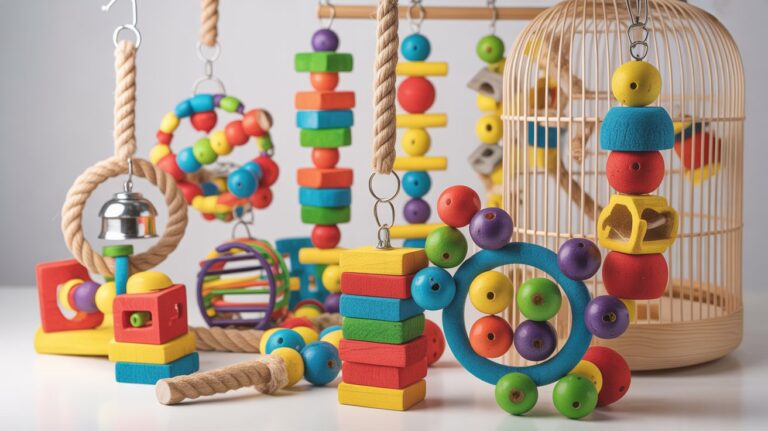
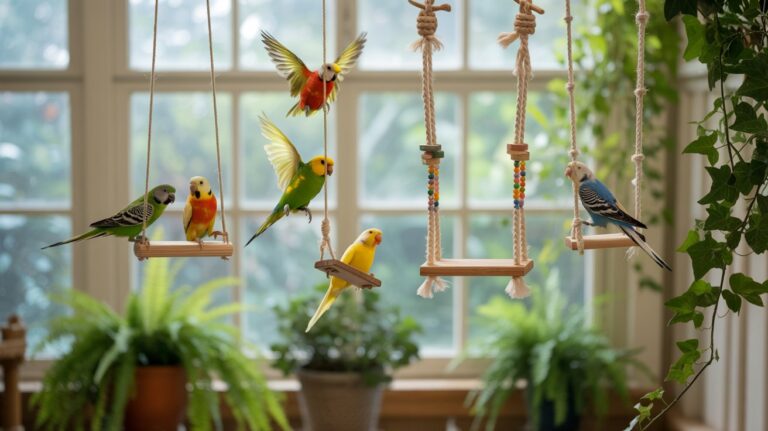
Preening Toys That Keep Solo Birds Happy
Your bird has it all: a spacious cage, fresh food, clean water, and a caring owner who chats with them like a tiny feathered therapist.
Yet, you might find your parrot over-preening, plucking, or just sitting there, looking sad. Sound familiar? You’re not imagining it.
Solo birds need more than food and perches. Preening toys are one of the best tools for bird owners.
This isn’t just a product list. Think of it as a chat between two people who care about keeping their birds happy and healthy. So grab a coffee, and let’s discuss what really works.
Why Preening Matters So Much for Solo Birds
Before we get into the toys themselves, let us establish why preening is such a big deal. Birds in the wild spend a significant portion of their day preening, both alone and with flock mates.
When a bird lives alone, they lose that social grooming partner completely.
A bird without an outlet for preening behavior will find their own outlet. Sometimes that outlet is their own feathers, which leads to over-preening or plucking.
Other times it is just restlessness and boredom, which is no fun for anyone involved.
Preening toys mimic that social grooming experience.
They give your bird something to preen, manipulate, and chew, satisfying that deep instinctive need without requiring another bird in the home.
What Makes a Good Preening Toy?
Not every toy labeled “preening toy” actually does the job well. Here is what you want to look for when shopping.
Texture Variety
Birds are texture nerds. They want to feel different surfaces under their beak.
The best preening toys combine multiple textures, such as soft rope, rough wooden beads, silky feathers, and crinkly materials, because variety keeps the bird engaged far longer than a single-material toy.
Shop Bird Preening Toys On Amazon
Safe Materials
This one is non-negotiable. Always check that the toy uses bird-safe dyes, untreated wood, and natural fibers.
Toys with zinc hardware, chemically treated rope, or synthetic dyes can cause serious harm. When in doubt, choose toys from reputable bird-specific brands over generic pet store finds.
Appropriate Size
A toy sized for a cockatiel will bore a macaw in about four seconds flat. Match the toy to your bird’s beak strength and body size.
A toy that is too small poses a swallowing risk, while a toy that is too large simply intimidates smaller birds.
Replaceability
Preening toys get destroyed. That is literally the point.
Buy toys you can easily replace or that come with refillable components, so you are not doing a full treasure hunt every time your bird demolishes something.
The Best Types of Preening Toys for Solo Birds
Feathered Toys
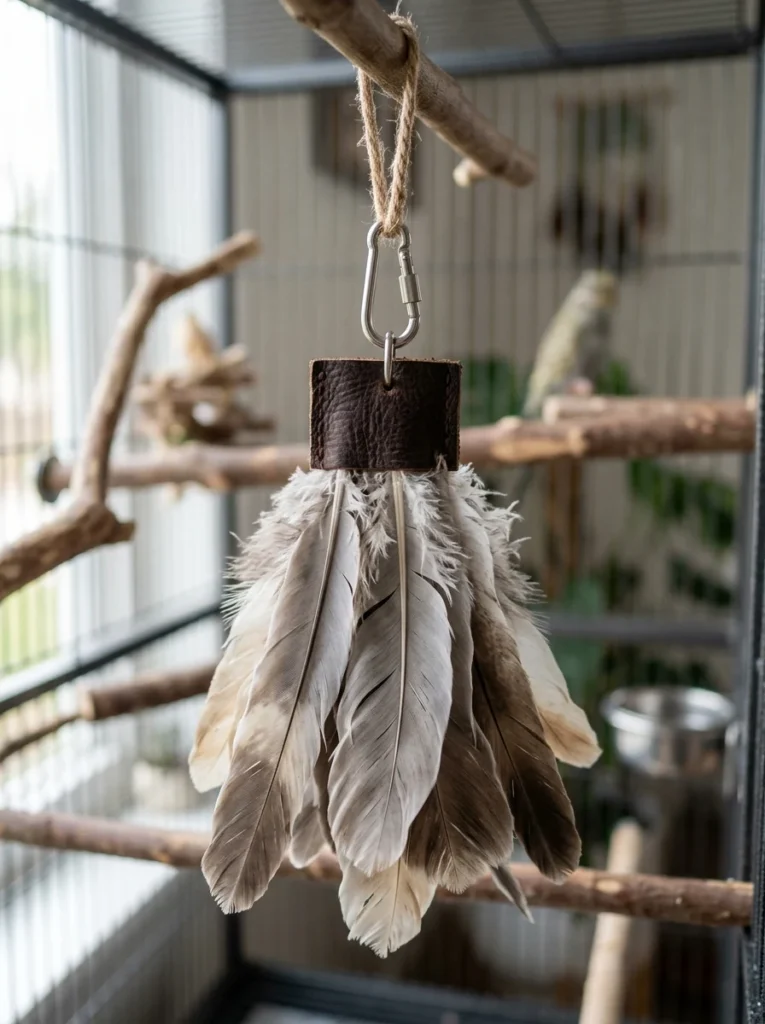
These are the classics, and for good reason. Feathered toys tap into a bird’s natural instinct to groom a companion.
Your bird will run their beak through the feathers repeatedly, just as they would with a flock mate.
What to look for:
- Natural, undyed feathers whenever possible
- Feathers attached to a sturdy base or hanging clip
- Toys that combine feathers with other textures like wood or leather strips
One thing worth mentioning here: some birds become genuinely attached to their feathered toys.
My cockatiel once mourned a worn-out feather toy for three days before accepting its replacement. Birds are dramatic creatures, and honestly, that is part of their charm.
Browse Feathered Bird Toys On Amazon
Rope and Fiber Toys
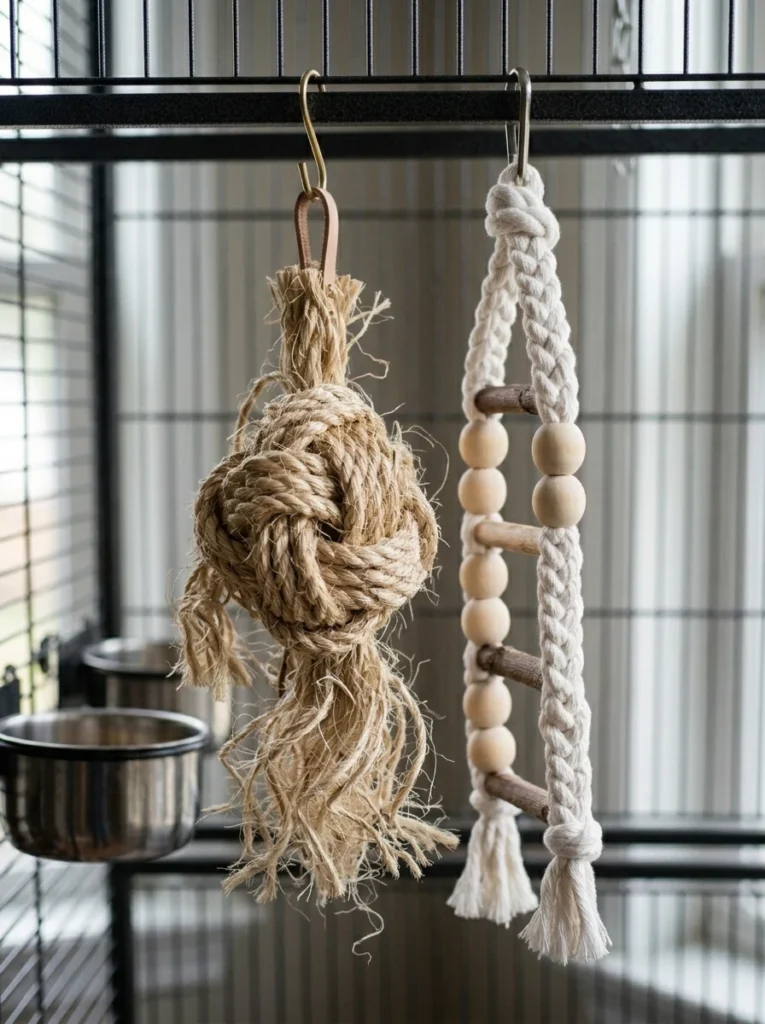
Rope toys give birds something to chew, preen, and unravel, which is basically the bird equivalent of a puzzle combined with a spa day.
Cotton rope and sisal rope are both popular choices, though you need to monitor these carefully. Loose threads can catch around toes or get ingested in large quantities.
The trick with rope toys is buying ones with interesting shapes. Simple straight ropes bore birds quickly, but rope woven into a net, ladder, or spiral shape? That holds attention much longer.
Foraging Preening Toys
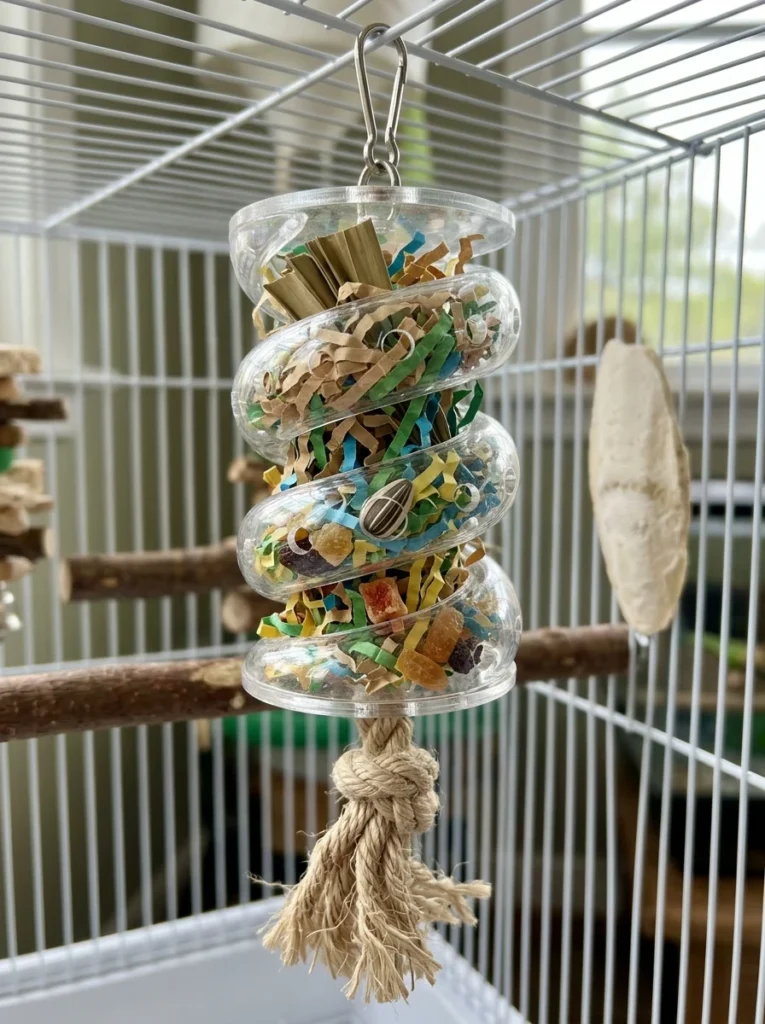
Here is where things get genuinely clever. Some preening toys double as foraging toys, hiding treats within soft, shreddable material that the bird has to work through.
This combines two powerful forms of enrichment at once.
Why this works so well:
- It keeps the bird mentally engaged, not just physically occupied
- The act of shredding mimics natural behavior
- The treat reward reinforces continued interaction with the toy
For solo birds especially, this combination is gold. You are addressing boredom, natural behavior, and positive reinforcement all in one toy.
Find Bird Foraging Preening Toys On Amazon
Soft Shreddable Toys
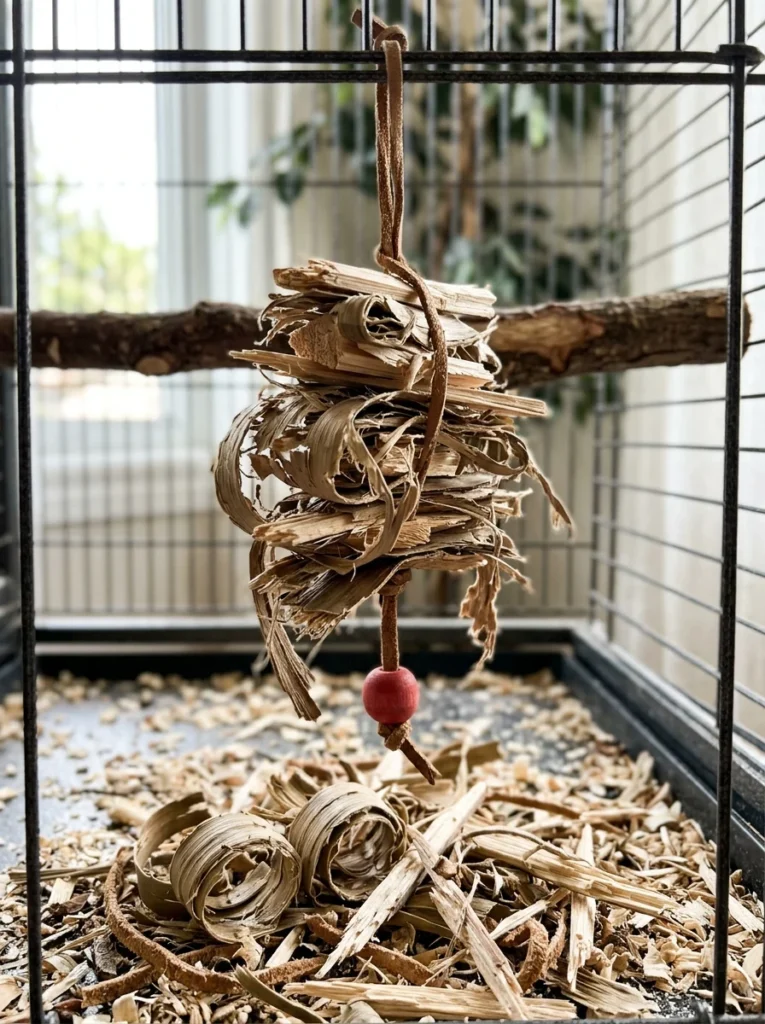
Think palm fronds, soft wood slices, paper-based toys, and woven grass materials.
These toys invite pulling, preening, and dismantling, and birds with a plucking tendency particularly benefit from having something appropriate to redirect that energy toward.
Shreddable toys are not just for parrots.
Finches, canaries, and softbills also benefit from having material they can manipulate, even if their interactions look different from a parrot’s more dramatic destruction sessions.
Preen Buddies and Plush Companions
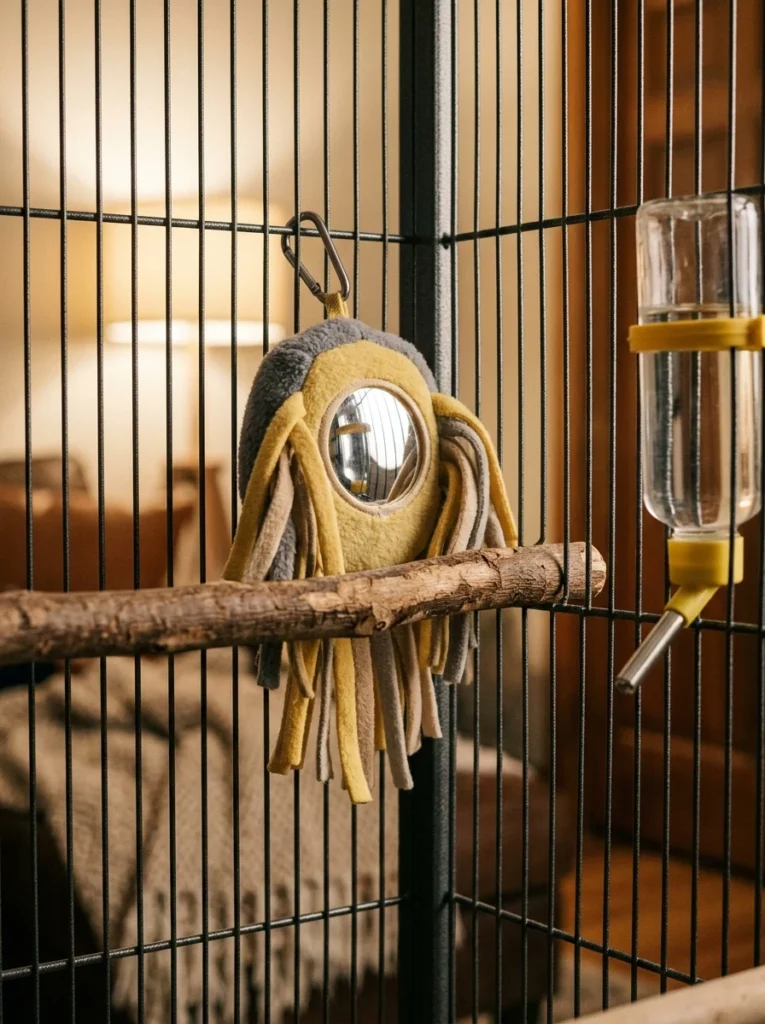
Preen buddies are specifically designed to simulate a flock companion. They typically feature soft, textured surfaces and sometimes include a mirror component.
Your bird can rub against them, preen them, and treat them like a social partner.
Fair warning: the mirror component is a double-edged sword. Some birds love mirrors and use them for healthy social interaction.
Others become obsessed to an unhealthy degree, treating the reflection as a rival or becoming stressed by the “other bird” that never responds properly.
Watch your bird’s behavior closely if you introduce a mirror-equipped toy.
How to Introduce Preening Toys Without Getting Ignored
Here is the thing about birds: they are suspicious of new objects by nature. Drop a brand-new toy into the cage and your bird might treat it like it just arrived from a hostile planet.
The Gradual Introduction Method
Start by placing the toy near the cage rather than inside it. Let your bird observe it from a safe distance for a day or two.
Once they seem comfortable, hang it just outside the cage door. Eventually move it inside, ideally placing it near a familiar perch where your bird already spends time.
Patience is the whole game here. Some birds take a week to warm up to a new toy. Rushing the process usually backfires.
Use Food as a Bridge
Smear a little bit of your bird’s favorite food on the toy. Suddenly that suspicious object becomes a lot more interesting.
Once the bird interacts with it for food, they usually start interacting with it for fun as well.
Rotate Toys Regularly
Even the best preening toy loses its appeal after a few weeks of constant exposure. Rotating a selection of toys in and out of the cage keeps novelty high and boredom low.
A toy that got ignored three months ago often gets enthusiastically received when it reappears after a break.
Preening Toys by Bird Type
Not all birds preen the same way, and their toys should reflect that.
Parrots and Parakeets
Parrots are the power users of the preening toy world. They want something they can really work on, with multiple textures and enough structural complexity to hold their interest.
Foraging preening combos work especially well for this group. Budgies and parakeets enjoy smaller rope toys and feathered swings at their scale.
Cockatiels and Lovebirds
These birds are social and affectionate by nature, which makes solo living particularly hard on them.
Preen buddies and feathered toys tend to resonate strongly here. Cockatiels especially respond to soft textures and will spend extended time grooming a well-placed feathered toy.
Finches and Canaries
These small birds need appropriately scaled toys, and they interact differently from hookbills.
Soft nesting-style materials, thin rope perches, and woven grass structures encourage natural manipulation behavior.
Do not expect the same dramatic shredding you get from a parrot; finches are more subtle in their interactions.
Larger Parrots
African greys, amazons, macaws, and cockatoos need seriously durable toys that can withstand a powerful beak.
For larger parrots, look for thick leather strips, dense wooden components, and heavy sisal rope.
These birds also tend to be highly intelligent, so complexity in the toy design matters a great deal.
Red Flags to Watch For
Preening toys are beneficial, but a few situations warrant a closer look.
- Obsessive behavior with any single toy, particularly mirrors, can signal loneliness or anxiety rather than healthy enrichment
- Increased preening leading to feather damage means the toy alone is not addressing the underlying issue, and a vet visit is a smart move
- Disinterest in all toys after a reasonable introduction period could point to illness or significant stress
Toys supplement a bird’s quality of life; they do not replace veterinary care, social interaction with you, or a healthy environment.
Building a Preening Toy Rotation That Actually Works
A solid rotation covers different textures, interaction styles, and difficulty levels. Here is a simple framework:
- One feathered toy for direct preening behavior
- One rope or fiber toy for chewing and manipulation
- One shreddable or foraging toy for mental engagement
- One preen buddy or soft companion toy for social comfort
Swap one toy out every one to two weeks to keep your bird’s environment feeling fresh.
You do not need to spend a fortune; many birds are just as happy with a well-chosen five-dollar toy as a premium thirty-dollar one. The quality of the interaction matters more than the price tag.
Shop The Full Range Of Bird Enrichment Toys On Amazon
The Bottom Line on Preening Toys
Solo birds carry a real challenge: they are wired for social connection, and without a feathered companion, they rely on you and their environment to fill that gap.
Preening toys are one of the most direct, practical ways to address that need.
The right toy will not transform your bird overnight, but over time, the right rotation of preening toys makes a measurable difference in feather condition, mood, and overall behavior.
Watch your bird, pay attention to what they gravitate toward, and do not be afraid to experiment.
And if your bird shreds a brand-new toy in forty-five minutes flat? Take it as a compliment. That means you picked exactly the right one.
Start Building Your Bird’s Toy Rotation On Amazon
What Are the Best Preening Toys for a Single Bird Living Alone?
The best preening toys for a solo bird mix different textures. Feathered toys, soft rope toys, and shreddable foraging toys are top choices.
They mimic the social grooming that a lone bird lacks. For parrots and cockatiels, a preen buddy with a rotating set of shreddable toys works great.
The key is variety. No single toy can keep a solo bird happy for long. Create a small rotation of three to four toys and swap them often. This keeps things fresh and your bird engaged.
How Do Preening Toys Help Prevent Feather Plucking in Birds?
Feather plucking in solo birds often comes from boredom, anxiety, or lack of a grooming partner. Preening toys offer an outlet for this grooming urge.
They help redirect the behavior from the bird’s feathers to something else. Shreddable toys and feathered toys work well because they mimic the feel of preening another bird.
While they don’t cure plucking alone, especially if it’s stress-related or medical, they are key to an enrichment strategy that helps reduce it.
How Often Should You Rotate Preening Toys for a Solo Bird?
Most bird behaviorists and experienced keepers suggest rotating toys every one to two weeks. Novelty is key for keeping a solo bird mentally stimulated.
Even a favorite toy can lose its charm with constant use. A good method is to have four to six toys in rotation.
Swap one or two out at a time instead of changing everything all at once. Reintroducing a toy after a three to four week break can spark the same excitement as a new toy.
This approach helps you manage costs while maintaining high enrichment levels.
Are Preening Toys Safe for All Bird Species?
Preening toys are safe for most bird species if you choose the right size and material.
Small birds like finches, canaries, and budgies need toys made from fine rope, thin natural fibers, and lightweight materials.
Larger parrots need tougher toys made from thick leather, dense wood, and heavy sisal to handle their strong beaks.
No matter the species, always ensure the toy has bird-safe dyes, untreated natural wood, and metal parts without zinc or lead.
Trusted bird-specific toy brands are a better choice than general pet store options.
How Do You Introduce a New Preening Toy to a Bird That Ignores Everything?
Birds are naturally wary of new things. A bird that ignores new toys is acting normally. The best way to introduce a toy is gradually.
Start by placing it near the cage, not inside. Let the bird see it for a day or two. Then, move it to the cage door before putting it inside near a familiar perch.
Putting a bit of the bird’s favorite food on the toy speeds things up. Once the bird associates the toy with food, curiosity usually kicks in, and it will start exploring the toy.