Spiral Bird Rope Perch for Parrots and Parakeets
If you have a parrot or parakeet, you know how picky they are about their home. If the cage setup is off, your bird will let you know—loudly.
One upgrade that truly makes a difference is the spiral bird rope perch. Once you discover its benefits, you’ll wonder how you managed without one.
This article covers everything about spiral rope perches. You’ll learn why birds love them, how to choose the right one, and how to keep it clean.
Whether you’re a new bird owner or an experienced parrot lover, you’ll find useful information here.
What Exactly Is a Spiral Bird Rope Perch?
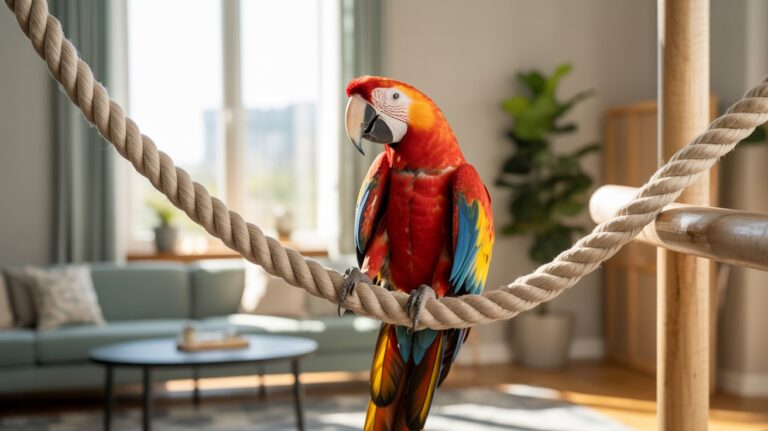
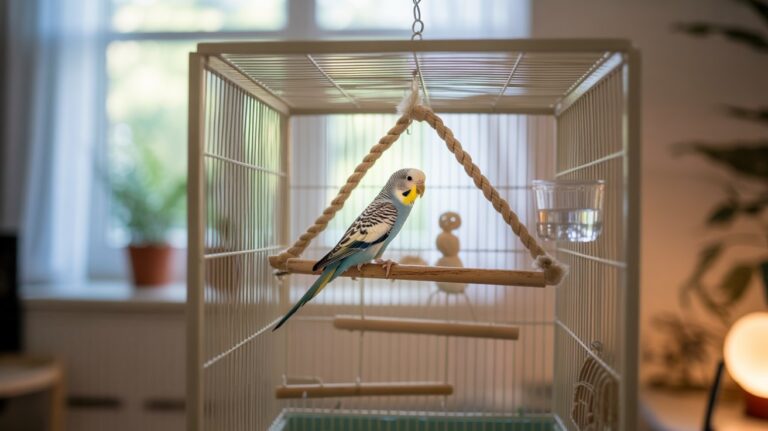
A spiral bird rope perch is a flexible, twisted rope perch that coils in a spring-like or corkscrew shape inside a bird’s cage.
Unlike flat wooden dowels or rigid perches, these rope perches bend and flex, allowing you to configure them in multiple positions.
Most versions attach to the cage bars on both ends, creating a fun, wobbly path your bird can walk, climb, and lounge on.
They come in various materials, the most popular being cotton rope, natural fiber rope, and sisal rope.
The spiral design is not just a style choice; it serves a very real functional purpose for your bird’s physical well-being. More on that in a moment.
Common Materials Used
- Cotton rope: Soft, gentle on feet, widely available, and easy to clean
- Sisal rope: Slightly rougher texture, great for beak conditioning and grip
- Natural jute rope: Eco-friendly option, often untreated and bird-safe
- Braided nylon rope: Durable but less ideal due to potential fiber ingestion risks
Shop Bird-Safe Rope Perches On Amazon
Always prioritize bird-safe, non-toxic materials when shopping. If a perch does not clearly state it is free from dyes, synthetic coatings, or chemical treatments, skip it.
Why Parrots and Parakeets Actually Need One
Here is the honest truth: most standard cages come with basic wooden dowel perches that are fine but not fantastic.
They work. They hold a bird. But they do not do much beyond that. A spiral rope perch, on the other hand, brings real benefits to the table.
Foot Health and Exercise
Wild parrots and parakeets spend their days gripping branches of all different shapes, textures, and diameters.
Their feet are built for variety, not repetition.
When a bird stands on the same smooth, uniform dowel all day, it puts constant pressure on the same spots of the foot, which can lead to pressure sores and bumblefoot over time.
The rope perch solves this because:
- The twisted, uneven surface shifts the pressure points constantly
- The soft texture is gentle on sensitive feet
- The flexible design encourages natural gripping motion
- Different diameters throughout the spiral provide variety in foot position
Find Rope Perches That Support Your Bird’s Foot Health On Amazon
Think of it as the difference between wearing one pair of shoes every single day versus rotating through a few comfortable options.
Your feet would thank you for the variety, and so will your bird’s.
Mental Stimulation and Play
Parrots are genuinely intelligent animals. A bored parrot is a destructive parrot, and if you have come home to chewed furniture or a screaming bird, you understand this completely.
Spiral rope perches add environmental enrichment simply by existing.
The wobbly, flexible structure challenges your bird’s balance, stimulates curiosity, and encourages movement throughout the cage.
Many birds enjoy:
- Walking the full length of the spiral like a tiny tightrope artist
- Gripping and swinging from the rope for exercise
- Preening and napping along the curved surface
- Playing with the fibers as a mild chewing activity
That last point is worth noting. Some birds will chew on the rope, which is normal and generally fine in moderation with safe materials.
Just inspect the perch regularly for fraying or loose threads that could become a hazard.
Beak and Nail Conditioning
With textured rope materials like sisal, the natural friction helps keep your bird’s beak and nails at a reasonable length.
This does not replace professional grooming, but it does reduce how quickly things get out of hand between trims.
Birds naturally rub their beaks on rough surfaces to keep them clean and conditioned, and a rope perch gives them a safe, built-in outlet for that behavior.
How to Choose the Right Spiral Rope Perch
Not all rope perches are created equal, and the wrong size or material can do more harm than good. Here is what to look for before you buy.
Size Matters More Than You Think
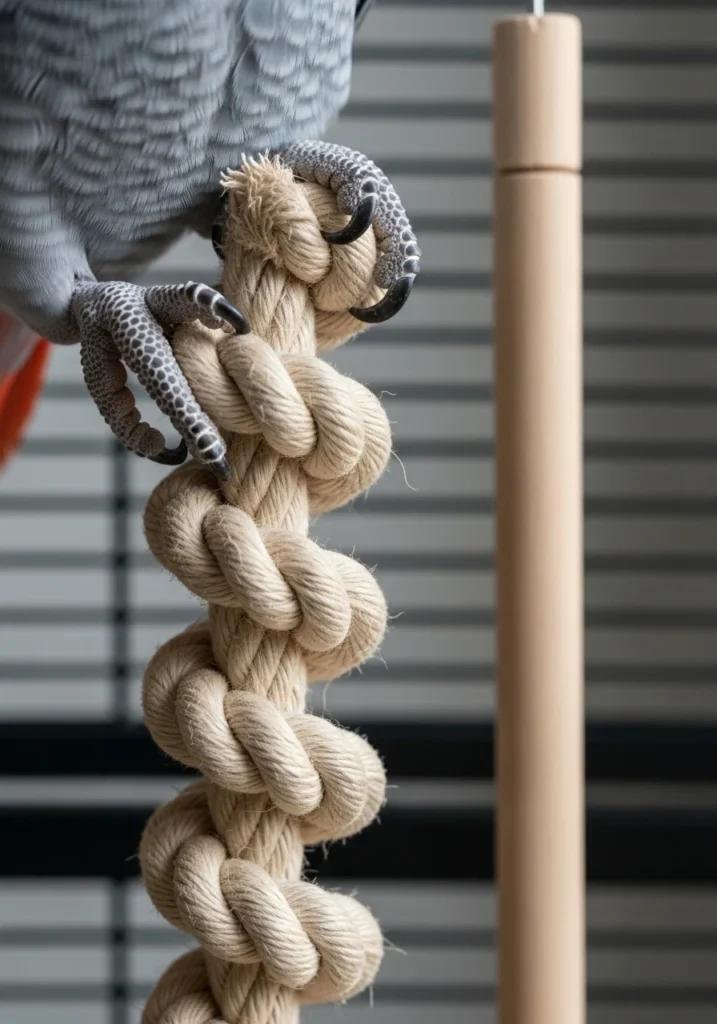
The diameter of the perch should match the size of your bird’s foot. A perch that is too thin forces the bird to grip too tightly, while one that is too thick prevents a proper wrap.
As a general guide:
- Parakeets and small birds: Perch diameter of roughly 0.5 to 0.75 inches
- Cockatiels and medium birds: Perch diameter of approximately 0.75 to 1 inch
- African Greys, Amazons, and similar: Perch diameter of 1 to 1.5 inches
- Macaws and large parrots: Perch diameter of 1.5 inches or more
When your bird wraps its toes around the perch, its front toes should not quite meet its back toes. That gripping position indicates the diameter is working correctly.
Browse Spiral Rope Perches By Size On Amazon
Length and Flexibility
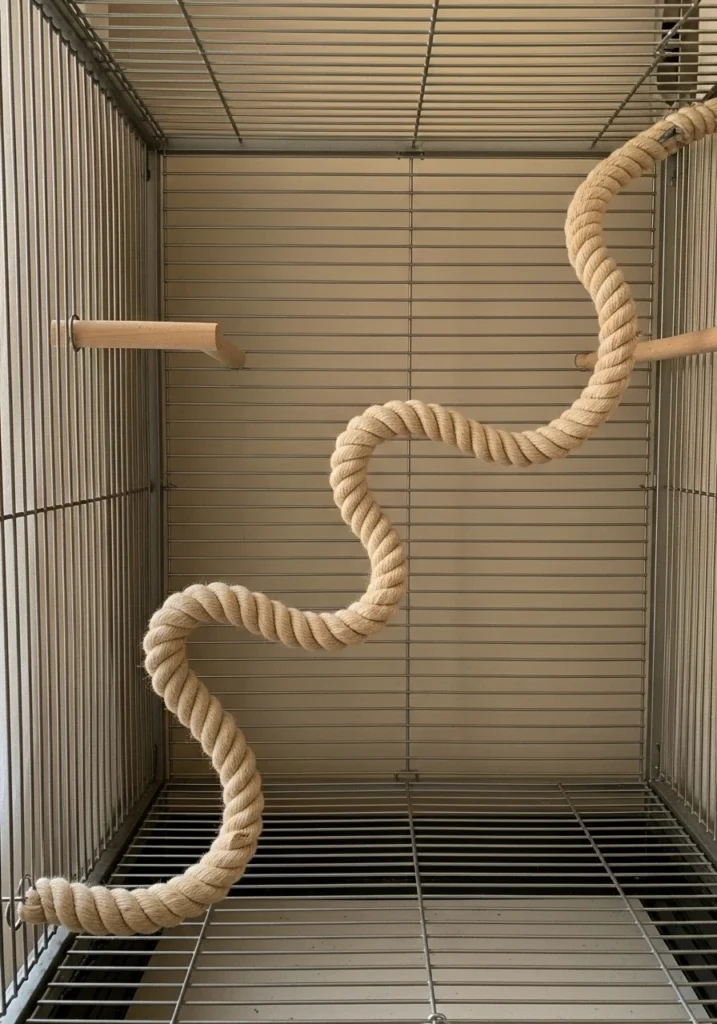
Longer spiral perches allow more movement and more creative cage configurations. A flexible perch that you can bend and shape is far more versatile than a rigid coil.
Look for a perch long enough to span at least one third of the cage’s interior, giving your bird plenty of room to explore.
Safety Certifications and Material Transparency
Reputable brands clearly state that their rope perches are made with non-toxic, bird-safe dyes or are left undyed entirely.
Avoid any perch with a vague material description or one that smells strongly of chemicals right out of the packaging.
Your bird will spend significant time in direct contact with this perch, so material quality is not an area to cut corners on.
Setting Up the Spiral Rope Perch in the Cage
Placement makes a surprisingly big difference. A poorly placed perch goes unused, which helps nobody.
Placement Tips
- Position the perch at mid-level in the cage, not directly above food or water bowls. You do not want droppings contaminating your bird’s meals.
- Angle it slightly upward from one end to the other to encourage active walking and climbing rather than passive sitting.
- Keep it away from cage walls on both sides where possible, giving your bird room to spread its wings without clipping them on the bars.
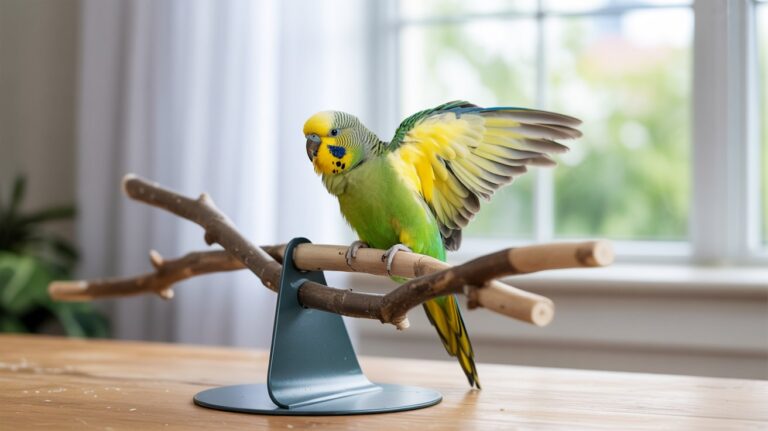
- Combine it with other perch types at different heights to create a varied, stimulating environment. A rope perch, a natural wood perch, and a platform perch together cover most of your bird’s needs.
The goal is variety and accessibility. Your bird should be able to move between perches naturally without having to make awkward jumps or squeezes.
Cleaning and Maintenance
Here is the part people skip until something goes wrong. Rope perches accumulate droppings, food debris, and bacteria faster than wooden perches, simply because the fibers trap material.
Regular cleaning is not optional; it is a genuine health issue for your bird.
Cleaning Routine
Weekly:
- Remove the perch and scrub it with warm water and a bird-safe soap
- Rinse thoroughly and squeeze out excess water
- Allow it to dry completely before returning it to the cage. A damp perch left in an enclosed space grows mold faster than you would expect.
Monthly:
- Do a deeper inspection of the entire perch for fraying, loose threads, or worn sections
- Replace any section that shows significant fraying where threads could be ingested
Immediate replacement triggers:
- Visible mold growth
- Strong or unusual odor that persists after cleaning
- Fibers unraveling to the point where your bird could get a toe caught
The lifespan of a quality rope perch with regular maintenance is typically three to six months depending on how active and how heavy a chewer your bird is.
Comparing Spiral Rope Perches to Other Perch Types
To give you a full picture, here is how a spiral rope perch stacks up against other common options.
| Perch Type | Foot Health | Enrichment | Durability | Ease of Cleaning |
|---|---|---|---|---|
| Wooden dowel | Low | Low | High | Medium |
| Natural wood branch | High | Medium | Medium | Low |
| Rope perch | High | High | Medium | Medium |
| Cement/pumice perch | Medium | Low | Very High | High |
| Platform perch | Medium | Medium | High | Medium |
The rope perch wins on enrichment and foot health, which is why most experienced bird keepers recommend having at least one in every cage setup.
It complements other perch types rather than replacing them entirely.
Shop Top-Rated Bird Perches On Amazon
A Few Things to Watch Out For
Even the best spiral rope perch comes with a couple of things worth watching.
Fraying fibers are the number one concern. Loose threads can wrap around a bird’s toe and cut off circulation, which is a medical emergency. Check the perch every few days if you have a heavy chewer.
Over-reliance on a single perch type limits your bird’s foot exercise. Use the rope perch as part of a varied setup, not the only option in the cage.
Cheap knock-offs made from mystery materials pop up constantly in pet stores and online marketplaces. Stick with brands that specify their materials and confirm bird safety.
The price difference between a quality perch and a questionable one is usually just a few dollars, and your bird’s health is worth more than that.
Final Thoughts
A spiral bird rope perch is one of those simple additions that delivers a disproportionate amount of value to your bird’s daily life.
Better foot health, more stimulation, gentle beak conditioning, and a more interesting cage environment all come packaged in one flexible, easy-to-install accessory.
You do not need a fancy setup or an expensive cage upgrade to give your parrot or parakeet a better quality of life.
Sometimes the best changes are also the most straightforward ones. Pick the right size, choose a safe material, keep it clean, and your bird will use it every single day.
And honestly, watching your parakeet wobble dramatically across a spiral rope perch like it is navigating a very serious obstacle course never gets old.
That alone might be worth the purchase.
Get A Spiral Rope Perch For Your Bird On Amazon
What Is a Spiral Bird Rope Perch and How Does It Work?
A spiral bird rope perch is a flexible, coiled rope. It attaches to both sides of a bird cage. This creates a winding path for your bird to walk, climb, and rest on.
Unlike rigid wooden dowels, the twisted rope surface shifts pressure points on your bird’s feet. This helps prevent soreness and supports long-term foot health.
The flexible design also lets you reshape and reposition it inside the cage. You can adjust it to fit your bird’s habits and preferences.
Is a Spiral Rope Perch Safe for Parakeets and Parrots?
Yes, a spiral rope perch is safe for parakeets and parrots. Just pick one made from non-toxic, bird-safe materials like natural cotton, sisal, or untreated jute rope.
Always check that the perch has no synthetic dyes, chemical coatings, or unsafe fibers. Inspect the perch regularly for frayed threads.
Loose fibers can wrap around a bird’s toe and cause injury if not addressed.
What Size Spiral Rope Perch Does My Bird Need?
The right perch size depends on your bird’s species and foot size. – Parakeets and small birds need a perch diameter of about 0.5 to 0.75 inches.
- Cockatiels and medium-sized birds require around 0.75 to 1 inch. – Larger parrots, like African Greys and Amazons, need 1 to 1.5 inches.
- Macaws require 1.5 inches or more.
A properly sized perch allows your bird’s toes to wrap around it. The front and back toes should not quite touch, which is the best gripping position.
How Do You Clean and Maintain a Spiral Bird Rope Perch?
Clean your spiral rope perch weekly. Remove it from the cage. Scrub it with warm water and bird-safe soap. Rinse it thoroughly. Let it dry completely before putting it back.
A damp perch in a closed cage can grow mold quickly, so drying is key. Check it closely every month for worn or frayed areas.
Replace the perch if you see mold, smell a bad odor after cleaning, or notice fibers that could entangle your bird’s toes.
How Long Does a Spiral Bird Rope Perch Last?
With regular cleaning and proper maintenance, a quality spiral bird rope perch typically lasts between three and six months.
The actual lifespan depends on how active your bird is and how much it chews on the rope.
Heavy chewers will wear through a perch faster, so inspect it more frequently if your parrot tends to treat every object in its cage as a personal renovation project.
Replacing it promptly when it shows significant wear keeps your bird safe and comfortable.