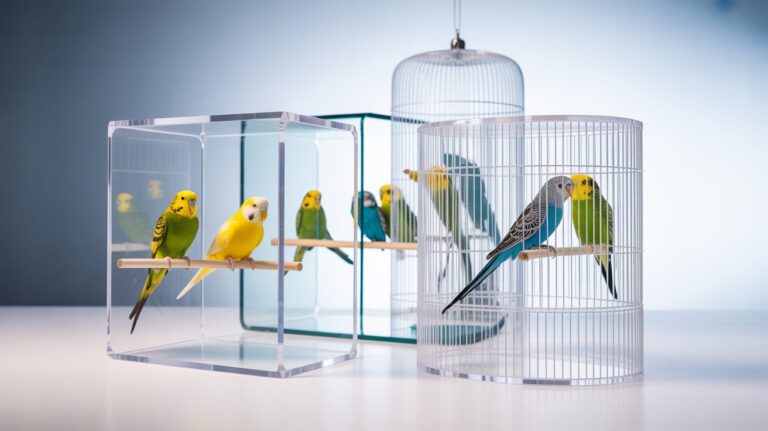
Bird Cage Setup Ideas Every New Owner Needs
You just brought home your first bird. You have the seed, the excitement, and a cage that came in a flat box with many confusing pieces.
Now you’re looking at it all and thinking, “What goes where?” Trust me, every bird owner has been there. Setting up a bird cage seems simple, but your bird’s happiness, health, and behavior depend on it.
This isn’t just a list of extras. A well-designed cage setup is key to a happy bird. Get it right from the start, and you’ll avoid headaches, vet bills, and those guilty looks from a bored parrot.
Choose the Right Cage Size First
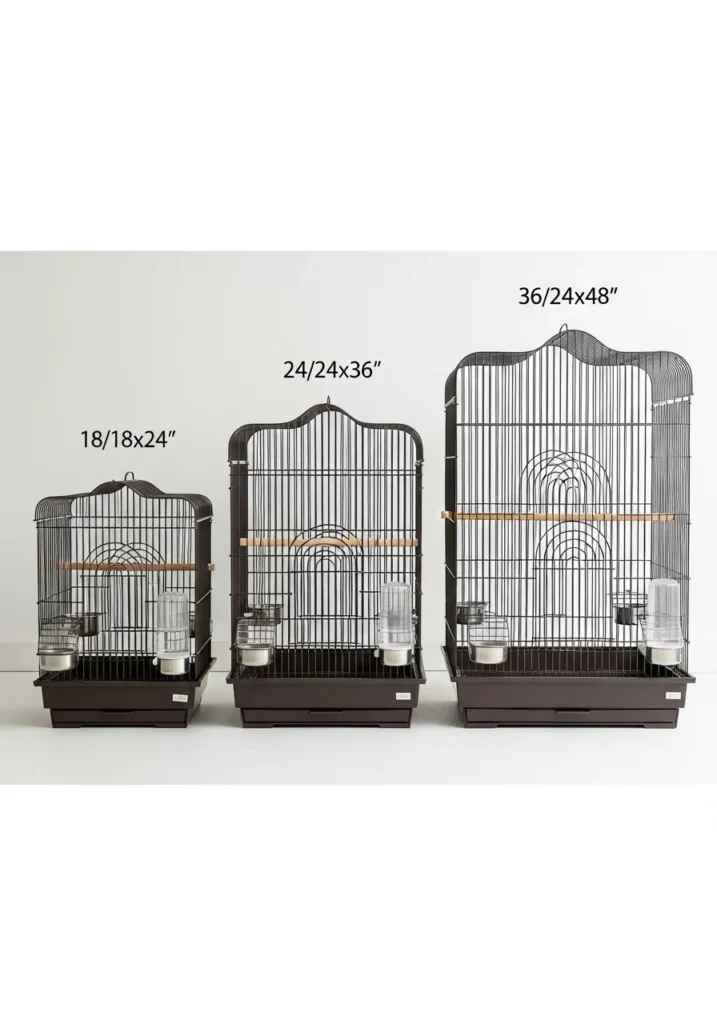
Before you start decorating, you need to make sure the cage itself works. The number one mistake new bird owners make? Buying a cage that is too small.
Birds need room to move, flap, climb, and act like the wild animals they still are at heart.
Here is a simple size rule to follow:
- Small birds (budgies, cockatiels, finches): minimum 18 x 18 x 24 inches
- Medium birds (conures, caiques, lovebirds): minimum 24 x 24 x 36 inches
- Large birds (African greys, amazons, cockatoos): minimum 36 x 24 x 48 inches
- Extra-large birds (macaws): go as big as your space allows
Bar spacing matters just as much as overall size. Bars that are too wide let small birds escape or get their heads stuck. Aim for 1/2 inch bar spacing for small birds and no more than 1 inch for larger species.
Cage Shape Matters Too
Round cages look pretty on Instagram. They are also terrible for birds. Birds need corners to feel secure.
A rectangular or square cage gives your bird defined spaces to retreat to, which reduces stress significantly. Go rectangular every single time.
Pick the Perfect Cage Location
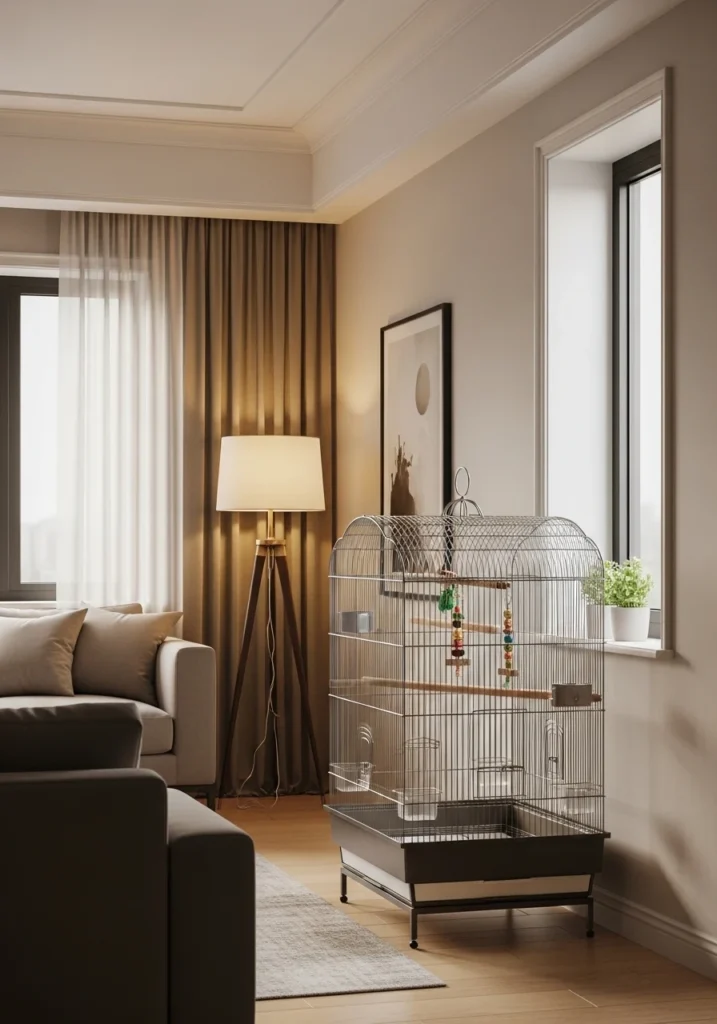
You can have the most beautifully stocked cage in the world and still stress your bird out by putting it in the wrong spot. Location is everything.
The ideal cage placement hits these marks:
- At eye level or slightly above, so your bird feels safe and can observe the room
- In a social area of the home, like the living room, where the bird sees daily activity
- Away from kitchen fumes, cooking smoke, and non-stick cookware (Teflon fumes are genuinely deadly to birds)
- Out of direct, unfiltered sunlight for more than a few hours
- Away from drafts, air conditioning vents, and exterior doors
A bird that lives isolated in a back bedroom will develop behavioral problems. Birds are flock animals. They need to feel like part of the action.
Avoid These Locations Completely
- Near the kitchen stove or microwave
- In high-traffic doorway zones where slamming doors cause constant stress
- Next to loud speakers or televisions running at high volume all day
- In direct sun with no shade options inside the cage
Set Up the Perches Strategically
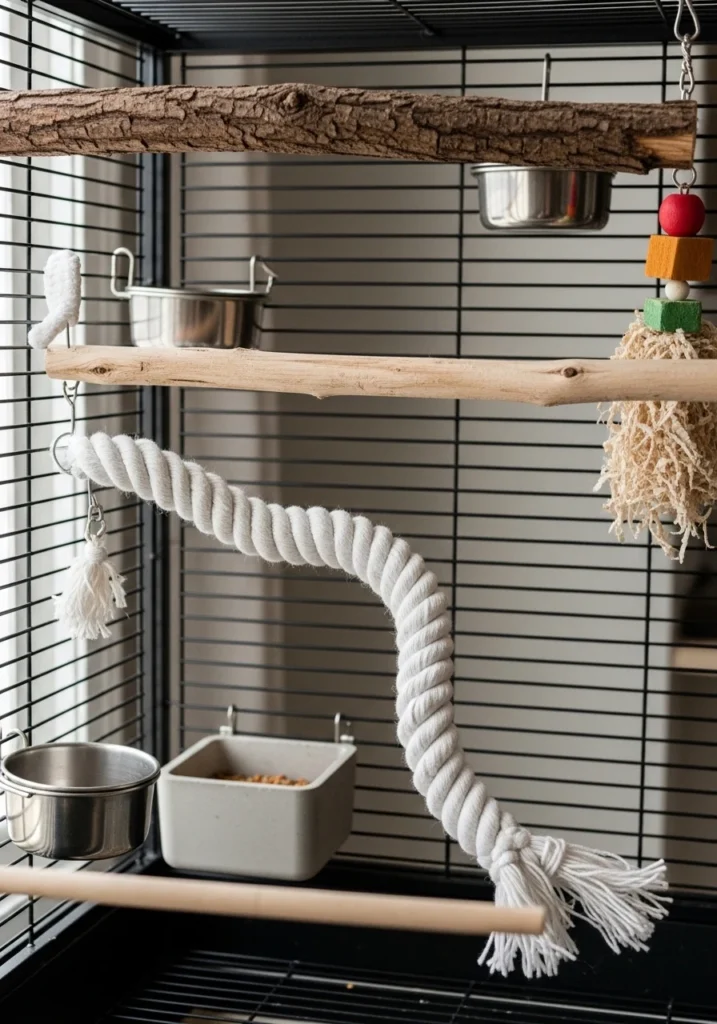
Here is where most new owners drop the ball. They install the two plastic perches that came with the cage and call it a day. That is the bare minimum, and bare minimum does not cut it.
Birds spend most of their lives standing. The texture, diameter, and variety of their perches directly affect their foot health.
A bird standing on the same smooth, uniform perch all day can develop pressure sores and arthritis over time.
Use a mix of these perch types:
- Natural wood perches (manzanita, java wood, dragonwood): irregular diameters exercise foot muscles naturally
- Rope perches: great for sleeping areas because they are soft and flexible
- Calcium or mineral perches: double as a supplement source
- Cement or sandy perches: placed near food bowls to keep nails naturally trimmed
Place perches at different heights throughout the cage. Put the sleeping perch at the highest point, since birds instinctively feel safest sleeping up high.
Keep at least one perch near the food and water stations so eating is effortless.
What to Avoid With Perches
Skip the smooth, uniform dowel perches that come standard with most cages. They look fine, but they do your bird’s feet zero favors.
Also avoid sandpaper-covered perches on the feet, because the abrasion causes sores rather than trimming nails.
Place Food and Water Dishes Thoughtfully
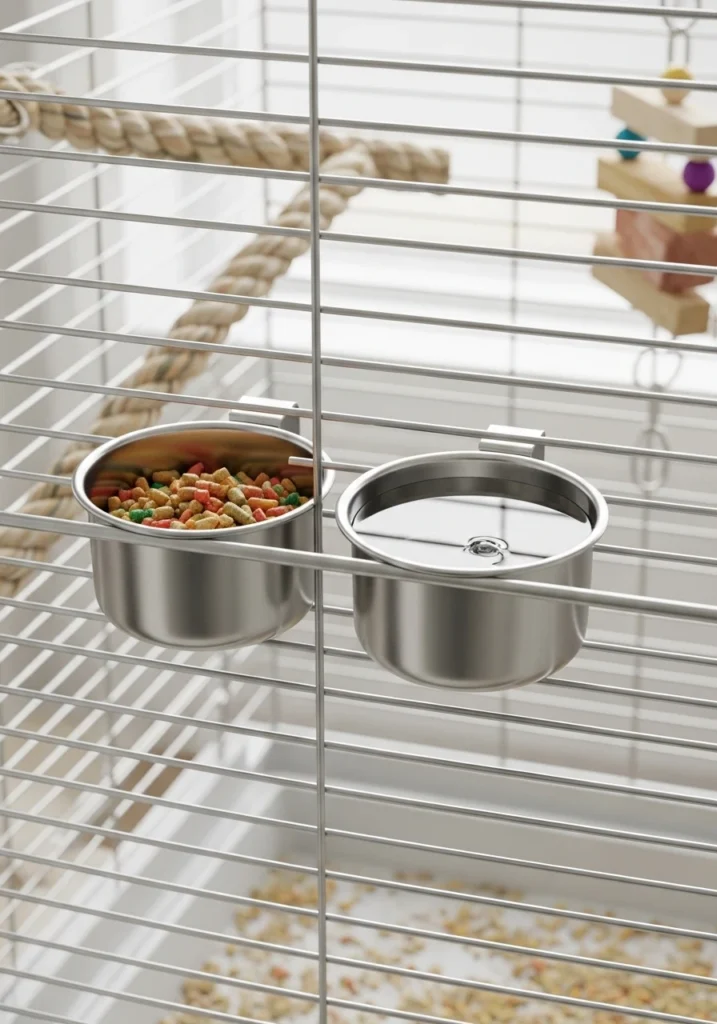
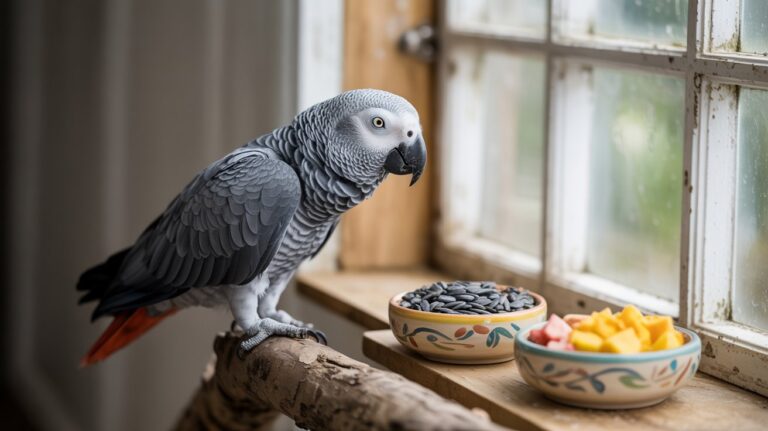
Your bird will spend a significant chunk of its day eating and drinking. Where you put the dishes and what kind you use matters more than you might think.
Dish placement tips that actually work:
- Mount food dishes at mid-cage height, not on the floor where droppings contaminate food
- Place water dishes away from perches directly above them (again, droppings)
- Use stainless steel dishes instead of plastic. Plastic harbors bacteria in tiny scratches and is much harder to properly sanitize
- Have at least two sets of dishes so you can swap them out during daily cleaning without leaving your bird without food while you wash
Some birds love foraging, so consider placing a small separate dish specifically for treats and foraging activities. It encourages natural behavior and keeps mealtimes interesting.
Water Quality Is Not Negotiable
Change your bird’s water at least once daily. Twice is better. Bacteria multiply in standing water fast, especially in warm environments.
A bird drinking contaminated water gets sick quietly and gradually, which makes it hard to catch early.
Add Toys That Actually Stimulate Your Bird
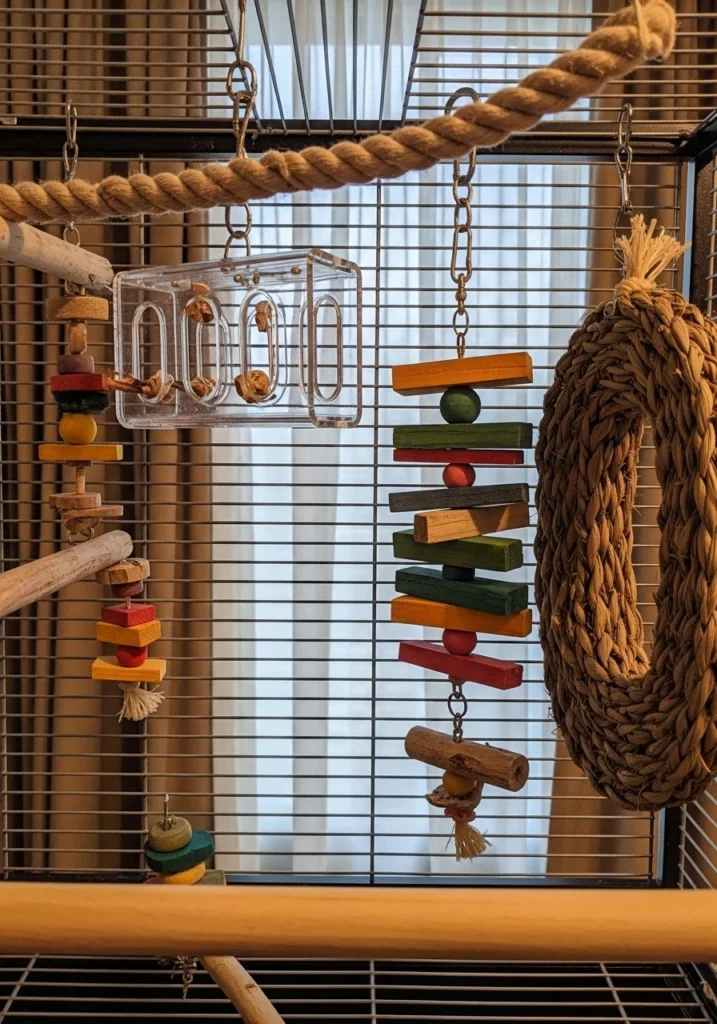
Here is the fun part. Toys transform a cage from a box into an environment. But not all toys are created equal, and throwing every colorful thing you own into the cage is not a strategy.
Birds need toys that fall into these categories:
- Foraging toys: hide food inside them so your bird has to work for treats. This mimics natural feeding behavior and prevents boredom.
- Chewing toys: wood blocks, palm fronds, vine balls. Especially important for parrots, who need to chew to keep their beaks healthy.
- Shredding toys: seagrass mats, paper-based toys, woven items. Birds love destroying things. Let them.
- Foot toys: small toys the bird can hold and manipulate independently
- Mirror toys: good for some solitary birds like budgies, but skip these for social parrots as they can cause obsessive behavior
Rotate toys every week or two. A toy your bird ignored for two weeks becomes fascinating again after a short absence.
Rotation keeps the cage feeling fresh without you spending a fortune constantly buying new items.
Toy Safety Is Non-Negotiable
Check every toy for zinc and lead components, which are toxic to birds.
Avoid toys with small parts that can be swallowed, chains with large links that can trap toes, or fraying ropes with loops big enough to catch a neck.
Inspect toys weekly for wear and retire damaged ones immediately.
Cover the Cage Floor Properly
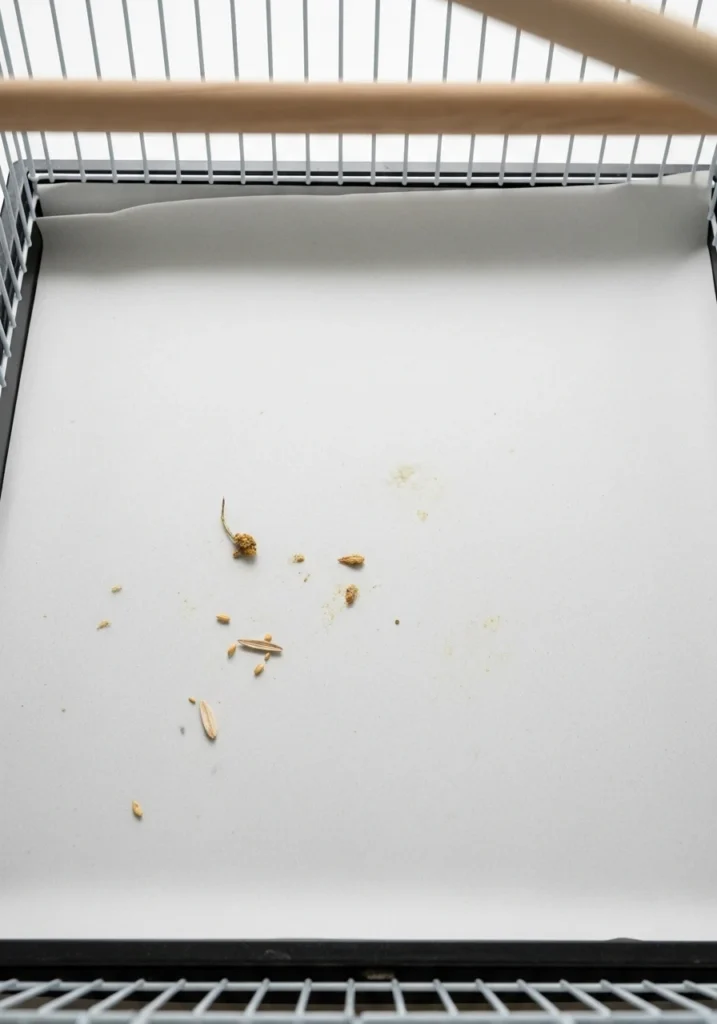
The cage floor is easy to overlook, but it plays a real role in hygiene and even enrichment.
Best cage liner options include:
- Unprinted newspaper or parchment paper: cheap, easy to swap daily, and you can monitor droppings easily for health changes
- Paper-based cage liners sold specifically for birds: convenient and absorbent
- Paper towels: perfectly fine for daily use
Avoid wood shavings, sand, and corn cob bedding. These trap moisture, grow mold and bacteria quickly, and can cause respiratory issues.
Cedar and pine shavings release aromatic oils that are actively harmful to birds.
Change the liner every single day. It takes thirty seconds and dramatically reduces the bacteria load in the cage environment.
Install a Cuttlebone and Mineral Block
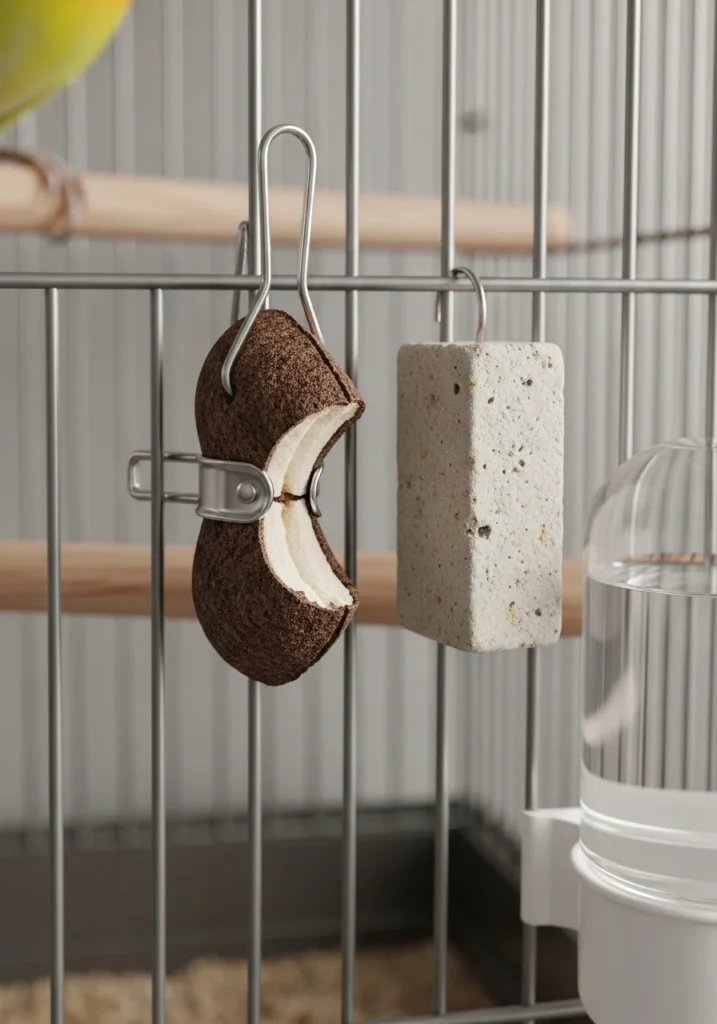
These two additions are small but mighty. A cuttlebone provides natural calcium, helps keep the beak worn down, and gives your bird something to investigate.
Most birds take to it quickly. Fix it to the cage bars with the soft side facing inward so your bird can actually access it.
A mineral block offers a broader range of trace minerals and doubles as an entertainment item for birds that love to grind and peck.
Both are inexpensive and genuinely beneficial, so there is no reason to skip them.
Create a Night Cover Routine
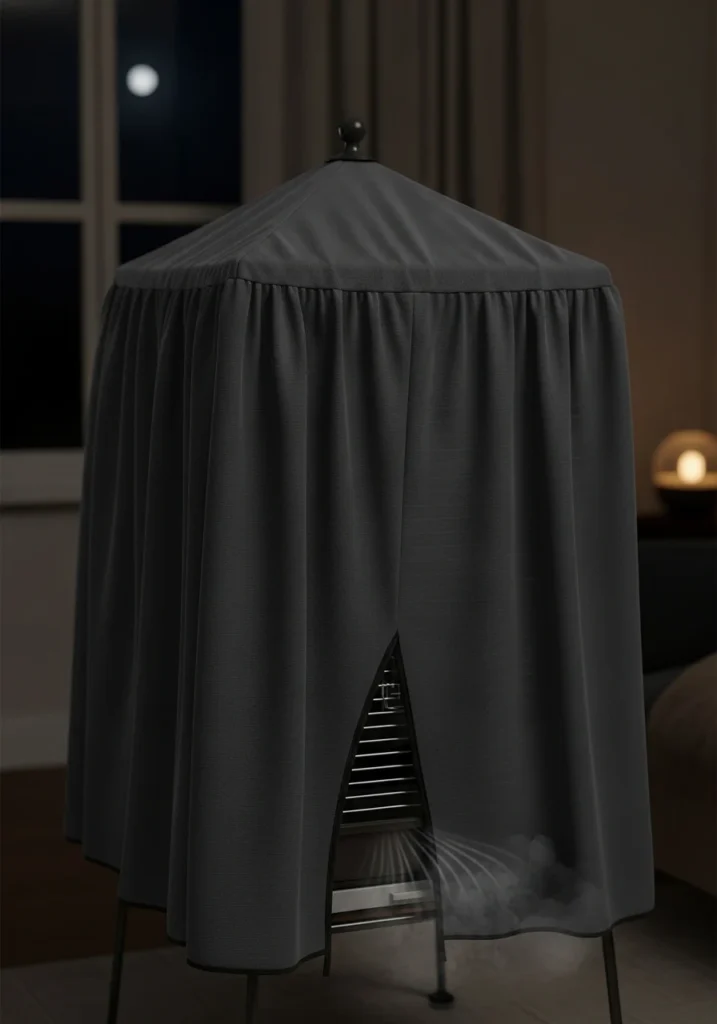
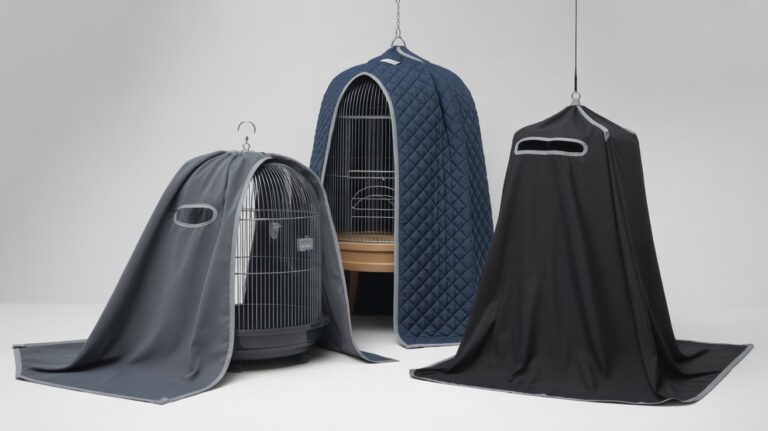
Birds need ten to twelve hours of sleep in a dark, quiet environment. A cage cover signals that it is time to sleep, blocks out disruptive light, and reduces drafts.
It also muffles sudden noises that would otherwise startle a sleeping bird.
Use a breathable, dark-colored fabric cover made specifically for cages or a simple dark cotton blanket. Avoid plastic covers that trap moisture and restrict airflow.
Establish a consistent covering and uncovering time each day. Birds thrive on routine, and a predictable sleep schedule contributes enormously to their overall temperament and health.
Do a Final Safety Check Before Your Bird Moves In
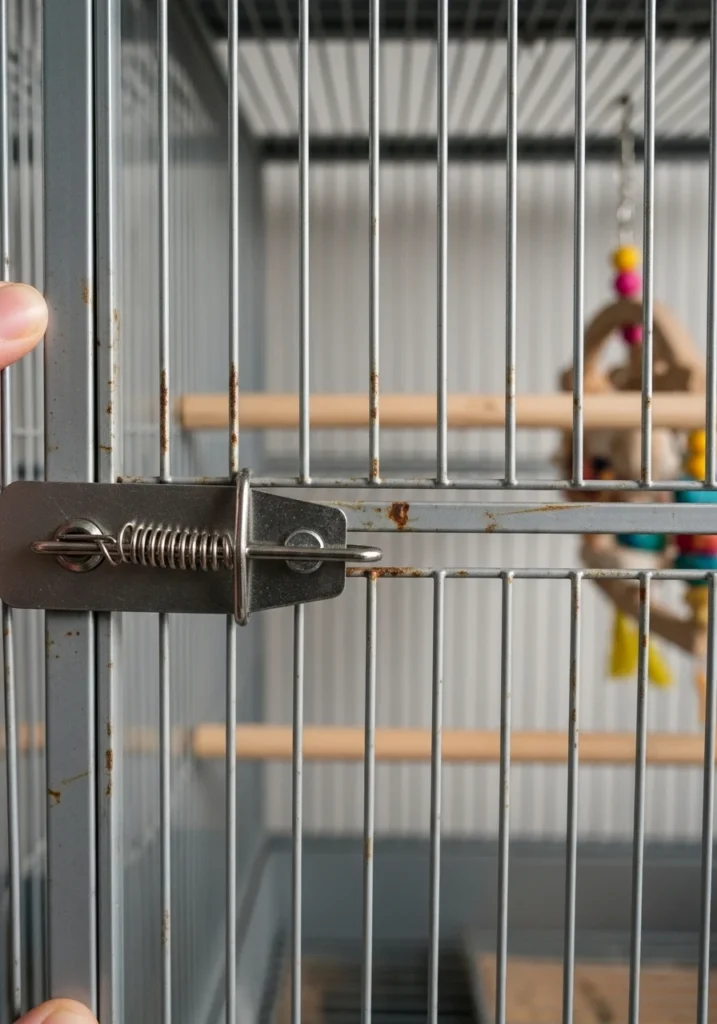
Before you let your bird explore its new home, walk through this checklist:
- No rust on cage bars or hardware
- All door latches are secure and cannot be opened by a clever bird from inside
- No sharp edges or broken wires anywhere
- Toys are positioned so they do not block movement or create cramped dead zones
- Food and water are stocked and accessible
- Perches are secure and do not wobble
Parrots especially are escape artists and problem-solvers. If a latch can be figured out, they will figure it out, usually at the worst possible moment.
Conclusion
Setting up a bird cage well is genuinely one of the most meaningful things you can do for your new bird. It is not about making it look nice for your living room (although that is a bonus).
It is about creating an environment where your bird feels safe, stimulated, and healthy every single day.
Start with the right cage size, nail the location, add varied perches, stock it with rotating toys, and keep the hygiene routine consistent. Do those five things and you are already ahead of most new bird owners.
Your bird cannot tell you when something is wrong with its setup. But it will show you through its behavior, its feathers, and its energy level.
Set it up right from day one, and you will see the difference almost immediately. Now go enjoy your bird. You have got this.
What Is the Best Bird Cage Setup for a Beginner?
The best bird cage setup for beginners includes a right-sized rectangular cage, various perch types, stainless steel food and water dishes, rotating toys, a cuttlebone, and a routine for daily cage liner changes.
Start simple, keep hygiene consistent, and add enrichment as you learn what your bird likes. Getting these basics right from day one gives you a big advantage over many first-time owners.
How Many Perches Should a Bird Cage Have?
A bird cage needs three to four perches with different textures and sizes. Include at least one natural wood perch, a rope perch for sleeping, and a harder perch near the food area to help trim nails.
Variety is important. Birds on the same perch all day can develop foot problems and arthritis over time.
Where Should You Place a Bird Cage in Your Home?
Place your bird cage in a lively room, like the living room, at eye level or slightly above. Keep it away from the kitchen, drafty windows, air conditioning vents, and direct sunlight.
Birds are social animals. They thrive on daily household activity, so avoid isolating them in a back bedroom. This can harm their mental health.
How Often Should You Clean a Bird Cage?
Change the cage liner and wipe food and water dishes daily. Scrub perches, toys, and cage bars thoroughly at least once a week.
Do a full deep clean of the entire cage, including hardware and tray, at least once a month. Daily cleaning stops bacteria from building up, which can make birds sick before you notice any issues.
What Toys Do You Need in a Bird Cage?
Every bird cage needs a mix of foraging toys, chewing toys, shredding toys, and at least one foot toy the bird can hold. Rotating these toys every one to two weeks is crucial.
This keeps the cage environment mentally stimulating. A bored bird becomes destructive and unhappy. Toys are your best defense against that.