How Play Top Bird Cages Benefit Your Parrot Daily
If your parrot has ever given you that bored stare, you know why a play top bird cage is important. Parrots are smart, social, and very active.
They need more than just a perch and a mirror to be happy. Their cage is not just a home; it’s their whole world.
Picking the right play top bird cage can be tricky. Every product claims to be the “ultimate” solution.
So, let’s explore what really works, which features are essential, and what cage styles will keep your parrot entertained instead of plotting against you.
Shop Top-Rated Play Top Bird Cages on Amazon
What Is a Play Top Bird Cage and Why Does It Matter?
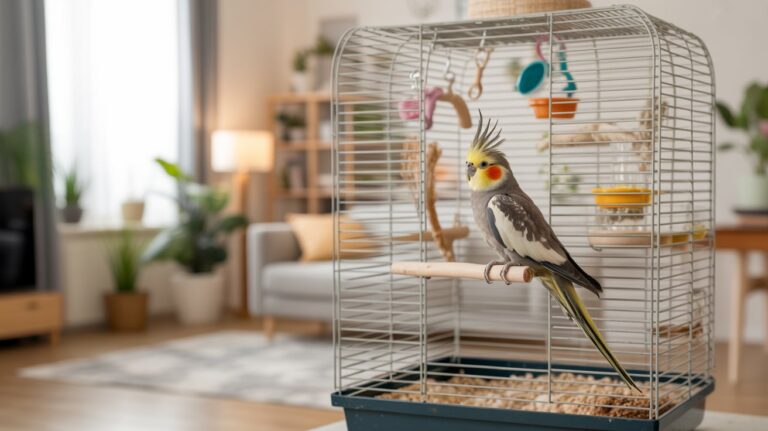
A play top bird cage is exactly what it sounds like. It is a bird cage with a built-in activity area on top, usually featuring perches, ladders, swings, and sometimes feeding stations.
Instead of just sitting inside a closed cage all day, your parrot gets to climb out, hang around on top, and interact with the world at a higher vantage point.
Parrots are naturally curious and love elevation. In the wild, they spend most of their time in treetops, scanning their surroundings and staying mentally sharp.
A play top cage mimics that experience indoors, giving your bird a safe space to explore beyond the cage bars.
Why a Regular Cage Often Fails Active Parrots
Standard cages without play tops are perfectly fine for birds that are out most of the day, but for parrots that spend significant time in their cage, a plain enclosure gets boring fast.
Boredom in parrots leads to feather plucking, excessive screaming, and destructive behavior. None of those are fun for you or your bird.
A play top gives your parrot a “bonus room” to burn energy and stimulate their mind, without you having to supervise every single moment of free roam time around the house.
Key Features to Look For in a Play Top Bird Cage
Not all play top cages are created equal. Some look great in product photos but fall apart under the beak of a determined African Grey. Here is what you should actually pay attention to before buying.
Cage Material and Bar Strength
The material of the cage matters enormously. You want a cage made from wrought iron or stainless steel, not cheap powder-coated zinc wire that can chip and cause metal toxicity.
Stainless steel is the gold standard because it does not rust, does not chip, and is nearly impossible for a parrot to destroy.
For larger parrots like Macaws and Cockatoos, bar spacing should be between 1 and 1.5 inches. Smaller parrots like Conures and Caiques do well with 3/4 inch spacing.
Get the spacing wrong and you either risk your bird getting its head stuck or slipping through the bars entirely.
Browse Safe and Sturdy Bird Cages on Amazon
Play Top Design and Variety
A good play top should offer more than just one perch. Look for cages that include:
- Multiple perches at different heights and diameters
- A built-in ladder or climbing structure to encourage movement
- Removable toy hooks or rings so you can rotate toys easily
- Cup holders or feeding stations on top for treats and foraging activities
- A seed catcher or tray to keep the mess manageable
The more varied the play top, the longer your parrot stays interested. A single wooden perch bolted to the top is not going to hold the attention of a bird that can solve puzzles.
Cage Size
Here is a rule that every parrot owner should tattoo on their brain: bigger is always better.
The minimum cage size should allow your parrot to fully extend its wings and flap without hitting the bars. For reference:
- Small parrots (Budgies, Lovebirds, Parrotlets): at least 24 x 24 x 24 inches
- Medium parrots (Conures, Caiques, Senegals): at least 30 x 30 x 36 inches
- Large parrots (African Greys, Amazons, Eclectus): at least 36 x 24 x 48 inches
- Extra-large parrots (Macaws, Large Cockatoos): at least 48 x 36 x 60 inches
Do not let any salesperson convince you that a cramped cage is fine because “your bird will mostly be out.”
Plans change. Life happens. Your bird needs space even on the days things do not go as planned.
Mobility and Practicality
Cages with locking wheels are a practical blessing.
You will want to move the cage toward a window for morning light, away from drafts in winter, and into the living room so your bird can be part of the action.
A cage that weighs 80 pounds and has no wheels is basically immovable furniture.
Also check for easy-access doors on the cage front and a pull-out debris tray at the bottom.
Cleaning a parrot cage is not glamorous work, and anything that makes it faster is worth the extra investment.
Best Play Top Bird Cage Styles Worth Considering
Rather than overwhelming you with an endless list, here are the main cage styles that parrot owners consistently trust and recommend.
These represent the types and features that have earned solid reputations in the bird community.
Explore All Play Top Bird Cage Styles on Amazon
The Classic Corner Play Top Cage
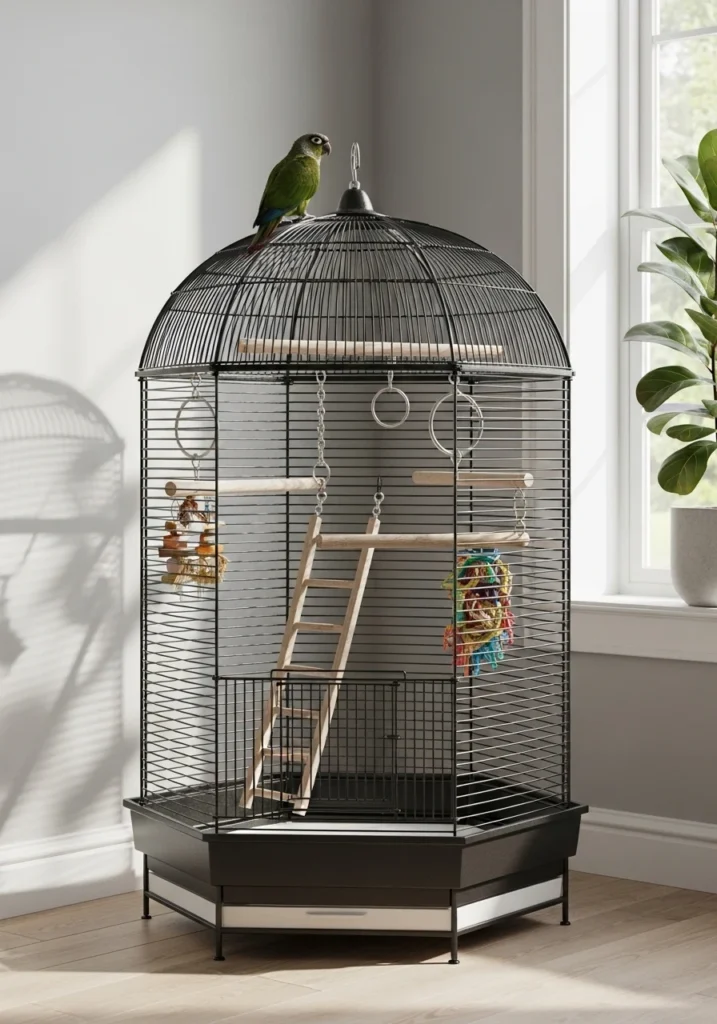
This style features a domed or flat play top that wraps around the upper back corners of the cage. It usually includes two perches, a ladder, and a couple of toy attachment points.
This is a great starter option for medium parrots and works particularly well for Conures and Caiques who love to climb and explore.
The play area is accessible by opening the top hatch, and most birds figure out how to use it within a day or two. The compact footprint makes it a good fit for apartments or smaller living spaces.
The Large Wrought Iron Play Top Cage
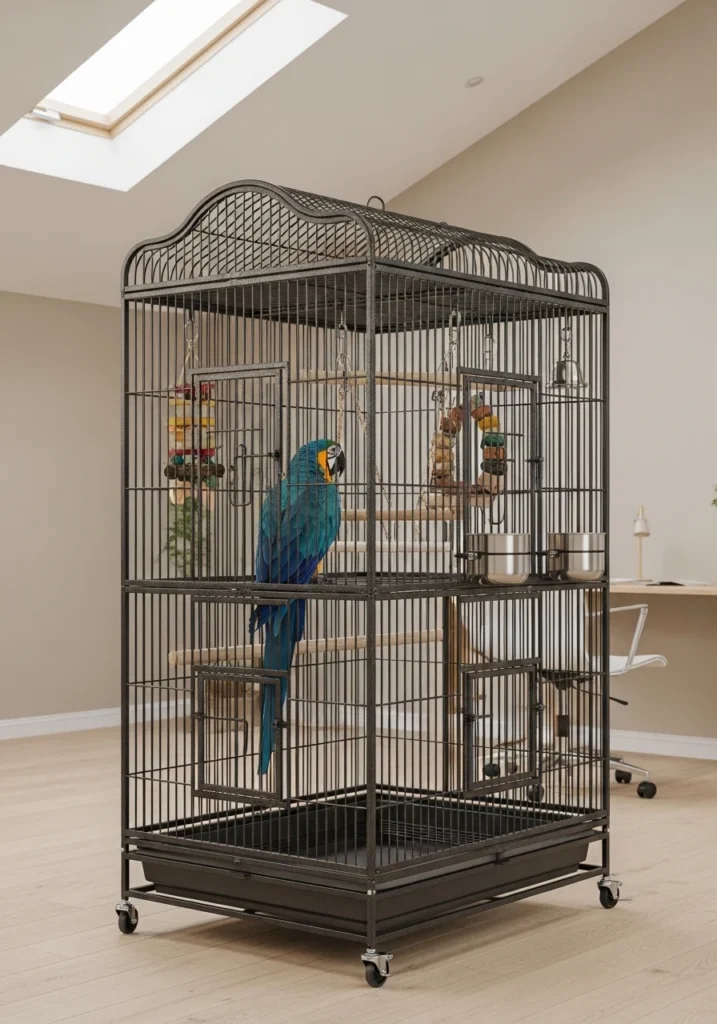
Built for serious birds, this style is the workhorse of the play top world. Large wrought iron cages with reinforced play tops handle the demands of large parrots that chew everything in sight.
The play area on this style tends to be more spacious, sometimes featuring a full activity center with swings, multiple perches, and large feeding cups.
The weight is significant, which is why you want those locking casters. But what you get in return is a cage that will last years and genuinely stand up to a Macaw or a large Cockatoo determined to redecorate.
The Flight Cage with Integrated Play Top
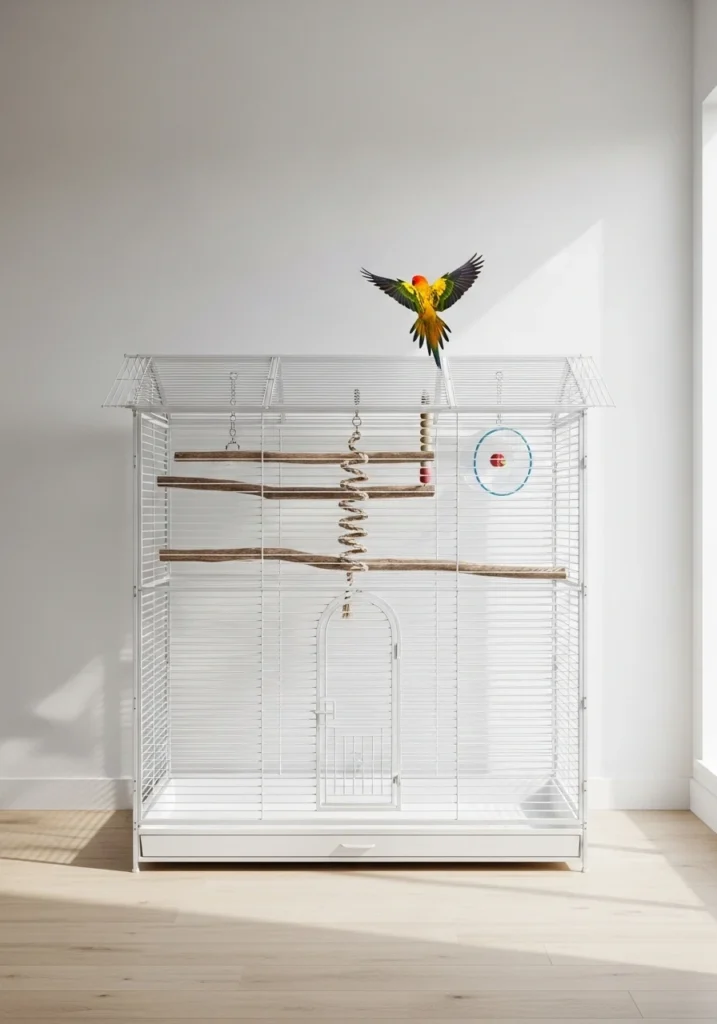
Flight cages prioritize horizontal space, giving birds room to actually fly short distances inside the enclosure.
When combined with a play top, this setup gives your parrot the best of both worlds: exercise room inside and a social hangout space on top.
This style works beautifully for smaller to medium parrots who are agile fliers. Caiques, Conures, and Ringnecks thrive in this type of setup.
The only downside is that flight cages tend to take up more floor space, so plan accordingly.
The Stainless Steel Play Top Cage
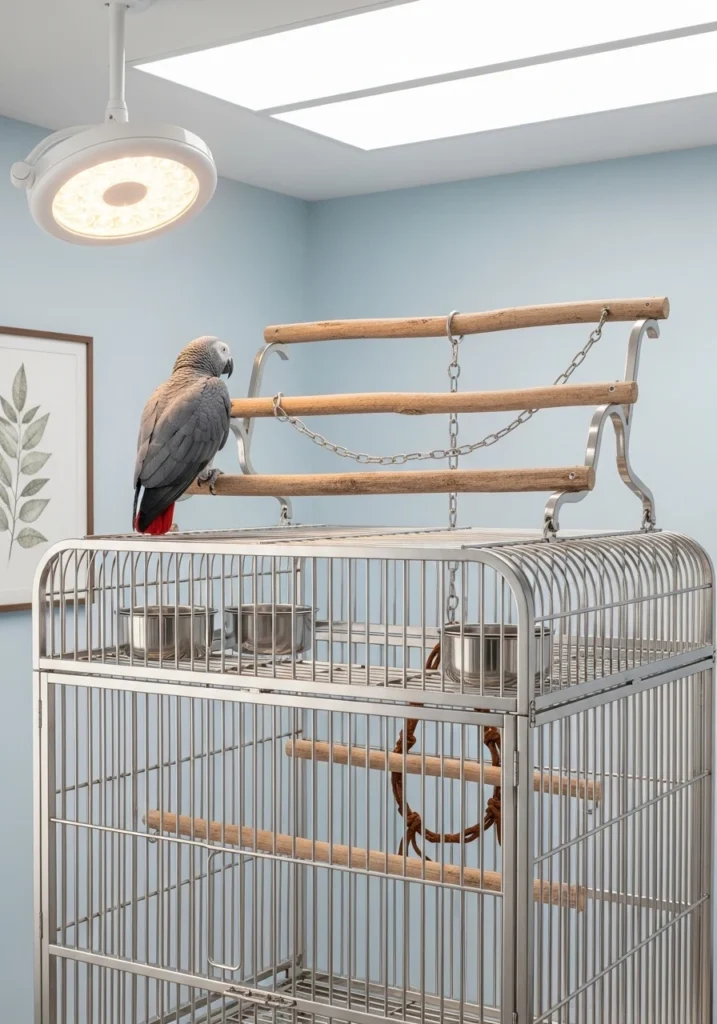
Stainless steel cages represent the premium end of the market, and honestly, they deserve the price tag. They will not rust, they are non-toxic, and they are easy to sanitize completely.
If you have a large parrot with a history of health issues or you just want a cage that you will never have to replace, stainless steel is your answer.
The play tops on stainless steel models tend to be equally well-built, with sturdy perches and heavy-duty hardware that can handle a bird with serious grip strength.
How to Make the Play Top Even More Stimulating
Buying the right cage is just the beginning. What you put on and around that play top determines how engaged your parrot actually stays.
Here are a few simple upgrades that make a real difference.
Shop Parrot Toys and Cage Accessories on Amazon
Rotate Toys Regularly
Parrots get bored with the same toys after a week or two. Keep a small collection of toys in rotation and swap them out every few days.
Foraging toys, foot toys, and puzzle feeders work especially well on play tops because your bird can interact with them independently.
Add Natural Wood Perches
Most factory perches are uniformly smooth and the same diameter from end to end.
Natural wood perches, like manzanita or java wood branches, vary in texture and thickness, which exercises different parts of your bird’s feet and keeps them more engaged physically.
Use the Feeding Cups Strategically
Place high-value treats like almonds, sunflower seeds, or fresh fruit pieces in the play top cups rather than in the main cage.
This gives your bird a reason to climb up to the play area and spend time there. It turns the play top into a destination rather than an afterthought.
Common Mistakes Parrot Owners Make When Buying a Play Top Cage
Since we are being honest with each other, let me flag a few traps that are easy to fall into.
Prioritizing aesthetics over function is probably the most common one. A beautiful cage that is too small or made from low-quality materials does your bird no favors.
Your parrot does not care what the cage looks like. They care whether they can move freely and whether the bars taste like poison. Prioritize quality over looks every single time.
Skipping the bar spacing check is another mistake that can turn dangerous quickly. Always verify that the bar spacing matches your specific bird’s size before purchasing.
A Conure can get its head stuck in spacing designed for a Macaw.
Buying a cage without checking the latch mechanism is something many first-time owners overlook. Parrots are problem-solvers and escape artists.
Make sure the door latches use a design your bird cannot figure out. Some owners add a small carabiner clip to cage doors as an extra precaution.
Final Thoughts
Finding the best play top bird cage comes down to matching your bird’s size, personality, and energy level to the right setup.
A well-chosen play top cage keeps your parrot mentally stimulated, physically active, and a lot less likely to redecorate your furniture out of sheer boredom.
The investment in a good play top cage pays for itself in your bird’s wellbeing and, frankly, in your own sanity. A busy parrot is a happy parrot.
And a happy parrot means a much more peaceful household for everyone involved, including the parrot who was definitely planning something before you upgraded their living situation.
Find the Best Play Top Bird Cage for Your Parrot on Amazon
What Is the Best Play Top Bird Cage for a Large Parrot?
For large parrots such as Macaws or Cockatoos, choose a playtop cage made of wrought iron or stainless steel. The bar spacing should be between 1 and 1.5 inches.
The cage size must be at least 48 x 36 x 60 inches. Ensure the playtop has multiple perches, toy hooks, and strong feeding cups that can endure a powerful beak.
How Do I Keep My Parrot Entertained in a Play Top Cage?
Rotate toys on the playtop every few days to avoid boredom. Use foraging toys, foot toys, and puzzle feeders in the activity area.
Place high-value treats in the top feeding cups. This gives your parrot a reason to climb up and stay engaged all day.
Is a Play Top Bird Cage Worth the Extra Cost?
Yes, this is true for parrots that stay in their cage a lot. A play top offers mental stimulation and physical activity.
This helps reduce behaviors like feather plucking and loud screaming. The investment benefits both your bird’s wellbeing and your peace of mind.
What Bar Spacing Should a Play Top Parrot Cage Have?
Bar spacing depends on your parrot’s size. Small parrots, like Budgies and Lovebirds, need 1/2 inch spacing.
Medium parrots, such as Conures, do well with 3/4 inch spacing. Large parrots, including African Greys and Amazons, need 1 to 1.5 inch spacing for safety and comfort.
What Materials Are Safest for a Play Top Bird Cage?
Stainless steel is the safest and most durable choice. It won’t rust, chip, or leach toxins. High-quality wrought iron with a safe powder coating is a good, lower-cost alternative.
Always avoid cages with zinc or lead-based coatings. These can cause serious metal toxicity in parrots.