Choosing Your First Pet Bird as a Beginner
You’ve decided to get a pet bird. Maybe you saw a little green parrot and thought, “That’s the one.” Or perhaps you just want a companion that doesn’t need walks in the rain.
Either way, welcome! Owning a pet bird can be rewarding. But picking the right one as a beginner is crucial.
Not all birds are the same. Some can surprise you if you’re not ready. The good news? Many species are great for first-time owners.
This guide will help you understand your options. By the end, you’ll know exactly what to expect.
Why Choosing the Right Bird Matters
Here is a truth most pet stores will not volunteer: birds have personalities, preferences, and needs that vary wildly from species to species.
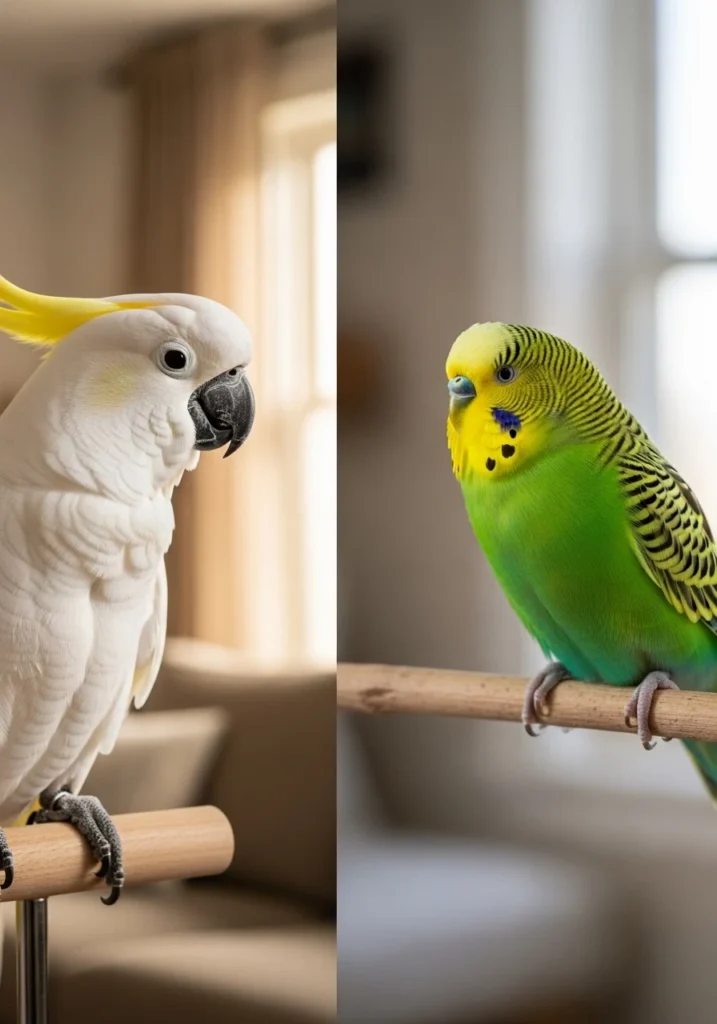
A cockatoo, for example, is breathtakingly beautiful but emotionally demanding in a way that can genuinely test your sanity.
A budgie, on the other hand, is cheerful, low-maintenance, and perfectly happy entertaining itself for a few hours while you get on with your day.
Choosing the wrong bird as a beginner does not just make your life harder. It can stress the bird out too. And a stressed bird is not a happy bird.
So doing your homework upfront is an act of kindness to both yourself and your future feathered roommate.
The Best Pet Birds for Beginners
1. Budgerigars (Budgies)
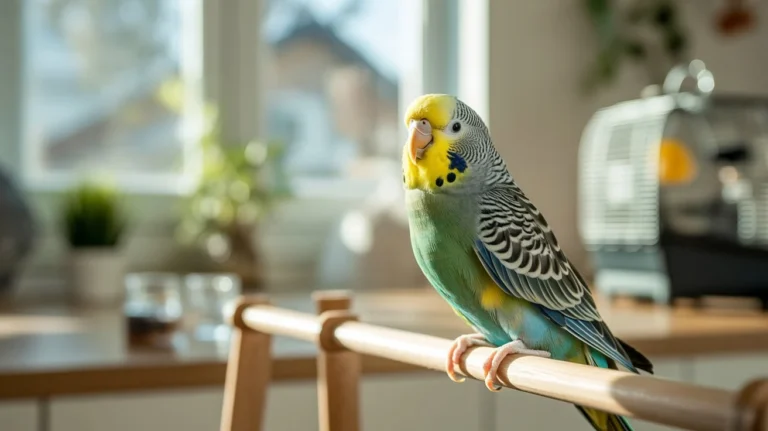
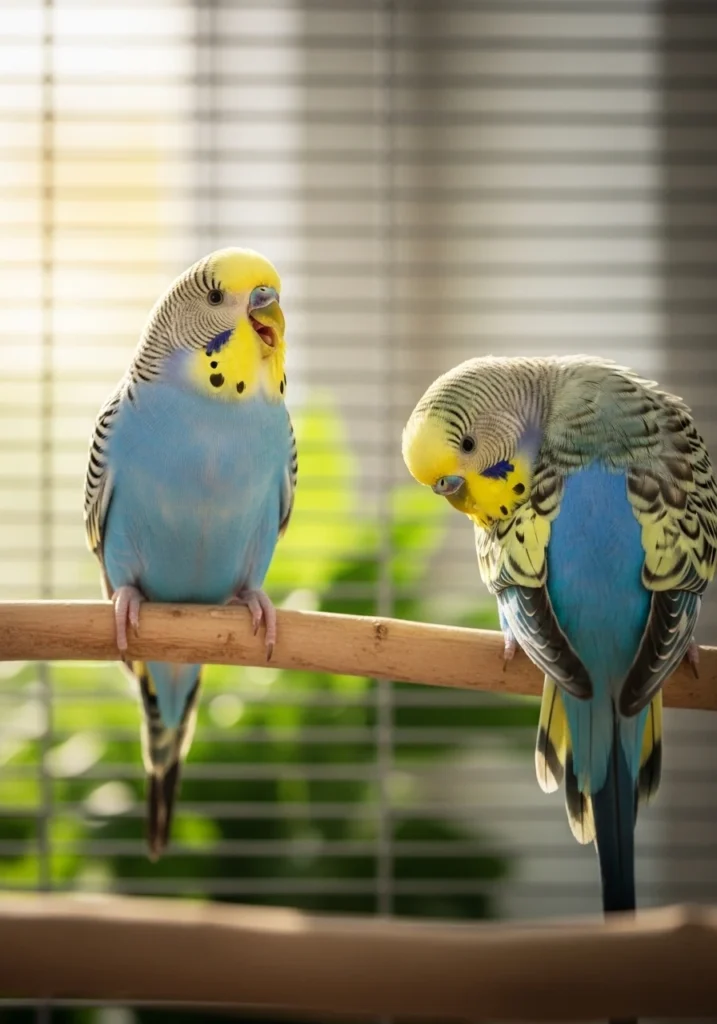
If there is one bird that belongs at the top of every beginner list, it is the budgerigar, or budgie.
These small, colorful parakeets are the most popular pet birds in the world for a reason, and that reason is simple: they are fantastic.
Why budgies work so well for beginners:
- They are small and do not need a massive cage or living space
- They can learn to mimic words and short phrases, which never stops being entertaining
- They are social and affectionate without being clingy
- Their food costs are low, mostly seeds and fresh vegetables
- With proper care, they live between 7 and 15 years
Budgies do best when kept in pairs, especially if you work long hours. A solo budgie needs plenty of interaction from you, so if your schedule is packed, give your bird a companion.
One honest heads-up: budgies are small, but they are not silent. They chirp throughout the day. If you work from home and value quiet, just know what you are getting into.
2. Cockatiels
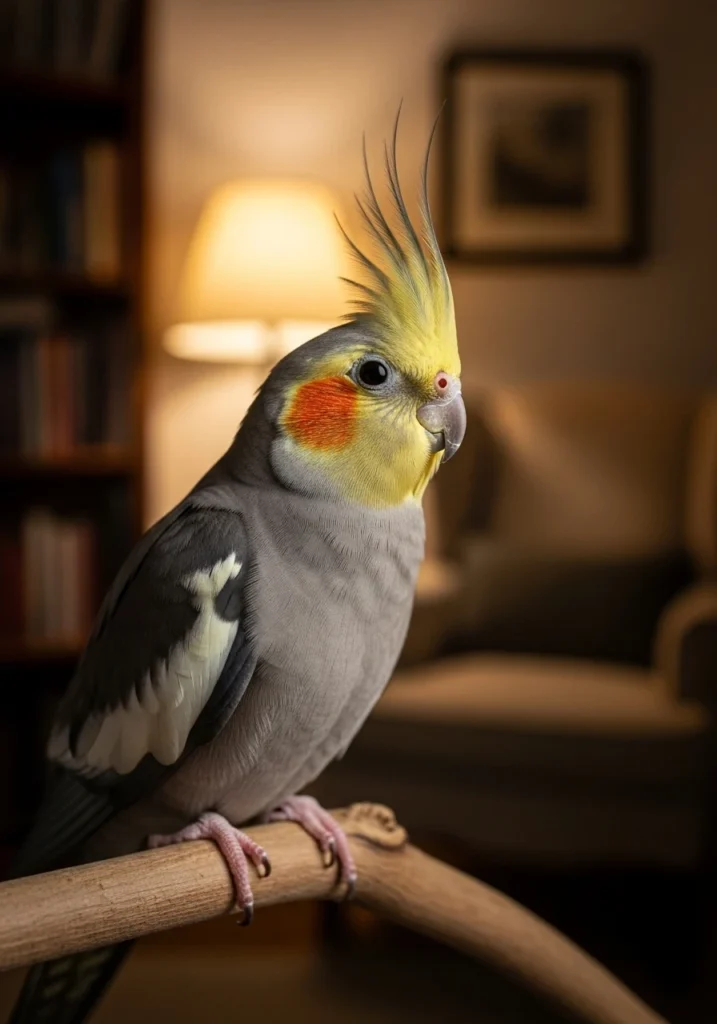
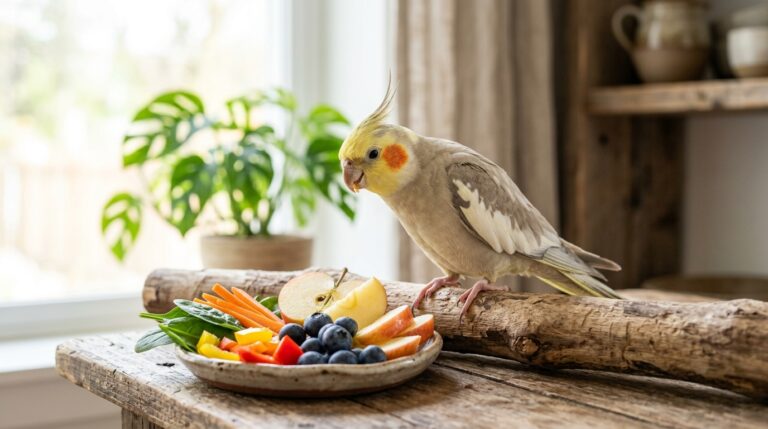
The cockatiel is arguably the gold standard of beginner pet birds. These medium-sized parrots from Australia are gentle, intelligent, and genuinely affectionate.
If you want a bird that will actually bond with you and enjoy being handled, the cockatiel is a strong choice.
What makes cockatiels great for first-time owners:
- They whistle beautifully and many learn to mimic tunes and words
- They enjoy head scratches and physical affection
- They are generally calm and not prone to aggressive biting
- Their diet is straightforward: pellets, seeds, fresh fruits, and vegetables
- They live between 15 and 25 years with good care
That lifespan is worth thinking about. A cockatiel is a long-term commitment.
These birds bond deeply with their owners, and rehoming them can be genuinely traumatic for the animal. If you bring one home, plan to keep it.
Cockatiels can also suffer from loneliness if left alone for long periods.
Many experienced owners keep two, though a bonded pair may become less interested in human interaction. It is one of those decisions you weigh based on your lifestyle.
3. Lovebirds
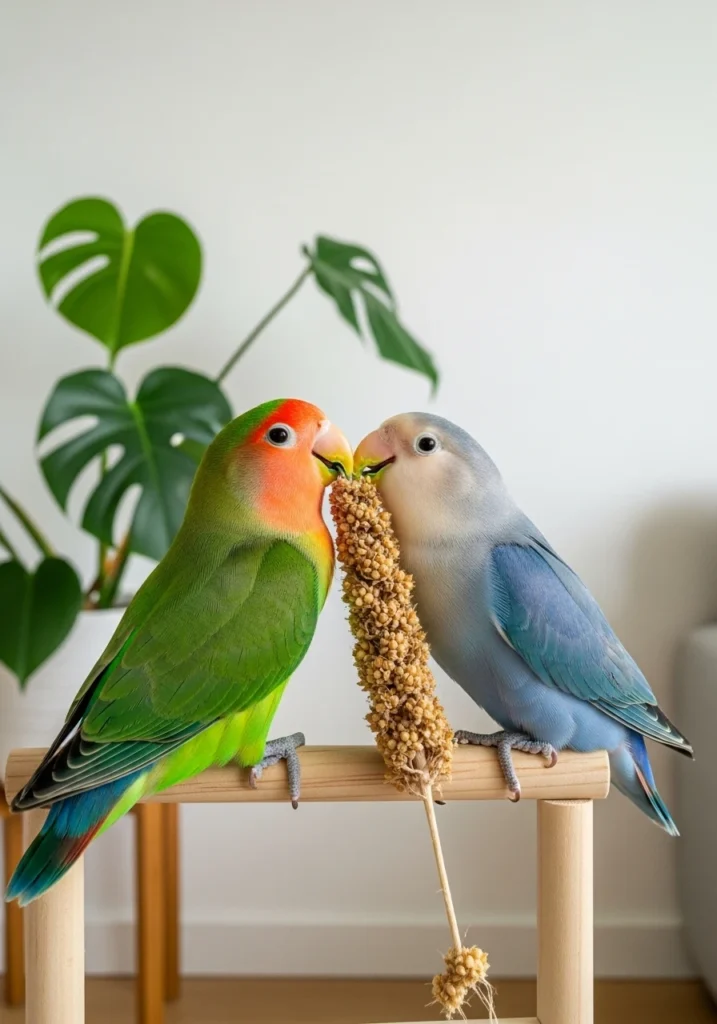
Do not let the name fool you. Lovebirds are feisty little birds with enormous personalities packed into a compact body.
They are curious, playful, and surprisingly bold for their size. If you want a bird with character, lovebirds deliver.
Key things to know about lovebirds as beginner birds:
- They are small (similar in size to budgies) but more spirited
- Hand-raised lovebirds are affectionate and enjoy human company
- They are highly active and need plenty of toys and mental stimulation
- They thrive on routine and can become territorial if not handled consistently
- Their lifespan is around 10 to 15 years
Lovebirds have a reputation for nipping, especially if they are not socialized well from a young age.
If you buy from a reputable breeder who has hand-fed the birds, you will have a much better experience than if you pick one up that has had minimal human contact.
Pro tip: lovebirds do not actually require a partner to be happy, despite the name. A well-socialized lovebird that gets regular human attention is perfectly content as the only bird in the household.
4. Canaries
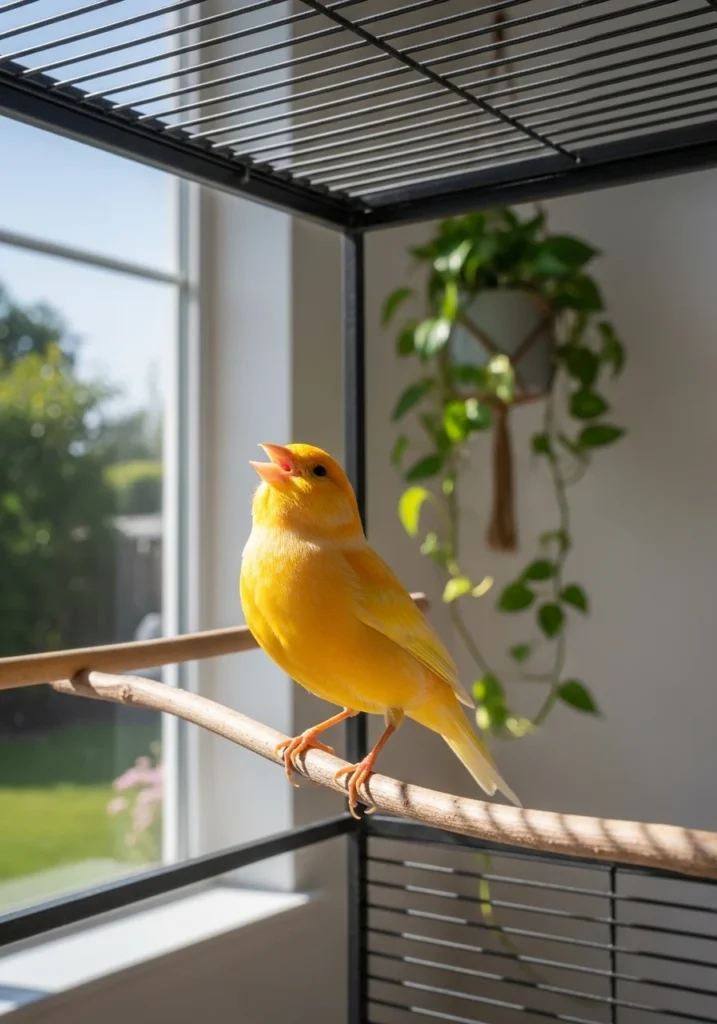
If you love the idea of a bird but are not particularly interested in handling or training, the canary might be your perfect match.
These birds are bred primarily for their song, and the males produce some of the most beautiful, complex vocalizations of any pet bird.
Why canaries suit certain beginners perfectly:
- They do not need daily handling or extensive social interaction
- Their care routine is simple: fresh food, clean water, a spacious cage, and occasional vet checkups
- Male canaries sing almost constantly during breeding season, which is genuinely lovely
- They are calm and low-drama compared to parrots
- They live between 10 and 15 years
Canaries are ideal for people who want the presence and beauty of a bird without the interactive demands of a parrot. They are observers and performers, not cuddlers.
If you are expecting a bird that will perch on your shoulder and chat with you, look elsewhere. But if you want a living, singing centerpiece for your living room, canaries are wonderful.
5. Conures (Green-Cheeked Conures in Particular)
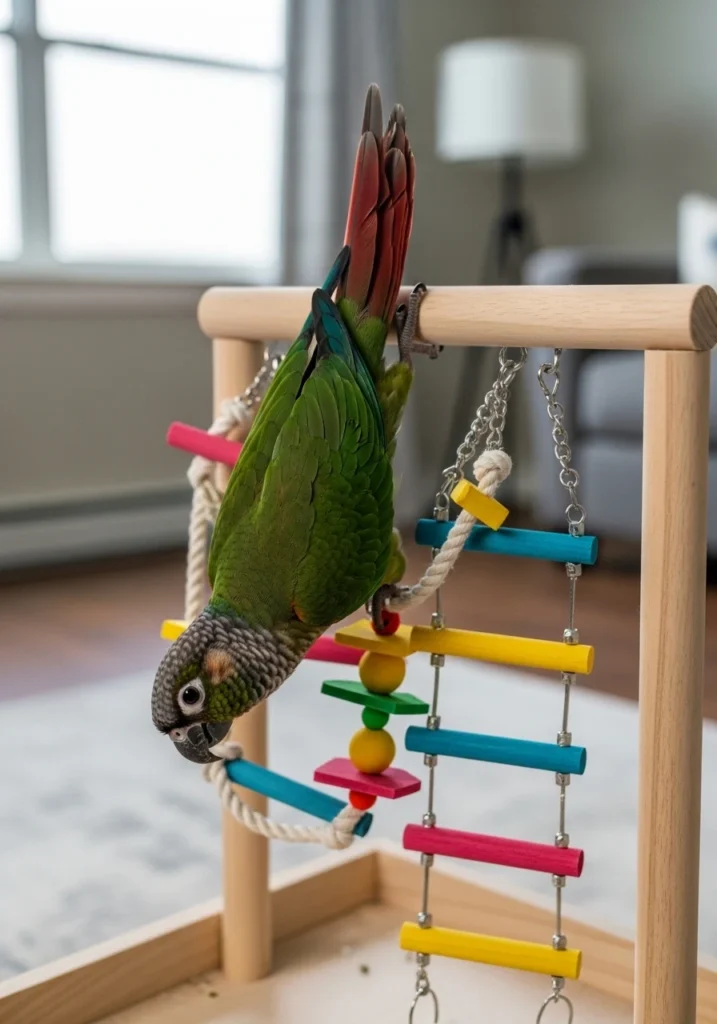
Conures are small to medium-sized parrots, and among the beginner-friendly options, the green-cheeked conure stands out. These birds are playful, comical, and deeply affectionate.
They also tend to be quieter than many other conure species, which is a genuine bonus in a household or apartment.
What you need to know about green-cheeked conures:
- They love physical contact and enjoy being cuddled and carried around
- They are mischievous in the best possible way and love learning tricks
- They are less noisy than sun conures or blue-crowned conures
- They need several hours of out-of-cage time each day
- Their lifespan is around 15 to 20 years
Green-cheeked conures are a step up in commitment from budgies or canaries. They need more time, more interaction, and more mental stimulation.
But for an owner willing to put in the time, the bond you build with a conure is genuinely special.
6. Pionus Parrots
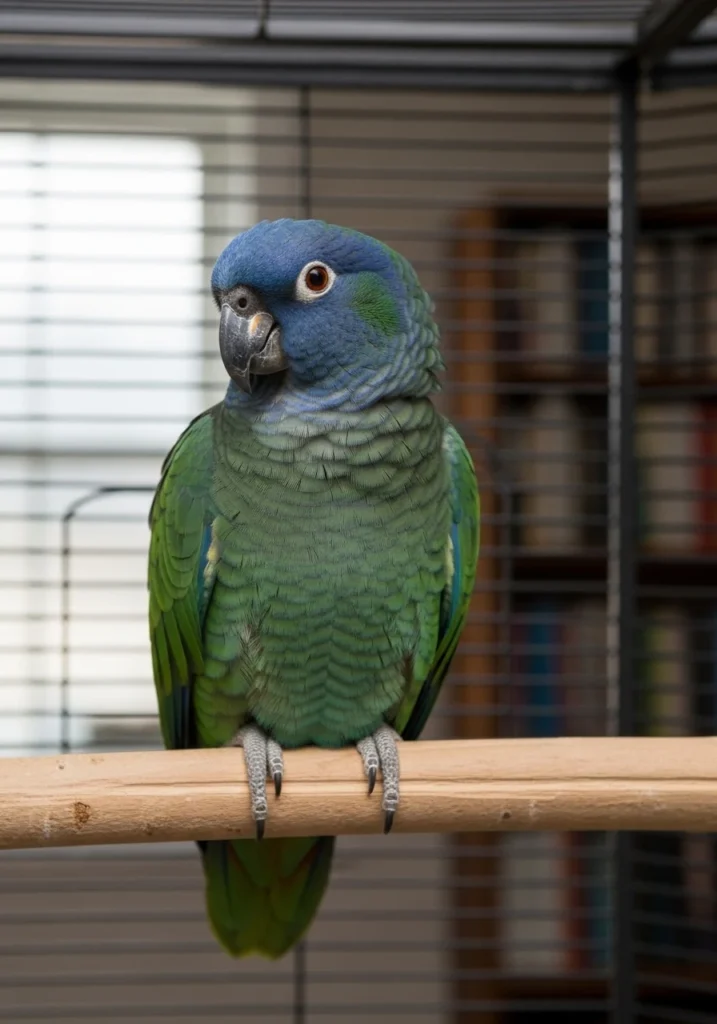
Here is one that does not get enough attention in beginner bird circles: the Pionus parrot. These medium-sized parrots are calm, independent, and less demanding than many other parrot species.
They do not crave constant attention the way cockatoos do, but they still enjoy human company and can develop a warm, trusting bond with their owners.
Why Pionus parrots deserve more recognition among beginners:
- They are quieter than most parrot species
- They tend to be gentle and rarely bite aggressively
- They are curious and intelligent without being hyperactive
- They adjust well to a variety of household environments
- Their lifespan ranges from 25 to 40 years, so this is a serious commitment
That lifespan bears repeating. A Pionus parrot can outlive you if you are not careful.
Many experienced bird owners who want a calmer companion with real personality end up gravitating toward Pionus parrots, and for good reason.
What Every First-Time Bird Owner Should Know
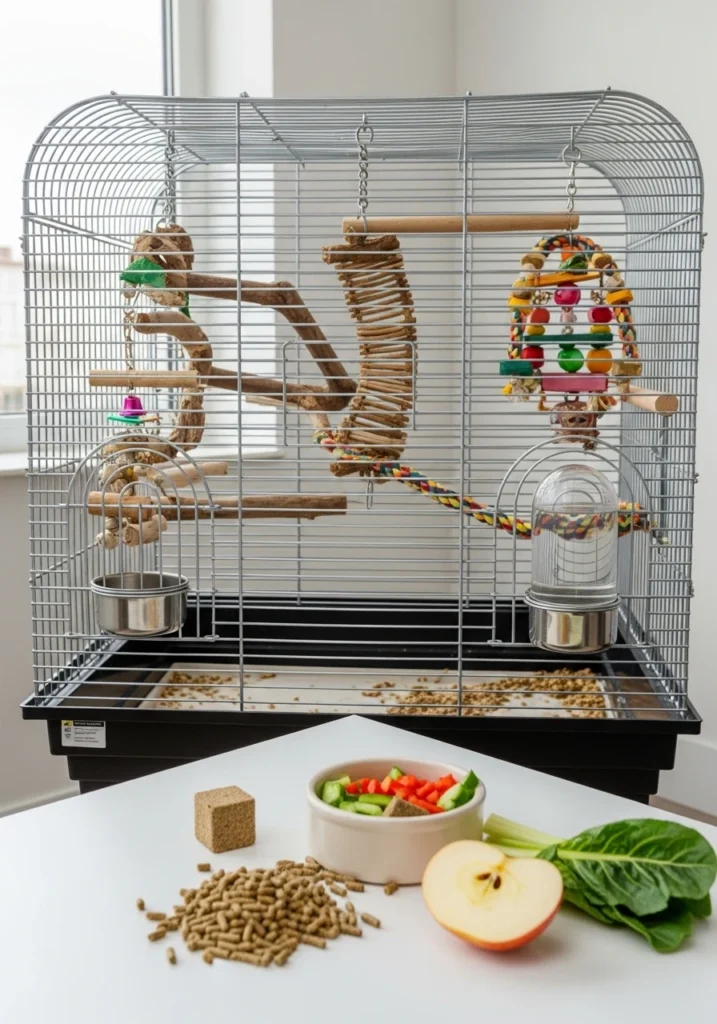
Before you rush out and buy the first bird that catches your eye, there are a few things worth understanding about bird ownership in general.
Birds Need More Space Than You Think
Even a small bird like a budgie needs a cage that lets it fly from one end to the other. A cramped cage leads to a stressed, unhealthy bird. Bigger is always better when it comes to bird housing.
Diet Matters Enormously
Many beginner owners put their birds on an all-seed diet, which is the bird equivalent of living on chips and fizzy drinks. Seeds alone are high in fat and low in essential nutrients. A good bird diet includes:
- High-quality pellets as the base
- Fresh fruits and vegetables daily
- Seeds and nuts as occasional treats
- Clean, fresh water changed every single day
Vet Care Is Not Optional
Birds are prey animals by instinct, which means they hide illness remarkably well. By the time a bird looks obviously sick, it has often been unwell for a while.
Finding an avian vet (a vet who specializes in birds) before you need one is one of the smartest things a new bird owner can do.
Birds Are Loud (Some More Than Others)
Every bird makes noise. That is just the deal. Some species are louder than others, but even a budgie will chirp cheerfully for hours.
If you live in a thin-walled apartment and your neighbours are easily annoyed, factor this into your choice.
How to Pick the Right Bird for Your Lifestyle
Ask yourself a few honest questions before deciding:
- How much time can you realistically spend with your bird each day? If the answer is under an hour, stick to canaries or a pair of budgies.
- Do you want a bird that talks or performs tricks? Cockatiels, budgies, and green-cheeked conures are all solid choices.
- Do you want a cuddly, affectionate bird? Cockatiels and conures lead the pack here.
- Is noise a concern? Canaries and Pionus parrots are your quietest options.
- Are you in this for the long haul? A Pionus or a cockatiel will be with you for decades.
There is no universally perfect bird. There is only the right bird for you, your home, and your lifestyle.
Final Thoughts
Getting your first pet bird is genuinely exciting, and the species on this list all offer something different.
Whether you want the cheerful chatter of a budgie, the musical talent of a canary, or the deep bond of a cockatiel, there is a bird here that fits your life.
Start by researching two or three species that appeal to you, visit a reputable breeder or bird rescue, and take your time.
The right bird will find you. And when it does, you will wonder how you ever lived without the sound of feathers and song in your home. Just maybe get some earplugs on standby for the first few weeks.
What Is the Easiest Bird to Take Care of for Beginners?
The budgerigar, or budgie, is often seen as the best bird for beginners. Budgies are small, cheap, and flexible.
They don’t need a big cage, their diet is simple, and they are social but not overly demanding. A pair of healthy budgies can do well with owners who are new to bird care.
What Is the Best Beginner Bird That Can Talk?
The budgie and the cockatiel are great choices for beginners wanting a talking bird. Budgies can learn a surprisingly large vocabulary for their size.
Cockatiels often mimic tunes, whistles, and short phrases clearly. Both are patient, making them easy for beginners to train without advanced skills.
How Much Does It Cost to Own a Pet Bird as a Beginner?
The startup cost for a beginner pet bird usually ranges from 50 to 300 USD, depending on the species. A budgie or canary is on the lower end. Cockatiels and conures cost more.
Besides the purchase price, plan for a good cage, food, toys, and yearly vet visits. Monthly costs for small birds typically run between 20 and 50 USD.
Do Pet Birds Get Lonely, and Do They Need a Companion?
Many pet bird species feel lonely if left alone for long hours. Budgies especially thrive with a companion bird.
Cockatiels and conures can be solo birds, but they need several hours of interaction each day. If your schedule is busy, keeping a pair of birds is often kinder and more practical.
What Should First-Time Bird Owners Avoid Doing?
First-time bird owners often make several common mistakes. They may feed an all-seed diet, skip regular vet checkups, buy a cage that’s too small, or underestimate their bird’s noise level.
Many beginners also forget that birds can hide illness, so routine vet visits are crucial for spotting health issues early. Researching your specific species before bringing it home helps avoid these problems.