Bird Cage Cleaning Tips for a Healthy Pet Bird
If you have a pet bird, you know they bring a lot of joy. But they can also create a big mess. Keeping the cage clean is not just for looks. It’s essential for your bird’s health and longevity.
Many new bird owners don’t realize this until it’s too late: a dirty cage can make birds sick. Bacteria, mold, and fungal spores thrive in a messy cage.
Birds have very sensitive respiratory systems. So, let’s discuss how to keep the cage clean, your bird healthy, and your home smelling fresh.
Why Regular Bird Cage Cleaning Actually Matters
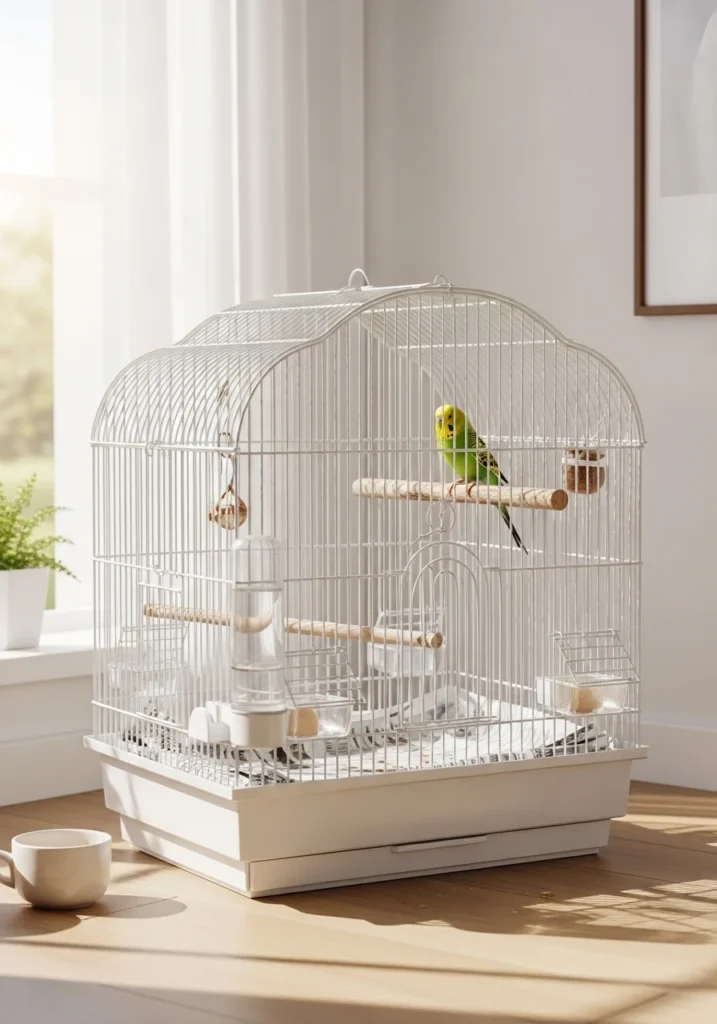
You might think a quick wipe-down every few days covers it. Spoiler alert: it does not.
Bird droppings, leftover food, feather dander, and seed husks build up fast, and they create a breeding ground for pathogens that can make your bird seriously sick.
Birds are also fastidious animals by nature. In the wild, they do not sit in their own mess.
When we keep them in cages, we take on the responsibility of maintaining a clean environment for them. Think of yourself as their housekeeper. A very underpaid, very devoted housekeeper.
The Health Risks of a Neglected Cage
A dirty cage can expose your bird to several real health threats, including:
- Aspergillosis, a fungal infection caused by mold that grows in damp, soiled bedding and food remnants
- Bacterial infections from contaminated water dishes and food bowls
- Psittacosis, a bacterial disease that can even spread to humans
- Respiratory distress caused by ammonia buildup from accumulated droppings
None of those sound fun, right? Regular cleaning prevents all of them.
How Often Should You Clean a Bird Cage?
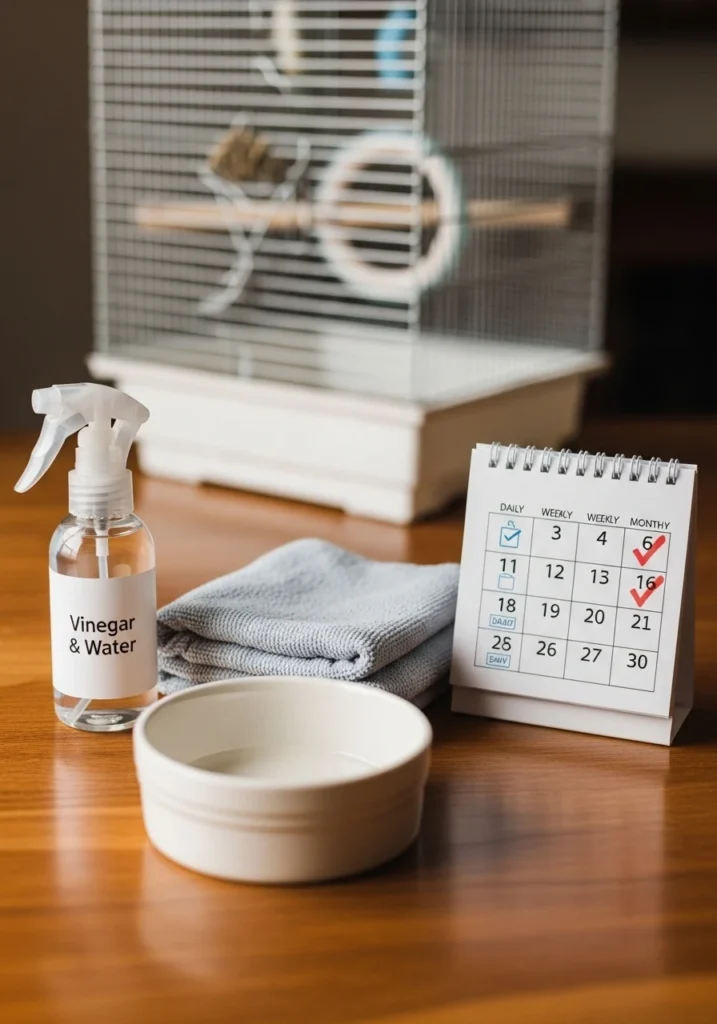
This is where a lot of people get confused, because “cleaning” is not a one-size-fits-all task. There are daily tasks, weekly tasks, and monthly deep cleans, and each one serves a different purpose.
Think of it like your own home. You probably wipe down the kitchen counter every day, scrub the bathroom weekly, and do a deep clean of the whole house once a month. Your bird’s cage works the same way.
Daily Cleaning Tasks
These are your non-negotiables. Skipping them is not an option if you want a healthy bird.
- Remove uneaten food from bowls and the cage floor every day. Wet or fresh foods spoil quickly and grow bacteria within hours.
- Wash food and water dishes with hot soapy water and rinse thoroughly. Bacteria love a grimy water bowl.
- Wipe down cage bars and perches where droppings accumulate. A damp cloth works perfectly for this.
- Change cage liners or newspaper at the bottom of the cage. Fresh paper every day keeps odors down and makes it easier to monitor your bird’s droppings for health issues.
Yes, every day. Your bird is counting on you.
Weekly Cleaning Tasks
Once a week, you need to go a step further. By this point, grime has started to build up in places your daily wipe-down does not reach.
- Scrub perches and toys with a bird-safe disinfectant or a diluted white vinegar solution. Perches especially collect dried droppings and need a good scrub.
- Clean the cage tray thoroughly, not just replace the liner. Wash it with hot water and dish soap, rinse well, and let it dry before putting it back.
- Inspect and rotate toys. Toys that have become heavily soiled or damaged should be removed and either cleaned properly or replaced.
- Wipe down the exterior of the cage and the area around it. Seed hulls and feather dust travel further than you think.
Monthly Deep Cleaning
Once a month, you need to do a full, thorough clean of everything. This means taking apart as much of the cage as possible and giving it a proper wash.
- Remove your bird from the cage and place it in a safe temporary space, like a travel carrier.
- Disassemble the cage completely where possible, including removable grates, trays, and perches.
- Soak removable parts in a diluted vinegar and water solution or a bird-safe disinfectant for at least 15 minutes.
- Scrub every surface, bar, corner, and crevice of the cage itself.
- Rinse everything thoroughly with clean water. Residue from cleaning products can be toxic to birds, so rinsing is not optional.
- Allow everything to dry completely before reassembling. Putting your bird back into a damp cage invites mold growth.
Choosing the Right Bird Cage Cleaning Products
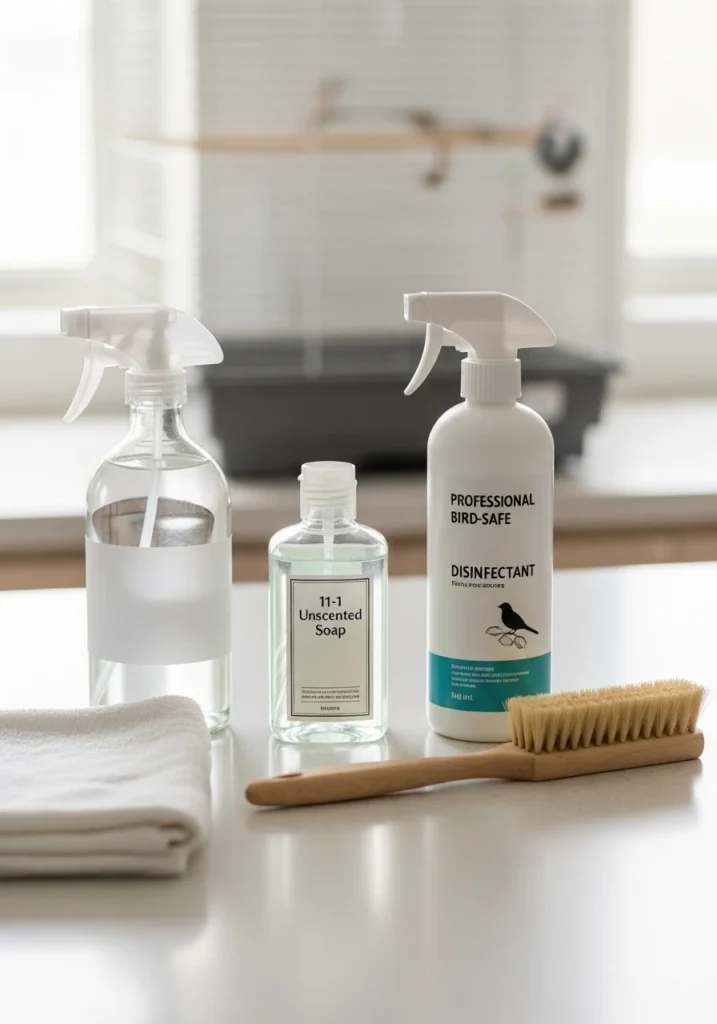
Here is where you really need to pay attention, because not all cleaning products are safe for birds.
Birds have highly sensitive respiratory systems, and many common household cleaners, including bleach in high concentrations, aerosol sprays, and scented products, can cause serious harm or even death.
Safe Cleaning Solutions for Bird Cages
The good news is that you do not need anything fancy to clean a bird cage effectively. Some of the safest and most effective options include:
- White vinegar diluted with water (a 1:1 ratio works well) is a natural disinfectant that is safe for birds once it dries. It cuts through grease, dissolves mineral deposits, and neutralizes odors.
- Dish soap and hot water for general scrubbing. Just make sure you rinse extremely well afterward.
- Commercial bird-safe disinfectants like F10 SC Veterinary Disinfectant, which many avian vets recommend. These products are specifically formulated to be safe around birds when used correctly.
What to Absolutely Avoid
Some products are popular household cleaners but genuinely dangerous in a bird’s environment. Keep these away from your bird’s cage:
- Bleach in high concentrations or without thorough rinsing
- Aerosol sprays of any kind, including air fresheners and furniture polish
- Products containing phenols, which are found in many common disinfectants like Lysol
- Essential oil-based cleaners, which might smell lovely to you but can be toxic to birds
When in doubt, check with your avian vet before using any new product near your bird.
Cleaning Bird Perches the Right Way
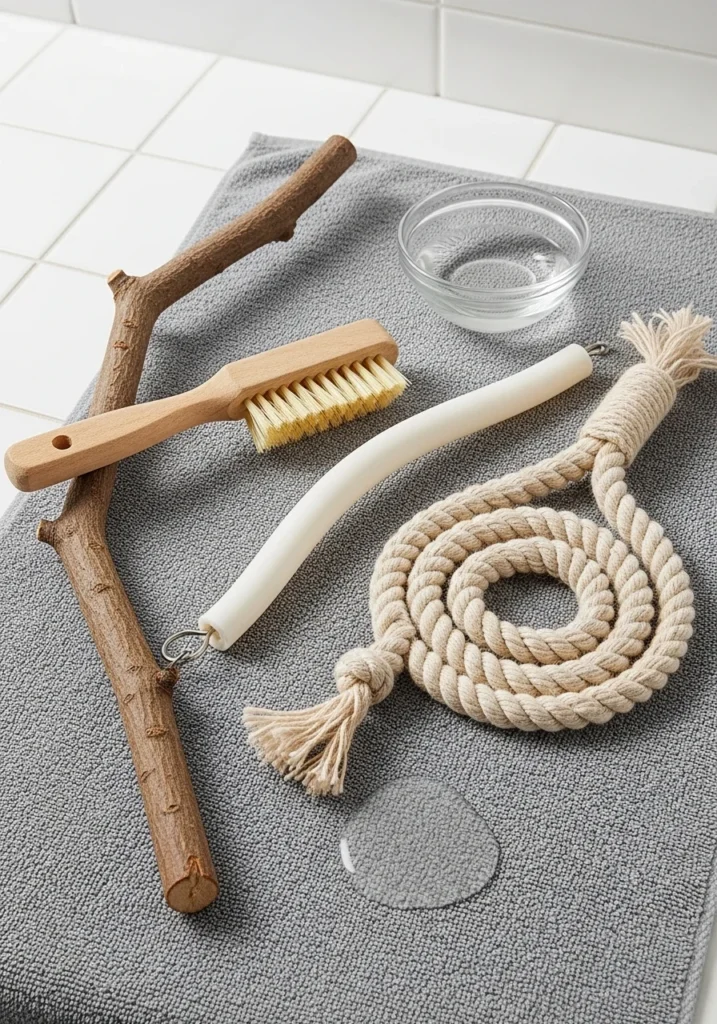
Perches are the most neglected part of most bird cages, and they are also the dirtiest. Your bird stands on them all day, every day.
Dirty perches can cause foot infections, and if your bird chews on them (which birds absolutely do), they can ingest bacteria and mold directly.
Types of Perches and How to Clean Them
Different perches need slightly different cleaning approaches.
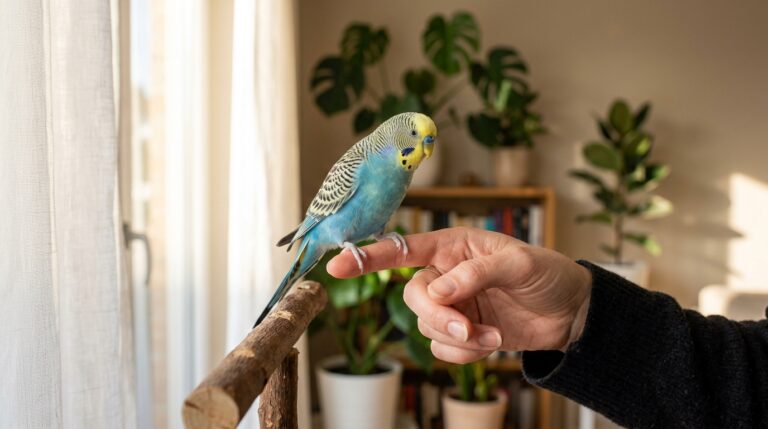
Natural wood perches soak up droppings over time. Scrub them with a stiff brush and hot water, then allow them to dry completely in the sun if possible.
UV light is a natural disinfectant and works wonderfully on porous wood. Replace them when they become too soiled to clean properly.
Plastic and acrylic perches are easier to clean. Soak them in a diluted vinegar solution, scrub with a brush, rinse well, and dry.
Rope perches are tricky. They harbor bacteria in their fibers and can develop mold if they stay damp. Wash them in hot water, but check them carefully for fraying afterward.
A frayed rope perch is also a safety hazard. If they cannot be cleaned properly, replace them.
Cement or sandy perches help keep your bird’s nails trim, but they also collect droppings in their rough texture. Scrub them with a stiff brush and hot water and let them dry fully before putting them back.
Tips for Keeping the Cage Cleaner Between Cleans
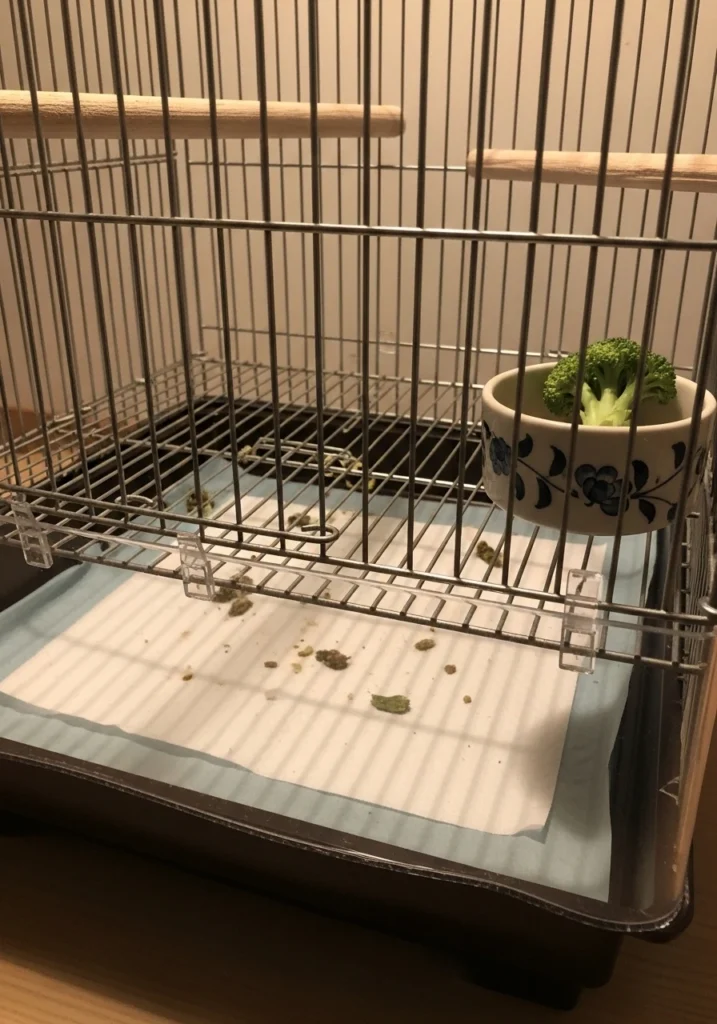
Nobody wants to spend more time cleaning than necessary. A few smart habits can reduce how much buildup you deal with at each cleaning session.
- Place cage liners under the grate so droppings fall through and collect below rather than sitting on the grate all day.
- Use a seed catcher or cage skirt around the lower portion of the cage to catch scattered seeds and debris before they hit your floor and get dragged back in.
- Position food and water bowls away from perches so birds are not dropping waste directly into their bowls. It sounds obvious, but many cages come with bowl placements that make this almost inevitable.
- Offer fresh food in small portions rather than large amounts your bird cannot finish. Less leftover food means less bacterial growth.
Cleaning a Bird Cage Without Stressing Your Bird
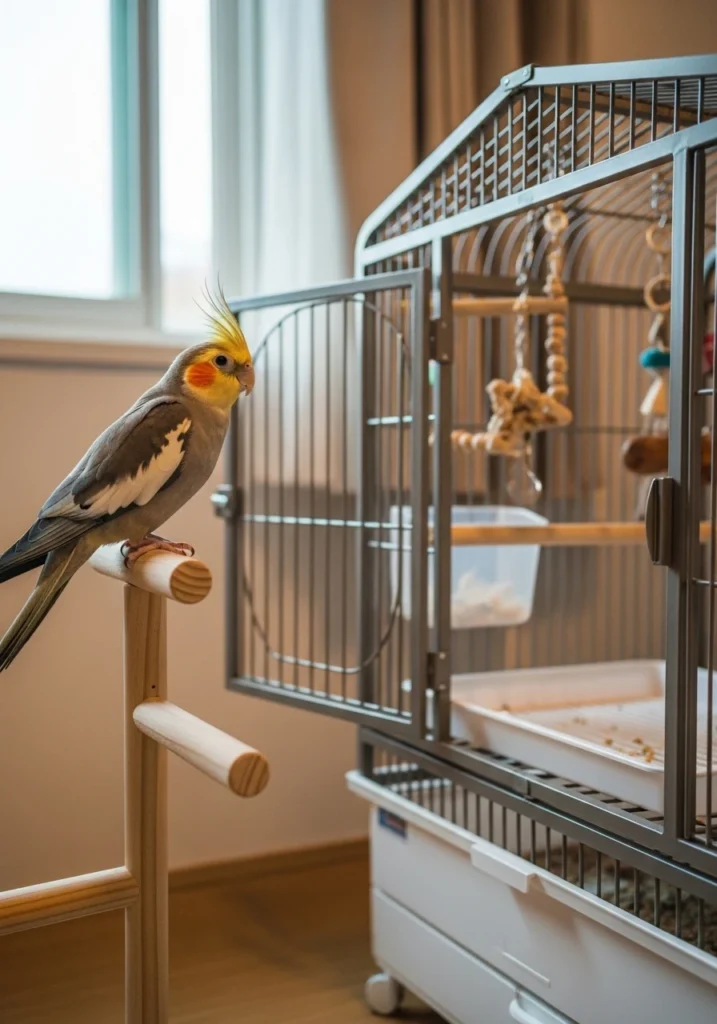
Some birds, especially parrots and cockatiels, get extremely agitated when you rearrange or clean their cages.
Their territory is their comfort zone, and suddenly having everything dismantled and put back in different spots can cause genuine stress.
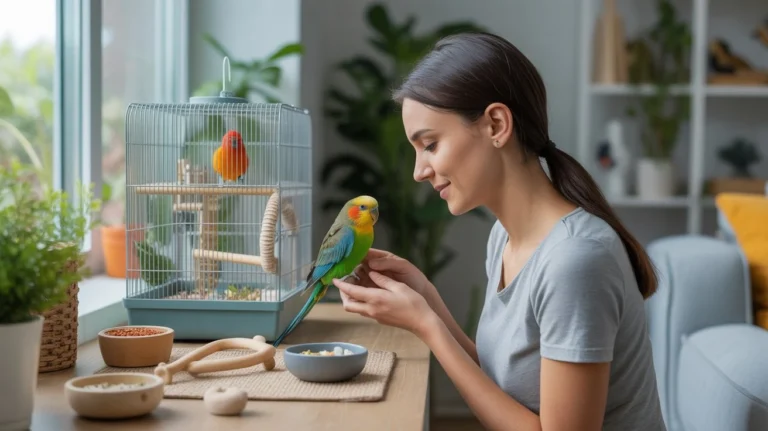
A few things help with this. Keep your bird in the same room during cleaning whenever possible, so it can see what is happening and does not feel abandoned.
Return items to the same positions after cleaning, at least during the weekly clean.
During the monthly deep clean, you can rearrange things as an enrichment activity, but keep some familiar elements in familiar spots.
Talk to your bird calmly while you clean. It sounds odd, but birds respond to voice cues, and a calm, reassuring tone genuinely helps.
Monitoring Your Bird’s Health Through Cage Cleanliness
Here is a habit that every bird owner should develop: check your bird’s droppings daily when you change the cage liner. The appearance of droppings tells you a lot about your bird’s health.
Normal droppings have three distinct parts: a dark solid section, a white or cream-colored urate section, and a small amount of clear liquid.
Changes in color, consistency, or smell can indicate illness, stress, dietary issues, or infection.
Because you are already changing the liner every day, you have a built-in daily health check built into your cleaning routine.
A Clean Cage Is a Happy Cage
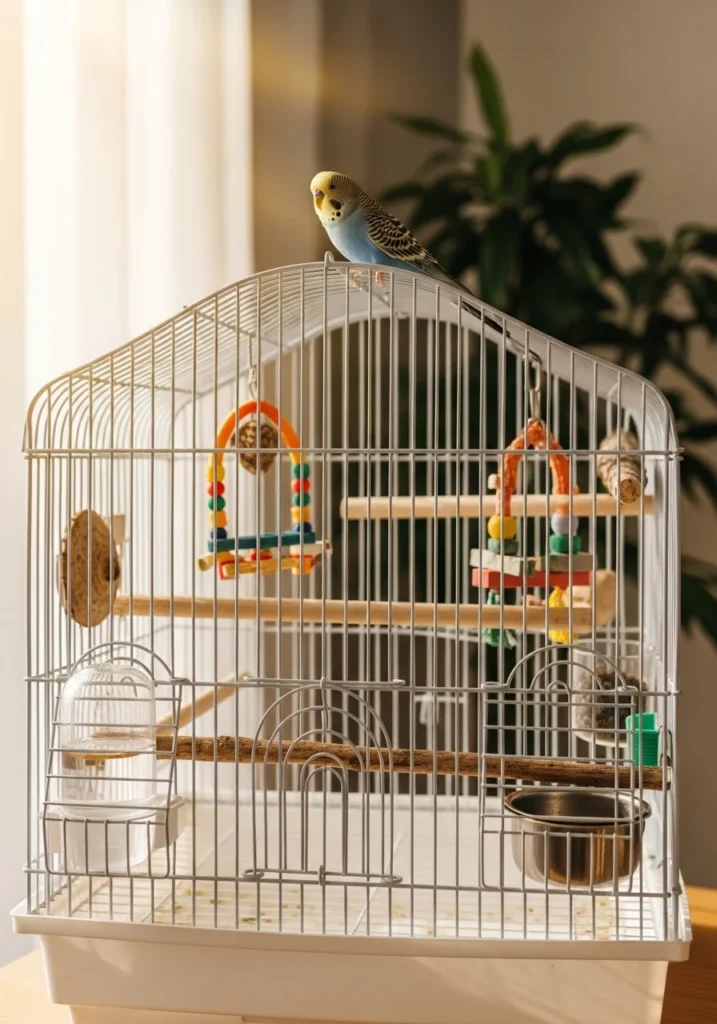
Keeping a bird cage clean does not require hours of effort or a cabinet full of specialized products.
It requires consistency, the right approach for each task, and a genuine commitment to your bird’s wellbeing.
Daily wipe-downs, weekly scrubs, and monthly deep cleans form a simple routine that keeps your bird healthy, your home pleasant, and your relationship with your feathered companion exactly what it should be: joyful, not stressful.
Your bird cannot tell you when something is wrong, so you keep its environment clean enough that problems do not get the chance to develop in the first place.
That, in the end, is what being a good bird owner actually looks like.
How Often Should You Clean a Bird Cage?
Do light cleaning tasks daily. This includes changing cage liners, washing food and water dishes, and wiping down dirty perches and bars. Each week, perform a more thorough clean.
Focus on perches, toys, and the cage tray. Once a month, do a full deep clean. Disassemble the cage, soak removable parts, and scrub every surface.
Rinse and dry everything completely. Consistency in all three levels keeps your bird healthy, not just one big clean.
What Is the Safest Cleaning Product to Use on a Bird Cage?
The safest and easiest option for daily cleaning is a mix of diluted white vinegar and water at a 1:1 ratio.
This solution is a natural disinfectant. It cuts through grime, removes mineral deposits, neutralizes odors, and is safe for birds once dried.
For tougher jobs, avian vets often recommend F10 SC Veterinary Disinfectant. It’s made to be safe in bird environments.
Always rinse surfaces well after cleaning, no matter which product you use. Even safe cleaners can harm if residue remains.
Can You Use Bleach to Clean a Bird Cage?
Bleach is not safe for regular bird cage cleaning. Though diluted bleach solutions are used in some avian care settings, the risks are too high for most pet owners.
Birds have very sensitive respiratory systems. Even small amounts of bleach fumes can cause serious breathing issues.
If you need a stronger disinfectant than vinegar, choose a bird-safe veterinary-grade product. Always rinse the cage thoroughly and make sure it’s completely dry before your bird returns.
How Do You Clean Bird Cage Perches Without Damaging Them?
The cleaning method varies by perch type.
- Natural wood perches: Scrub with a stiff brush and hot water. Dry them in direct sunlight; UV light disinfects naturally.
- Plastic and acrylic perches: Soak in a diluted vinegar solution, scrub, and rinse.
- Rope perches: Wash in hot water. Check for mold or fraying afterward.
- Cement and sandy perches: Use a stiff brush and hot water to clean their rough texture.
If a perch can’t be cleaned well, replace it.
How Do You Keep a Bird Cage Clean for Longer Between Deep Cleans?
A few simple habits can make a big difference.
- Place cage liners under the grate. This way, droppings fall through and collect below instead of sitting on surfaces.
- Use a seed catcher or cage skirt around the base. This helps stop scattered seeds and debris from spreading on the floor.
- Position food and water bowls away from perches. This reduces contamination from droppings.
- Offer fresh food in small portions. Large amounts can lead to leftover food, which promotes bacterial growth in the cage.
These small changes lead to much less buildup between your cleaning sessions.