Cage-Mount Bird Toy Sets Your Parrot Will Love
If you have a parrot at home, you know a bored bird can be loud and destructive. Tossing a single plastic ring into the cage won’t keep your clever friend entertained for long.
Cage-mount bird toy sets are a great solution. Once you see their benefits, you’ll wonder why you waited to get one.
This guide shows you how to choose, place, and rotate cage-mount bird toy sets. This way, your parrot stays mentally sharp, physically active, and quiet during your work calls.
Why Cage-Mount Bird Toy Sets Beat Single Toys Every Time
Most bird owners start with one toy. Maybe it rattles, maybe it has a mirror, maybe it dangles attractively from the top bar.
The parrot ignores it for three days, then destroys it in twenty minutes. Sound familiar?
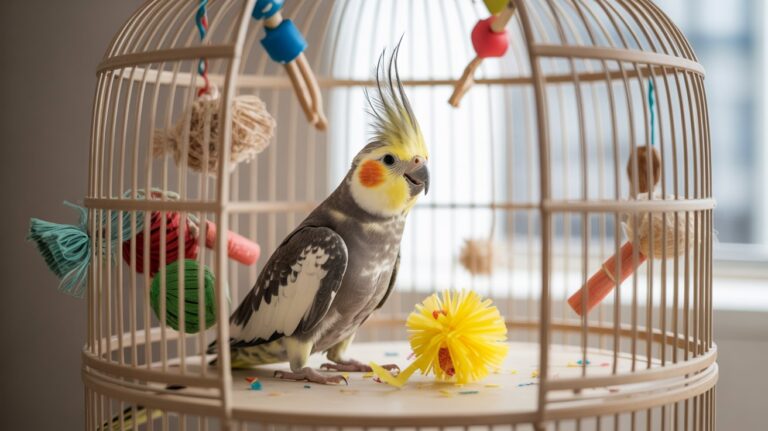
A cage-mount bird toy set changes the game because it offers variety in one package.
Instead of a single point of stimulation, your parrot gets multiple textures, sounds, and challenges all fixed to different spots on the cage bars.
That means more opportunities to forage, chew, climb, and problem-solve throughout the day.
Browse Top-Rated Cage-Mount Bird Toy Sets on Amazon
Parrots Need More Mental Stimulation Than You Think
Wild parrots spend the majority of their waking hours searching for food, interacting with flock members, and navigating complex environments.
In captivity, that natural drive does not disappear. It just gets redirected into screaming, biting, or redecorating your furniture.
Cage-mount toy sets tap into those instincts by giving your bird structured things to do. A well-designed set keeps a parrot busy for hours, which benefits both the bird and the people who live with it.
What to Look for in a Good Cage-Mount Bird Toy Set
Not all toy sets are created equal, and some are honestly a waste of money. Before you buy anything, here are the features that actually matter.
Safe, Bird-Friendly Materials
This is non-negotiable. Your parrot will chew on everything in the cage, so every component in the set needs to be made from bird-safe materials. Look for:
- Untreated natural wood (balsa, pine, or willow are popular and safe choices)
- Vegetable-dyed or food-grade colored parts rather than chemical dyes
- Stainless steel or nickel-plated hardware for the mounting clips and hooks
- Natural cotton or hemp rope that does not fray into dangerous threads
- Avoid any toy with zinc or lead components, which are toxic to birds
If the product listing does not specify materials, treat that as a red flag and keep scrolling.
Shop Bird-Safe Toy Sets Made With Natural Materials on Amazon
Appropriate Size for Your Parrot
A toy set made for a budgie will last about thirty seconds in a macaw’s cage. Match the size of the toys to the size of your bird. Most reputable brands categorize their sets by bird size:
- Small (budgies, parrotlets, lovebirds)
- Medium (cockatiels, conures, caiques)
- Large (African greys, Amazons, eclectus)
- Extra-large (macaws, cockatoos)
Getting the right size matters for both safety and engagement. Toys that are too small become a choking hazard.
Toys that are too large can intimidate a smaller bird into avoiding the cage altogether.
Variety of Textures and Activities
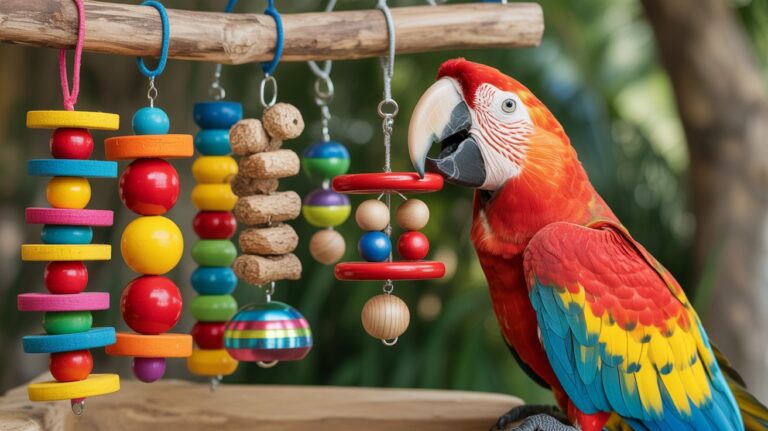
The best cage-mount bird toy sets combine several different types of enrichment in one package. A solid set usually includes:
- Foraging components where you can hide treats inside folds or pockets
- Chewable wooden pieces that satisfy the natural urge to destroy things
- Shredding materials like palm leaves or layered paper
- Bell or rattle elements for auditory stimulation
- Puzzle or moveable parts that reward problem-solving behavior
When a single set covers multiple enrichment categories, your parrot gets a more complete experience without you needing to buy a dozen separate toys.
Secure Mounting Hardware
The mounting mechanism on a cage-mount toy set does more work than you might expect. It needs to hold firm under the weight of an active bird hanging, swinging, and pulling.
Quick-link connectors and sturdy stainless steel clips are the gold standard. Avoid sets that rely on simple plastic hooks, which can open under pressure and send the whole assembly crashing down.
The Best Types of Cage-Mount Bird Toy Sets
There are several distinct categories of cage-mount toy sets, and knowing the difference helps you pick the right one for your parrot’s personality and species.
Foraging Toy Sets
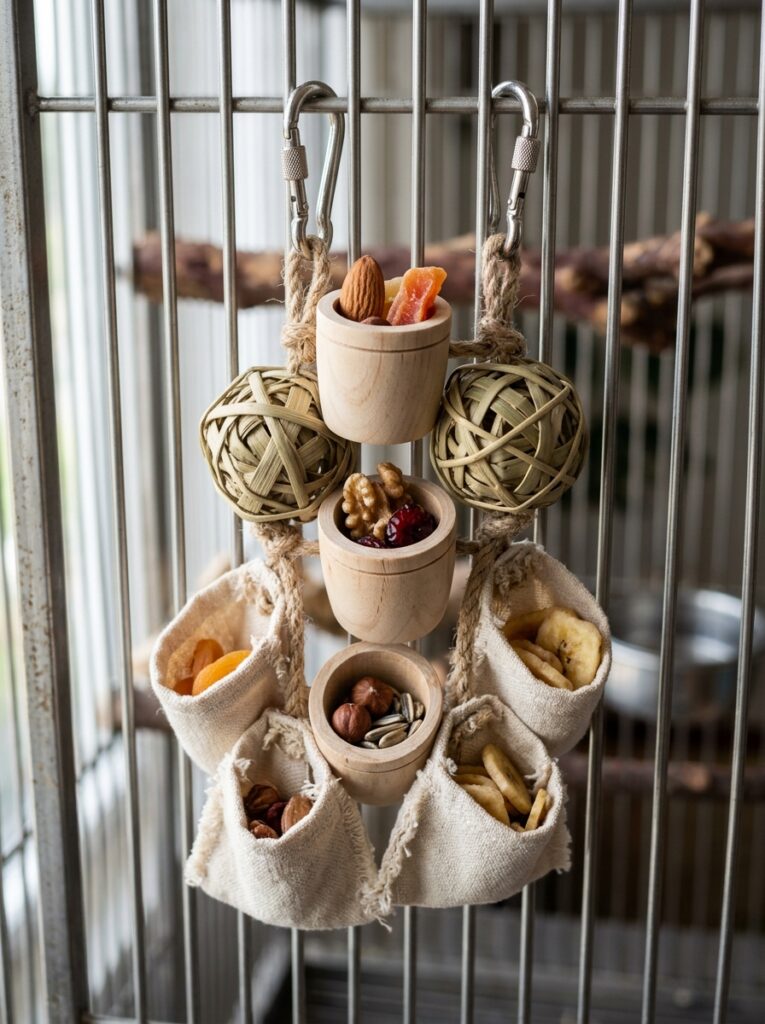
Foraging is arguably the single most important enrichment activity you can provide for a parrot.
These sets typically include woven balls, cups, or fabric pockets where you can hide pellets, dried fruit, or small pieces of nut.
The bird has to work to extract the food, which burns mental energy and mimics natural feeding behavior.
Foraging toy sets work especially well for species known for their intelligence, like African greys, cockatoos, and Amazon parrots.
If your bird spends a lot of time staring at you looking existentially bored, a foraging set is your first move.
Find Foraging Toy Sets for Parrots on Amazon
Chewing and Shredding Sets
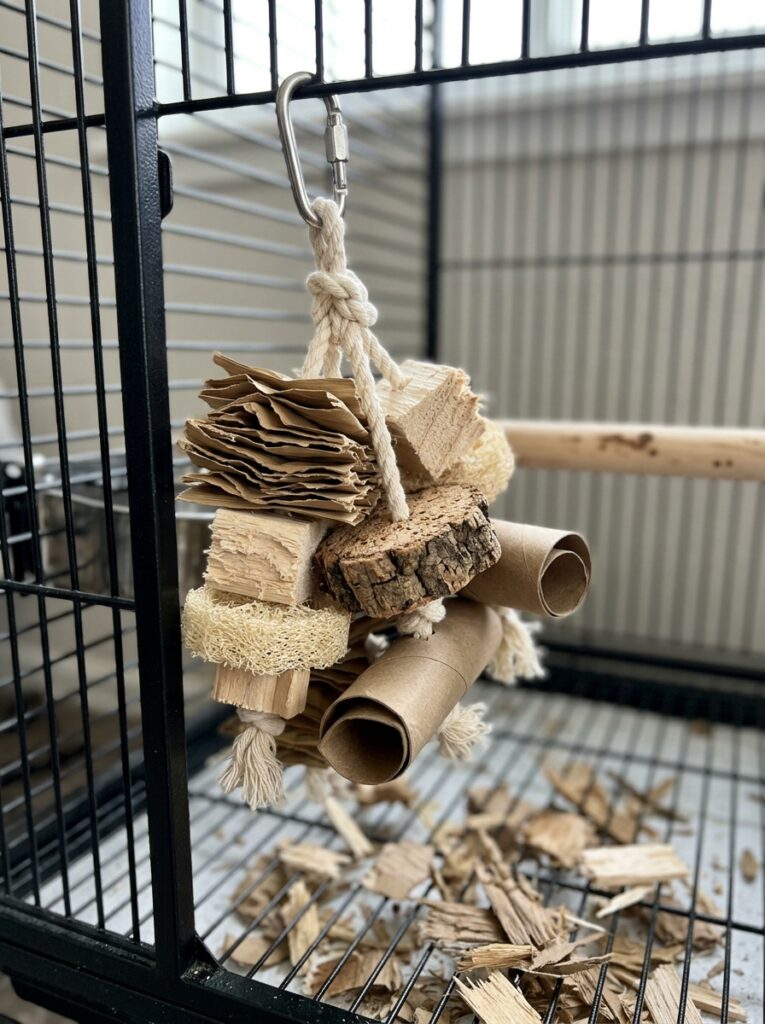
Some parrots are simply born to destroy things. Conures, macaws, and cockatoos fall into this category, and no amount of reasoning will change their perspective.
A chewing and shredding toy set channels that energy productively by giving the bird a socially acceptable outlet.
These sets usually include layered palm fronds, cork, balsa wood blocks, loofah pieces, and paper-based components.
The satisfaction a bird gets from systematically dismantling one of these sets is genuinely impressive to watch, and the mess is a small price to pay for a calm, entertained parrot.
Shop Chewing and Shredding Toy Sets for Parrots on Amazon
Climbing and Activity Sets
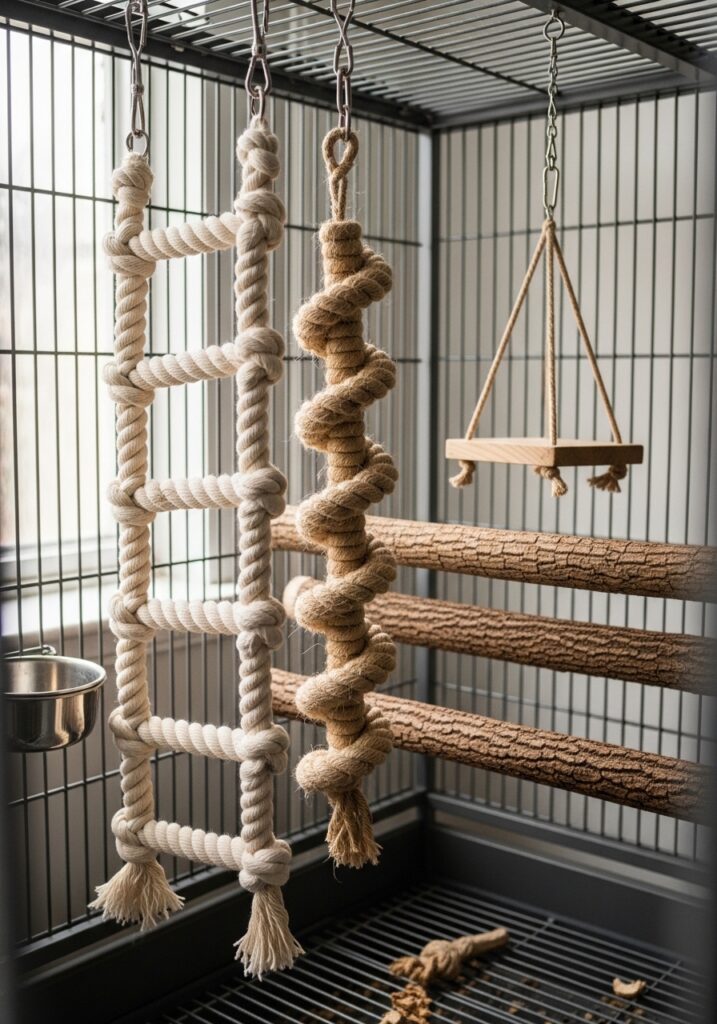
Parrots in the wild climb constantly, navigating branches of varying thickness and texture. A cage-mount climbing and activity set brings a version of that experience indoors.
These sets typically include rope ladders, wooden perch extensions, hanging swings, and spiral chew ropes, all fixed to the cage bars so they move slightly when the bird interacts with them.
The movement itself is part of the appeal. Birds engage more with toys that respond to their actions, and a gently swinging rope ladder holds attention far longer than something completely static.
Multi-Activity Sets
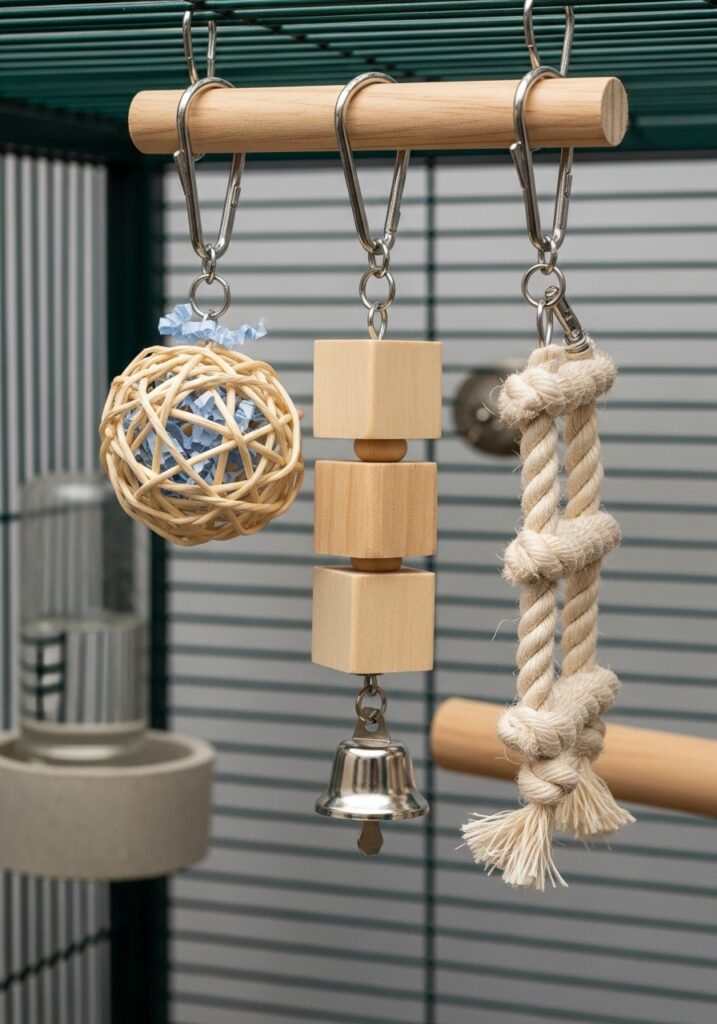
If you are not sure what category your parrot falls into, or if your bird tends to cycle through phases of different behaviors, a multi-activity set is the safest bet.
These combine foraging, chewing, climbing, and sensory elements into one cohesive package, giving the bird options throughout the day depending on what mood strikes.
Multi-activity sets also work well as a starter kit for new bird owners who are still figuring out their parrot’s preferences.
You get data on what your bird gravitates toward, which makes future purchases much easier to target.
How to Place Cage-Mount Bird Toys Strategically
Buying a great toy set is step one. Placing it correctly is step two, and a surprising number of people skip this part entirely.
Position Toys at Different Heights
Parrots naturally feel most secure at the highest point of their cage, so they will almost always spend the most time at the upper perches.
Place your most engaging and complex toys at the upper third of the cage, where your bird already wants to be. Save simpler or noisier items for lower positions.
Avoid Overcrowding
More is not always better. If you pack every inch of the cage with toys, your parrot may feel overwhelmed rather than stimulated.
Aim for enough toys to create variety without blocking movement inside the cage. Your bird needs clear flight lines to move from perch to perch comfortably.
Create a Rotation Schedule
Even the best cage-mount bird toy set loses its novelty after a while. Parrots are quick learners, and once they figure out a toy, the challenge disappears.
Rotate toys in and out of the cage every week or two to keep things fresh. A toy that disappeared two weeks ago suddenly feels like a brand new discovery when it comes back.
Maintaining and Cleaning Your Cage-Mount Toy Set
Bird toys get dirty fast, and dirty toys can harbor bacteria and mold that harm your parrot.
Set a weekly cleaning routine for the components that survive regular contact with food, saliva, and droppings.
- Wooden pieces can be scrubbed with a diluted bird-safe cleaner and allowed to air dry completely before going back in the cage
- Metal hardware should be checked for rust or corrosion each time you clean
- Rope and fabric components need inspection for fraying ends, which can trap toes or beaks
- Replace any component that shows significant wear rather than trying to extend its life past the point of safety
The general rule is: if you would not want your parrot putting it in their mouth, take it out of the cage.
Parrot Personalities and Matching Them to the Right Toy Set
Every parrot has a personality, and the best cage-mount toy set for your bird depends heavily on who that bird actually is.
High-energy, destructive birds like lorikeets, conures, and macaws thrive with shredding and chewing sets that give them maximum physical satisfaction.
Thoughtful, food-motivated birds like African greys and Amazons respond best to foraging sets with genuine problem-solving challenges.
Social, interactive birds like cockatiels and caiques often love activity sets with movement and sound because those elements mimic the feedback they would get from a flock mate.
Pay attention to how your parrot reacts in the first few days with a new toy set. That behavior tells you more about their preferences than any product description ever will.
Bringing It All Together
Choosing the right cage-mount bird toy set is one of the most impactful things you can do for your parrot’s wellbeing.
A bird that has appropriate enrichment is calmer, healthier, and far more enjoyable to live with.
The key is matching the set to your bird’s size, species, and personality, then placing and rotating the toys thoughtfully so they stay relevant.
You put a lot of love into caring for your parrot. Make sure their environment reflects that. A great toy set is not a luxury; it is a core part of giving your bird the life they deserve.
Start with one good set, watch what your parrot loves, and build from there.
Your bird will thank you, probably by screaming slightly less, which is honestly the highest compliment a parrot can give.
Explore Cage-Mount Bird Toy Sets on Amazon and Treat Your Parrot Today
What Are the Safest Materials for Cage-Mount Bird Toy Sets?
The safest cage-mount bird toy sets use untreated natural wood like balsa, pine, or willow. They should have stainless steel or nickel-plated hardware.
Rope parts need to be made from natural cotton or hemp. Any coloring on the toys must be from vegetable-based or food-grade dyes.
Always avoid toys with zinc or lead. Both metals are toxic to parrots and can cause serious health issues, even with minimal contact.
How Often Should I Rotate My Parrot’s Cage-Mount Toys?
Rotate your parrot’s cage-mount toys every one to two weeks. This keeps their environment fresh and mentally stimulating.
Parrots are smart birds that quickly solve challenges. When a toy is no longer a challenge, it loses their interest.
Bringing back a toy after a short break makes it feel new again. This novelty can re-engage even the most indifferent parrot.
Can I Use the Same Cage-Mount Bird Toy Set for Different Parrot Species?
Not always. The toy set size must match your parrot’s size. A set for budgies won’t work for a macaw, and the opposite is true.
Different species also have unique enrichment preferences. Foraging sets suit food-motivated birds like African greys and Amazons.
Shredding and chewing sets are better for high-energy birds like conures and cockatoos. Matching the toy type to the species greatly impacts how much the bird engages with it.
How Do I Clean and Maintain Cage-Mount Bird Toy Sets?
Clean your cage-mount bird toy sets once a week. Use a bird-safe, diluted cleaner for the wooden and plastic parts.
After cleaning, let everything air dry completely before returning it to the cage. Check metal hardware for rust or corrosion each time you clean.
Also, inspect rope and fabric parts for fraying ends that could snag a beak or toe. Replace any part that shows serious wear.
Damaged toys can be safety hazards, no matter how new they appear.
How Many Toys Should I Mount in My Parrot’s Cage at One Time?
A good rule of thumb is to mount enough toys to give your parrot variety. This also keeps their movement around the cage free.
For most medium-sized cages, three to five toys at different heights work well. Too many toys can overwhelm some birds.
This can discourage exploration. So, spacing things out and rotating toys regularly is smarter than loading the cage all at once.