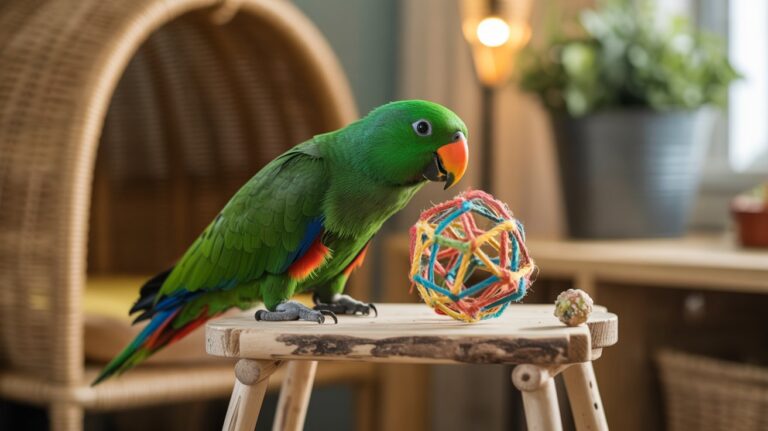
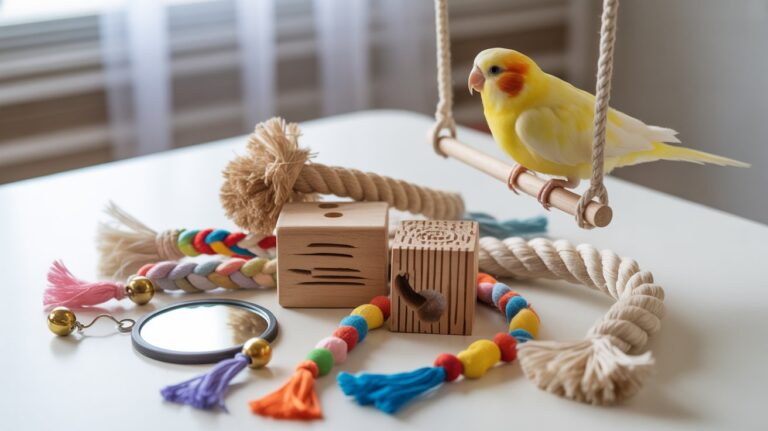
Durable Acrylic Parrot Toys Your Bird Will Love
If you have a parrot, you know the routine. You buy a toy, hang it in the cage, and your bird either ignores it or destroys it in minutes.
Sound familiar? After years of trying wooden and rope toys that turned into expensive confetti, I finally took acrylic parrot toys seriously, and I haven’t looked back.
Acrylic toys stand out in the parrot toy world. They are durable, engaging, and last much longer than most options.
If you haven’t considered them yet, this article will cover everything you need to know.
Why Acrylic Parrot Toys Deserve a Spot in Every Cage
Let’s be real for a second. Most parrot toys are not built with a determined African Grey or a bored Eclectus in mind.
A lot of them fall apart embarrassingly fast, which is both frustrating and potentially dangerous if your bird swallows a loose piece.
Acrylic toys solve the durability problem in a way that most other materials simply cannot.
The material itself is tough enough to withstand serious chewing and manipulation without splintering, cracking into sharp edges, or disintegrating into a pile of dye-soaked fluff.
For medium to large parrots especially, that durability is not a luxury, it is a necessity.
The Safety Advantage You Cannot Ignore
One of the first things parrot keepers ask about acrylic is whether it is safe. It is a fair question. Food-grade, bird-safe acrylic is non-toxic and does not splinter the way wood does.
When a parrot bites into a wooden toy with enough force, it can produce sharp splinters that pose a genuine ingestion risk.
Acrylic, by contrast, holds its shape even under sustained beak pressure from large species.
That said, not all acrylic toys on the market meet the same safety standard.
Always source your toys from reputable bird toy suppliers who specifically state that their acrylic is food-grade and free from harmful dyes or coatings.
Cheap, unbranded acrylic toys from general pet shops sometimes cut corners on materials, and your parrot’s health is not the place to find bargains.
Mental Stimulation That Actually Lasts
Parrots are genuinely intelligent animals, and an under-stimulated parrot is a destructive, noisy, and sometimes aggressive one.
Ask any experienced keeper and they will tell you the same thing.
Acrylic toys tend to hold a parrot’s attention longer than toys that can be quickly destroyed, because the challenge remains intact over time.
A wooden toy that gets demolished in one session offers a brief burst of enrichment and then nothing.
An acrylic foraging toy, puzzle feeder, or manipulative ring set keeps presenting the same mental challenge day after day.
That sustained engagement matters enormously for a bird’s psychological wellbeing.
Types of Durable Acrylic Parrot Toys Worth Knowing About
Not all acrylic parrot toys serve the same purpose, and building a good toy rotation means understanding what each type actually does for your bird.
Shop Durable Acrylic Parrot Toys on Amazon
Acrylic Foraging Toys
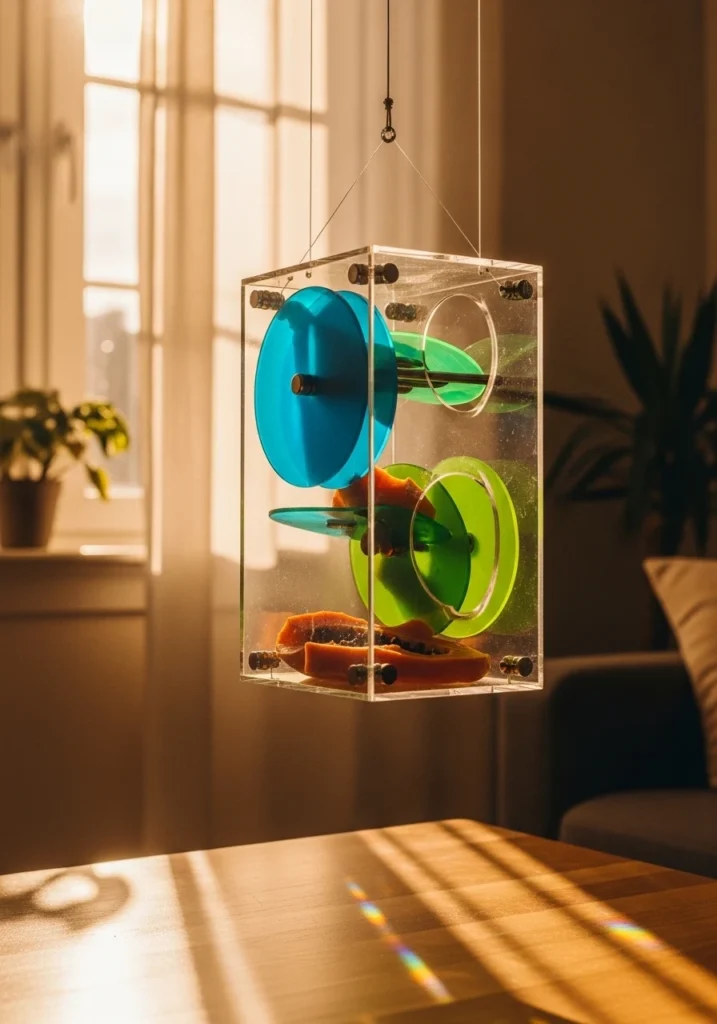
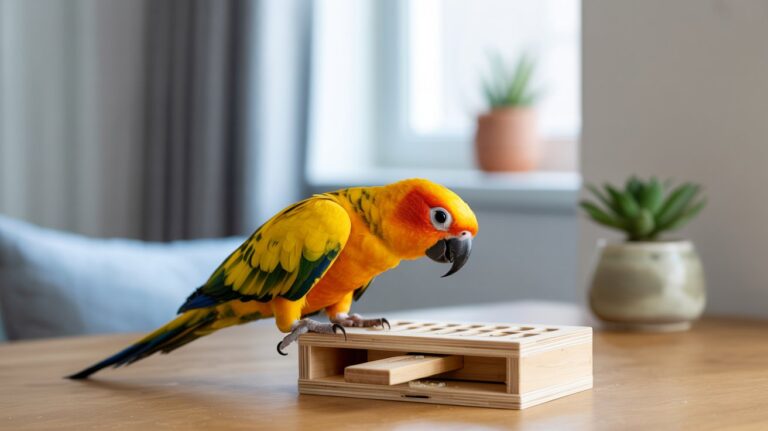
Foraging toys are designed to make your parrot work for its food or treats.
Acrylic versions typically feature compartments, sliding doors, rotating discs, or removable plugs that your bird has to figure out before accessing the reward inside.
Foraging is one of the most natural and mentally healthy behaviors you can encourage in a captive parrot. Wild parrots spend a significant portion of their day searching for food.
When you replicate that behavior in the cage, you reduce boredom, lower stress, and give your bird a sense of purpose that seed-in-a-bowl feeding simply cannot provide.
The beauty of acrylic foraging toys is that you can reload and reuse them indefinitely. Wood and cardboard foraging toys often need replacing after a few uses.
An acrylic one just needs a quick wash and a refill.
Browse Acrylic Foraging Toys for Parrots on Amazon
Acrylic Puzzle and Manipulative Toys
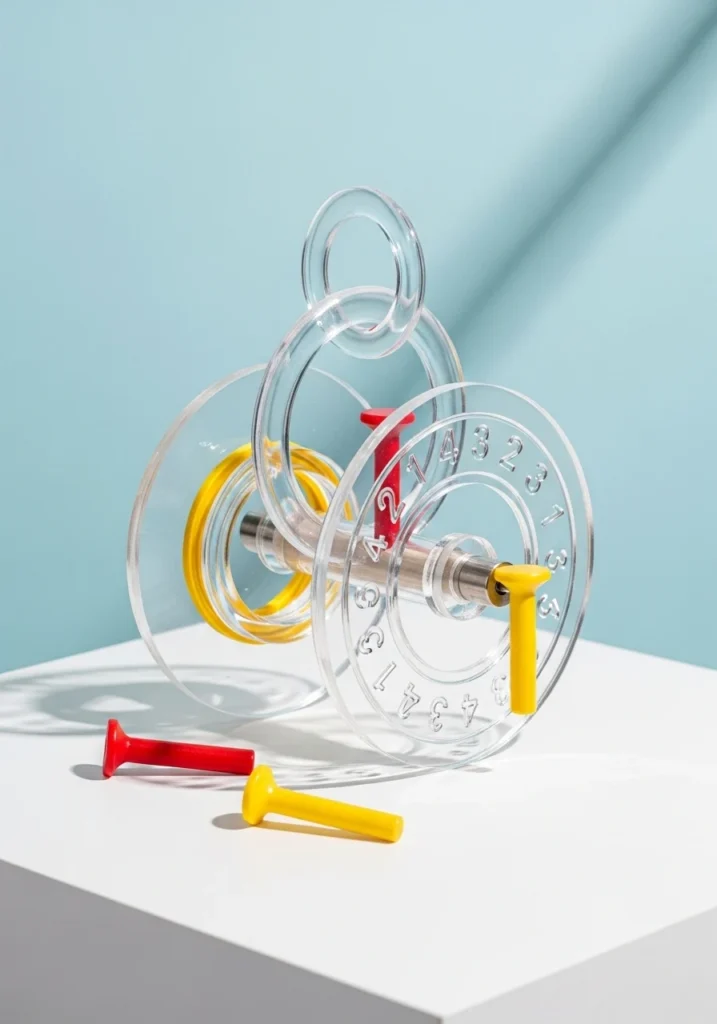
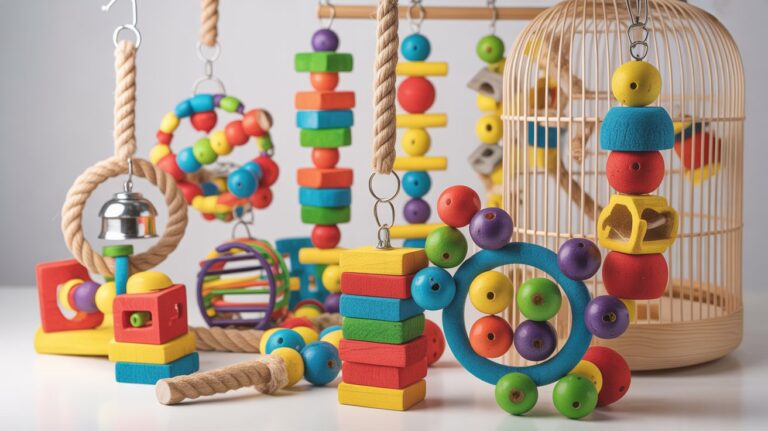
These toys focus on problem-solving rather than food reward. Think interlocking rings, sliding bead tracks, removable pegs, and rotating wheels.
Parrots with higher intelligence, like African Greys, Amazons, and macaws, tend to engage especially well with puzzle-style acrylic toys.
The key with puzzle toys is to rotate them regularly. Once your bird figures out a puzzle, the stimulation value drops.
Swap it out for a week, reintroduce it, and your bird often approaches it with fresh interest. It is not foolproof, but it extends the life of your toy rotation considerably.
Acrylic Foot Toys
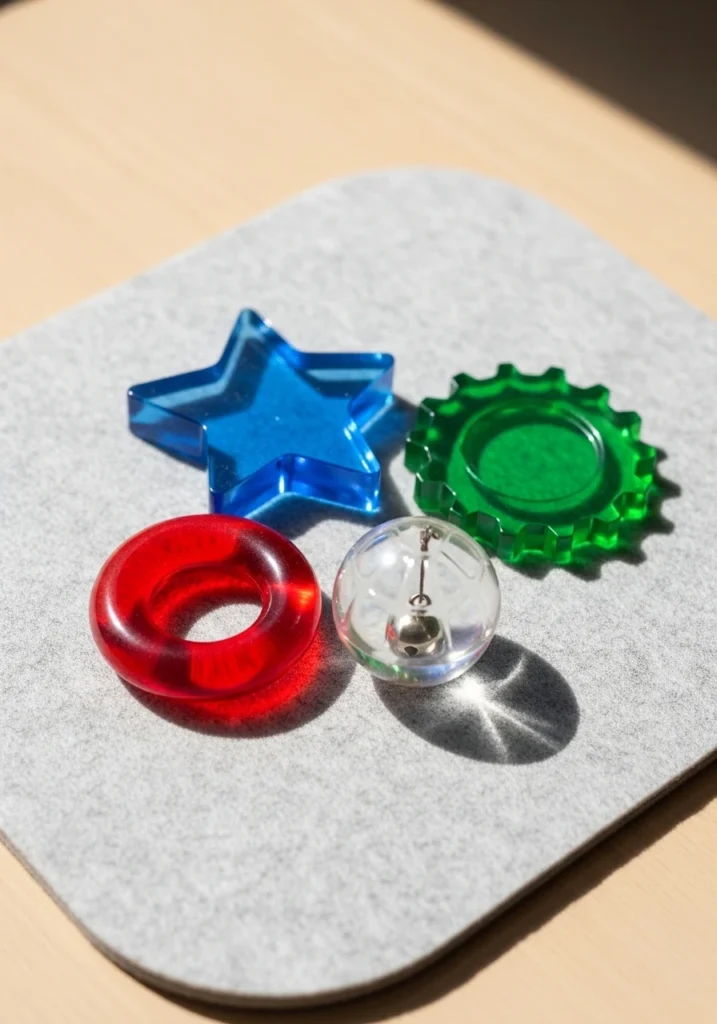
Foot toys are small enough for your parrot to hold and manipulate independently.
Acrylic versions in shapes like rings, stars, balls, and discs give your bird something to grip, toss, and investigate outside the cage during out-of-cage time.
Foot toys are particularly valuable for species that use their feet as hands, such as caiques, conures, and cockatiels.
Watching a caique lie on its back and play with an acrylic ring is one of those genuinely entertaining parrot-keeping moments that never gets old.
Find Acrylic Foot Toys for Parrots on Amazon
Acrylic Shreddable and Combination Toys
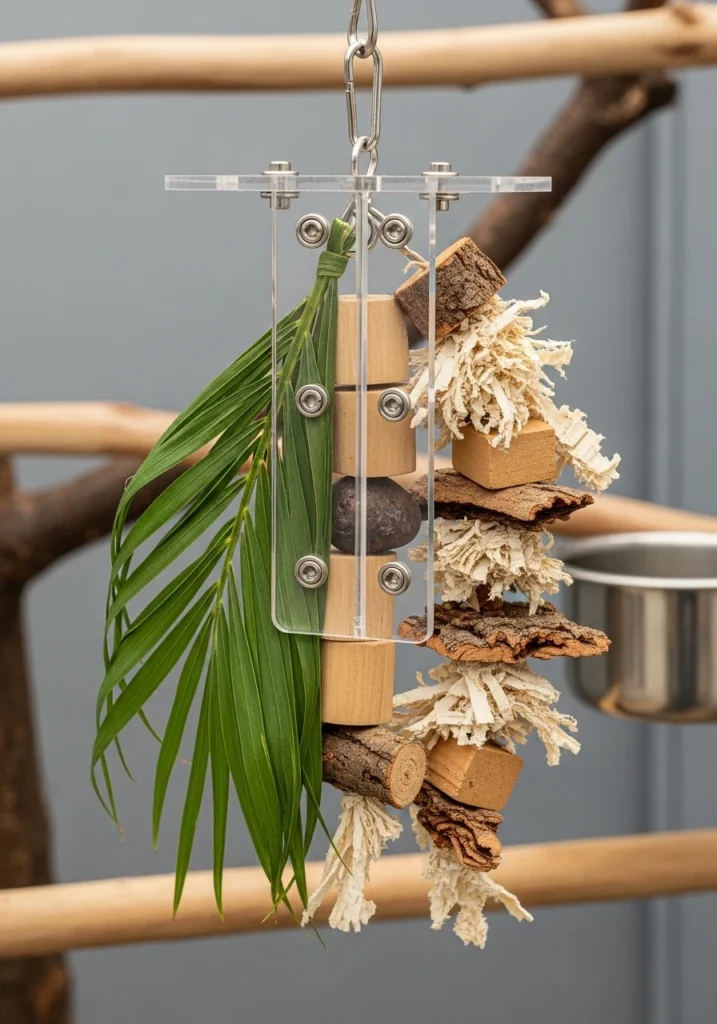
Some of the best acrylic toys on the market combine acrylic components with shreddable elements like palm fronds, cork, or untreated softwood.
The acrylic provides structure and longevity while the shreddable parts satisfy your bird’s natural urge to destroy things.
This combination approach gives you the best of both worlds. Your bird gets to chew and shred to its heart’s content, and you replace only the consumable parts rather than the entire toy.
Over time, this saves money and reduces the waste that comes with buying entirely disposable toys.
How to Choose the Right Acrylic Toy for Your Parrot
Choosing toys is not one-size-fits-all, and the wrong toy for your bird’s size or temperament can end up ignored or, in rare cases, dangerous.
Match the Toy to Your Bird’s Size
Size compatibility is the single most important factor when selecting any parrot toy, acrylic or otherwise.
A toy designed for a budgie will not engage a macaw, and a large acrylic puzzle toy with heavy components can actually injure a small bird if it falls or tips.
Use these general size guidelines as a starting point:
- Small parrots (budgies, parrotlets, lovebirds): lightweight acrylic foot toys, small bead tracks, mini puzzle feeders
- Medium parrots (conures, caiques, cockatiels, ringnecks): medium foraging toys, acrylic ring sets, combination shreddable toys
- Large parrots (African Greys, Amazons, Eclectus): heavy-duty foraging puzzles, thick acrylic manipulative toys, large foot toy sets
- Extra-large parrots (macaws, cockatoos): reinforced acrylic with stainless steel hardware, oversized puzzle feeders, large combination toys
Assess Your Bird’s Play Style
Some parrots are aggressive chewers who attack everything with maximum beak force.
Others are more curious and methodical, preferring to investigate and manipulate rather than destroy. Knowing your bird’s play style helps you pick toys that will actually get used.
An aggressive chewer will not get much satisfaction from a delicate puzzle toy it cannot interact with physically.
A shy or cautious bird may feel overwhelmed by a large, complex acrylic structure and avoid it entirely.
Match the toy’s design to your bird’s personality, and you dramatically improve the chances of it becoming a cage favourite.
Check the Hardware
The toy itself might be top quality, but if the hanging hardware is poor, the whole thing becomes a safety hazard.
Always look for stainless steel quick-links, rings, and chains rather than nickel-plated or zinc-coated hardware.
Zinc and nickel are toxic to birds, and your parrot will chew on every part of a toy, not just the acrylic components.
Reputable bird toy manufacturers use stainless steel throughout. If a product listing does not specify the hardware material, that is a reason to pause before buying.
Shop Bird-Safe Stainless Steel Parrot Toy Hardware on Amazon
Cleaning and Maintaining Acrylic Parrot Toys
One of the genuinely great things about acrylic toys is how easy they are to clean.
Unlike rope toys that harbor bacteria in their fibers or wood toys that absorb moisture and develop mold, acrylic surfaces clean up quickly and thoroughly.
How to Clean Acrylic Toys Properly
Clean your acrylic toys at least once a week, more frequently if your bird plays with them heavily or uses them as foraging toys that come into contact with fresh food.
Here is a reliable cleaning routine:
- Remove the toy from the cage and disassemble any removable parts
- Soak in warm water with a small amount of unscented dish soap for ten minutes
- Scrub with a soft brush to remove food residue and dried debris
- Rinse thoroughly under running water to remove all soap traces
- Allow to air dry completely before returning to the cage
Avoid harsh chemical cleaners, bleach solutions, or anything with strong fragrances. Parrots have extremely sensitive respiratory systems, and residue from strong cleaners can cause serious harm.
Inspect Toys Regularly for Wear
Even though acrylic is durable, it is not indestructible. Check your toys regularly for:
- Deep scratches or gouges that could harbor bacteria
- Cracked or chipped sections with sharp edges
- Worn or corroded hardware that could break under load
- Loose components that could become a swallowing hazard
When a toy shows significant wear, replace it. The whole point of buying durable acrylic toys is longevity, but that does not mean keeping a damaged toy in the cage out of stubbornness.
Building a Well-Rounded Acrylic Toy Rotation
The most effective approach to parrot enrichment is not buying one great toy and leaving it in the cage forever.
A rotation system keeps your bird’s environment consistently stimulating without requiring you to constantly buy new toys.
Aim to have four to six acrylic toys in your collection at any given time. Keep two or three in the cage and rotate the others in every week or two.
Reintroducing a familiar toy after a break often reignites your bird’s interest in it.
Birds notice changes in their environment, and a “new” toy that is actually an old favourite can generate just as much excitement as something genuinely new.
Mix toy types within your rotation. Combine a foraging toy, a manipulative puzzle, and a foot toy for out-of-cage time.
That variety covers different cognitive and physical needs and keeps your bird from falling into a pattern of only one type of play.
Final Thoughts
Durable acrylic parrot toys genuinely earn their place in any serious parrot keeper’s toolkit.
They last longer, clean easier, and deliver sustained mental stimulation in a way that disposable toys simply cannot match.
Once you experience the difference between watching your bird interact with a well-designed acrylic puzzle for weeks on end versus sweeping up the remnants of yet another destroyed wooden toy, the case pretty much makes itself.
Start with one or two quality pieces suited to your bird’s size and play style, build a small rotation, and pay attention to how your parrot responds.
You will quickly figure out which toy types your bird loves most, and from there, expanding the collection becomes one of the more enjoyable parts of parrot keeping.
Your bird deserves enrichment that actually lasts, and acrylic delivers exactly that.
Are Acrylic Parrot Toys Safe for All Parrot Species?
Yes, food-grade acrylic parrot toys are safe for all parrot species when bought from trusted suppliers.
The key factor is material quality. Food-grade acrylic won’t splinter or leach harmful chemicals. It keeps its shape, even under the strong beaks of large birds like macaws and cockatoos.
Always check that the supplier confirms their acrylic is bird-safe. Also, ensure all hardware, like rings, chains, and quick-links, is made from stainless steel.
Avoid zinc or nickel-plated metals, as they are toxic to birds.
How Long Do Acrylic Parrot Toys Typically Last Compared to Wood or Rope Toys?
Acrylic parrot toys usually outlast wood and rope options. A good wooden toy can splinter after just one play session with a medium-sized parrot.
Rope toys are softer but absorb moisture and can harbor bacteria. They also fray into strands that parrots might ingest over time.
In contrast, a quality acrylic toy can last for months or even years with regular cleaning and inspection.
This long-term cost per use makes acrylic a smart choice, even with its higher initial price.
What Size Acrylic Toy Should I Buy for My Parrot?
The right size depends on your parrot’s species and body size. Small parrots, like budgies, parrotlets, and lovebirds, prefer lightweight acrylic foot toys and mini puzzle feeders.
Medium species, such as conures, caiques, and cockatiels, do well with medium foraging toys and acrylic ring sets.
Large parrots, including African Greys, Amazons, and Eclectus parrots, need heavy-duty foraging puzzles and thick acrylic toys.
Extra-large species, like macaws and cockatoos, require reinforced acrylic with stainless steel parts.
Always match the toy’s weight and size to your bird to prevent injury from falling parts or swallowing hazards.
How Often Should I Clean My Parrot’s Acrylic Toys?
Clean acrylic parrot toys at least once a week with normal use. If your bird uses a toy as a foraging feeder with fresh food or soft treats, clean it every two to three days.
This helps prevent bacterial growth.
The cleaning process is simple: soak the toy in warm water with a bit of unscented dish soap.
Then, scrub it with a soft brush, rinse it well, and let it air dry completely before putting it back in the cage.
Avoid bleach and strong chemical cleaners. Parrots have sensitive respiratory systems and can react poorly to fumes and residues.
How Do I Get My Parrot Interested in a New Acrylic Toy?
To get a parrot interested in a new toy, take it slow. Don’t just hang it in the cage and wait. Start by placing the toy near the cage or on a play stand.
This way, your bird can see it without feeling pressured. When your bird shows curiosity, move the toy inside the cage.
To spark interest, attach a favorite treat to the toy or thread food through it. Also, rotate toys every one to two weeks.
Reintroducing a familiar toy after a short absence can excite your bird again.