Pet Bird Enrichment Ideas to Banish Boredom
If your bird has been perched, staring at the same wall, and screaming at nothing for the third time this week, congratulations. You have a bored bird.
A bored bird isn’t a happy bird. The good news? Fixing this is more fun than you think.
Bird enrichment isn’t just a buzzword for pet store workers to sell you expensive toys. It means stimulating your bird’s mind, body, and instincts.
This helps them thrive in captivity, not just survive. Let’s dive into the fun part.
Why Bird Enrichment Actually Matters
Here is a question worth sitting with: what would your parrot, cockatiel, or conure be doing right now if it lived in the wild? Foraging for food.
Flying miles. Solving problems. Socializing with a flock. Not staring at a mirror in a 24-inch cage, that’s for sure.
When pet birds don’t get enough mental and physical stimulation, they develop behavioral problems that range from mildly annoying to genuinely heartbreaking.
These include feather plucking, excessive screaming, aggression, and repetitive rocking. Enrichment is the most effective tool you have to prevent all of that.
The best part is that enrichment does not require you to spend a fortune. Most of what your bird needs, you already have at home or can make in about ten minutes.
Foraging Toys and Activities
Make Your Bird Work for Its Food
In the wild, birds spend a huge chunk of their day foraging.
So why do most of us just plop food into a bowl and call it done? Switching up how you deliver food is honestly one of the easiest and most impactful changes you can make.
Try these foraging ideas that work brilliantly for most pet birds:
- Wrap pellets or seeds in small pieces of paper for your bird to unwrap
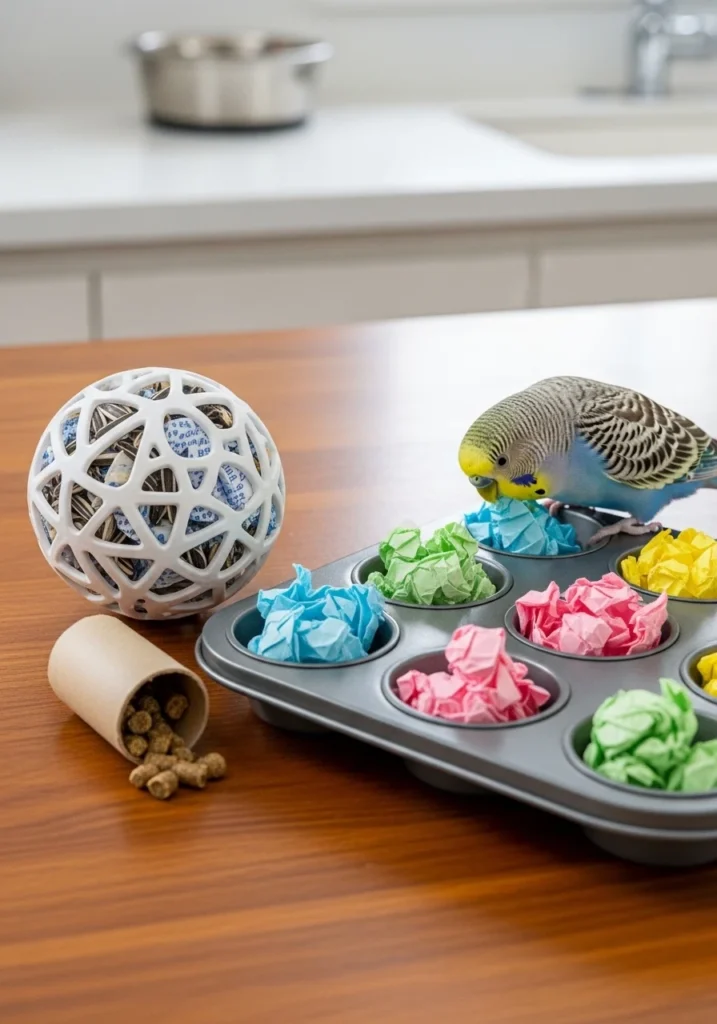
- Hide food inside cardboard tubes or toilet paper rolls
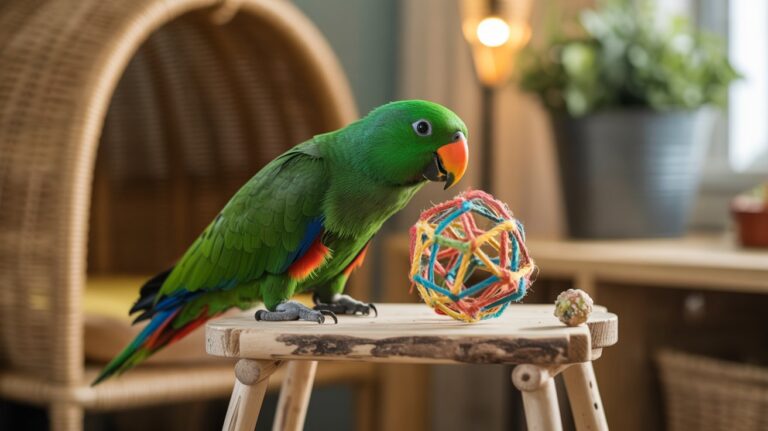
- Stuff treats into the holes of a wiffle ball
- Layer food under shredded paper in a foraging box
- Use a muffin tin with tennis balls or crumpled paper hiding each cup
The goal is simple: make your bird think, problem-solve, and feel accomplished. Even ten minutes of foraging activity can burn more mental energy than an entire day of sitting on a perch.
Commercial Foraging Toys Worth Trying
If you want to invest in a proper foraging toy, look for ones with multiple compartments or sliding mechanisms.
Brands like Super Bird Creations and Planet Pleasures make solid options that hold up well over time. Rotate them regularly so your bird does not lose interest. The novelty factor is a big deal.
Physical Enrichment and Exercise
Give Them Space to Actually Move
A bird that cannot spread its wings fully in its cage is not getting enough physical enrichment.
Flight is one of the most natural and necessary behaviors for birds, and restricting it too much leads to physical and psychological problems.
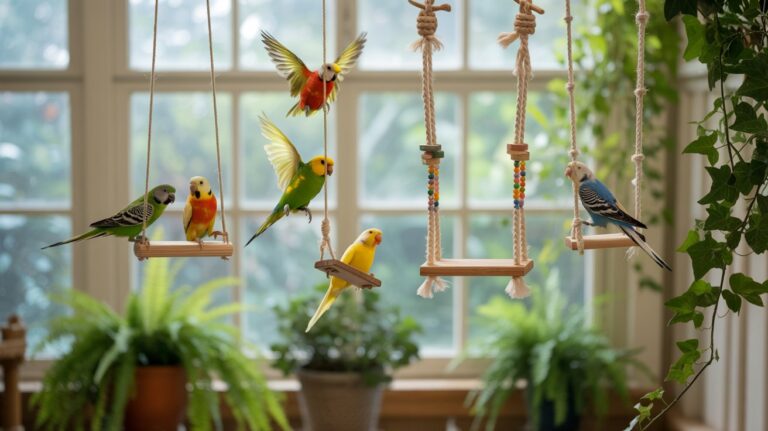
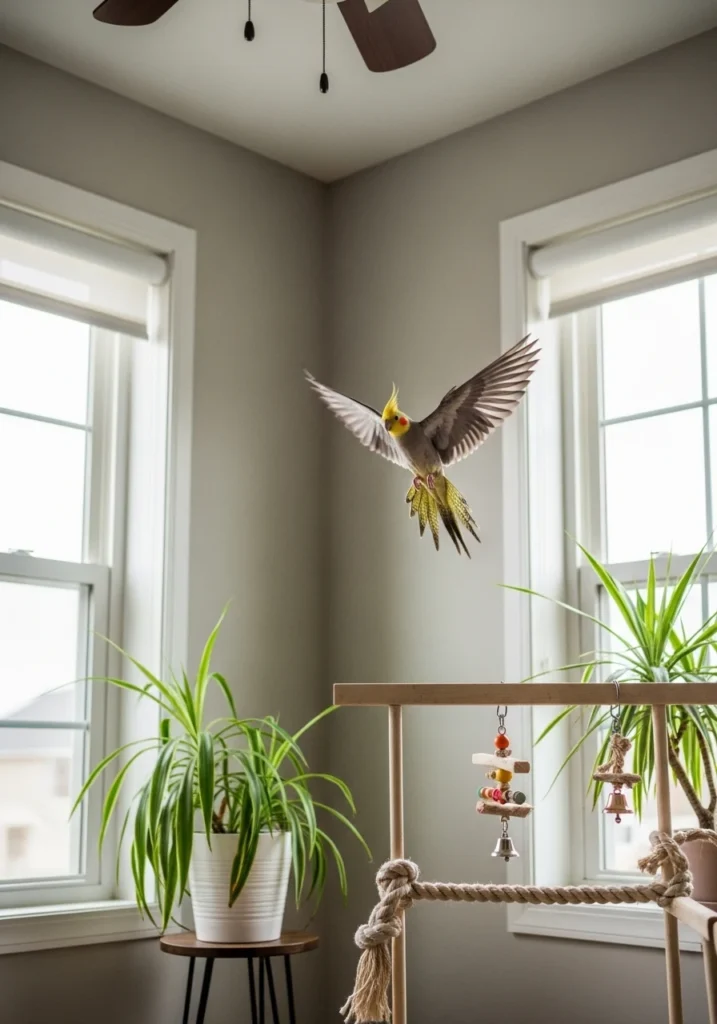
If you have a flighted bird, set up a safe bird-proofed room where they can fly freely under supervision.
Cover mirrors, close windows, turn off ceiling fans, and remove any hazards before you let them out. Even 30 minutes of daily free flight makes a remarkable difference in their mood and energy levels.
Perch Variety Is Non-Negotiable
Most cages come with a couple of smooth wooden dowels.
Your bird uses these every single day, for every single activity, and they are about as exciting as beige wallpaper. Swap them out for a variety of perch types and sizes:
- Rope perches for texture and grip variety
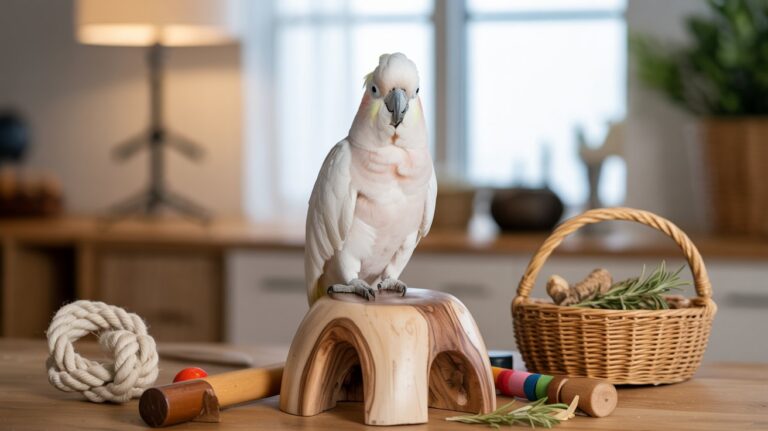
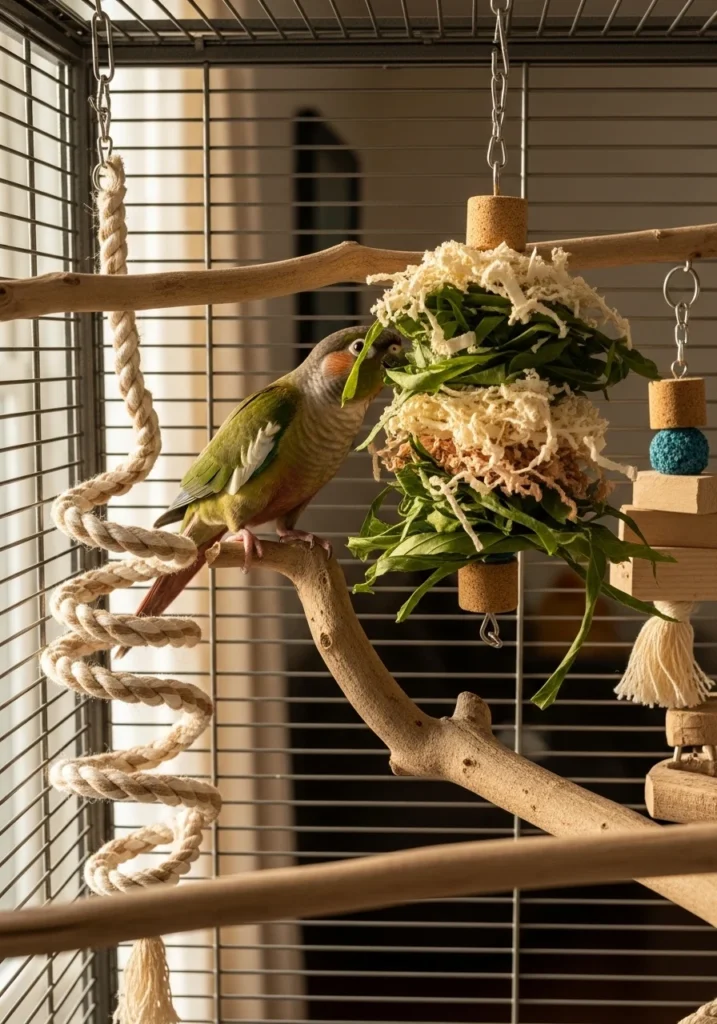
- Natural wood perches like manzanita or java wood for irregular surfaces that exercise foot muscles
- Mineral perches that help keep nails trimmed naturally
- Boing perches (those spring-like rope spirals) that add a fun, bouncy element
Changing up perch diameter is especially important because it exercises different muscles in your bird’s feet and reduces the risk of pressure sores.
Mental Stimulation and Cognitive Enrichment
Teach Your Bird Something New
Birds are remarkably intelligent creatures. Some parrots outperform human toddlers on certain cognitive tasks.
So if you have never tried training your bird, you are genuinely leaving enrichment potential on the table.
Target training is the easiest place to start. You teach your bird to touch a small stick or chopstick with its beak in exchange for a treat.
From there, you can build on it to teach them to step up, turn around, wave, or even retrieve objects. African Greys, Amazon parrots, and cockatoos especially love having a job to do.
Training sessions do not need to be long. Three to five minutes, two or three times a day, is plenty. Short and positive always beats long and exhausting.
Puzzle Toys That Actually Challenge Them
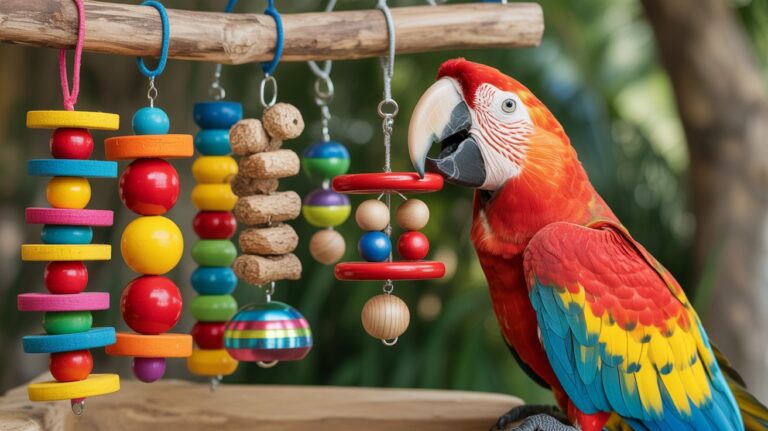
Not all bird toys are created equal. Brightly colored plastic bells are fine, but they are not exactly pushing your bird’s cognitive limits.
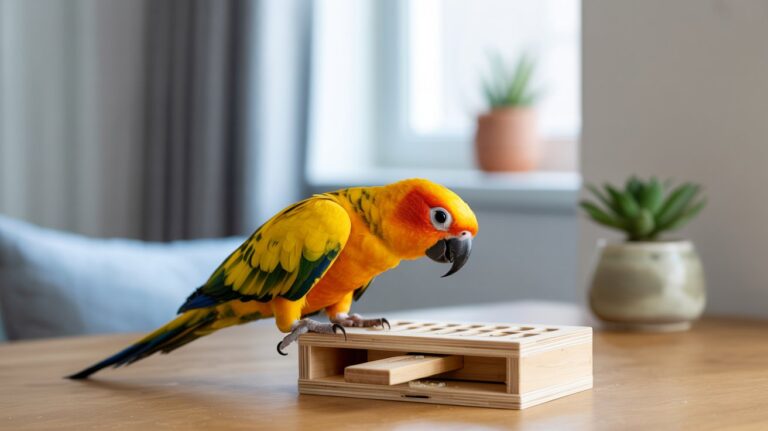
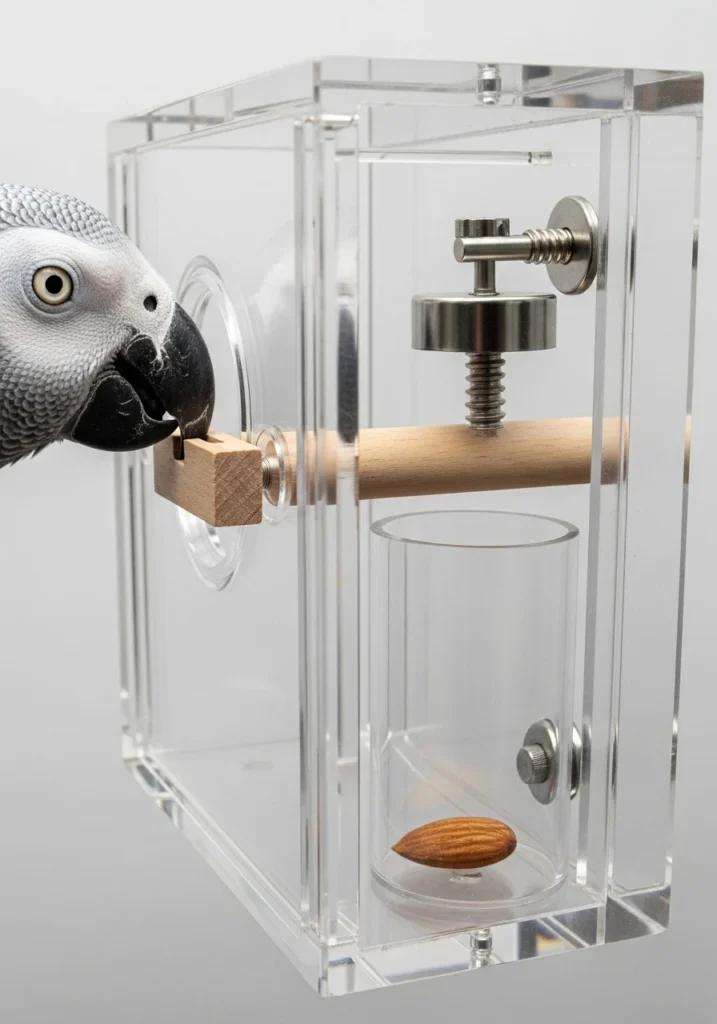
Puzzle toys that require your bird to unlock, slide, or unscrew components to reach a treat inside are significantly more stimulating.
Look for toys with:
- Sliding locks or bolts to undo
- Screw-off caps over treat compartments
- Stackable cups that nest inside each other
- Boxes with doors that latch shut
Start with easier puzzles and graduate to harder ones as your bird figures them out. Watching a clever bird solve a puzzle for the first time is genuinely one of the most satisfying experiences in pet ownership.
Social Enrichment
Your Presence Is the Best Enrichment Tool You Have
No toy, foraging station, or puzzle will ever replace quality time with you. Birds are flock animals.
They are hardwired for social interaction, and your bird genuinely considers you part of its flock. Regular, positive interaction is not a bonus. It is a necessity.
This does not mean you need to dedicate hours of undivided attention every day.
Even bringing your bird into the room while you work, talk to them while you cook, or have them perch near you while you watch TV contributes meaningfully to their social wellbeing.
Music, Podcasts, and Background Noise
Ever noticed how some birds calm down the moment you turn on the radio? Birds respond strongly to auditory stimulation.
Many owners swear by leaving calm music, nature documentaries, or even talk radio on while they are out.
Classical music and reggae have actually been studied for their calming effects on parrots, if you want to get specific about your playlist.
Avoid leaving loud, aggressive, or high-pitched content on for extended periods. A bird that listens to intense action movies all day is not having a relaxing time, despite what it might look like.
DIY Enrichment on a Budget
Household Items That Double as Great Bird Toys
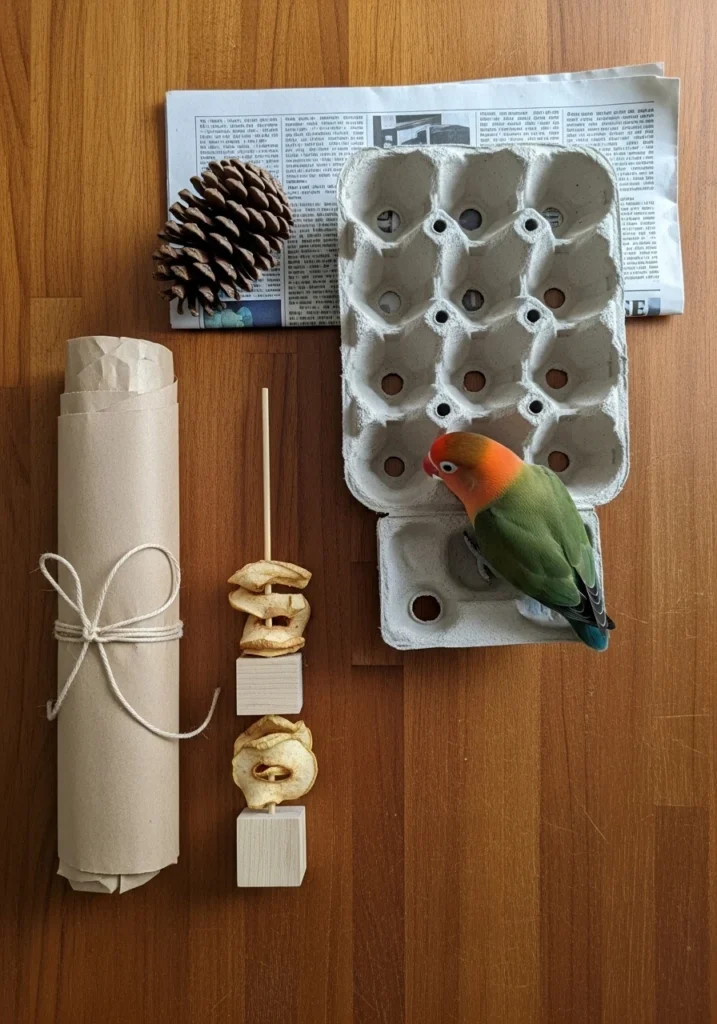
You do not need to spend a lot to keep your bird entertained. Some of the best enrichment tools cost nothing at all. Here are items you probably already have:
- Cardboard boxes and egg cartons for destruction play
- Paper bags stuffed with shredded paper and treats
- Untreated wooden skewers threaded with dried pasta, vegetables, or fruit
- Stainless steel measuring spoons that make great foraging containers
- Pine cones (cleaned and baked to remove any contaminants) for natural chewing enrichment
Always make sure anything you give your bird is free of dyes, chemicals, glue, and sharp edges. Safety first, obviously.
Seasonal and Rotating Enrichment
One thing that many bird owners overlook is rotation. Even the best toy becomes boring after a week of constant access.
Pull toys out, put them away for two weeks, and bring them back. Your bird will treat a familiar toy like it is brand new.
Seasonal enrichment works on the same principle. Fresh branches from bird-safe trees like willow, apple, or eucalyptus make fantastic temporary enrichment.
Your bird gets to chew, strip bark, and forage through leaves. It is basically a mini forest experience in their enclosure.
Environmental Enrichment
Set Up a Bird-Friendly Playstand
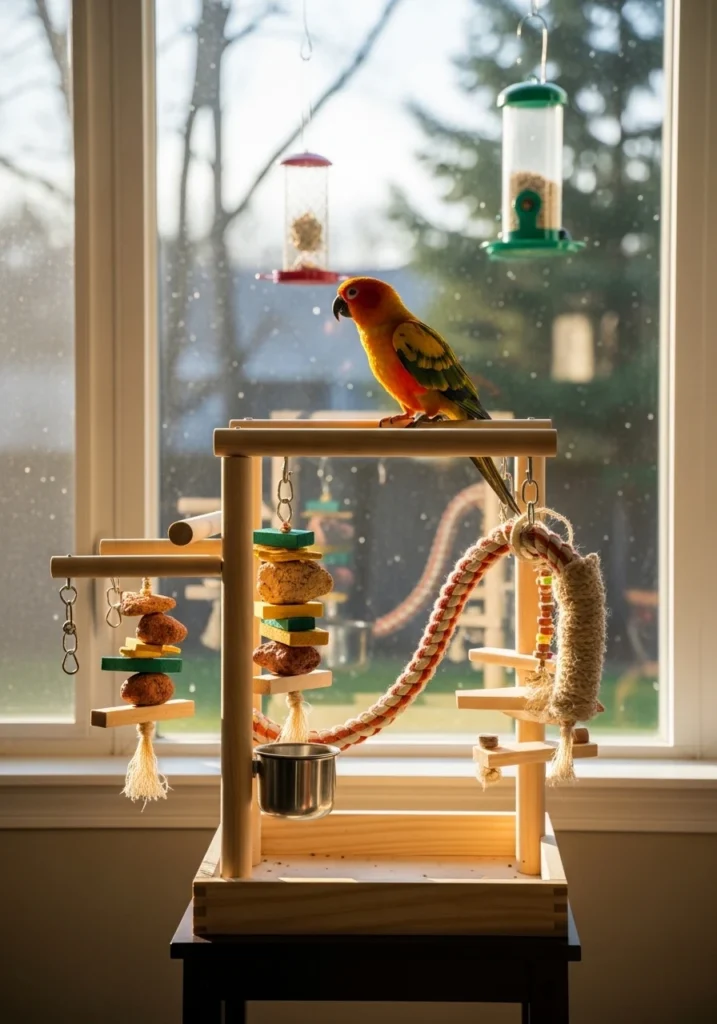
A good playstand outside the cage gives your bird a dedicated space to explore, climb, and play during out-of-cage time.
Load it up with foraging stations, hanging toys, chewable wood pieces, and treat cups. The goal is to make it so interesting that your bird actually wants to spend time there.
Position the playstand near a window if possible. Birds love watching the world outside.
Watching other birds, squirrels, and passing activity provides hours of passive enrichment that you do not even have to set up.
Vary the View
Speaking of windows, rotating your bird’s environment matters more than most people realize.
If your bird has looked at the same corner of the same room for three years, they are not getting much environmental stimulation.
Move their cage to a different spot occasionally. Let them explore a different room under supervision. Novelty is enriching on its own.
A Few Final Thoughts
Enrichment is not a one-size-fits-all formula. What works brilliantly for a cockatiel might bore a Congo African Grey into a deep, dramatic sulk.
You need to observe your individual bird, try different things, and pay attention to what genuinely excites them versus what they ignore completely.
The bottom line: a stimulated bird is a healthier, happier, and significantly quieter bird. And a quieter bird means you get to maintain your sanity and your relationship with your neighbors. Everybody wins.
Start small if you are new to this. Pick one foraging idea this week, try a new perch texture, or spend an extra ten minutes training.
Build from there. Your bird will absolutely notice the difference, and if you pay attention, so will you.
What Are the Best Enrichment Activities for Pet Birds?
The best enrichment activities for pet birds mix mental, physical, and social stimulation. Foraging toys, puzzle feeders, target training, free flight time, and different perch textures are top choices.
Rotate activities often so your bird doesn’t get too comfy. A predictable environment can be boring.
How Often Should I Rotate My Pet Bird’s Toys?
Rotate your pet bird’s toys every one to two weeks. This keeps things fresh and exciting. Even toys your bird loves can become boring with constant access.
Taking a toy away for two weeks and then bringing it back can make your bird act like it’s new. This is the kind of stimulation you want.
Can I Use Household Items for Bird Enrichment Activities?
Sure! Many household items can enrich a bird’s life. Cardboard boxes, egg cartons, paper bags, untreated wooden skewers, and stainless steel measuring spoons work well.
Just ensure everything is free from dyes, chemical coatings, sharp edges, and adhesives before giving it to your bird.
How Do I Know If My Pet Bird Is Bored or Under-Stimulated?
Common signs of a bored or under-stimulated pet bird are feather plucking, loud screaming, repetitive rocking or pacing, aggression, and destructive behavior toward cage bars.
If your bird shows these behaviors often, try increasing enrichment activities and out-of-cage time. This is usually the best first step before exploring other options.
What Types of Foraging Toys Work Best for Pet Birds?
The best foraging toys for pet birds fit their skill level and slowly increase in difficulty.
Wiffle balls filled with treats, cardboard tubes with food, muffin tins topped with paper balls, and multi-compartment puzzle feeders work great.
Start simple so your bird gains confidence. Then, add more complex foraging challenges as they improve.