Signs Your Pet Bird Is Happy and Healthy
If you have a bird at home, you know they have their own way of communicating.
They chirp, fluff up, bob their heads, and sometimes scream at 7 a.m. for no clear reason. But how can you tell if your bird is truly happy and healthy?
The good news is that birds are very expressive. Once you learn what to watch for, it’s easy to read their signals of happiness and health. This guide simplifies it all for you.
A Bird That Sings Is Usually a Bird That Thrives
Vocalizations Are Your First Clue
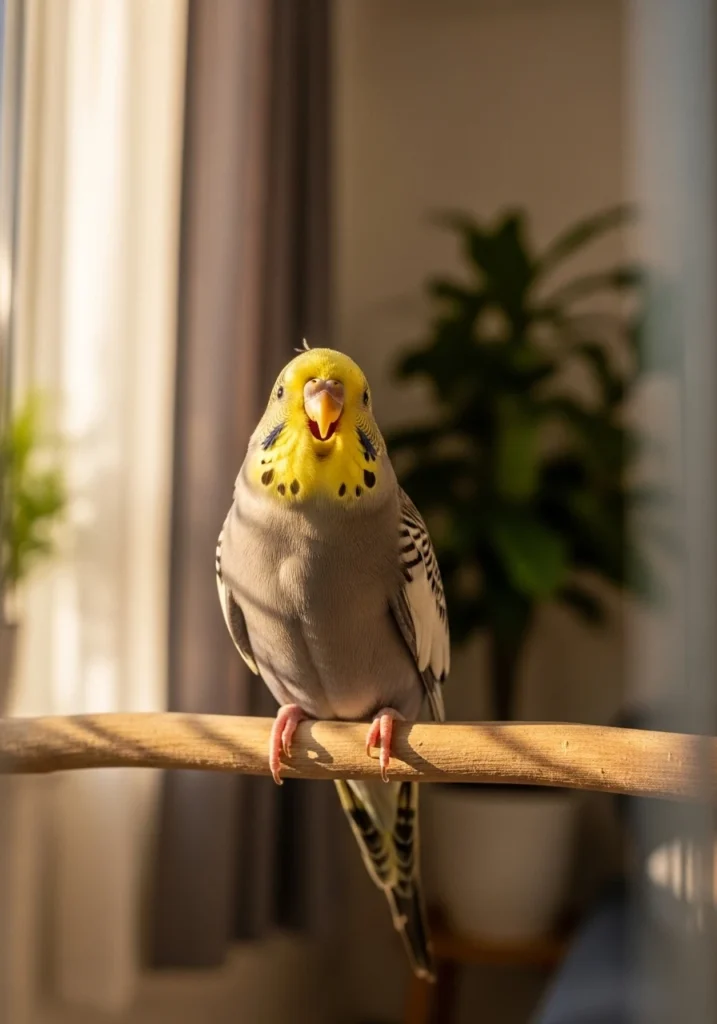
One of the clearest signs of a happy bird is consistent vocalization. When a bird sings, chatters, whistles, or mimics sounds around the house, it signals contentment.
A bird that goes eerily quiet, especially one that was previously chatty, often signals that something is off.
Healthy birds vocalize regularly throughout the day, particularly in the morning and late afternoon. These are natural activity peaks rooted in their wild behavior patterns.
Pay attention to the quality of sound, too. Singing and chattering sound bright and energetic.
Wheezing, clicking, or labored breathing sounds are a completely different story and warrant a visit to an avian vet.
What Different Sounds Actually Mean
Birds are not just making noise for fun. Well, sometimes they are, but most sounds carry meaning:
- Soft chirping or singing = relaxed and content
- Loud, repetitive squawking = bored, frustrated, or seeking attention
- Grinding beak sounds (at rest) = a relaxed, sleepy bird winding down
- Hissing or sharp screeching = threatened or in pain
- Chattering quietly to itself = a very comfortable bird at ease in its environment
If your bird greets you every morning with a little song, take that as a genuine compliment. Birds reserve their best performances for environments where they feel safe.
Feather Condition Tells You Everything
Smooth, Shiny Feathers Signal Good Health
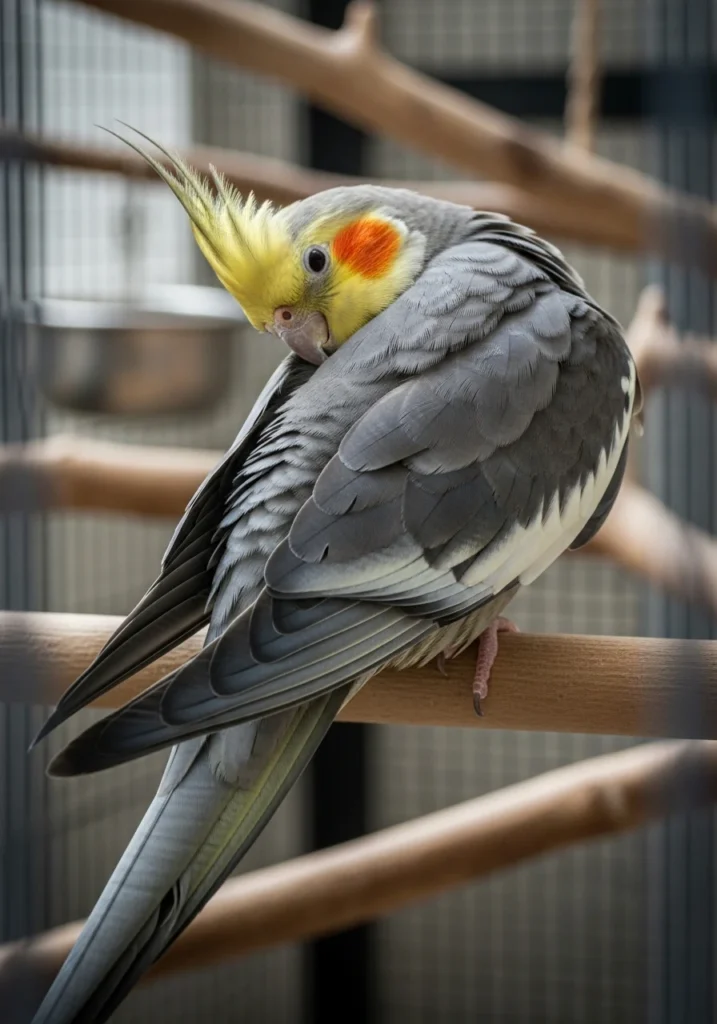
A healthy bird sports feathers that lie flat, look smooth, and have a natural sheen. Feather quality directly reflects your bird’s nutritional intake, stress levels, and overall physical condition.
Think of feathers as the bird equivalent of healthy skin and hair.
Occasional ruffling is completely normal, especially when your bird is relaxing or trying to stay warm. The concern kicks in when a bird stays puffed up for extended periods during normal activity hours.
When to Worry About Feather Condition
Keep an eye out for these red flags:
- Persistent fluffing during the day (not just during rest) = possible illness or discomfort
- Bald patches or broken feathers = feather-destructive behavior, which is often linked to stress or nutritional deficiency
- Dull, brittle, or discolored feathers = poor diet or underlying health issue
- Excessive preening to the point of self-damage = a sign worth discussing with a vet
Healthy preening, however, is a great sign.
When a bird preens itself and grooms its feathers regularly, it means it feels safe and comfortable enough to maintain itself. A bird under constant stress will not bother.
Active and Curious Behavior Signals a Happy Bird
Movement and Playfulness Matter
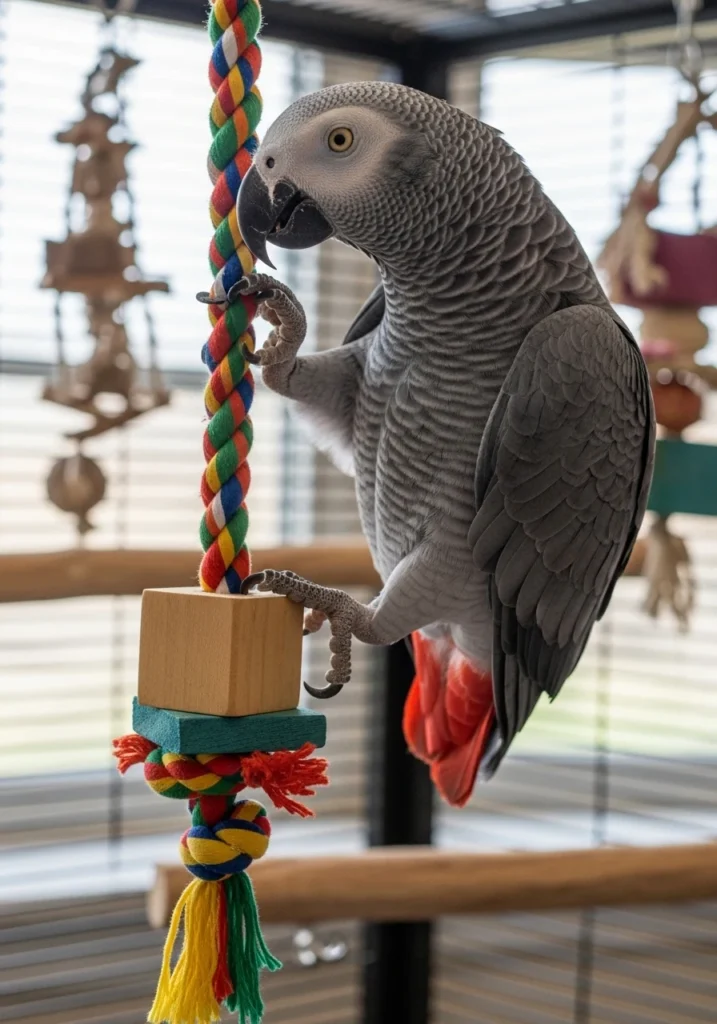
A happy, healthy bird moves around its cage or space with purpose. It climbs, explores toys, investigates new objects, and engages with its surroundings.
Lethargy in birds is a serious warning sign. Unlike some pets that simply enjoy lounging, birds are wired to be active.
Watch how your bird responds when you approach its cage. A healthy, happy bird will often come toward you, vocalize, or show visible interest.
One that consistently retreats, stays hunched in a corner, or avoids eye contact may be unwell or stressed.
Engagement With Toys and Environment
Birds need mental stimulation just as much as physical activity. Here is what engaged, content behavior looks like:
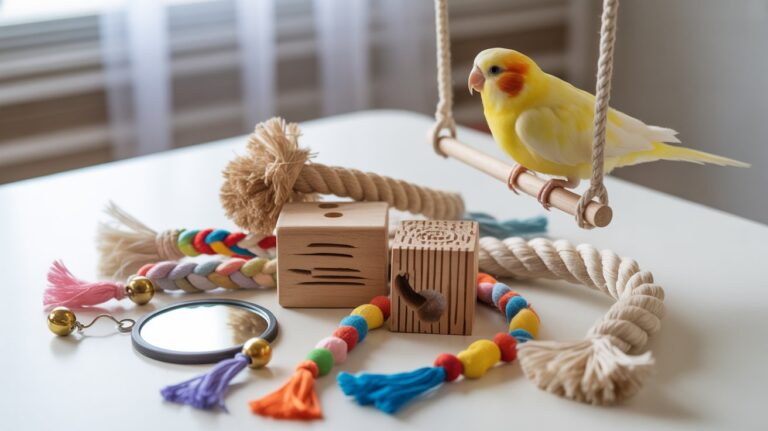
- Chewing, shredding, or manipulating toys = mentally active and stimulated
- Problem-solving around food puzzles = a sharp, curious mind
- Climbing and hopping between perches = physically fit and comfortable
- Exploring new objects placed in the cage = confident and curious temperament
A bird that ignores everything in its environment for days on end is sending you a clear message. That message is rarely a positive one.
Eating and Drinking Habits Reflect Internal Health
A Good Appetite Is a Green Flag
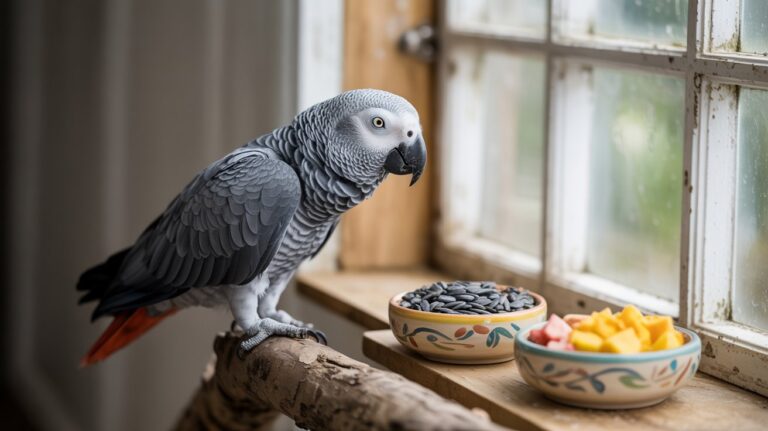
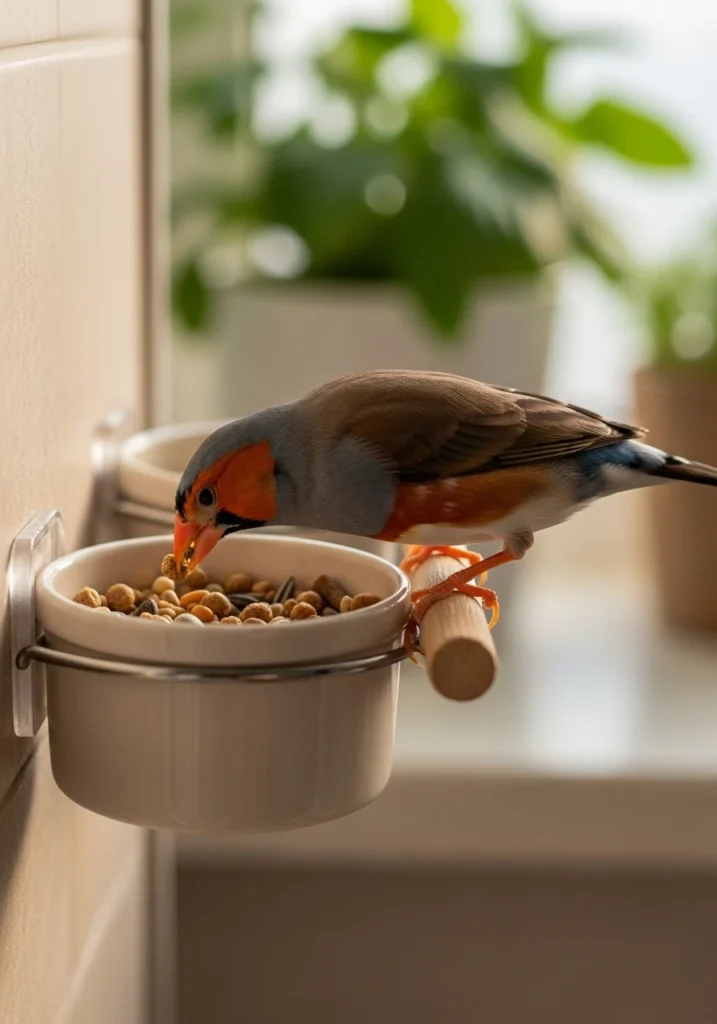
Healthy birds eat consistently and with enthusiasm. Monitoring your bird’s daily food consumption is one of the most reliable health indicators you have.
A sudden drop in appetite almost always precedes visible signs of illness in birds.
Birds are prey animals by instinct, which means they instinctively hide symptoms of illness for as long as possible.
By the time a bird looks visibly sick, it has often been unwell for some time. Changes in eating habits catch problems earlier.
What Healthy Eating Looks Like
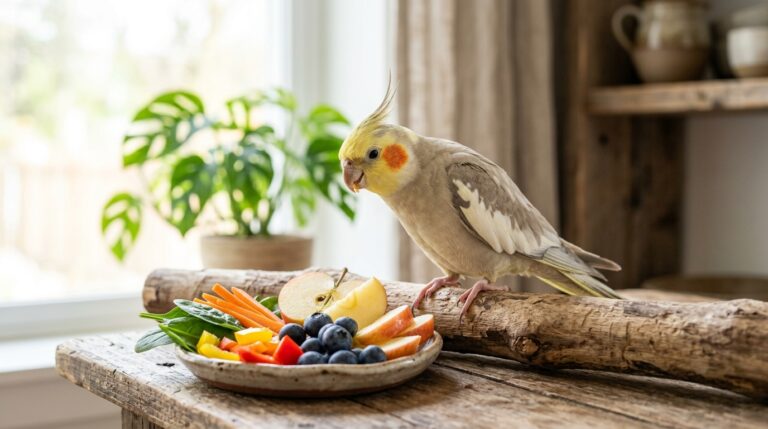
- Your bird finishes a reasonable portion of food each day
- It shows interest and excitement when you introduce fresh foods
- Droppings remain consistent in color and texture (more on this shortly)
- It drinks water regularly throughout the day
One practical tip: weigh your bird weekly using a small kitchen scale.
Even minor weight loss that you cannot see with the eye can show up clearly on a scale. Consistent weight indicates consistent health.
Droppings: Not Glamorous, But Incredibly Informative
Yes, You Need to Look at the Droppings
Nobody’s favorite topic, but here we are. Bird droppings are genuinely one of the best diagnostic tools available to you as a bird owner.
Healthy droppings consist of three parts: the solid fecal portion (usually dark green or brown), the white urate portion, and clear liquid urine.
Normal droppings are firm, well-formed, and consistent in appearance from day to day. Any significant change in color, consistency, or frequency deserves attention.
Changes to Watch Out For
- Watery or extremely loose droppings = possible infection, dietary issue, or stress
- Droppings that are entirely black or very dark = could signal internal bleeding
- Bright red, yellow, or lime green droppings = dietary cause possible, but also worth investigating
- Droppings stuck to the vent area = concerning and needs cleaning plus monitoring
- Very infrequent droppings = potential blockage, which is a medical emergency
Diet affects dropping color, so always account for what your bird ate recently.
A bird that just consumed blueberries will not have the same colored droppings as one that ate pellets and seeds. Context matters here.
Bright Eyes and an Alert Expression
Eyes Are the Window to Your Bird’s Health
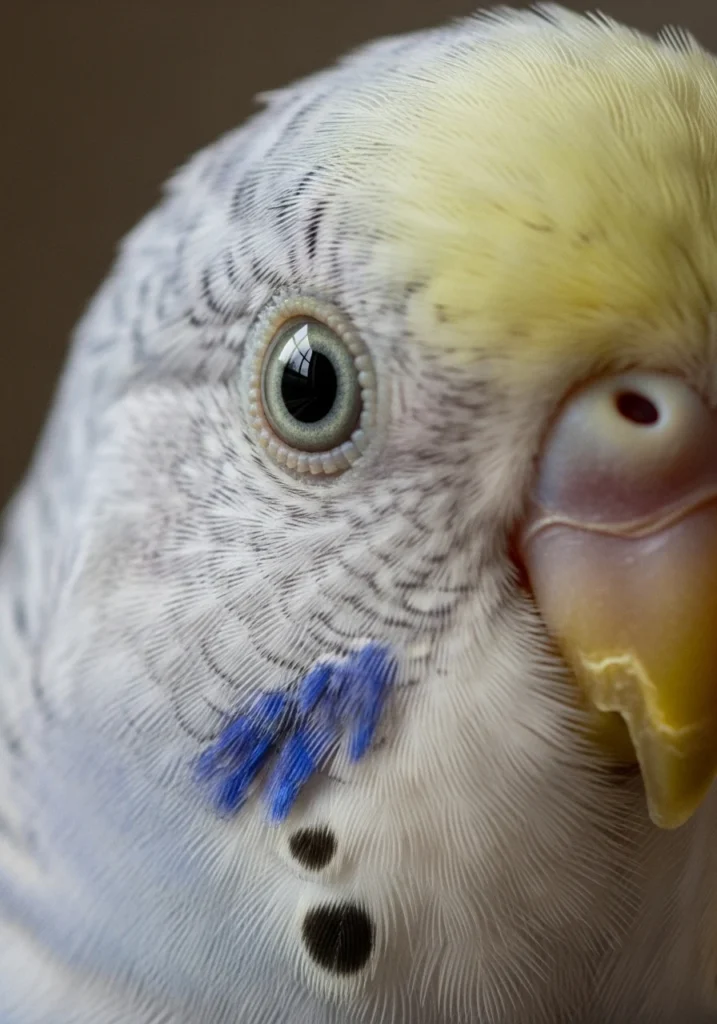
A healthy bird has clear, bright, fully open eyes that respond to movement and light. Dull, cloudy, half-closed, or sunken eyes are red flags that demand prompt veterinary attention.
Birds that feel well look alert and engaged. Their eyes track movement, show curiosity, and remain focused.
Eye discharge, swelling around the eye area, or frequent squinting all indicate a problem. These symptoms never resolve on their own, and waiting too long makes treatment harder.
The “Slow Blink” of Trust
Here is a genuinely sweet one. When your bird slowly blinks at you or makes steady, relaxed eye contact without appearing threatened, it signals comfort and trust.
Some bird owners describe this as the avian equivalent of a smile. It is a small moment, but it means your bird genuinely feels secure with you.
Social Behavior and Bonding Signs
A Happy Bird Wants to Be Near You
Birds are flock animals. In the wild, isolation signals danger.
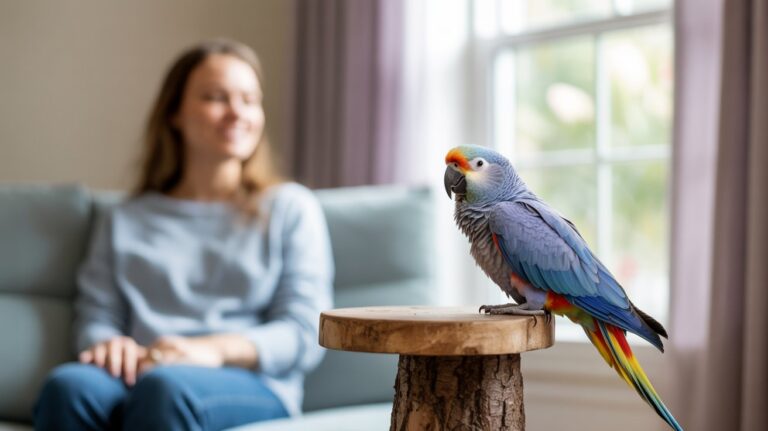
So when your bird actively seeks your company, flies toward you, steps up willingly, or grooms your hair or fingers, it demonstrates genuine contentment and trust.
A bird that tolerates handling is one thing. A bird that actively seeks it out is a bird that feels truly safe.
Signs of healthy social bonding include:
- Stepping onto your hand without hesitation
- Leaning into your touch during gentle handling
- Regurgitating food for you (yes, this is actually a sign of deep affection in birds, even if you never asked for it)
- Vocalizing when you leave the room and calming when you return
- Mirroring your moods and responding to your voice
Signs of Stress to Keep in Mind
On the flip side, watch for these social stress indicators:
- Biting frequently without clear trigger
- Feather-destructive behavior
- Screaming for extended periods throughout the day
- Rocking or repetitive movements
These behaviors often develop when birds lack sufficient interaction, mental stimulation, or environmental enrichment. They are behavioral responses to unmet needs, not personality quirks.
Good Posture and Physical Balance
How a Bird Holds Itself Matters
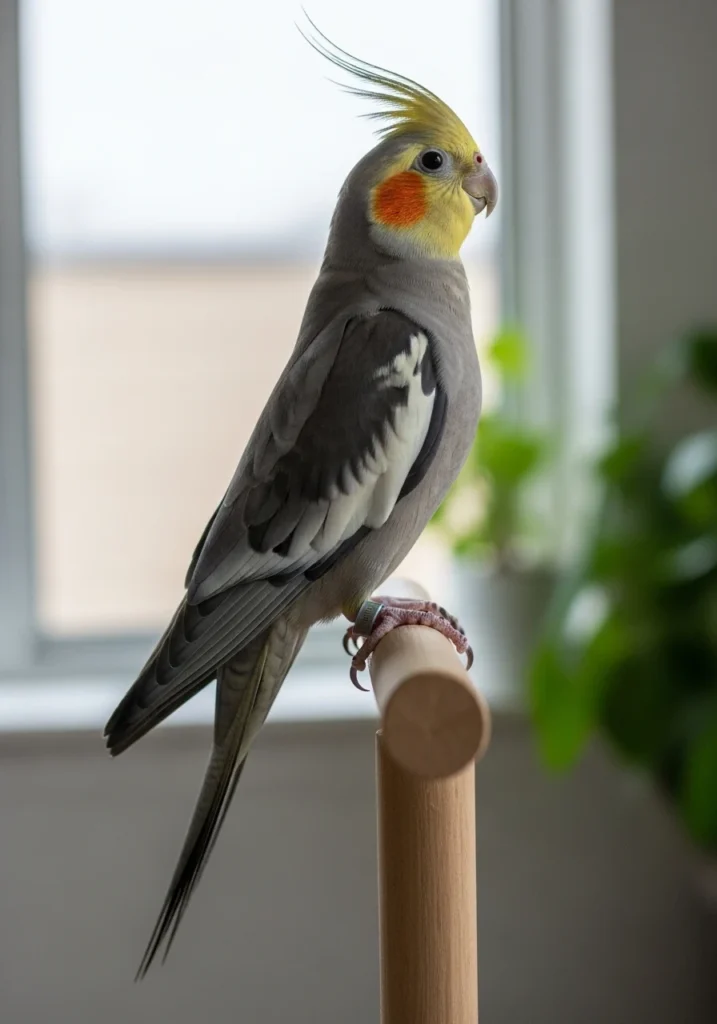
Posture tells you a lot about a bird’s physical state. A healthy bird stands upright on its perch, grips firmly with both feet, and holds its head up with alertness.
It shifts weight comfortably between feet and does not favor one side.
A bird sitting on the bottom of its cage when it should be perching, or a bird that consistently loses its grip or appears unbalanced, may be dealing with a neurological issue, injury, or serious illness.
Weight Distribution and Foot Health
Check your bird’s feet regularly. Healthy feet are smooth, grip well, and show no swelling, discoloration, or sores.
Bumblefoot, a condition where sores develop on the feet due to inappropriate perch size or poor hygiene, is entirely preventable with the right care.
Offer perches of varied diameters and textures so your bird exercises its feet properly and does not develop pressure points from gripping the same diameter all day.
Regular Preening and Personal Grooming
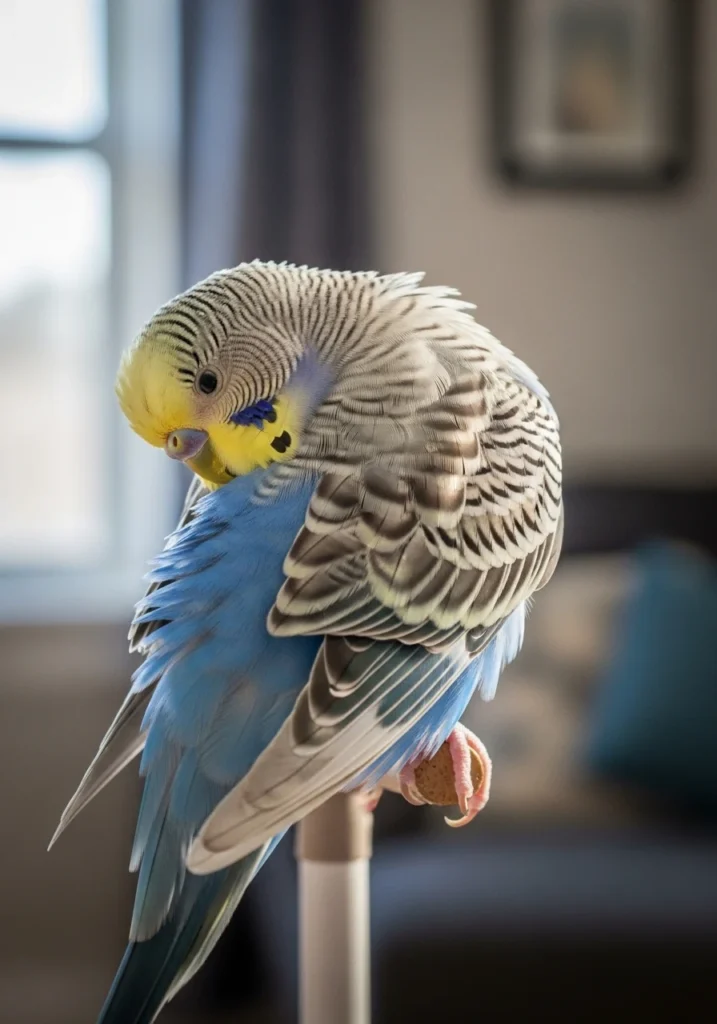
Self-Care Is a Health Indicator
Birds that feel well take care of themselves.
Regular preening means your bird oils its feathers using the preen gland near its tail, realigns feathers for insulation and aerodynamics, and removes debris.
A bird that stops preening is almost always telling you something is wrong.
Equally, a bird that over-preens to the point of pulling out its own feathers is experiencing significant stress, nutritional deficiency, or a medical condition that requires professional evaluation.
Healthy preening looks calm, methodical, and thorough. Your bird works through its feathers with deliberate attention, and the end result is a neat, well-organized coat of feathers.
What a Truly Thriving Bird Looks Like: A Quick Summary
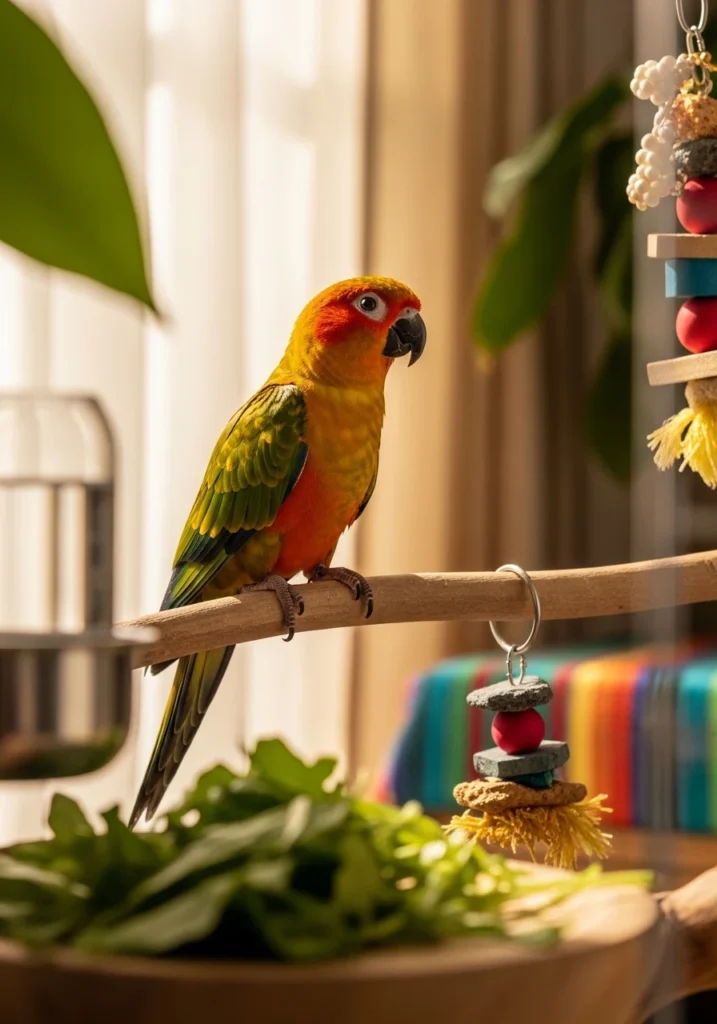
A happy and healthy pet bird checks most, if not all, of these boxes:
- Vocalizes regularly with bright, energetic sounds
- Feathers lie smooth and flat with a healthy sheen
- Stays active and engaged with its environment and toys
- Eats consistently and maintains a stable body weight
- Produces normal droppings that remain consistent day to day
- Eyes look clear, bright, and alert with no discharge
- Seeks social interaction and responds positively to handling
- Stands upright with good posture and grips perches firmly
- Preens regularly without excessive or destructive behavior
No bird hits every mark every single day, and that is fine. The goal is to understand your individual bird’s baseline so you can recognize when something shifts.
Final Thoughts
Caring for a pet bird is genuinely rewarding, but it asks something of you: attention.
The birds that thrive are the ones whose owners pay close enough attention to notice the small changes before they become big problems.
You do not need to be a veterinarian to keep your bird healthy. You just need to know your bird, observe it consistently, and act promptly when something feels off.
Trust your instincts. If your gut tells you something is wrong, schedule that vet visit. Birds are resilient, but they are also fragile in ways that catch unprepared owners off guard.
Build a relationship with a qualified avian veterinarian before you actually need one, schedule annual wellness checks, and keep doing what you are already doing by learning how to read the signs.
Your bird may not be able to tell you how it feels, but it is always showing you, if you know where to look.
How Can I Tell If My Pet Bird Is Happy?
A happy pet bird shows clear signs: it sings or chirps regularly, has smooth feathers, plays actively, and enjoys your company.
If a bird seeks you out, steps up easily, and vocalizes often, it’s usually content. Sudden changes in these behaviors should be noted.
What Does a Healthy Bird’s Poop Look Like?
Healthy bird droppings have three parts: a firm, dark green or brown fecal section, a white or cream urate portion, and a small amount of clear liquid urine.
They should look consistent daily. Watery, discolored, or infrequent droppings, especially with other symptoms, need a visit to an avian vet.
Why Does My Bird Fluff Up Its Feathers?
Fluffing is normal for birds. They fluff their feathers to keep warm, relax before sleep, or settle down after activity.
However, if a bird stays puffed up for long periods during the day, it may be a sign of illness, discomfort, or stress.
If fluffing occurs with lethargy, loss of appetite, or changes in droppings, contact an avian veterinarian right away.
How Often Should a Healthy Pet Bird Eat?
A healthy pet bird eats small amounts throughout the day instead of large meals. The amount varies by species, but consistency is key.
If your bird suddenly eats less, leaves food untouched, or ignores fresh foods it once liked, this could signal a problem.
What Are the Early Warning Signs That a Pet Bird Is Sick?
Birds hide their illness, so early signs can be hard to spot. Look for less vocalization, puffing for long periods, changes in droppings, decreased appetite, lethargy, loss of balance on the perch, cloudy or half-closed eyes, and a sudden lack of interest in interaction or toys.
Spotting these signs early and acting fast can greatly improve treatment outcomes. Regular wellness checks with an avian vet help find issues before they become serious.