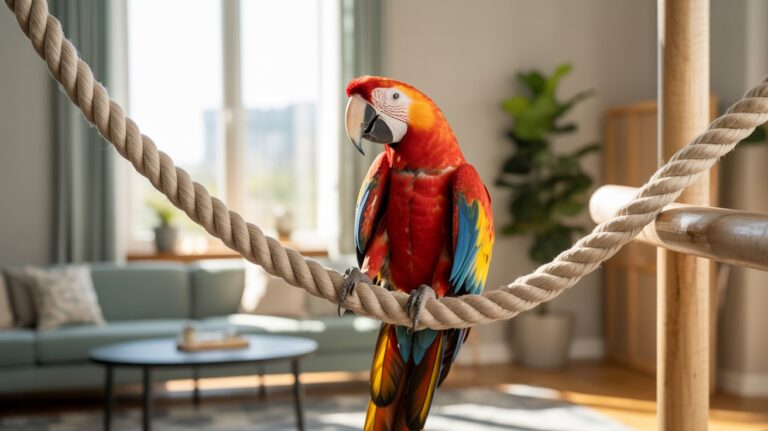
Bird Rope Perches for Healthy, Pain-Free Parrot Feet
Your parrot spends nearly all its waking hours on its feet. Think about that. Unlike us, they can’t kick off their shoes and relax.
Their feet are always gripping, balancing, and working. This means the quality of their perches greatly affects their life. If you’ve been using just a plain wooden dowel perch, we need to talk.
Rope perches are now popular in parrot cages, and for good reasons. This article covers everything you need to know about bird rope perches.
We’ll discuss their benefits for your bird’s feet, how to choose the right one, use it safely, and keep it clean. Let’s dive in.
Why Parrot Feet Need More Than a Basic Perch
Most starter cages come with smooth, uniform wooden dowels.
They do the job technically, but they are about as ergonomically thoughtful as making someone stand all day on a perfectly flat concrete floor. Not great.
Parrots in the wild grip constantly changing surfaces: branches of varying thickness, bark textures, curved limbs, soft vegetation.
Their feet are built for variety. When you give them only one type of perch surface at one diameter, the same pressure points on their feet take all the stress, all day, every day.
The Problem With Repetitive Pressure
Bumblefoot (pododermatitis) is a painful condition that affects parrots kept on poor perching setups.
It starts as redness or soreness on the bottom of the foot, and if ignored, it can develop into ulcers and serious infections.
Vets see this regularly, and a significant contributing factor is improper perch variety.
Repetitive pressure on the same spots causes inflammation. The tissue breaks down.
And because birds instinctively hide pain (a survival mechanism from the wild), your parrot might be uncomfortable long before you notice anything is wrong.
What Healthy Feet Actually Need
Healthy parrot feet need:
- Varied perch diameters so different parts of the foot bear weight at different times
- Irregular, textured surfaces that promote natural grip movement
- Some flexibility in the perching material to reduce joint strain
- Multiple perch types spread throughout the cage at different heights
This is exactly where rope perches shine.
What Makes Rope Perches So Good for Parrots
Rope perches offer a combination of texture, flexibility, and grip that few other perch types can match.
They are not magic, and they are not the only perch your bird should have, but they bring something genuinely useful to the cage setup.
Natural Grip Stimulation
The woven texture of a rope perch means your bird’s feet work slightly differently on every grip.
The fibers create micro-variations in surface, which keeps the foot muscles engaged and distributes pressure more evenly across the toe pads.
Think of it like the difference between walking on packed dirt versus soft grass. One is harder on your joints over time.
Parrots that use rope perches regularly tend to have better foot muscle tone because their grip has to stay active rather than just locking onto a smooth surface.
Flexibility That Cushions Joints
Unlike hard wood or metal perches, rope has a natural give to it.
When your parrot lands, the rope absorbs a small amount of that impact rather than sending it straight through their foot and ankle joints.
Over years of climbing and landing, that gentler impact adds up in a meaningful way.
This is especially relevant for older parrots or birds with arthritis. A softer, slightly flexible surface can make a real difference in their daily comfort.
Enrichment Through Interaction
Here is something people overlook: rope perches are mentally engaging. Parrots love to chew, pull, and investigate the fibers.
The perch becomes part toy, part furniture. Watching a bird methodically unravel a rope perch is both endearing and a sign they are using their brain and beak in a healthy way.
Types of Bird Rope Perches
Not all rope perches are the same, and picking the right one matters. Here is a breakdown of what you will typically find on the market.
Cotton Rope Perches
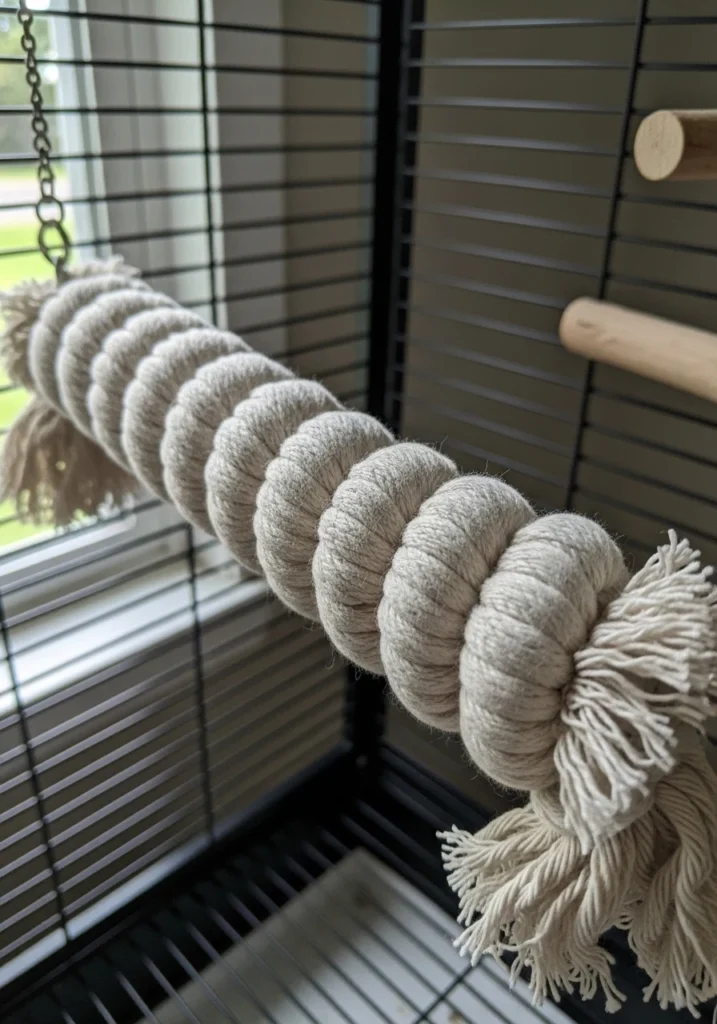
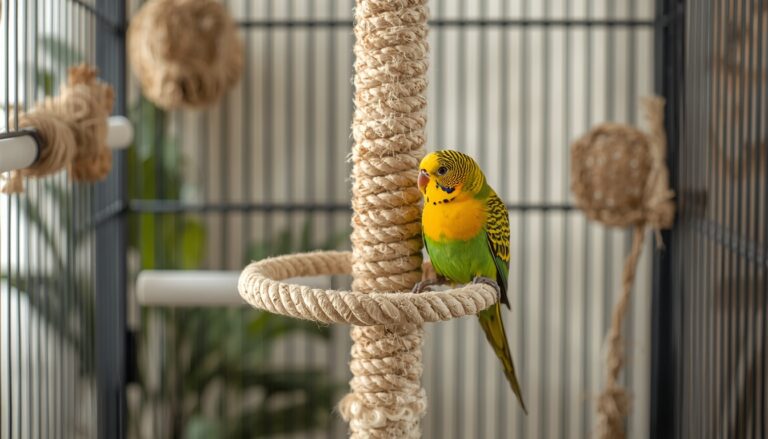
Cotton is the most popular and widely recommended option. It is soft, pliable, and comes in a huge range of sizes.
The natural fibers are generally safe if your bird swallows small amounts while chewing, though you still want to monitor for fraying.
Cotton rope perches work well for most small to medium parrots, including budgies, cockatiels, lovebirds, conures, and caiques.
Shop Cotton Rope Perches On Amazon
Sisal Rope Perches
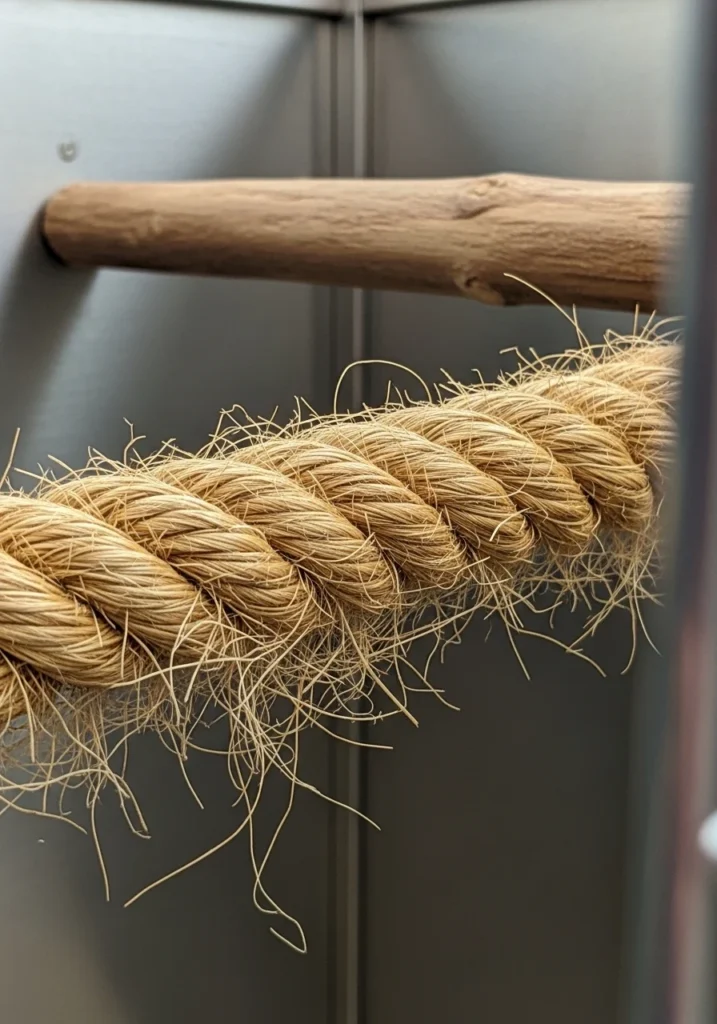
Sisal is a natural plant fiber that is rougher and stiffer than cotton. This makes it excellent for birds that need more beak and nail conditioning.
It is a bit less forgiving on sensitive feet, so it works better as one perch among several rather than the only option in the cage.
Good for: macaws, cockatoos, and other large birds that do heavy chewing.
Braided vs. Twisted Rope
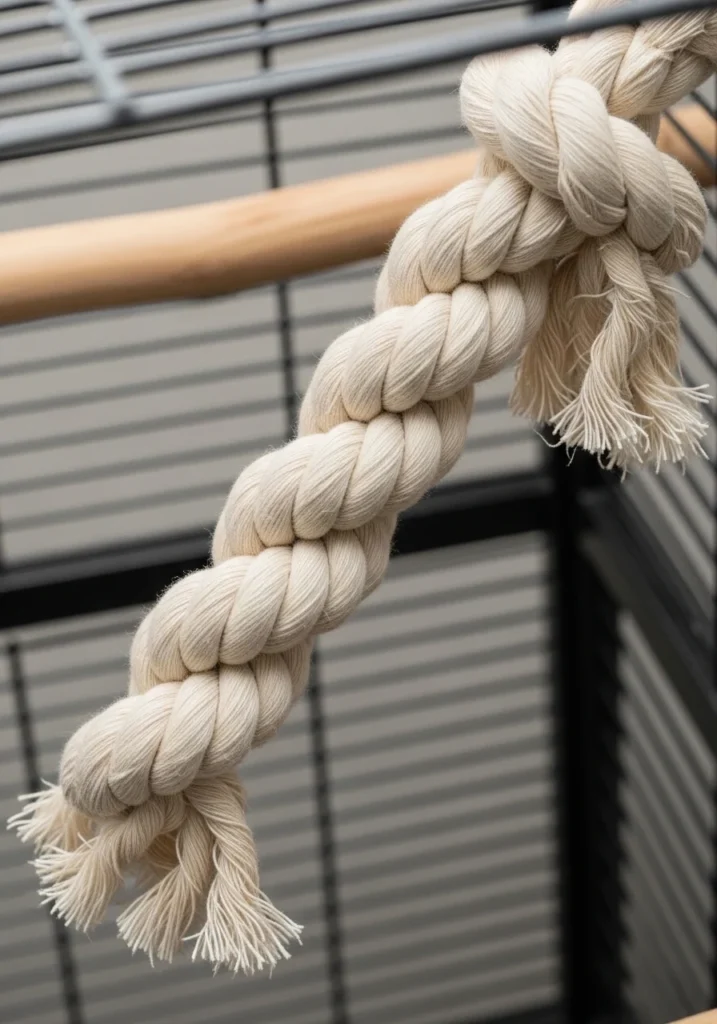
The construction style matters more than most people realize.
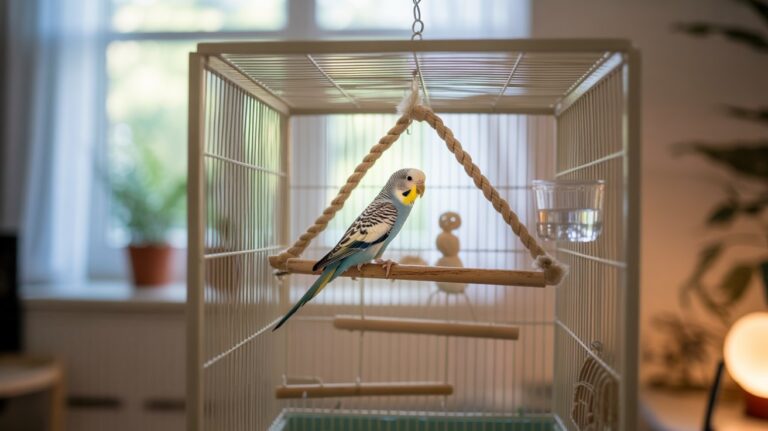
- Braided rope perches have a tighter, more uniform surface that holds shape well over time and is less prone to dangerous unraveling loops
- Twisted rope perches have a more variable texture and tend to fray more quickly, which some birds love but requires more frequent replacement
For safety, braided tends to be the smarter long-term choice.
Boing (Spiral Rope Perches)
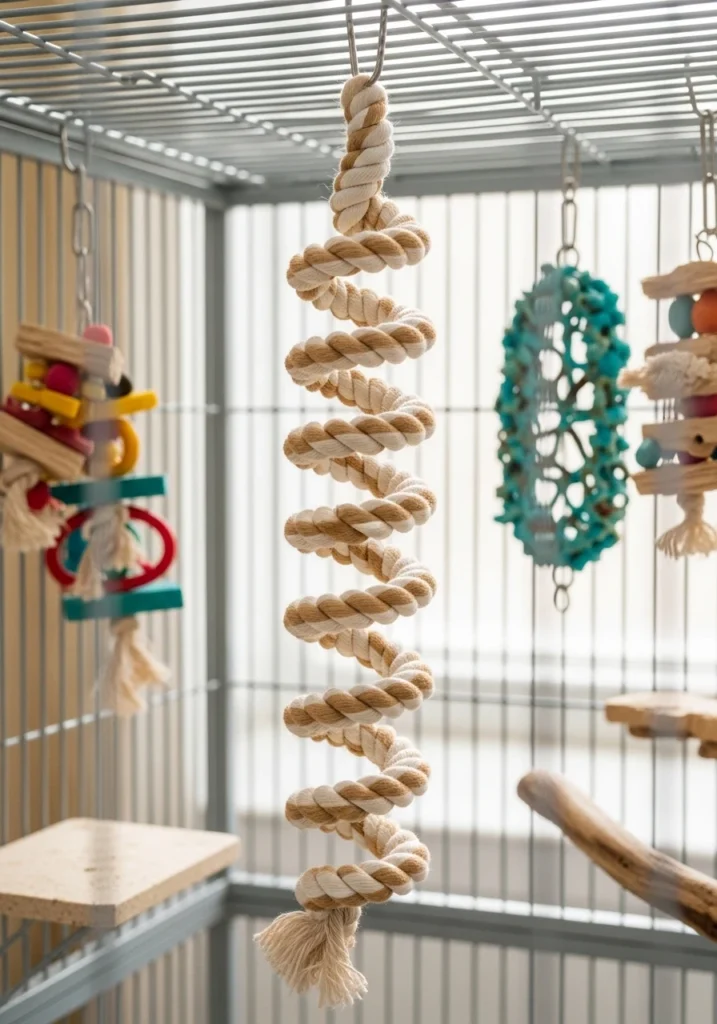
The boing is a coiled, spring-like rope perch that hangs vertically or at an angle. It is bouncy, interactive, and many parrots absolutely adore it.
The varying coil diameters also provide excellent foot exercise along the length of the perch.
Boings are particularly popular with conures and caiques, who tend to be energetic, bouncy birds that appreciate a perch that matches their personality.
Find Boing Rope Perches On Amazon
How to Choose the Right Rope Perch Size
Sizing is not optional. Get it wrong and you eliminate most of the benefit.
The General Rule
Your parrot’s foot should wrap about two-thirds of the way around the perch. You want their front toes and back toe to almost meet but not quite.
If the perch is too thin, they grip it with the tips of their toes and strain their tendons. Too thick, and they cannot get a proper grip at all.
Quick Size Guide by Species
- Budgies and parrotlets: 0.5 to 0.75 inches diameter
- Cockatiels and lovebirds: 0.75 to 1 inch diameter
- Conures, caiques, small Amazons: 1 to 1.25 inches diameter
- African greys, medium Amazons, Eclectus: 1.25 to 1.5 inches diameter
- Large cockatoos and macaws: 1.5 to 2 inches diameter
When in doubt, go slightly larger. Most birds adapt better to a perch that is a touch too wide than one that is too narrow.
Browse Rope Perches By Size On Amazon
Placement Tips for Maximum Benefit
Buying the right rope perch is step one. Placing it well is step two, and it is just as important.
Height Matters
Parrots instinctively prefer to be at the highest point in their environment. Place your rope perch near the top of the cage as the main daytime perch.
A lower rope perch can serve as a resting spot, but expect your bird to gravitate upward.
Create a Perch Variety System
A well-set-up cage should include:
- One rope perch (for comfort and texture variety)
- One natural wood perch of irregular diameter (for foot conditioning)
- One harder perch like manzanita or java wood (for beak and nail wear)
- A platform or flat perch (for resting, especially helpful for older birds)
No single perch type should make up the entire cage setup. The goal is variety, and rope perches play a key role in that ecosystem.
Shop A Complete Parrot Perch Variety Set On Amazon
Avoid Placing Perches Over Food and Water
This is a hygiene basic that still catches people off guard. A rope perch directly above your bird’s dishes turns into a very effective poop delivery system.
Position perches to the side of food stations.
Rope Perch Safety: What to Watch For
Rope perches are excellent tools, but they do carry some risks that you absolutely need to manage.
Fraying and Loop Hazards
This is the big one. As rope perches wear, they can develop loose loops and threads.
A bird’s toenail catching in one of these loops can cause a serious injury fast, including broken toes or worse.
Check rope perches at least once a week and replace them at the first sign of significant fraying.
Watch for:
- Loose loops large enough to catch a toe
- Sections where the core of the rope is exposed
- Heavily chewed areas that are unraveling
When in doubt, replace it. Rope perches are inexpensive. Vet bills for a caught toe are not.
Material Safety
Stick to natural fiber options from reputable bird supply companies.
Avoid rope perches made from synthetic fibers like nylon or polyester, which can cause intestinal blockages if swallowed.
Also avoid dyed ropes unless the manufacturer explicitly confirms the dyes are bird-safe.
Cleanliness
Rope absorbs moisture and organic material, which means it can harbor bacteria and mold.
Rope perches need regular cleaning with a bird-safe cleaner, and they need to dry completely before going back into the cage.
A damp rope perch sitting in a cage is a bacterial breeding ground. Replace rope perches entirely every few months, or sooner if they stay visibly soiled.
My Personal Take After Years With Parrots
I have kept parrots for well over a decade, and rope perches were honestly a late addition to my setup. For years I was all about natural wood, convinced that was the gold standard.
And look, natural wood perches are fantastic. But the first time I added a cotton rope perch to my conure’s cage, the change in how often she used that perch was immediately noticeable.
She was on it constantly. She would sit there for hours, work on the fibers with her beak, stretch her feet along the varying texture.
And after her last avian vet visit, her foot health was genuinely the best it had ever been. Coincidence? Maybe. But I have not gone back to a rope-free setup since.
Conclusion
Parrot feet are working feet, and they deserve a perch setup that respects that.
Bird rope perches offer a combination of cushioned flexibility, textured grip stimulation, and genuine enrichment value that most other perch types simply cannot replicate on their own.
The key takeaways are simple: choose the right size, use natural fibers, inspect regularly for fraying, keep them clean, and combine them with other perch types for a truly foot-friendly cage environment.
Your bird cannot tell you when their feet hurt. But you can stay ahead of that by making smart choices now.
Add a quality rope perch, watch how your parrot responds, and enjoy the satisfaction of knowing you gave those little feet exactly what they needed.
Find The Right Rope Perch For Your Parrot On Amazon
How Often Should I Replace a Bird Rope Perch?
Inspect your bird’s rope perch weekly. Replace it if you see fraying, exposed fibers, or large loops that could trap a toe.
Even without visible damage, change the perch every two to three months for hygiene. Rope can hold bacteria and moisture, and cleaning won’t fully eliminate that.
Your bird’s foot health is worth the small cost of a new perch.
Are Rope Perches Safe for All Parrot Species?
Yes, rope perches are great for almost all parrot species if you match the perch diameter to your bird’s foot size.
Smaller birds, like budgies and cockatiels, prefer thinner cotton rope perches. Larger birds, such as macaws and cockatoos, need thicker, sturdier options like sisal.
A key safety rule applies to all species: always choose natural fiber ropes from trusted bird supply brands. Avoid synthetic materials like nylon or polyester, as they can be harmful if ingested.
Can I Use a Rope Perch as the Only Perch in My Parrot’s Cage?
You can use a rope perch, but it’s best not to rely on it alone. A varied perch setup works better. Parrots need different surfaces and sizes each day.
This helps keep their foot muscles strong, prevents pressure sores, and maintains healthy nails and beaks.
Pair your rope perch with at least one natural wood perch of different sizes and one harder perch, like manzanita or java wood. Variety is key for your parrot’s long-term foot health.
How Do I Clean a Bird Rope Perch Properly?
Take the rope perch out of the cage. Scrub it well with warm water and a bird-safe cleaner or a diluted white vinegar solution.
Rinse it thoroughly to remove any cleaner. Then, let it dry completely before putting it back in the cage. This step is crucial.
A damp perch in a warm cage can foster mold and bacteria. If the perch still smells bad or looks dirty after cleaning, replace it instead of scrubbing.
What Is the Best Rope Perch Material for Parrots That Chew Heavily?
For heavy chewers, braided cotton rope perches are the safest choice. Their tight construction resists unraveling and lowers the risk of dangerous loops.
Sisal rope perches also work well for large birds. The coarser fiber stands up better to aggressive beak work.
Avoid twisted rope constructions for heavy chewers. They fray faster and create hazardous threads quickly. Always check rope perches often if your bird is an active chewer.