Tame Your Bird to Step Up on Your Finger
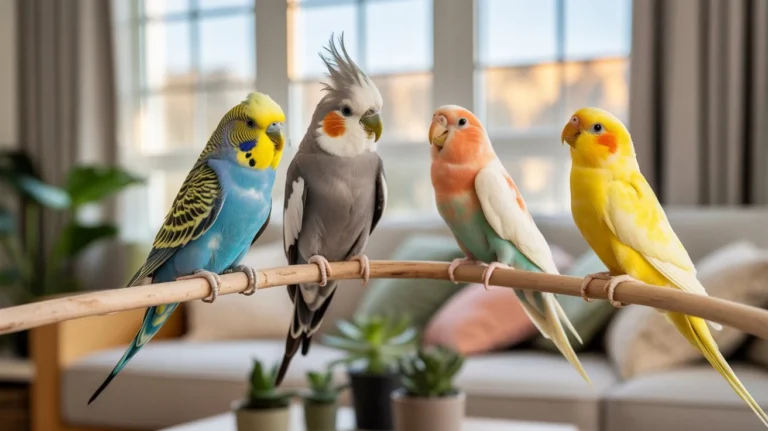
You have a bird. It could be a lively parakeet, a wary cockatiel, or a dramatic African Grey that judges your every move.
You want that bird on your finger, but right now, it wants nothing to do with you. That’s relatable. The good news is that teaching your bird to step up is easy.
You don’t need a degree in animal behavior or a magic wand.
This guide will help you build trust with a bird that barely tolerates you. Soon, you’ll have a confident, reliable step-up every time. Let’s get started.
Why the Step-Up Command Matters So Much
Before you start shoving your finger at your bird and wondering why it bites you, it helps to understand why the step-up is such a big deal.
This one simple behavior is the foundation of your entire relationship with your bird.
A bird that steps up willingly is a bird that trusts you. And a bird that trusts you is easier to handle, easier to train, and frankly, a lot more fun to live with.
The step-up also becomes critical in emergencies. If there is ever a fire, a window left open, or a cat that somehow got into the house, you need to be able to move your bird quickly and safely.
So yes, this is about more than a cute party trick.
Understanding Your Bird Before You Train It
Every Bird Has Its Own Personality
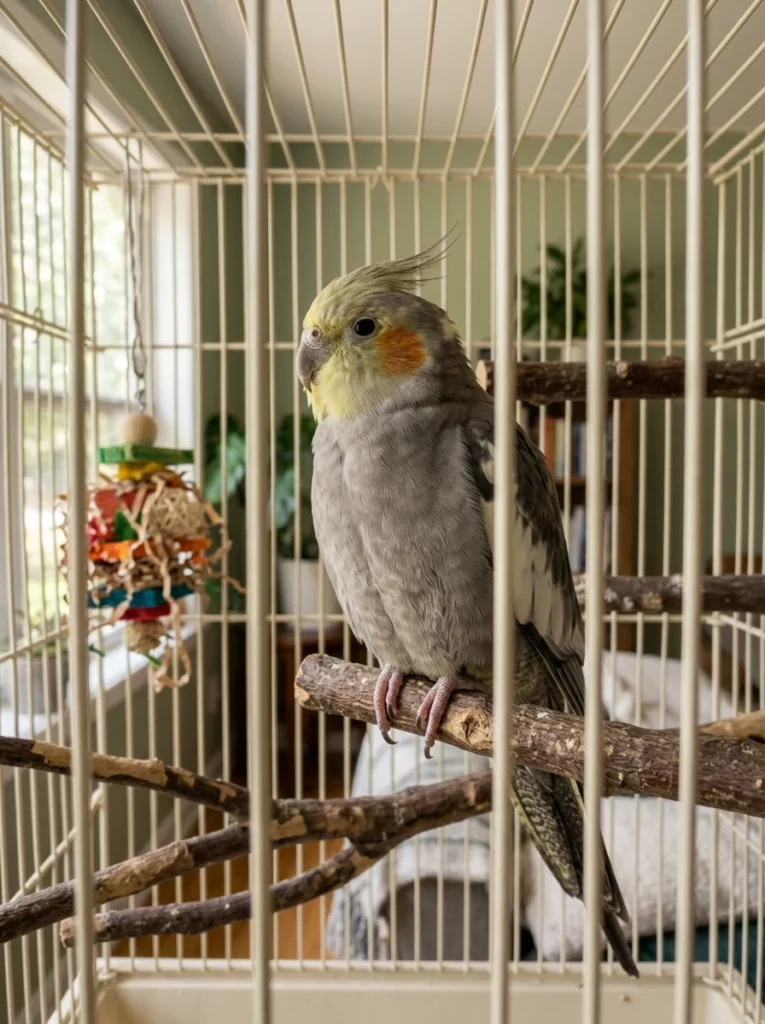
Here is something a lot of beginner bird owners miss: birds are not all the same, even within the same species. One cockatiel might walk right onto your hand on day one.
Another might spend three weeks glaring at you from the corner of its cage like you personally offended its ancestors.
You need to read your specific bird, not just follow a generic timeline.
Watch for signs of relaxation, like a slightly puffed up posture when resting, soft chirping, or a bird that voluntarily moves closer to you.
These signals tell you the bird is warming up and that training can begin.
The Role of Fear in Bird Behavior
Birds are prey animals. Their instincts tell them that a large hand moving toward them is a threat. So when your bird flaps away or bites, it is not being difficult.
It is being a bird. Understanding this single fact will save you a lot of frustration.
Never punish a bird for biting or refusing. That only confirms its suspicion that you are, in fact, terrifying.
Step 1: Build Trust First, Train Second
Spend Time Near the Cage Without Forcing Interaction
Start by simply existing near your bird. Sit next to the cage, talk softly, read a book out loud, or just eat your lunch nearby. Let the bird get used to your presence without any pressure to interact.
Do this for several days, or even a couple of weeks, depending on how nervous your bird is. There is no rushing this stage.
A bird that feels safe around you will learn five times faster than one that is still in survival mode every time you walk into the room.
Let the Bird Take the Lead
Offer your hand near the cage bars without reaching in. Let your bird sniff, nibble, or completely ignore your fingers. All of these responses are fine.
The goal here is simple: your hand near the bird equals nothing scary happening. Repetition builds familiarity, and familiarity builds trust.
Step 2: Introduce Positive Reinforcement
Find Your Bird’s Favorite Treat
This is where things get fun. Figure out what your bird absolutely cannot resist. For most parakeets and cockatiels, millet spray is basically bird currency.
For larger parrots, it might be a small piece of almond, a sliver of banana, or a bit of their favorite pellet.
The treat should be something special, not something they get all day in their bowl. If your bird can eat sunflower seeds whenever it wants, sunflower seeds will not motivate it to do anything.
Reserve the good stuff for training sessions.
Shop For Bird Training Treats On Amazon
Use Treats to Create a Positive Association With Your Hand
Before you ask for any behavior, spend a few sessions simply offering treats from your open palm or fingertips.
The bird reaches over, grabs the treat, and nothing bad happens. Repeat this until your bird actively leans toward your hand when you offer it.
Sound basic? It is. But this foundation is what makes everything else work.
Step 3: Teach the Step-Up Command
Start Inside the Cage
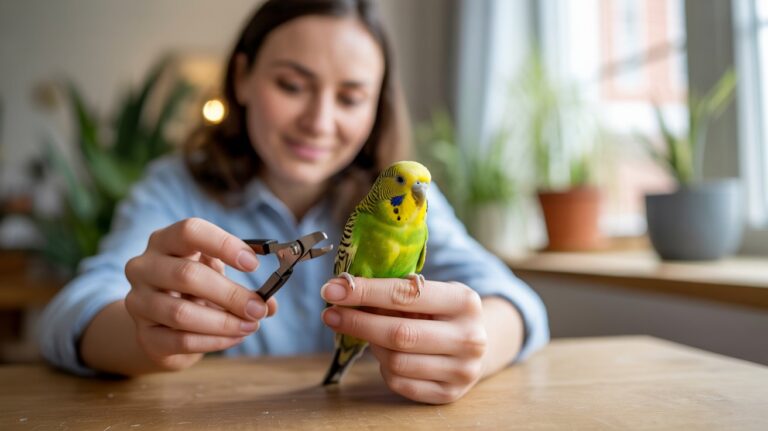
Once your bird is comfortable taking treats from your hand, it is time to ask for the step-up. Place your finger or hand just below the bird’s chest, gently pressing against its lower belly.
This slightly off-balance feeling naturally encourages the bird to step forward onto your hand.
As soon as the bird steps up, even partially, reward it immediately with a treat and calm praise. The timing here matters.
You want the bird to connect the action of stepping up with the good feeling of getting a reward.
Use a Consistent Verbal Cue
Say “step up” in a calm, clear voice every single time you present your hand for this behavior. Birds learn verbal cues well, and parrots especially will start to associate the phrase with the action.
Keep your voice consistent. No need to shout or use a special tone. Just say it the same way every time, and your bird will eventually start responding to the cue alone, even without the treat every time.
Browse Bird Training Tools And Perches On Amazon
What to Do When the Bird Refuses
Some days, your bird just will not step up. Maybe it is tired, or it just had a big meal, or it simply decided today is not a training day. Birds are allowed to have off days.
Do not force the issue. End the session calmly, try again later, and resist the urge to interpret this as failure. Consistency over time beats intensity in a single session every time.
Step 4: Practice Makes Reliable
Keep Sessions Short and Frequent
Five to ten minutes of training, two or three times a day, beats one exhausting thirty-minute session. Birds have short attention spans, and the moment training stops being fun, they check out.
Short, positive sessions keep your bird engaged and eager to participate. You want your bird to look forward to training time, not dread it.
Gradually Reduce Treats Over Time
Once your bird steps up reliably, you can start to reduce how often you give a treat for the behavior.
Switch to giving treats every second or third step-up instead of every single time. Eventually, verbal praise and interaction become reward enough.
This process is called a variable reinforcement schedule, and it actually makes the behavior stronger over time. Your bird keeps performing because it knows a reward might come.
Common Mistakes That Slow Down Your Progress
Let’s be real for a second. Most people make at least one of these mistakes, and the good news is that all of them are fixable.
- Moving too fast: Skipping the trust-building phase because you want results now. This almost always backfires.
- Using force: Pushing your hand against a panicking bird does not teach step-up. It teaches the bird to panic harder.
- Inconsistent sessions: Training three days in a row and then disappearing for a week confuses your bird and slows progress significantly.
- Giving up after a bite: Biting is communication, not rejection. Figure out what the bird was trying to tell you and adjust your approach.
- Training when the bird is already tired or stressed: A bird that just had a big scare, or it is past its usual bedtime, is not in a learning mindset.
Find Highly Rated Bird Training Guides And Books On Amazon
Avoiding these mistakes is honestly half the battle.
Training Older or Previously Traumatized Birds
It Takes Longer, But It Is Absolutely Possible
If you adopted a rescue bird or an older parrot with a difficult past, the step-up process might take longer.
Some birds have learned to distrust hands entirely, and that association does not disappear overnight.
The process is the same: build trust, use positive reinforcement, go at the bird’s pace. The difference is that you measure progress in smaller increments.
Celebrate the bird willingly moving toward your hand as a win, even if it does not step up yet.
Shop For Bird Enrichment And Comfort Products On Amazon
Stay Patient and Consistent
Patience is not just a nice suggestion here. It is genuinely the most important tool you have.
Birds are sensitive to frustration, and they will pick up on your stress even when you think you are hiding it well.
Approach every session relaxed and with low expectations, and you will often be pleasantly surprised.
Beyond Step-Up: What Comes Next
Once your bird steps up consistently, you have opened the door to a much richer relationship.
Step-up is the foundation that makes everything else possible: recall training, trick training, out-of-cage time, and the kind of bond where your bird actually chooses to spend time with you.
That is the real goal here. Not just a bird that performs on command, but a bird that genuinely feels safe with you and enjoys your company. The step-up is just the beginning.
Explore Bird Training Kits And Starter Accessories On Amazon
Final Thoughts
Training your bird to step up is a process that rewards patience more than technique. You do not need expensive tools or perfect conditions.
You need consistency, a good treat, and the willingness to let your bird set the pace.
Start slow, celebrate small wins, and remember that every bird that eventually steps up confidently onto someone’s finger started out as a bird that absolutely refused to do it.
Your bird is not the exception to that rule. It just needs a little time and a reason to trust you.
So take a breath, grab the millet, and go make friends with your bird. You have got this.
How Long Does It Take to Tame a Bird to Step Up on Your Finger?
It depends on the bird. Some birds adjust in a few days, while others, like rescues or older birds, may take weeks. Trust is the main factor.
If you spend time near your bird daily without forcing interaction, most birds become willing in one to three weeks. Skipping trust-building usually makes the process longer, not shorter.
What Is the Best Treat to Use When Teaching a Bird to Step Up?
The best treat is what your bird loves most. For budgies and cockatiels, millet spray works well. For larger parrots, like African Greys or Amazons, try small pieces of almond, walnut, or their favorite fruit.
Save these treats just for training sessions. If your bird has access to them in its cage, they quickly lose their appeal.
Why Does My Bird Bite When I Try to Get It to Step Up?
Biting is how your bird shows discomfort or fear. It’s not just aggression.
If your bird bites during step-up attempts, it often means you moved too quickly, the bird doesn’t trust your hand yet, or it isn’t in the mood to train.
Instead of pulling back or scolding, stay calm. End the session and revisit trust-building steps before trying again.
Can an Older or Previously Neglected Bird Learn to Step Up?
Yes, absolutely. Older birds and rescues with a tough past can learn to step up. This takes more patience and smaller milestones.
The training method remains the same: build trust with consistent, low-pressure exposure. Use treats to create a positive link.
Only ask for the step-up when the bird feels comfortable with your hand. Progress may be slower, but it is definitely achievable.
Should I Train My Bird Inside or Outside the Cage?
Start training in the cage. This is your bird’s safe space. Asking it to step up here lowers stress. Once your bird steps up reliably inside, you can practice outside.
Don’t rush into out-of-cage training. An unfamiliar setting can overwhelm your bird and undo your hard work.