How to Train and Tame Your Pet Bird at Home
So you brought home a bird, expecting it to perch on your finger while you sip coffee. Instead, it screams at you as if you offended its ancestors.
Sound familiar? Training a pet bird is rewarding but requires patience, consistency, and a good understanding of how birds think.
The good news? You don’t need to be a pro trainer or have a bird whisperer certificate. With the right approach, even the most suspicious bird can become your best feathered friend. Let’s dive in.
Understanding Your Bird Before You Start Training
Why Your Bird’s Personality Matters
Here is something a lot of new bird owners skip over: every bird is different.
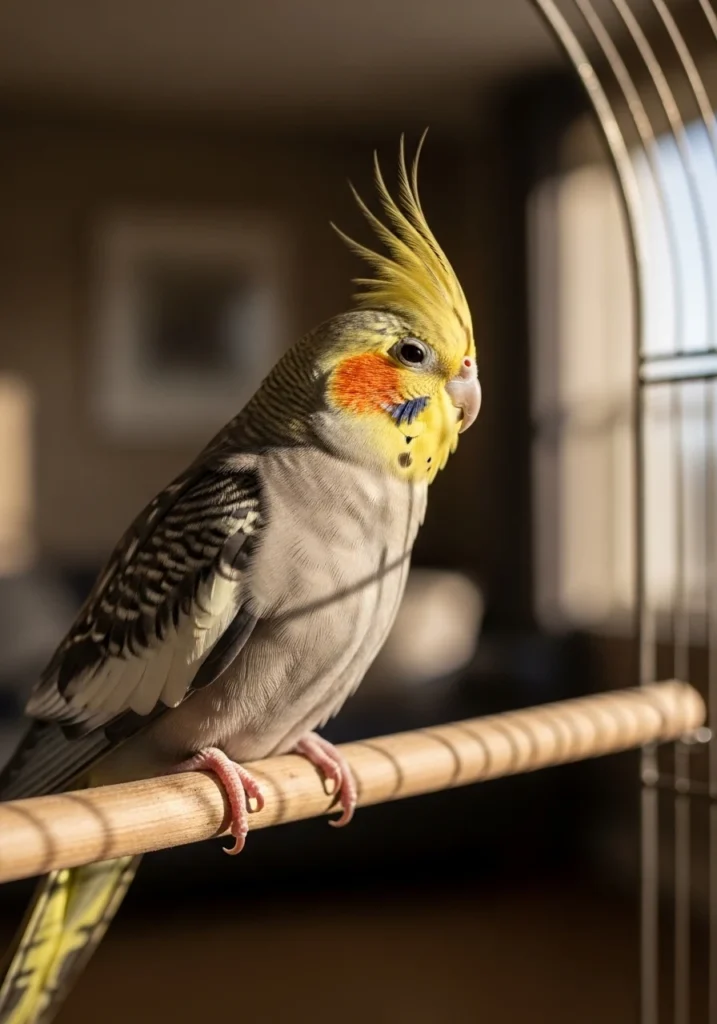
A cockatiel raised from a chick behaves very differently from a rescued African Grey that has had three previous homes. Before you try any training technique, take time to simply observe your bird.
Watch how it reacts when you approach the cage. Notice whether it moves toward you or retreats to the far corner like you are a predator.
Understanding your bird’s baseline behavior is the single most important first step in taming a pet bird at home. You cannot work with what you do not understand.
The Role of Trust in Bird Training
Birds are prey animals. Their instinct tells them to be suspicious of anything large that moves toward them quickly. That includes you, even when you mean well.
Building trust takes time, and there are no shortcuts. The training process only works when your bird sees you as safe, not as a threat.
This is why consistency in your behavior matters far more than any specific trick or technique. Show up, be calm, and let your bird set the pace at first.
Setting Up a Training-Friendly Environment
Creating a Safe and Comfortable Space
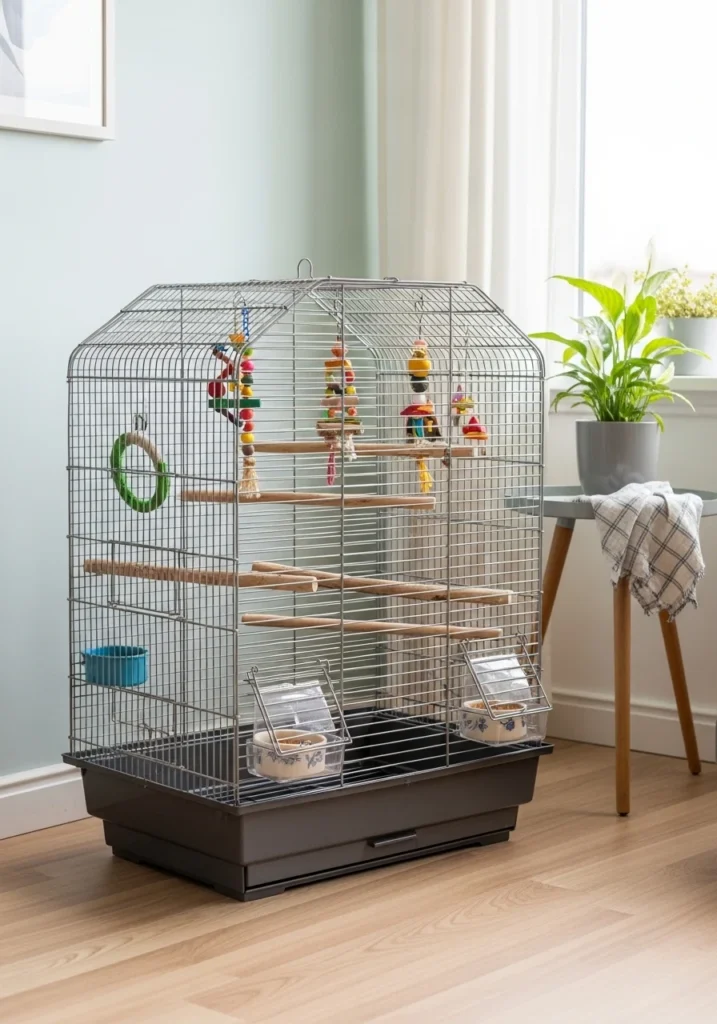
Before you attempt any hands-on training, your bird needs to feel settled in its environment.
A stressed, disoriented bird will not learn anything, and honestly, neither would you if someone kept rearranging your furniture and blasting unfamiliar sounds.
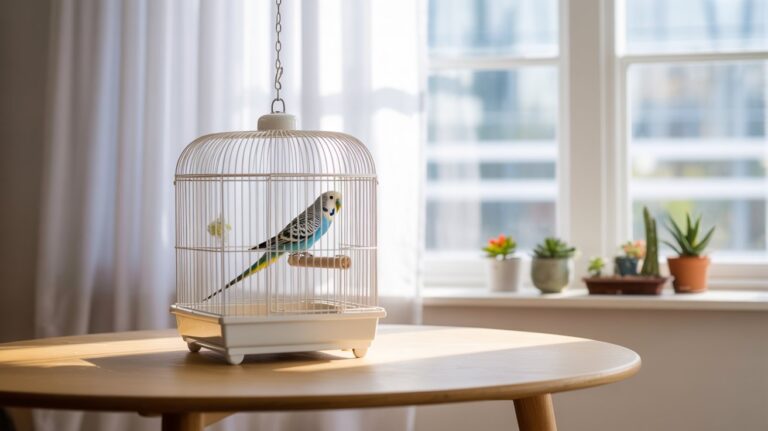
Place the cage in a room where your bird can see household activity without being overwhelmed by it.
Avoid placing the cage near drafty windows, kitchen fumes, or blaring televisions. A calm, predictable environment lays the foundation for successful bird training at home.
Choosing the Right Time to Train
Timing matters more than most people realize. Birds are sharpest and most receptive in the morning and late afternoon.
Avoid training sessions right after a full meal (birds get drowsy and distracted) or late at night when they naturally wind down.
Keep sessions short, especially in the beginning. Five to ten minutes per session is plenty, particularly with smaller birds like budgies and cockatiels.
Longer is not better here. Shorter, more frequent sessions beat one long, exhausting session every time.
How to Tame a Pet Bird: The Step-by-Step Process
Step 1: Talking Before Touching
Start by simply talking to your bird from a comfortable distance. Use a calm, low, steady voice. Read out loud, describe what you are doing around the house, or just narrate your day.
The content does not matter. The consistency of your voice teaches your bird that your presence equals safety.
Do this for several days, maybe even a week or two, depending on how skittish your bird is.
You will know you are making progress when your bird stops retreating every time you walk past the cage. That shift, as small as it looks, is actually huge.
Step 2: Hand Presence Near the Cage
Once your bird is comfortable with your voice, start placing your hand near the outside of the cage during your talking sessions.
Keep the hand still and open. No sudden movements. No reaching inside yet.
The goal here is to associate your hand with calmness, not threat. If your bird flies to the far side of the cage, that is okay.
Keep your hand there for a minute, speak gently, then move on. Repeat this daily.
Step 3: Introducing Treats Through the Cage Bars
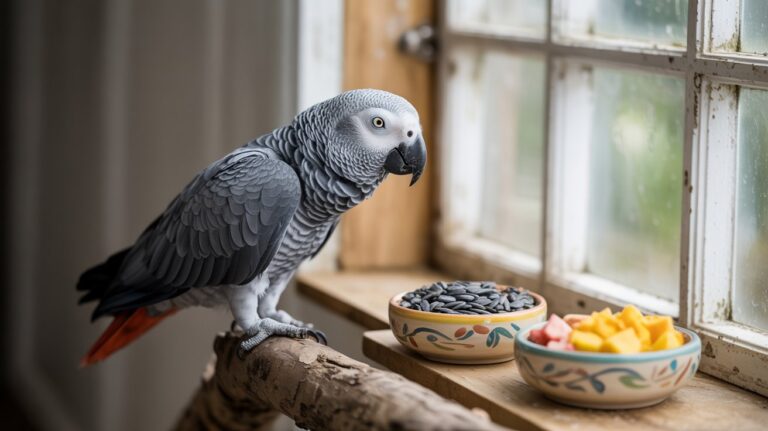
Now comes the part birds actually enjoy: food. Find out what your bird absolutely loves. Millet spray works brilliantly for budgies and cockatiels.
Almonds or walnuts tend to work well for larger parrots. Small fruit pieces like apple or mango are crowd-pleasers across the board.
Offer the treat through the cage bars by hand. Do not push it at your bird. Hold it near the bars and wait.
If your bird comes to take it, that is a massive win. Treats create a positive association with your hand, and that association is the engine behind all future training.
Step 4: The Step-Up Command
The step-up is the foundational skill every pet bird owner needs to teach.
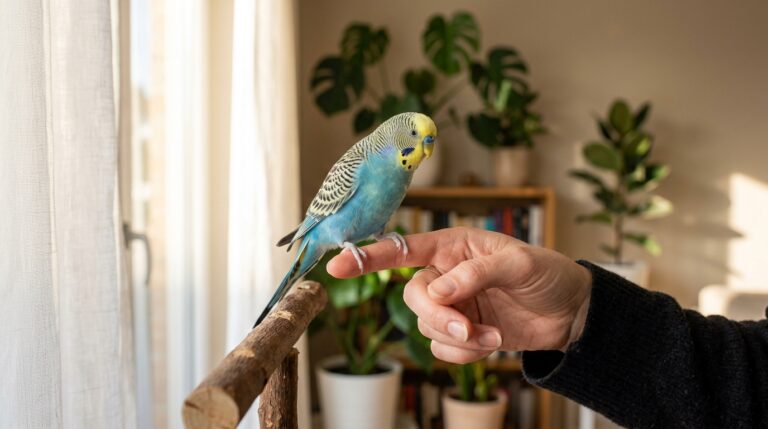
It is simple: you place your finger or hand in front of your bird’s lower chest, apply gentle pressure, and say “step up” in a clear, steady voice.
Most birds will step onto your finger because the pressure naturally makes them shift their weight. When they do, immediately reward them with praise and a treat.
Do this repeatedly across multiple short sessions until your bird steps up on command without hesitation. A bird that steps up reliably is a bird you can handle safely and comfortably.
Step 5: Expanding the Training Outside the Cage
Once your bird steps up confidently, start practicing in a larger, controlled space outside the cage. A bird-proofed room with windows covered and ceiling fans turned off works well.
This new environment will excite and distract your bird at first, so keep sessions even shorter during this phase.
Practicing in different spaces generalizes the training. Your bird learns that “step up” means step up everywhere, not just in the familiar cage setting.
This flexibility is what separates a well-trained bird from one that only cooperates when everything is exactly right.
Teaching Basic Tricks and Commands
Teaching “Recall” or Target Training
Target training involves teaching your bird to touch a target stick (or even the tip of a pen) with its beak on command.
Once your bird reliably touches the target, you can use the stick to guide it to different perches, into a carrier, or onto your hand from a distance.
Here is how you start:
- Hold the target near your bird’s beak.
- The moment it shows curiosity and touches it, say “yes” or click a clicker and offer a treat immediately.
- Repeat until your bird touches the target on purpose, not just out of curiosity.
- Gradually increase the distance your bird has to move to touch the target.
Target training is one of the most versatile tools in pet bird training, and once your bird gets the concept, learning new behaviors becomes significantly faster.
Teaching Your Bird to Talk
Not all birds talk, and that is completely fine. But if you have a species with talking potential, such as African Greys, Amazons, budgies, or Indian Ringnecks, consistent repetition is your best friend.
Choose simple, clear words or short phrases to start. “Hello,” your bird’s name, or a simple greeting all work well. Repeat the phrase clearly and enthusiastically every time you greet your bird.
Birds learn through repetition and context, so saying “good morning” every single morning creates a strong association.
Do not get discouraged if it takes weeks or months. Some birds talk within a few months, others take over a year.
And some, no matter how hard you try, will look you dead in the eye and refuse. That is just birds.
Teaching Your Bird to Return to Its Cage
This one saves a lot of frustration. Train your bird to return to its cage on command by making the cage a positive, desirable place.
Never use the cage as punishment. Always place treats or favorite toys inside when you want your bird to go in.
Use a consistent phrase like “go home” or “cage time” every time you guide your bird back. Over time, your bird learns that this phrase means: go in, get a treat, everything is fine.
Common Mistakes That Slow Down Bird Training
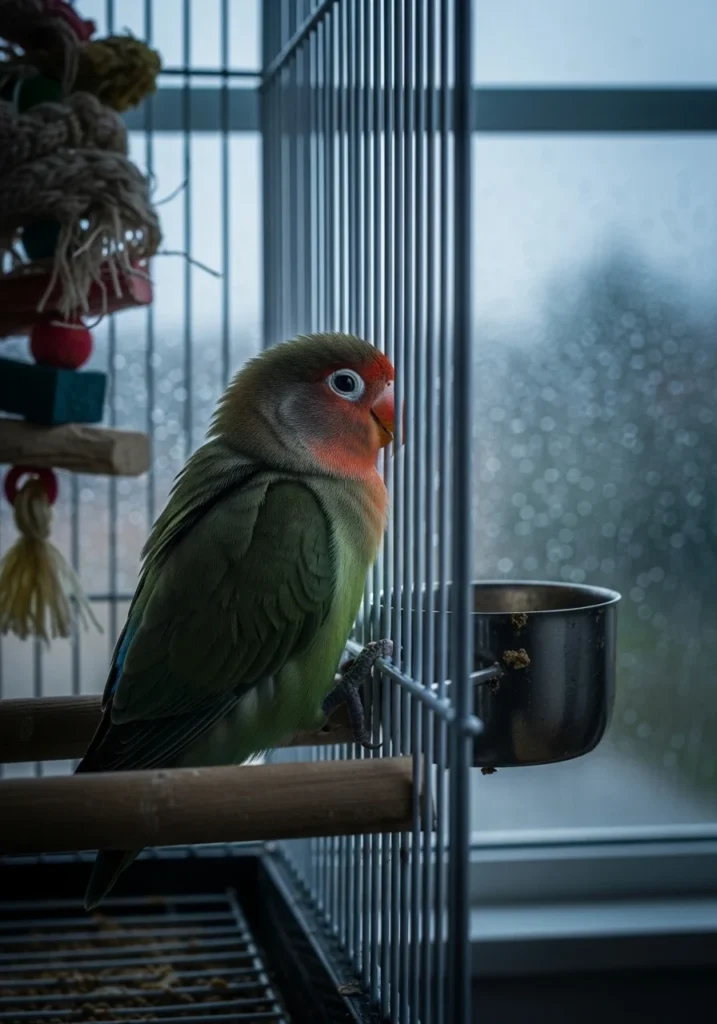
Even the most well-intentioned bird owners make training mistakes. Here are the ones that show up most often:
- Rushing the process: Skipping steps because you want faster results almost always sets you back further. Respect the pace your bird sets.
- Training when the bird is stressed or unwell: A bird that is molting, sick, or frightened will not retain anything. Watch for signs of stress like feather fluffing, loss of appetite, or excessive screaming.
- Using punishment: Negative reinforcement and punishment do not work with birds. They destroy trust and create fear-based behavior that is very hard to undo.
- Inconsistency: Asking your bird to “step up” one day but letting it bite and stay put the next sends mixed signals. Be consistent with your commands and responses every single time.
- Ignoring body language: Birds communicate constantly through posture, feather position, and eye movement. A bird with pinned pupils and raised feathers is not in the mood for training. Learn to read these signals.
Maintaining Progress and Keeping Your Bird Engaged
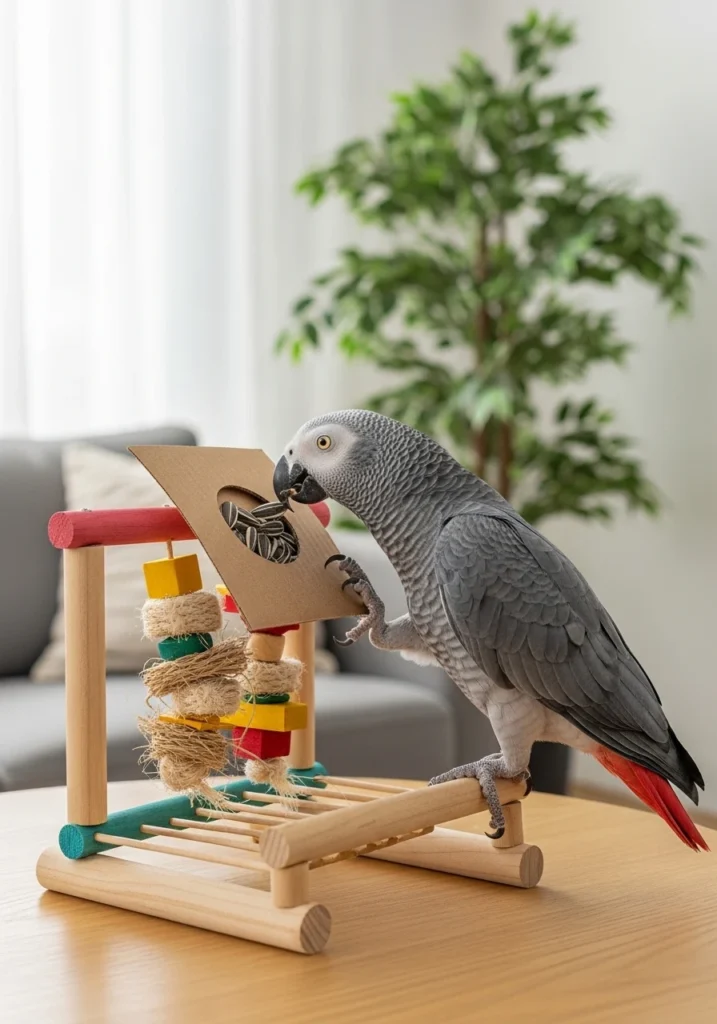
Daily Interaction Makes All the Difference
Training is not a one-time project you complete and then abandon. Daily interaction, even brief and casual, keeps your bird social, mentally stimulated, and bonded to you.
Talk to your bird every day. Offer foraging opportunities. Rotate toys regularly to prevent boredom.
A bored bird is a problematic bird. You will know this the moment your parrot decides that the wooden corner of your bookshelf is its new favorite chew toy.
Progressing to More Advanced Behaviors
Once your bird masters the basics, you can build on them. Waving, spinning, fetching small objects, playing simple games, and even potty training are all achievable with most parrot species.
The same principles apply: short sessions, positive reinforcement, and patience.
Advanced tricks are genuinely fun to teach, and watching your bird figure out a new behavior is one of those small joys that makes bird ownership completely worth the screaming.
A Final Word on Training Your Pet Bird at Home
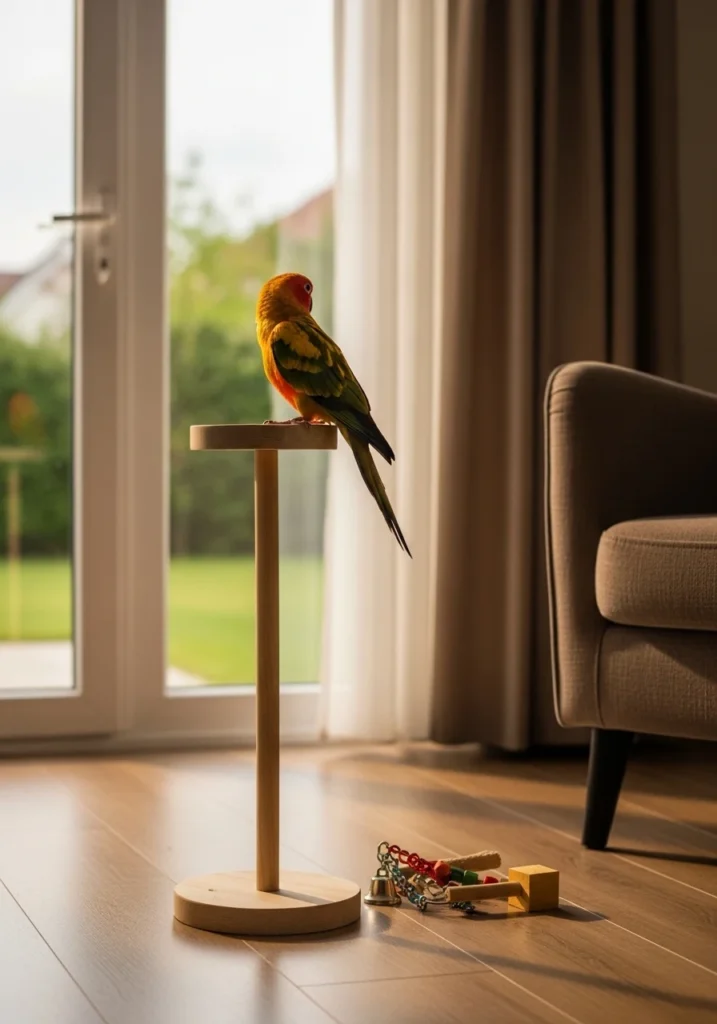
Training and taming a pet bird at home is less about discipline and more about communication. You are learning your bird’s language while teaching it yours.
That takes time, attention, and a genuine respect for the creature in front of you.
The birds that end up being the most social, the most interactive, and the most fun to own are almost always the ones whose owners simply refused to give up during those early weeks when progress felt invisible.
Keep showing up. Keep the sessions positive. Keep the treats stocked.
Your bird will come around. And when it finally steps up onto your finger for the first time without hesitation, you will understand exactly why all of that patience was worth every second.
How Long Does It Take to Tame a Pet Bird at Home?
It depends on the bird’s species, age, and past experiences. A hand-raised budgie may warm up to you in a week or two. In contrast, a rescued parrot with a tough history might take several months.
The key is consistency. Short daily sessions build trust faster than long, occasional ones. Rushing the process usually backfires. Let your bird set the pace and celebrate small wins along the way.
What Is the Best Age to Start Training a Pet Bird?
Younger birds are usually easier to tame and train. They lack deep fears or bad habits. If you have a hand-fed baby bird, start gentle socialization right away.
Older birds can also be trained, but they need more patience. Building trust takes time before you can begin hands-on training.
Which Pet Birds Are the Easiest to Train at Home?
Budgerigars, cockatiels, and lovebirds are some of the easiest pet birds to train. They’re perfect for beginners. African Greys, Amazon parrots, and Indian Ringnecks are very smart.
They can learn advanced commands and speech, but they need more time and mental stimulation.
Even canaries and finches, which you can’t usually handle, can get used to you. Just use calm, consistent interaction.
What Should I Do If My Pet Bird Keeps Biting During Training?
Biting is often a way for birds to communicate, not an act of aggression. Your bird might feel threatened, overstimulated, or just not want to be handled. Stop the session and give your bird some space.
Go back to the last training step where your bird felt safe. Never punish biting. Instead, pay attention to your bird’s body language before a bite occurs.
Signs like pinned eyes, raised feathers, and a crouched posture mean it’s time to back off.
Can I Train a Pet Bird Without Using Treats?
Treats are the best training tool. They create a strong, quick positive link to the desired behavior. Verbal praise, gentle head scratches, and favorite toys can also work as rewards for some birds.
If your bird doesn’t like food, try to find what excites it and use that as a reward. The type of reward is less important than your bird’s motivation.